
Alice Zeniter
Author of The Art of Losing
About the Author
Image credit: By Thesupermat - Own work, CC BY-SA 3.0, https://commons.wikimedia.org/w/index.php?curid=30429034
Works by Alice Zeniter
L'Enfant que j'ai connu 1 copy
Tagged
Common Knowledge
- Birthdate
- 1986
- Gender
- female
- Nationality
- France
- Birthplace
- Clamart, France
- Places of residence
- Champfleur, France
Paris, France
Budapest, Hungary - Map Location
- France
Members
Reviews

The story of three generations of a family: Ali, who served in the French army in World War II and afterwards worked his way up to becoming one of the most prosperous farmers in his Kabyle mountain village, then forced to flee to France in 1962 after finding himself on the wrong side in the Algerian war; his son Hamid, traumatised as a small child by war and refugee camps, who nonetheless manages to do well at school and climb out of the provincial banlieue where his ”harki” parents have show more been dumped by an ungrateful French state; and Hamid’s daughter, Naïma, a young woman working in a Paris gallery, who starts to wonder whether she “knows where she comes from” after a silly comment from her cousin Mohammed and an assignment from her boss to put together an exhibition of work by a veteran Algerian artist, which involves the scary prospect of actually visiting Algeria for the first time in her life.
As the title implies — it refers to an Elizabeth Bishop poem — this is as much a book about how easy it is to lose contact with the past through silences, unasked questions, and translation difficulties as it is the actual story of a family. There’s obviously a lot of autobiographical stuff going on — Zeniter’s own background has clear parallels with Naïma‘s — but, by making Naïma a third-person character like Ali and Hamid, the author reminds us that a lot of what she tells us about the grandfather and father is imaginative reconstruction of things that nobody ever told Naïma. The narrator “knows” what happened, but the narrator has the voice and duties of a novelist, not those of a historian or autobiographer.
A very engaging book about French/Algerian history and a look at the social and psychological effects of migration and refugee status that manages to avoid most of the clichés whilst giving the reader plenty to think about. show less
As the title implies — it refers to an Elizabeth Bishop poem — this is as much a book about how easy it is to lose contact with the past through silences, unasked questions, and translation difficulties as it is the actual story of a family. There’s obviously a lot of autobiographical stuff going on — Zeniter’s own background has clear parallels with Naïma‘s — but, by making Naïma a third-person character like Ali and Hamid, the author reminds us that a lot of what she tells us about the grandfather and father is imaginative reconstruction of things that nobody ever told Naïma. The narrator “knows” what happened, but the narrator has the voice and duties of a novelist, not those of a historian or autobiographer.
A very engaging book about French/Algerian history and a look at the social and psychological effects of migration and refugee status that manages to avoid most of the clichés whilst giving the reader plenty to think about. show less
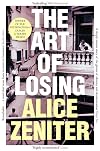
"The Art of Losing" by Alice Zeniter, translated from French by Frank Wynne, is a well-rounded investigation into identity, revolution, family history, and the dynamic nature of our world, a dynamism that has persisted from time immemorial. It is about the inevitable cycle that follows colonialism; the struggle for independence, the ultimate struggle for domination amongst the local factions, civil war, and then attempts, some successful, some not, to develop a stable country through show more democracy, suppression of rival factions, an uneasy peaceful co-existence, or a fragile partnership.
"The Art of Losing" is focused on the search for identity by the descendants of those who left Algeria but were born and grew up in France, but the book's themes, issues, and the personal experiences of all the characters, are common to many situations across the World where people have migrated for one reason or another, and have settled in countries strange to them, and where they are not universally welcomed by the local population.
Racism is a constant backdrop to the story. Its insidious presence is something that is felt by all minorities and victims of hatred. Zeniter is skilful in portraying how the constant presence of racist attitudes affects the thoughts and behaviours of people subject to its uncouth existence.
While this book deals with heavy issues, if does so in a very easily consumed fashion. This book did not contain horror or gore. The book is basically a saga involving the lives of three generations of a family with the unrest being the backdrop that drives the actions of the stories participants. The difficult issues are dealt with sensitively and with great insight into human nature, and the way people are affected by socio-political dynamics in their neighbourhood.
Would I read another book by this author?
This was a powerful book and I learned a lot from it. I would need to think about this question. I certainly would not resist reading another book by Zeniter, but I think I would need a breather between this one and the next.
That is a long way of say, “Yes!”
Would I recommend this book?
Yes.
Who would I recommend this book to?
Anyone interested in how people survive in times of civil unrest and political turmoil.
One of my friends has said she would be reluctant to read this book because it deals with dreadful things like people being uprooted from their homes and having to move quickly leaving their life behind them. The book does deal with these things, but it does so in a very careful way that is not as terrifying as it would have been if the author had chosen to write that sort of book. I do not want play down the horrors of fleeing from war, but this book is about the effects of the unrest and revolution on the sense of identity of the three generations of the family; from the first generation that left Algeria with their children, to their children, and then to their grandchildren.
Has this book inspired me to do anything?
Yes. I have already purchased the DVD of "The Battle for Algiers", a film I watched many years ago, and a novel set in Algeria. I have also been forced to think about how the principles and happenings in [The Art of Losing] are common to many, if not all, areas of conflict throughout history, where people are displaced and then become outcasts in their original country, and yet are not accepted in their new country, even unto the second, third, fourth, and more generations. It asks the question, can someone born in France to people who fled Algeria, really be Algerian if the country of their family’s origin has changed beyond recognition; and can that person be accepted as French in France, where they often meet racist attitudes and abuse despite having been born in France and being claimed as French citizens by the government? This is a common dilemma for the descendants of immigrants in so many countries. show less
"The Art of Losing" is focused on the search for identity by the descendants of those who left Algeria but were born and grew up in France, but the book's themes, issues, and the personal experiences of all the characters, are common to many situations across the World where people have migrated for one reason or another, and have settled in countries strange to them, and where they are not universally welcomed by the local population.
Racism is a constant backdrop to the story. Its insidious presence is something that is felt by all minorities and victims of hatred. Zeniter is skilful in portraying how the constant presence of racist attitudes affects the thoughts and behaviours of people subject to its uncouth existence.
While this book deals with heavy issues, if does so in a very easily consumed fashion. This book did not contain horror or gore. The book is basically a saga involving the lives of three generations of a family with the unrest being the backdrop that drives the actions of the stories participants. The difficult issues are dealt with sensitively and with great insight into human nature, and the way people are affected by socio-political dynamics in their neighbourhood.
Would I read another book by this author?
This was a powerful book and I learned a lot from it. I would need to think about this question. I certainly would not resist reading another book by Zeniter, but I think I would need a breather between this one and the next.
That is a long way of say, “Yes!”
Would I recommend this book?
Yes.
Who would I recommend this book to?
Anyone interested in how people survive in times of civil unrest and political turmoil.
One of my friends has said she would be reluctant to read this book because it deals with dreadful things like people being uprooted from their homes and having to move quickly leaving their life behind them. The book does deal with these things, but it does so in a very careful way that is not as terrifying as it would have been if the author had chosen to write that sort of book. I do not want play down the horrors of fleeing from war, but this book is about the effects of the unrest and revolution on the sense of identity of the three generations of the family; from the first generation that left Algeria with their children, to their children, and then to their grandchildren.
Has this book inspired me to do anything?
Yes. I have already purchased the DVD of "The Battle for Algiers", a film I watched many years ago, and a novel set in Algeria. I have also been forced to think about how the principles and happenings in [The Art of Losing] are common to many, if not all, areas of conflict throughout history, where people are displaced and then become outcasts in their original country, and yet are not accepted in their new country, even unto the second, third, fourth, and more generations. It asks the question, can someone born in France to people who fled Algeria, really be Algerian if the country of their family’s origin has changed beyond recognition; and can that person be accepted as French in France, where they often meet racist attitudes and abuse despite having been born in France and being claimed as French citizens by the government? This is a common dilemma for the descendants of immigrants in so many countries. show less
In her novel The Art Of Losing, describing the effects of the Algerian Civil War against France in the 1960s, Alice Zeniter focuses on an Algerian family caught on the wrong side of the revolution. She traces the family’s decision to abandon Algeria for France when the French abandoned the fight, and the discrimination they faced in a country where they were considered second class citizens. The story traces three generations adjusting to life in France, and what was won and lost in show more blending into a culture resistant to their arrival.
The novel is divided into three parts. The first focuses on events taking part during the revolution against French rule in the country, followed by a family fleeing for France, fearing persecution, and then the discrimination awaiting them there. Zeniter plumbs the cost of decolonization and the uncomfortable fit that followed those forced to relocate. Its final section details a granddaughter’s return to Algeria and her introduction to a country both familiar and foreign to her.
For those not familiar with the Algerian revolution, this novel provides a description of how it affected those caught in its cross fire. While failing to give details of the independence movement itself, its sole focus on a single family displaced by the civil war is captivating. At a time when Muslim immigrants are flooding France and countries across the globe, this book personalizes their story, highlighting the costs involved. It describes how haunting the past can be for those who have emigrated to the west, and their continued attraction back to a home country that resonates with memories but remains foreign to them. show less
The novel is divided into three parts. The first focuses on events taking part during the revolution against French rule in the country, followed by a family fleeing for France, fearing persecution, and then the discrimination awaiting them there. Zeniter plumbs the cost of decolonization and the uncomfortable fit that followed those forced to relocate. Its final section details a granddaughter’s return to Algeria and her introduction to a country both familiar and foreign to her.
For those not familiar with the Algerian revolution, this novel provides a description of how it affected those caught in its cross fire. While failing to give details of the independence movement itself, its sole focus on a single family displaced by the civil war is captivating. At a time when Muslim immigrants are flooding France and countries across the globe, this book personalizes their story, highlighting the costs involved. It describes how haunting the past can be for those who have emigrated to the west, and their continued attraction back to a home country that resonates with memories but remains foreign to them. show less
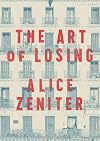
Having read several stories set around the colonization of various African countries, this is one of the best. Told from the viewpoint of 3 generations. Ali was a successful merchant in Algeria while it was under French control. When the drive for independence began, Ali became a "harki" - an Algerian who sided with the French. As a result, he was forced to leave Algeria to settle in France with his uneducated and peasant wife. The family is forced into settlement camps, and eventually some show more sort of public housing. His son, Hamid, barely remembers Algeria as he was young when they left. Hamid's daughter, Naima, works in the art world, knows of her family's Algerian background, but basically knows nothing of the struggle.
This is the story of how each individual and each generation deals with loss - their identity, their past, their memories. Ali's story is particularly interesting set during the time of the revolution. Hamid grows up in France and basically doesn't want to remember much, especially the fact that his father was a harki.
The last section focusing on Naima was just not as compelling as the others except for the part when she does actually visit Algeria while investigation some art issues.
Very well written, interesting, believable, and tells so much about colonization, immigration, and how family history is passed from one generation to the next. show less
This is the story of how each individual and each generation deals with loss - their identity, their past, their memories. Ali's story is particularly interesting set during the time of the revolution. Hamid grows up in France and basically doesn't want to remember much, especially the fact that his father was a harki.
The last section focusing on Naima was just not as compelling as the others except for the part when she does actually visit Algeria while investigation some art issues.
Very well written, interesting, believable, and tells so much about colonization, immigration, and how family history is passed from one generation to the next. show less
Lists
Awards


You May Also Like


Associated Authors
Statistics
- Works
- 16
- Members
- 586
- Popularity
- #42,791
- Rating
- 3.7
- Reviews
- 36
- ISBNs
- 64
- Languages
- 9