
Jérôme Ferrari
Author of The Sermon on the Fall of Rome
About the Author
Image credit: Jérôme Ferrari, en 2018
Works by Jérôme Ferrari
Tagged
Common Knowledge
- Canonical name
- Ferrari, Jérôme
- Birthdate
- 1968
- Gender
- male
- Occupations
- novelist
teacher - Nationality
- France
- Birthplace
- Paris, France
- Associated Place (for map)
- France
Members
Reviews
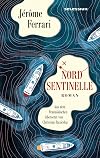
The setting for this story is Corsica. A French island where politicians don't give a damn about the authorities in Paris and where the archaic is omnipresent.
The catastrophes in this novel are manifold: the island loses its identity and surrenders itself to sell-out over the decades - and the inhabitants destroy each other in a spiral of hatred and brutality that has been nurtured over generations and ends in the murder of a young tourist.
Ferrari tells this actually tragic story with show more uncanny linguistic power and a constantly surprising, wonderfully bitter humour. His skilfully intertwined sentences, which seem to go on forever, make it almost impossible to put the book down for even a moment.
The narrator is one of the locals who, since childhood, has observed how the island becomes a Disneyland for tourists in the summer months and only has emptiness and dreariness to offer out of season. However, the narrator is such a misanthropic cynic that his report cannot be trusted. He describes his best friends and family with the same hatred as the tourists, and almost no one is spared his scathing judgement. The hardest hit is young Alexandre, the son of the woman he himself could not have and who will later become a murderer.
Jérôme Ferrari uses the story of Alexandre and his - from the narrator's point of view - all misguided ancestors to try to fathom the cause of the violence and hatred - against the backdrop of a seemingly degenerate society in which the brazen tourists and the deceitful locals are in no way inferior to each other in terms of wretchedness.
It is a great story that I am happy to recommend. show less
The catastrophes in this novel are manifold: the island loses its identity and surrenders itself to sell-out over the decades - and the inhabitants destroy each other in a spiral of hatred and brutality that has been nurtured over generations and ends in the murder of a young tourist.
Ferrari tells this actually tragic story with show more uncanny linguistic power and a constantly surprising, wonderfully bitter humour. His skilfully intertwined sentences, which seem to go on forever, make it almost impossible to put the book down for even a moment.
The narrator is one of the locals who, since childhood, has observed how the island becomes a Disneyland for tourists in the summer months and only has emptiness and dreariness to offer out of season. However, the narrator is such a misanthropic cynic that his report cannot be trusted. He describes his best friends and family with the same hatred as the tourists, and almost no one is spared his scathing judgement. The hardest hit is young Alexandre, the son of the woman he himself could not have and who will later become a murderer.
Jérôme Ferrari uses the story of Alexandre and his - from the narrator's point of view - all misguided ancestors to try to fathom the cause of the violence and hatred - against the backdrop of a seemingly degenerate society in which the brazen tourists and the deceitful locals are in no way inferior to each other in terms of wretchedness.
It is a great story that I am happy to recommend. show less

Matthieu and his best friend Libero drop out of college to run a bar in the Corsican village where Matthieu's parents come from and where Libero has grown up. With plentiful supplies of sunshine, alcohol, music, girls and high-quality charcuterie, what could possibly go wrong? Well, just ask St Augustine...
Ferrari's stylish, compact and philosophically-charged look at the transience of the worlds we build for ourselves almost feels like a parody of everything we expect to find in French show more literature, which is perhaps what made it such a natural Goncourt winner, but there's an astonishing amount packed into 200 pages: both World Wars, French colonialism, Paris vs. Corsica, rural poverty, violence, and of course the Bishop of Hippo himself, whose church (in modern Algeria) Matthieu's archaeologist sister is busy excavating. show less
Ferrari's stylish, compact and philosophically-charged look at the transience of the worlds we build for ourselves almost feels like a parody of everything we expect to find in French show more literature, which is perhaps what made it such a natural Goncourt winner, but there's an astonishing amount packed into 200 pages: both World Wars, French colonialism, Paris vs. Corsica, rural poverty, violence, and of course the Bishop of Hippo himself, whose church (in modern Algeria) Matthieu's archaeologist sister is busy excavating. show less
I read this novel on holiday when it first came out and thought it was brilliant. It well deserved to win the Prix Goncourt. Very funny, very well-observed account of successive generations' experiences in Corsica. A must for all Corsophiles. Only problem was I could never understand the choice of title.
There seem to be two ways of judging this book. On the one hand it is praised for is elaborate use of language, compact story and connection to the past. On the other hand it is seen as pompousness, badly written because of its long sentences and to decadent - who dares to compare a café with the fall of Rome?
Both views are possible, but personally I would be more on the positive side. The reason is that the story really got me. It is possible to feel the longing of every person and the show more difference between them and reality. But, it also took a while before I found the link with Rome and Augustine's.
In short, the story is about a family an friendship sage of a Corsican based bloodline. All the characters are trying to find a place in the world that is, mildly said, not at his best according to there standard. They all long for another life. A life that is not possible because of the time of the events and the place where they grow up. It is this other (impossible world) that they are longing for. Two friends start a café that blossoms and decays because of the little jalousies and desires of every character involved.
The connection with Augustine's sermon about the fall of Rome is this theme of finding peace in another story when all things come down. This connection didn't make the story stronger. It is just a well written saga on 20th first century life longing for the 'good' with all the bad and right emotions and desires involved in that. This is why you should read it.
If you are not interested in the fall of Rome denotation in this novel, just skip the last chapter. show less
Both views are possible, but personally I would be more on the positive side. The reason is that the story really got me. It is possible to feel the longing of every person and the show more difference between them and reality. But, it also took a while before I found the link with Rome and Augustine's.
In short, the story is about a family an friendship sage of a Corsican based bloodline. All the characters are trying to find a place in the world that is, mildly said, not at his best according to there standard. They all long for another life. A life that is not possible because of the time of the events and the place where they grow up. It is this other (impossible world) that they are longing for. Two friends start a café that blossoms and decays because of the little jalousies and desires of every character involved.
The connection with Augustine's sermon about the fall of Rome is this theme of finding peace in another story when all things come down. This connection didn't make the story stronger. It is just a well written saga on 20th first century life longing for the 'good' with all the bad and right emotions and desires involved in that. This is why you should read it.
If you are not interested in the fall of Rome denotation in this novel, just skip the last chapter. show less
Lists
Awards


You May Also Like


Associated Authors
Statistics
- Works
- 17
- Members
- 713
- Popularity
- #35,569
- Rating
- 3.7
- Reviews
- 33
- ISBNs
- 83
- Languages
- 10
