

Lydie Salvayre
Author of Cry, Mother Spain
About the Author
Image credit: Flickr user Usaigaijin.
Works by Lydie Salvayre
Associated Works
Tagged
Common Knowledge
- Canonical name
- Salvayre, Lydie
- Legal name
- Salvayre, Lydie
- Other names
- Arjona, Lydie
- Birthdate
- 1948-09-05
- Gender
- female
- Occupations
- psychiatrist
- Awards and honors
- Commander of the Order of Arts and Letters (2015)
- Nationality
- France
- Birthplace
- Autainville, France
- Places of residence
- Autainville, France
Auterive, France - Associated Place (for map)
- France
Members
Reviews
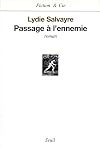
Passage à l'ennemie is a clever satire about an undercover policeman who is assigned to infiltrate a delinquent youth gang in a high-rise estate on the fringes of Paris. Over the course of eight months living with the young men of the estate, smoking pot with them, sharing in their resistance to all forms of authority, and not least falling in love with the only female member of the "gang", the beautiful but silent Dulcinée Savedra, he gradually realises that his sympathies lie more with show more the people he's being paid to betray than with his colleagues on the side of law and order.
Salvayre is obviously a writer who is very interested in the way conflicts in our lives play out in the collision between different languages (Pas pleurer tells its story largely through the confusion of Spanish and French in the mother's mind) - in this book, she tells the story entirely through Arjona's official reports to his superiors, and we watch him gradually going off the rails as the painfully bureaucratic, impersonal language starts to give way to little touches of coarse but fully-human street French. She handles this beautifully - Arjona's attempts to pour his heart out in numbered bullet points are hilariously touching, and it's only in the very last report that he manages to kick the habit of referring to himself in the third person as "le soussigné" (the undersigned).
Names matter in this book. The narrator is using the alias "Adrien Arjona", a name he has borrowed from the absent father he never met. Arjona happens to be Salvayre's maiden-name (being an Andalusian name, she points out that it could easily be of Arab or Jewish origin), but it was also the family name of two famous Andalusian brothers from the Enlightenment, one a poet and the other a reforming police-chief and later mayor of Seville. The gang's resident intellectual is a student drop-out called Wallenstein. And of course, Dulcinée's name tips us off that there's something else going on here as well - this is a story fully compliant with the First Law of Spanish Literature. Arjona's mind has been distorted by his reading of spy fiction - in particular Gérard de Villiers's "SAS" series - his image of himself as a James Bond/Prince Malko action-hero figure is every bit as unreal as Don Quixote's role as a knight-errant. It is only through his love of Dulcinée and his need to enter sympathetically into her mind and find out why she is unable to speak that he recovers his own sanity and the clear view of life that shows him what disgusting animals his police colleagues are.
Fun, subversive and very clever, but don't look to it for a balanced view of France's social problems! show less
Salvayre is obviously a writer who is very interested in the way conflicts in our lives play out in the collision between different languages (Pas pleurer tells its story largely through the confusion of Spanish and French in the mother's mind) - in this book, she tells the story entirely through Arjona's official reports to his superiors, and we watch him gradually going off the rails as the painfully bureaucratic, impersonal language starts to give way to little touches of coarse but fully-human street French. She handles this beautifully - Arjona's attempts to pour his heart out in numbered bullet points are hilariously touching, and it's only in the very last report that he manages to kick the habit of referring to himself in the third person as "le soussigné" (the undersigned).
Names matter in this book. The narrator is using the alias "Adrien Arjona", a name he has borrowed from the absent father he never met. Arjona happens to be Salvayre's maiden-name (being an Andalusian name, she points out that it could easily be of Arab or Jewish origin), but it was also the family name of two famous Andalusian brothers from the Enlightenment, one a poet and the other a reforming police-chief and later mayor of Seville. The gang's resident intellectual is a student drop-out called Wallenstein. And of course, Dulcinée's name tips us off that there's something else going on here as well - this is a story fully compliant with the First Law of Spanish Literature. Arjona's mind has been distorted by his reading of spy fiction - in particular Gérard de Villiers's "SAS" series - his image of himself as a James Bond/Prince Malko action-hero figure is every bit as unreal as Don Quixote's role as a knight-errant. It is only through his love of Dulcinée and his need to enter sympathetically into her mind and find out why she is unable to speak that he recovers his own sanity and the clear view of life that shows him what disgusting animals his police colleagues are.
Fun, subversive and very clever, but don't look to it for a balanced view of France's social problems! show less

Louisiane is doing her best to deal with a bailiff who's taking inventory of her possessions prior to seizing them for unpaid rent, but her deranged elderly mother keeps butting in, convinced that it's 1943 again and the bailiff has been sent by Pétain (always "Putain" to her) and Darnand (the head of the fascist Milice). The story keeps gliding backwards and forwards between the bailiff's systematic progress through the two women's claustrophobic flat and the wartime village in show more Haute-Garonne where Louisiane's mother grew up, and where Louisiane's uncle Jean was brutally murdered by fascist thugs when he was eighteen.
It's constructed more like a stage-play than a novella, but it's an original — and surprisingly witty — look at modern France's relationship with the Vichy era, and the way individual human lives (and thus, by extension, society as a whole) get broken when we attempt to sweep past injustices under the carpet instead of looking for a true resolution. show less
It's constructed more like a stage-play than a novella, but it's an original — and surprisingly witty — look at modern France's relationship with the Vichy era, and the way individual human lives (and thus, by extension, society as a whole) get broken when we attempt to sweep past injustices under the carpet instead of looking for a true resolution. show less
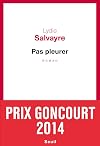
Pas Pleurer brings together two contrasting sets of memories of the opening months of the Spanish Civil War: the author's mother, Montse, a teenage girl from a repressed peasant background who briefly gets to experience the excitement of the anarchist Revolution in Barcelona and finds her horizons shifted irrevocably; and the right-wing, Catholic writer Georges Bernanos, observing the rise of the Nationalists in Majorca and horrified by the - church-supported - violence he sees. The author show more reproduces Montse's vivid account of her experiences mostly as a first-person account, with occasional affectionate and exasperated editorial comments on her mother's appalling mixture of French and Spanish (and clinical reflections on how it is that her mother remembers these things so clearly 75 years on, when so much else has faded). Montse's narrative alternates with a running commentary on the author's experience of reading Bernanos's 1938 book about the nationalist atrocities in Majorca, Les grands cimetières sous la lune.
This all sounds like a rather awkward premise for a novel, but it actually comes together very well. Montse's voice is quite something, and the "fragnol" is used in carefully dosed ways - always characteristically individual, never a simple caricature. (Readers who don't know any Spanish might struggle a bit, but you probably don't need much.) The contrast with the much more measured and analytical language of Bernanos is used to bring out parallels in the ways that violence and hate lurk below the surface of our communities: the Le Pen clan is never actually mentioned, but we're clearly supposed to be drawing parallels to those who exploit the rise of similar fears and turn them into hatreds in our own time as well. A thoughtful, rewarding and entertaining book, and one that also brought back quite a few memories for me of stories I've heard from older family members (no fragnol in our background, but plenty of other interesting combinations...). show less
This all sounds like a rather awkward premise for a novel, but it actually comes together very well. Montse's voice is quite something, and the "fragnol" is used in carefully dosed ways - always characteristically individual, never a simple caricature. (Readers who don't know any Spanish might struggle a bit, but you probably don't need much.) The contrast with the much more measured and analytical language of Bernanos is used to bring out parallels in the ways that violence and hate lurk below the surface of our communities: the Le Pen clan is never actually mentioned, but we're clearly supposed to be drawing parallels to those who exploit the rise of similar fears and turn them into hatreds in our own time as well. A thoughtful, rewarding and entertaining book, and one that also brought back quite a few memories for me of stories I've heard from older family members (no fragnol in our background, but plenty of other interesting combinations...). show less
The company of ghosts : followed by some useful advice for apprentice process-servers by Lydie Salvayre

Can injustice be atoned for? Is there a point at which nations can, and should, forgive themselves and move on for atrocities committed decades before? What obligations do the survivors of atrocities have for keeping the memories alive in the public consciousness? These are some of the questions that arose for me as I made my way through this short but difficult book.
The story is much like a one-act play. The setting is a small apartment and the entire action takes place in the space of show more perhaps three hours. There are only three actors: Rose Mélie, a survivor of the Jewish Action in Vichy France; her eighteen-year-old daughter, Louisiane; and the government official sent to inventory the Mélie's apartment prior to their eviction for failure to pay rent. The scope of the novel, however, is much broader and multi-faceted than this simplicity implies.
Rose was six when her brother, Jean, is killed in a brutal way that forever changes the way she views the world. Rose is unable to psychically leave 1942 and replays the events of that year, and the way they effected her family, endlessly in her mind and aloud to her daughter. Louisiane has spent her entire childhood listening to the historical ravings of her mother and trying to keep things under control. When things get too bad, her mother is institutionalized, and she is sent to foster care. Hard for a young girl who would rather watch soaps and learn about sex. The arrival of the official sets off Rose, who mistakes him for a Vichy militia member, and Louisiane who wants desperately to make things appear normal in the hopes that they might be given a reprieve.
I was unable to fully engage with the novel, despite this rather interesting premise, for a couple of reasons. First, I didn't connect emotionally with any of the characters, all of whom are "difficult to love". Second, the novel is written almost entirely in dialogue, but without the punctuation that makes it easy for a reader to follow along. Finally, the book is just plain difficult. Woven around the plot described above is the analogy of the present representing the collaborationist atmosphere of the past. Just as Rose confuses the two, the reader is led to imagine Rose as the French citizen who does try to speak out against the regime, but is silenced. Louisiane is the person who appeases rather than confronts, hoping to overt disaster. Finally, in the the short piece, "Some Useful Advice for Apprentice Process-Servers", included in the book I read, we hear from the perspective of the official, whose voice only confirms the analogy. show less
The story is much like a one-act play. The setting is a small apartment and the entire action takes place in the space of show more perhaps three hours. There are only three actors: Rose Mélie, a survivor of the Jewish Action in Vichy France; her eighteen-year-old daughter, Louisiane; and the government official sent to inventory the Mélie's apartment prior to their eviction for failure to pay rent. The scope of the novel, however, is much broader and multi-faceted than this simplicity implies.
Rose was six when her brother, Jean, is killed in a brutal way that forever changes the way she views the world. Rose is unable to psychically leave 1942 and replays the events of that year, and the way they effected her family, endlessly in her mind and aloud to her daughter. Louisiane has spent her entire childhood listening to the historical ravings of her mother and trying to keep things under control. When things get too bad, her mother is institutionalized, and she is sent to foster care. Hard for a young girl who would rather watch soaps and learn about sex. The arrival of the official sets off Rose, who mistakes him for a Vichy militia member, and Louisiane who wants desperately to make things appear normal in the hopes that they might be given a reprieve.
I was unable to fully engage with the novel, despite this rather interesting premise, for a couple of reasons. First, I didn't connect emotionally with any of the characters, all of whom are "difficult to love". Second, the novel is written almost entirely in dialogue, but without the punctuation that makes it easy for a reader to follow along. Finally, the book is just plain difficult. Woven around the plot described above is the analogy of the present representing the collaborationist atmosphere of the past. Just as Rose confuses the two, the reader is led to imagine Rose as the French citizen who does try to speak out against the regime, but is silenced. Louisiane is the person who appeases rather than confronts, hoping to overt disaster. Finally, in the the short piece, "Some Useful Advice for Apprentice Process-Servers", included in the book I read, we hear from the perspective of the official, whose voice only confirms the analogy. show less
Lists
Awards


You May Also Like


Associated Authors
Statistics
- Works
- 32
- Also by
- 1
- Members
- 700
- Popularity
- #36,172
- Rating
- 3.5
- Reviews
- 32
- ISBNs
- 108
- Languages
- 9
- Favorited
- 3