

Maylis de Kerangal
Author of The Heart
About the Author
Works by Maylis de Kerangal
Dia de ressaca (Portuguese Edition) 2 copies
RŽparer les vivants 1 copy
Riparare i venti 1 copy
Giorno di risacca 1 copy
Reparar a los vivos 2014 1 copy
Associated Works
Kingdom of Olives and Ash: Writers Confront the Occupation (2017) — Contributor — 165 copies, 5 reviews
Tagged
Common Knowledge
- Birthdate
- 1967-06-16
- Gender
- female
- Occupations
- author
- Awards and honors
- Franz-Hessel-Preis (2010)
- Nationality
- France
- Birthplace
- Toulon, Var, Provence-Alpes-Côte d'Azur, France
- Associated Place (for map)
- Provence-Alpes-Côte d'Azur, France
Members
Reviews
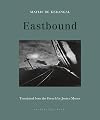
This novella, focusing on a Russian soldier on the way to the front, is short, but packs a wallop. It was written before the Russian invasion of Ukraine, but was not translated into English until 2023, after the invasion.
The book opens with a trainload of Russian troops on their way east into Siberia, though none of them knows precisely where they are headed. One of the soldiers, Aliocha, as did many of his cohorts, had tried mightily to avoid being drafted, feigning illness, injury or show more disability. He even went so far as to try to find a girlfriend to impregnate. All of his efforts were in vain, however, and now he is on his way east, along with others whose similar efforts also failed, to God knows where..
In the middle of the night, Aliocha decides he will desert. As he ponders this, smoking at the back of the train, a young woman joins him for a smoke. They have no common language, but somehow begin to communicate. She is Helene, a French woman who followed her Russian lover, a scientist, to a remote posting. Now Helene has deserted her lover, and jumped on the first train passing through, the eastbound to Vladivostok, rather than west towards Paris. Even with the deficiencies of communication, Aliocha and Helene connect, and the next thing we know Aliocha is hiding out in Helene's private compartment as the train is searched for a missing soldier.
In part, the novel is gripping: Will Aliocha get caught or will he make it to freedom? What about Helene? If Aliocha is caught will she face consequences? What will she do after ending up in Vladivostok instead of Paris? In part, the book is also a beautifully and lyrically descriptive journey through the Siberian landscape. It was also a very timely read in that, having read recent news accounts of the morale problems of current-day Russian troops drafted for the Ukraine conflict, I had no problem transposing Aliocha and the troops of this slightly earlier era and their dissatisfactions to the present day.
Highly recommended show less
The book opens with a trainload of Russian troops on their way east into Siberia, though none of them knows precisely where they are headed. One of the soldiers, Aliocha, as did many of his cohorts, had tried mightily to avoid being drafted, feigning illness, injury or show more disability. He even went so far as to try to find a girlfriend to impregnate. All of his efforts were in vain, however, and now he is on his way east, along with others whose similar efforts also failed, to God knows where..
In the middle of the night, Aliocha decides he will desert. As he ponders this, smoking at the back of the train, a young woman joins him for a smoke. They have no common language, but somehow begin to communicate. She is Helene, a French woman who followed her Russian lover, a scientist, to a remote posting. Now Helene has deserted her lover, and jumped on the first train passing through, the eastbound to Vladivostok, rather than west towards Paris. Even with the deficiencies of communication, Aliocha and Helene connect, and the next thing we know Aliocha is hiding out in Helene's private compartment as the train is searched for a missing soldier.
In part, the novel is gripping: Will Aliocha get caught or will he make it to freedom? What about Helene? If Aliocha is caught will she face consequences? What will she do after ending up in Vladivostok instead of Paris? In part, the book is also a beautifully and lyrically descriptive journey through the Siberian landscape. It was also a very timely read in that, having read recent news accounts of the morale problems of current-day Russian troops drafted for the Ukraine conflict, I had no problem transposing Aliocha and the troops of this slightly earlier era and their dissatisfactions to the present day.
Highly recommended show less

Keep on Searching
Media:Audio
Read by Steven Jay Cohen
Length: 8 hrs and 49 mins
I bought this book after reading Eastbound. I’d been so overwhelmed by that novella that I needed more of de Kerangal than the two hours that Eastbound had given me.
Unfortunately I could not finish The Heart. The six hours about the day in the life of a heart transplant was beyond me. Yes the writing is mesmerizing and the detail finessed. Yet somehow it wasn’t enough. But it wasn’t so bad that it doesn’t show more deserve a mention, and I’m sure others will like it more than I could.
A young boy, a surfer dies in a car accident. His young healthy heart is made available for a transplant. Everyone involved is a subject of de Kerangal’s attention. The surgeons, the hospital and care workers, the relatives of the donor and the donee all play a part in this perfectly chronicled choreographed feat of modern medicine. Every detail of the participants’ lives in the twenty for hours is described, accurately and efficiently. From the cup of coffee the head nurse drinks, from the assistant hospital orderly’s intake of her cigarette, to the donor’s mother’s inner feelings come to the reader as if we are in the room with the participants.
Despite my enthusiasm at finding a new writer to follow, I had a problem with The Heart. The poetic language seemed at odds with the subject matter. The symbolism and softness of the beating heart didn’t sit well in the stark sterility of the operating theater. Feeling and technology didn’t mix. For me at least.
I suppose I was expecting something along the lines of Eastbound - short and softly emotional. The Heart is a novel three times longer than the novella. What worked on a train trip didn’t work for me in a hospital setting.
Still I look forward to reading more of this writer’s work. It is just that Eastbound set such a high bar, and maybe my heart wasn’t in this one. show less
Media:Audio
Read by Steven Jay Cohen
Length: 8 hrs and 49 mins
I bought this book after reading Eastbound. I’d been so overwhelmed by that novella that I needed more of de Kerangal than the two hours that Eastbound had given me.
Unfortunately I could not finish The Heart. The six hours about the day in the life of a heart transplant was beyond me. Yes the writing is mesmerizing and the detail finessed. Yet somehow it wasn’t enough. But it wasn’t so bad that it doesn’t show more deserve a mention, and I’m sure others will like it more than I could.
A young boy, a surfer dies in a car accident. His young healthy heart is made available for a transplant. Everyone involved is a subject of de Kerangal’s attention. The surgeons, the hospital and care workers, the relatives of the donor and the donee all play a part in this perfectly chronicled choreographed feat of modern medicine. Every detail of the participants’ lives in the twenty for hours is described, accurately and efficiently. From the cup of coffee the head nurse drinks, from the assistant hospital orderly’s intake of her cigarette, to the donor’s mother’s inner feelings come to the reader as if we are in the room with the participants.
Despite my enthusiasm at finding a new writer to follow, I had a problem with The Heart. The poetic language seemed at odds with the subject matter. The symbolism and softness of the beating heart didn’t sit well in the stark sterility of the operating theater. Feeling and technology didn’t mix. For me at least.
I suppose I was expecting something along the lines of Eastbound - short and softly emotional. The Heart is a novel three times longer than the novella. What worked on a train trip didn’t work for me in a hospital setting.
Still I look forward to reading more of this writer’s work. It is just that Eastbound set such a high bar, and maybe my heart wasn’t in this one. show less
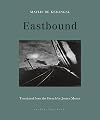
The Publisher Says: Aliocha is racing toward Vladivostok with other Russian conscripts packed on a trans-Siberian train. Soon after boarding, he decides to desert. Over a midnight smoke in a dark corridor of the train, the young soldier encounters an older French woman, Hélène, for whom he feels an uncanny trust. He manages through pantomime and a basic Russian that Hélène must decipher to ask for her help. As they hurry from the filth of his third-class carriage to Hélène’s show more first-class sleeping car, Aliocha becomes a hunted deserter and Hélène his accomplice with her own recent memories to contend with. Eastbound is both an adventure story and a duet of vibrant inner worlds. In evocative sentences gorgeously translated by Jessica Moore, De Kerangal tells the story of two unlikely souls entwined in a quest for freedom with a striking sense of tenderness, sharply contrasting the brutality of their surrounding world.
I RECEIVED A DRC FROM THE PUBLISHER VIA EDELWEISS+. THANK YOU.
My Review: First, read this:
No matter who or what it is you're running from, you end up entwined with other people...maybe not the same people you started your journey with, but in a connection, a relationship of some sort, with a person or some people...that is the one and only escape you, any more than Author De Kerangal's characters, cannot make happen, no matter how bad you think you want it. It is the crux of this intense record of the collision of the runaways here, a privileged outsider and a miserably exploited insider each of whom needs to run away from Life's consequences. They don't know each other and can't get conventionally acquainted because they share no verbal language, but they recognize each other unerringly as fellows of the social class "runaway". Neither can really be blamed for the intensity of the drive to escape circumstances they do not like and reckonings they cannot afford. Anyone who has made a major life-decision will comprehend this readily. It's not like we haven't faced our own inflection points; maybe we lacked the courage—or the intense, impelling force of terror—of these two who went through with separate but intertwining truly terrible decisions. Maybe we were just luckier than either of them. But I expect most will find the fact of the read to be that they are relatable, real-feeling fictional creations. These two impulsive seekers are people.
How Author De Kerangal achieves this feat is using deft and economical prose, concise to the point of terseness, that focuses our attention on externals and surfaces and appearances...that uses the novella's tight time constraints to force the reader's, just as the characters', experience of the story into the damned claustrophobic confines of a crowded car of, a narrow corridor on, a train, then finally a small but private compartment on a long, transcontinental train...the longest single line in the world crossing the vastness of Siberia at a steady, slow 60 kph (about 40mph). Then she forbids more than passing expansion of your awareness and attention by adding a hazardous dimension of being hunted for a dangerous act of commission, of each being guilty of an actual legally definable crime. Like the classic films noirs of the late 1940s through the 1950s...most especially 1952's The Narrow Margin, another claustrophobic train-set escape-from-consequences story (unaccountably to me not widely known or loudly praised) that ends ambiguously, not resolving the fates of the protagonists with the finality of lesser stories. What the payoff of the read is can be summed up in that most uncommon of endings: the open field, the wide horizon, the absence of compulsion at last in a story that has heretofore been about the characters' compelled actions all stemming from each one's initial impulsive law-breaking decision. Unlike the usual affect of such an ending, Author De Kerangal's storytelling creates the sense of a satisfying ending out of this indeterminate state.
This is a pleasure read for those waking up to the reality that this is a world whose misfortunates live lives that are not thought of as valuable in and of temselves, but only as compulsory and unwilling sacrifices to tired and rotting systems...patriarchy, its running dog of war...whose zombies continue to create and devour ever more victims world seemingly without end. These souls, previously NPCs, are finally coming into the focus of the world's storytellers. Ever more urgent in the increasingly callous and uncaring world many around the globe are working assiduously to create.
I'm not quite there on making this a five-star read only because its bottled-in-the-train structure, finely crafted though it is, did not quite do full justice to Hélène's point of view. I knew Aliocha and victimized insider's fears more intimately than Hélène's uniquely powerful-because-outsider status and honestly felt deprived by this. An extra 15pp fleshing out her very multivalently privileged character would've been the final shove into five-star-read-hood, and would still have left this a tight, compact novella. show less
I RECEIVED A DRC FROM THE PUBLISHER VIA EDELWEISS+. THANK YOU.
My Review: First, read this:
Hélène smiles. She agreed to take Aliocha in without hesitation, without even really weighing his request, and whether suspect ease or absence of discernment it doesn't much matter, she felt overwhelmed by this young man, absolutely unique in the world in the face of his request, and she who had reserved both bunks in the compartment so she might be alone with an opening onto Siberia to remember and imagine—two ways of seeing clearly—she had welcomed this stranger. She turns her eyes and lets them drift outside: what's done is done.
–and–
...this sordid scenario where she gave herself the lucky draw, proclaimed herself the hero, the stranger who descends from the sky, saves you and then slips away, ready to rack up self-convincing statements—I did my utmost, I did all that I could—all the while knowing she’s incapable of believing it: the worm of guilt is already lodging itself in her gut.
At the end of a tunnel, the craggy relief engulfs the window and obscures the sky whole, leaving it to the traveller to invent the most plausible or the most wild off-camera scene, but Hélène doesn't need to invent anything, everything is happening here, right here in front of her: all she has to do is look at the soldier sleeping on the bunk to feel that his presence is absurd, out of place, and to see that something's off here, something's shortcircuiting. In the end, whether it was this young man or a bear stretched out there, it would amount to the same thing, the same enormity, as though the real was suddenly crumbling, subverted by powerful dreams or completely other substances capable of catalysing metamorphoses, as though the real was tearing apart under the pressure of a faint but immutable deviation, something far bigger, far stronger than it—but no, there are no dreams in Hélène's head, no drugs in her blood, the young man is well and truly there —indeed, he is the real, the tangible present moment of life, here, breathing with his mouth open a little, body rising and falling imperceptibly with each breath, and if she were to place a hand on him, on his pale and downy cheek, on his shoulder, she knows she would feel him alive, he would stir, open an eye and wake up.
–and–
...and {the mothers} gather around Valentina Melnikova, President of the Committee of Soldiers’ Mothers—they’re fearsome, boiling mad, determined, and if the cameras turn up they rush to fit their eager faces in the frame: I don’t want my son to go, and he’s not even a drinker! When reprieves run out, the next option is the false medical certificate, bought for an arm and a leg from doctors who slip the cash directly into their breast pockets, and the families who’ve been bled dry go home and get smashed in relief. If this doesn’t work, and when anxiety has bitten down night after night to the quick, then come the direct attempts at bribery.
No matter who or what it is you're running from, you end up entwined with other people...maybe not the same people you started your journey with, but in a connection, a relationship of some sort, with a person or some people...that is the one and only escape you, any more than Author De Kerangal's characters, cannot make happen, no matter how bad you think you want it. It is the crux of this intense record of the collision of the runaways here, a privileged outsider and a miserably exploited insider each of whom needs to run away from Life's consequences. They don't know each other and can't get conventionally acquainted because they share no verbal language, but they recognize each other unerringly as fellows of the social class "runaway". Neither can really be blamed for the intensity of the drive to escape circumstances they do not like and reckonings they cannot afford. Anyone who has made a major life-decision will comprehend this readily. It's not like we haven't faced our own inflection points; maybe we lacked the courage—or the intense, impelling force of terror—of these two who went through with separate but intertwining truly terrible decisions. Maybe we were just luckier than either of them. But I expect most will find the fact of the read to be that they are relatable, real-feeling fictional creations. These two impulsive seekers are people.
How Author De Kerangal achieves this feat is using deft and economical prose, concise to the point of terseness, that focuses our attention on externals and surfaces and appearances...that uses the novella's tight time constraints to force the reader's, just as the characters', experience of the story into the damned claustrophobic confines of a crowded car of, a narrow corridor on, a train, then finally a small but private compartment on a long, transcontinental train...the longest single line in the world crossing the vastness of Siberia at a steady, slow 60 kph (about 40mph). Then she forbids more than passing expansion of your awareness and attention by adding a hazardous dimension of being hunted for a dangerous act of commission, of each being guilty of an actual legally definable crime. Like the classic films noirs of the late 1940s through the 1950s...most especially 1952's The Narrow Margin, another claustrophobic train-set escape-from-consequences story (unaccountably to me not widely known or loudly praised) that ends ambiguously, not resolving the fates of the protagonists with the finality of lesser stories. What the payoff of the read is can be summed up in that most uncommon of endings: the open field, the wide horizon, the absence of compulsion at last in a story that has heretofore been about the characters' compelled actions all stemming from each one's initial impulsive law-breaking decision. Unlike the usual affect of such an ending, Author De Kerangal's storytelling creates the sense of a satisfying ending out of this indeterminate state.
This is a pleasure read for those waking up to the reality that this is a world whose misfortunates live lives that are not thought of as valuable in and of temselves, but only as compulsory and unwilling sacrifices to tired and rotting systems...patriarchy, its running dog of war...whose zombies continue to create and devour ever more victims world seemingly without end. These souls, previously NPCs, are finally coming into the focus of the world's storytellers. Ever more urgent in the increasingly callous and uncaring world many around the globe are working assiduously to create.
I'm not quite there on making this a five-star read only because its bottled-in-the-train structure, finely crafted though it is, did not quite do full justice to Hélène's point of view. I knew Aliocha and victimized insider's fears more intimately than Hélène's uniquely powerful-because-outsider status and honestly felt deprived by this. An extra 15pp fleshing out her very multivalently privileged character would've been the final shove into five-star-read-hood, and would still have left this a tight, compact novella. show less
Ain’t got no cigarettes…
Media: Audio
Read by Jennifer Pickens
Length: 2 hrs and 23 mins
The central character in this brilliant novella is the train. In what appears to be a never-ending journey, it doggedly winds its way east from Moscow to Vladivostok. Aliocha and Helene are two of the passengers on the ride that takes place in post Soviet Russia.
Aliocha a young Russian conscript and Helene is a slightly older French woman. They are strangers when they meet on the train when Aliocha is show more trying to desert. Helene becomes his accomplice. The tension is high for both and for the reader, as the train moves east and the probability of Aliocha being able to stay hidden until he can make a break from it, increases.
The pair have no common language and are reluctantly entwined, together in a fragile shell. The Siberian landscape is their moving background.
It’s a gripping tale that covers a very short time period, a few days. A lot happens and like Aliocha the reader loses all sense of time. Seven days becomes an hour, a minute, but at the same time the trip appears to be unending.
What sets this book apart from other books I’ve read in the past two years is the beauty of its prose. The reader is put firmly into the train with Aliocha and Helene and the Provodnitsy. The imagery that bounces from train windows as in a shattered film sequence is depicted in unfaltering detail. I was amazed at the skill that was evident in Jessica Moore’s translation. There were times that I couldn’t help but try to translate back into French to experience how the sentences would sound in their original language.
Helene and Aliocha sleep, eat, and smoke cigarettes. As an ex-smoker I related to de Kerangal’s detailed description of the cigarettes. From the cheap cardboard filters to the packaging and the associated cravings. I noticed that cigarettes played a large part in Kerangal’s other novel The Heart. She’s must be a smoker. The pleasure of smoking oozed back into my memory as I tried to slow my reading, not wanting the train to reach the final stop and the book to end.
Highly recommended. show less
Media: Audio
Read by Jennifer Pickens
Length: 2 hrs and 23 mins
The central character in this brilliant novella is the train. In what appears to be a never-ending journey, it doggedly winds its way east from Moscow to Vladivostok. Aliocha and Helene are two of the passengers on the ride that takes place in post Soviet Russia.
Aliocha a young Russian conscript and Helene is a slightly older French woman. They are strangers when they meet on the train when Aliocha is show more trying to desert. Helene becomes his accomplice. The tension is high for both and for the reader, as the train moves east and the probability of Aliocha being able to stay hidden until he can make a break from it, increases.
The pair have no common language and are reluctantly entwined, together in a fragile shell. The Siberian landscape is their moving background.
It’s a gripping tale that covers a very short time period, a few days. A lot happens and like Aliocha the reader loses all sense of time. Seven days becomes an hour, a minute, but at the same time the trip appears to be unending.
What sets this book apart from other books I’ve read in the past two years is the beauty of its prose. The reader is put firmly into the train with Aliocha and Helene and the Provodnitsy. The imagery that bounces from train windows as in a shattered film sequence is depicted in unfaltering detail. I was amazed at the skill that was evident in Jessica Moore’s translation. There were times that I couldn’t help but try to translate back into French to experience how the sentences would sound in their original language.
Helene and Aliocha sleep, eat, and smoke cigarettes. As an ex-smoker I related to de Kerangal’s detailed description of the cigarettes. From the cheap cardboard filters to the packaging and the associated cravings. I noticed that cigarettes played a large part in Kerangal’s other novel The Heart. She’s must be a smoker. The pleasure of smoking oozed back into my memory as I tried to slow my reading, not wanting the train to reach the final stop and the book to end.
Highly recommended. show less
Lists
World Books (1)
Awards


You May Also Like


Associated Authors
Statistics
- Works
- 32
- Also by
- 1
- Members
- 1,707
- Popularity
- #15,030
- Rating
- 3.8
- Reviews
- 89
- ISBNs
- 154
- Languages
- 11
- Favorited
- 1