
Marie NDiaye
Author of Three Strong Women
About the Author
Marie NDiaye was born on June 4, 1967 in Pithiviers, France. Her first novel, Quant au Riche Avenir, was published in 1985. Her novels and short stories include Autoportrait en vert, Mon couer a l'etroit, Trois femmes puissantes, and Ladivine. One of her plays, Papa Doit Manger, has been taken into show more the repertoire of the Comédie Française. She also writes children's novels, essays and screenplays. Her awards include The 2001 Prix Femina for Rosie Carpe, the 2009 Prix Goncourt for Three Strong Women, and the 2015 Nelly Sachs Prize. (Bowker Author Biography) show less
Image credit: French author Marie NDiaye in 2013 By Sohn von Marie NDiaye - Foto gemacht vom Sohn von Marie NDiaye, CC BY-SA 3.0, https://commons.wikimedia.org/w/index.php?curid=24858447
Works by Marie NDiaye
Pomeriggio d'agosto.Racconto 1 copy
Associated Works
New Daughters of Africa: An International Anthology of Writing by Women of African Descent (2019) — Contributor — 114 copies, 1 review
La condition noire : Essai sur une minorité française (2008) — Preface, some editions — 14 copies, 2 reviews
Tagged
Common Knowledge
- Birthdate
- 1967-06-04
- Gender
- female
- Education
- Lycée Lakanal
Villa Médicis, Rome, Italy - Occupations
- novelist
playwright - Awards and honors
- Man Booker International Prize Finalist (2013)
- Relationships
- Cendrey, Jean-Yves (husband)
N'Diaye, Pap (brother) - Nationality
- France
- Birthplace
- Pithiviers, France
- Places of residence
- Paris, France
Cormeilles, Normandy, France
Berlin, Germany
Bourg-la-Reine, Île-de-France, France - Associated Place (for map)
- France
Members
Reviews

My 12th book from the International Booker longlist.
What mysterious powers do your teenage daughters have? And what can they do with them? I just love thinking about this book. Published in 1996 in French, the 6th novel by author who hadn't yet turned 30, and only just now translated last month. It's smart, with straight-faced humor, and an anger at the patriarchy, at powerless housewives and at soulless suburbia. It was so fun read. So curious. Every oddity seems carefully placed, and seems show more to have its point, although it's often not entirely clear what it is. Or what they are. She has a lot of elements mixed in this magic.
We follow Lucie, a middling witch, a housewife unable to make her sour husband happy, home with her twin girls and nosy neighbors. Her mother is powerful witch, but Lucie's powers are practically useless. But, as she tells us in the opening line, "When my daughters turned twelve I initiated them into the mysterious powers." What allusions are already going through your head, after that opening line? I think it may tell you something about how much you will like the book. Lucie doesn't take it too hard when her daughters don't seem that interested in these powers that she herself can't do much with. Actually, poor Lucie seems to take a lot of sad things in stride. And when she does try to force an issue, her motives aren't necessarily all that great, and, a middling witch, not all that effective. The world resists. And she misreads it anyway. As all this strange stuff happens, the prose stays very staid. Lucie carries on. It's not until we get well into the book that wheels come off. Lucie, with middling foresight, gives us some warning by telling us, about her twin daughters, "and I began to envy Maud and Lise." What would you do with these new powers?
This book is smart and great fun and has wildly mysterious multifaceted elements, and it managed them without losing this reader. It's not going to be everyone's thing, but I was all in and adored it.
2026
https://www.librarything.com/topic/384249#9199892 show less
What mysterious powers do your teenage daughters have? And what can they do with them? I just love thinking about this book. Published in 1996 in French, the 6th novel by author who hadn't yet turned 30, and only just now translated last month. It's smart, with straight-faced humor, and an anger at the patriarchy, at powerless housewives and at soulless suburbia. It was so fun read. So curious. Every oddity seems carefully placed, and seems show more to have its point, although it's often not entirely clear what it is. Or what they are. She has a lot of elements mixed in this magic.
We follow Lucie, a middling witch, a housewife unable to make her sour husband happy, home with her twin girls and nosy neighbors. Her mother is powerful witch, but Lucie's powers are practically useless. But, as she tells us in the opening line, "When my daughters turned twelve I initiated them into the mysterious powers." What allusions are already going through your head, after that opening line? I think it may tell you something about how much you will like the book. Lucie doesn't take it too hard when her daughters don't seem that interested in these powers that she herself can't do much with. Actually, poor Lucie seems to take a lot of sad things in stride. And when she does try to force an issue, her motives aren't necessarily all that great, and, a middling witch, not all that effective. The world resists. And she misreads it anyway. As all this strange stuff happens, the prose stays very staid. Lucie carries on. It's not until we get well into the book that wheels come off. Lucie, with middling foresight, gives us some warning by telling us, about her twin daughters, "and I began to envy Maud and Lise." What would you do with these new powers?
This book is smart and great fun and has wildly mysterious multifaceted elements, and it managed them without losing this reader. It's not going to be everyone's thing, but I was all in and adored it.
2026
https://www.librarything.com/topic/384249#9199892 show less
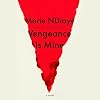
Je ne sais pas in Bordeaux
If you read an individual page at random, I’m pretty sure you’d think it belonged to a well-written edgy mystery. Unfortunately I read the whole book.
I chose to read Vengeance is Mine partly because the New Yorker praised it, honoring it with its listing in The Best Books of 2023.
The prose is elegant, and every paragraph conveys an air of menace. Plus, book starts off well. But that’s about it. It goes nowhere. I can’t understand what The New Yorker saw in show more it. I don’t understand what it’s about, but then I don’t understand The New Yorker cartoons either.
I was annoyed as I kept expecting things to come together as the MC Maître Susane obsesses with every little thing including her own thoughts. The book is all over the place both geographically and mentally, with subplot after subplot defying logic. NDiaye builds up suspense with French panache, only for the reader to realize she’s going nowhere. In short, I have no idea what this book is about.
And so there’s no synopsis and nothing left to say except to give this book a miss. show less
If you read an individual page at random, I’m pretty sure you’d think it belonged to a well-written edgy mystery. Unfortunately I read the whole book.
I chose to read Vengeance is Mine partly because the New Yorker praised it, honoring it with its listing in The Best Books of 2023.
The prose is elegant, and every paragraph conveys an air of menace. Plus, book starts off well. But that’s about it. It goes nowhere. I can’t understand what The New Yorker saw in show more it. I don’t understand what it’s about, but then I don’t understand The New Yorker cartoons either.
I was annoyed as I kept expecting things to come together as the MC Maître Susane obsesses with every little thing including her own thoughts. The book is all over the place both geographically and mentally, with subplot after subplot defying logic. NDiaye builds up suspense with French panache, only for the reader to realize she’s going nowhere. In short, I have no idea what this book is about.
And so there’s no synopsis and nothing left to say except to give this book a miss. show less
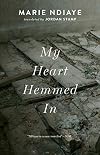
Almost Inexplicable Until You Have the Key
Review of the Two Lines Press paperback edition (2017) of the English translation of the French language original "Mon cœur à l'étroit" (2007)
I feel quite positive about this book after feeling miserable about it for the first half. I was floundering in the paranoia and despair and not seeing any relief in sight except for the sometimes comical food scenes with the neighbour. Then I had a breakthrough.
I had started it thinking it was something show more like Dorothy Hughes' [book:The Expendable Man|12459312] which starts with a similar aura of paranoia which you can't understand but has a gut-punch reveal about 100 pages in. Ndiaye lets it all seep into you gradually without any sudden reveals. I felt the lack of an introduction to a 2017 translation of a 2007 book and felt that some added context would have helped. That meant that I had to research it myself. I fixated on the information that Ndiaye left France in protest after Sarkozy's election in 2007. I started imagining the husband Ange as a sickly France being nursed to death by the neighbour Noget (as a stand-in for Sarkozy) while Nadia (a stand-in for NDiaye) plans to leave him behind.
When I chanced upon the "Souhar" reveal (through the translator's hidden Q&A spoiler) it helped me to get oriented properly (this is what I mean by The Key in the lede above) and Nadia's paranoia (and the manifestation growing in her belly) all became much clearer as it being due to her disavowal of her origins and heritage. She (and Ange) became well (or at least relatively well) after she had reconciled herself to her past.
This was my first NDiaye, and it was a difficult read but ultimately still an interesting read which did end on a positive note. I'm definitely intrigued to read her further as her style appears to be quite unique and challenging.
I read My Heart Hemmed In as the December 2019 Group Read at the 100 Best Women in Translation Group on Goodreads. show less
Review of the Two Lines Press paperback edition (2017) of the English translation of the French language original "Mon cœur à l'étroit" (2007)
I feel quite positive about this book after feeling miserable about it for the first half. I was floundering in the paranoia and despair and not seeing any relief in sight except for the sometimes comical food scenes with the neighbour. Then I had a breakthrough.
I had started it thinking it was something show more like Dorothy Hughes' [book:The Expendable Man|12459312] which starts with a similar aura of paranoia which you can't understand but has a gut-punch reveal about 100 pages in. Ndiaye lets it all seep into you gradually without any sudden reveals. I felt the lack of an introduction to a 2017 translation of a 2007 book and felt that some added context would have helped. That meant that I had to research it myself. I fixated on the information that Ndiaye left France in protest after Sarkozy's election in 2007. I started imagining the husband Ange as a sickly France being nursed to death by the neighbour Noget (as a stand-in for Sarkozy) while Nadia (a stand-in for NDiaye) plans to leave him behind.
When I chanced upon the "Souhar" reveal (through the translator's hidden Q&A spoiler) it helped me to get oriented properly (this is what I mean by The Key in the lede above) and Nadia's paranoia (and the manifestation growing in her belly) all became much clearer as it being due to her disavowal of her origins and heritage. She (and Ange) became well (or at least relatively well) after she had reconciled herself to her past.
This was my first NDiaye, and it was a difficult read but ultimately still an interesting read which did end on a positive note. I'm definitely intrigued to read her further as her style appears to be quite unique and challenging.
I read My Heart Hemmed In as the December 2019 Group Read at the 100 Best Women in Translation Group on Goodreads. show less

On the face of it, this is a similar sort of deal to Gertrude Stein's Three lives: three novella-length pieces, each involving a strong female character. But it's also a kind of novel, as the three stories intersect in ways that aren't entirely straightforward and logical, and in places verge on the mystical. All three straddle the physical and cultural space between France and Senegal: in the first, Paris lawyer Norah is summoned to Senegal by her estranged father to deal with the aftermath show more of a family tragedy; in the second, we are in a small French town watching the life of disgraced schoolteacher Rudy unravel as his Senegalese wife Fanta remains enigmatically offstage; in the third, the young widow Khady Demba gets caught up in the horrors of the illegal migration trail across the Sahara to Europe.
NDiaye's women are "strong" not in the conventional sense of being able to exercise power, but in the more particular sense that they have to have the moral strength to deal with more than their fair share of other people's (read: men's) problems without unravelling themselves. It's a book that's packed with anger at the injustices of the world and the selfishness of men and Europeans, and occasionally it seems to lose its direction in all that rage, but most of the time NDiaye's writing is sharp and devastating: it's well worth hanging in there through the woolly patches. show less
NDiaye's women are "strong" not in the conventional sense of being able to exercise power, but in the more particular sense that they have to have the moral strength to deal with more than their fair share of other people's (read: men's) problems without unravelling themselves. It's a book that's packed with anger at the injustices of the world and the selfishness of men and Europeans, and occasionally it seems to lose its direction in all that rage, but most of the time NDiaye's writing is sharp and devastating: it's well worth hanging in there through the woolly patches. show less
Lists
el (1)
Black Authors (1)
Awards


You May Also Like


Associated Authors
Statistics
- Works
- 40
- Also by
- 3
- Members
- 2,028
- Popularity
- #12,677
- Rating
- 3.4
- Reviews
- 88
- ISBNs
- 192
- Languages
- 13
- Favorited
- 1


