
Tanguy Viel
Author of Article 353
About the Author
Works by Tanguy Viel
Een meisje dat je belt 1 copy
Tagged
Common Knowledge
- Birthdate
- 1973
- Gender
- male
- Education
- Villa Médicis, Rome, Italy
- Nationality
- France
- Birthplace
- Brest, Brittany, France
- Associated Place (for map)
- Brittany, France
Members
Reviews

Martial Kermeur has been arrested after going out on a fishing trip with the property developer Lazanec and returning to port without him. He's being interviewed by the prosecuting magistrate, and, as so often happens in French fiction, finds himself having to tell the magistrate the story of his life.
A delicate and absorbing little novel, neatly chronicling the collapse of the life of an ordinary man in a small Bréton village — very much the sort of thing Simenon used to do, but show more surprisingly timeless: there's nothing about this that sounds at all old-fashioned. This is Tanguy Viel's seventh novel: I obviously need to read more of them... show less
A delicate and absorbing little novel, neatly chronicling the collapse of the life of an ordinary man in a small Bréton village — very much the sort of thing Simenon used to do, but show more surprisingly timeless: there's nothing about this that sounds at all old-fashioned. This is Tanguy Viel's seventh novel: I obviously need to read more of them... show less

Vivarium by Tanguy Viel holds the middle between an essay and autobiography. It is an introspective memoir in which the author ruminates on writing, life, the past, sensations and literature. It is a dreamy and lyrical work. The author's thoughts turn to the full spectrum of European literature, and so have his travels as his ideas wander across Europe, resting on moments and ideas in various cities. Vivarium is a book one could read again and again, wandering its pages as one wanders one's show more memory. It is very enjoyable to read, but does not leave much of an impression. show less
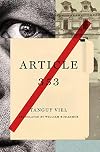
The book opens with a murder - a man pushed overboard deliberately. The rest of the narrative involves the murderer explaining himself: the man he killed arrived at a down-at-heels seaside town in the north of France and scammed the mayor and many of the residents into investing in a real estate scheme that was never going to get off the ground. It's a meditation on what happens when hope is replaced by delusion, on the loss of communal identity and sense of worth. For a very short book, it show more took me a long time to read. The ending is a surprise. show less
‘As long as I’m talking, as long as I haven’t finished talking, then right here, right in front of you, nothing can happen to me.’
This short novel by Tanguy Viel is one of those where you have to savour every word, for here there is subtlety and precision. Two men sit in a courtroom, a judge and Martial Kermeur, and Kermeur starts to tell his story, the story of his town and of his family, and how he came to be there. As the book progresses, we learn more about the case: a man has show more drowned, pushed off a boat by Kermeur himself, a fact he does not deny. The victim is Antoine Lazenec, a property developer who had come to a small town with grand plans, the repercussions of which rock the whole town and Kermeur's family as well.
In part the book reminded me of something by Beckett, or of Camus’ L’Etranger, with its pared back style and matter-of-fact first-person narrative voice. It is also part crime novel, and part psychological study of a man trapped in a situation from which he cannot escape. It might not be everyone’s cup of tea; there are no action sequences or very much that happens at all. It is all reported. For me, the strength of the book lies entirely there: it is understated, you have to listen to the words and imagine the situation as it plays out, feel the interaction between Kermeur and the judge. The book makes you face questions of justice, of right and wrong, of taking responsibility for one’s actions. It is a subtle, deceptively simple book, but one which deserves to be read. show less
This short novel by Tanguy Viel is one of those where you have to savour every word, for here there is subtlety and precision. Two men sit in a courtroom, a judge and Martial Kermeur, and Kermeur starts to tell his story, the story of his town and of his family, and how he came to be there. As the book progresses, we learn more about the case: a man has show more drowned, pushed off a boat by Kermeur himself, a fact he does not deny. The victim is Antoine Lazenec, a property developer who had come to a small town with grand plans, the repercussions of which rock the whole town and Kermeur's family as well.
In part the book reminded me of something by Beckett, or of Camus’ L’Etranger, with its pared back style and matter-of-fact first-person narrative voice. It is also part crime novel, and part psychological study of a man trapped in a situation from which he cannot escape. It might not be everyone’s cup of tea; there are no action sequences or very much that happens at all. It is all reported. For me, the strength of the book lies entirely there: it is understated, you have to listen to the words and imagine the situation as it plays out, feel the interaction between Kermeur and the judge. The book makes you face questions of justice, of right and wrong, of taking responsibility for one’s actions. It is a subtle, deceptively simple book, but one which deserves to be read. show less
Awards


You May Also Like


Associated Authors
Statistics
- Works
- 18
- Members
- 415
- Popularity
- #58,724
- Rating
- 3.5
- Reviews
- 24
- ISBNs
- 78
- Languages
- 8