
Michel Laclotte (1929–2021)
Author of Orsay: Paintings
About the Author
Works by Michel Laclotte
Le Siècle de Titien : l'âge d'or de la peinture à Venise [cat. exp., Paris, Grand Palais 9 mars-14 juin 1993] (1993) 27 copies, 2 reviews
The art and spirit of Paris 5 copies
The Art and Spirit of Paris 5 copies
Splendeur de Venise, 1500-1600 : peintures et dessins des collections publiques françaises : [expos (2005) 5 copies
Primitifs Français 3 copies
Orsay, La pintura 2 copies
THE BOOK OF ART: Vol 5: 2 copies
le louvre: la peinture etrangere 2 copies
Musée du louvre pintura 1 copy
La peinture russe à l'époque romantique. Exposition Galeries Nationales du Grand Palais, novembre 1976 -février 1977. (1976) 1 copy, 1 review
Petite larousse de la peinture (assistéde Jean Pierre Cuzin conservateur au musée du Louvre (1979) 1 copy
L'ecole d'Avignon 1 copy
Musee Du Louvre Pintura 1 copy
L'École d'Avignon : la peinture en Provence aux XIVe et XVe siècles / par Michel Laclotte 1 copy, 1 review
Musee du Louvre. 1 copy
Musée du Louvre : peintures 1 copy
Le Musee d'Orsay 1 copy
Associated Works
Impressionist and Post-Impressionist Masterpieces at the Musée d'Orsay (1987) — Foreword, some editions — 124 copies
Tagged
Common Knowledge
- Legal name
- Laclotte, Michel René
- Birthdate
- 1929-10-27
- Date of death
- 2021-08-11
- Gender
- male
- Education
- Ecole du Louvre, Paris (Diplôme d’études supérieures)
Université de Paris (Licence, Lettres)
Lycée Pasteur, Neuilly-sur-Seine - Occupations
- professor
museum administrator
art historian
museum curator - Organizations
- Musée du Louvre
Musée d'Orsay - Awards and honors
- Commandeur de la Légion d’honneur
Commandeur de l’ordre national du Mérite et des Arts et des Lettres, Chevalier de l'ordre du British Empire
Commandeur de l’ordre des Arts et des Lettres
Chevalier de l'ordre du British Empire
Grand prix national des musées (1993)
Université de Sienne, Italie (Docteur honoris causa) - Nationality
- France
- Birthplace
- Saint-Malo, France
- Places of residence
- Paris, France
- Place of death
- Montauban, France
- Map Location
- France
- Associated Place (for map)
- France
Members
Reviews
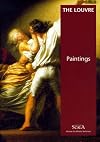
On August 10, 1793, a wondrous building was made open to the public. Exactly one year before, Louis XVI was imprisoned and the monarchy felled. The National Assembly urged that the works of art hoarded by Louis and previous kings be collected and displayed so that they could preserve the national memory. At it’s opening, The Louvre showcased 537 paintings and 184 other objects of art. From there started an interesting and sometimes sordid history. Michel Laclotte and Jean-Pierre Cuzin’s show more The Louvre gives a history of each of the museum’s major collection, but more importantly, displays a wide variety of the museum’s pieces in glorious color plates.
The book is pretty straightforward. There is a cursory history of the collection and the building, and then each collection is given a sizable chunk of the book. Half the book is given over to French painting and other half to other European works of art. The authors discuss how each period’s works started in the collection and then gives a fair amount of detail on how they’ve progressed over the years. One of the more interesting bits of information that the text sometimes glosses over is that people used to pay estate or other taxes by handing over works of art to the museum. While each collection’s history is plenty intriguing, it’s the full color plates of works that make the book worth thumbing through. It will never replace actually going to the museum, but centuries’ worth of art is contained in this book, and that is worth at least the price of admission. show less
The book is pretty straightforward. There is a cursory history of the collection and the building, and then each collection is given a sizable chunk of the book. Half the book is given over to French painting and other half to other European works of art. The authors discuss how each period’s works started in the collection and then gives a fair amount of detail on how they’ve progressed over the years. One of the more interesting bits of information that the text sometimes glosses over is that people used to pay estate or other taxes by handing over works of art to the museum. While each collection’s history is plenty intriguing, it’s the full color plates of works that make the book worth thumbing through. It will never replace actually going to the museum, but centuries’ worth of art is contained in this book, and that is worth at least the price of admission. show less

very well organized and well written. good photos. perfect art book.
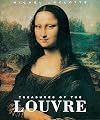
30.5 x 23 cm (12" x 9") ISBN 0896600637 and 0896600378 Artabras 1993, 280 pages, Paperback
Containing work form all areas of the Louvre's collections, this is fully illustrated throughout, in fact there is little else besides the illustrations here with the introduction just a little over a page in length, plus an index to the work illustrated.
The work is divided into sections: Oriental Antiques (pp 9-34); Egyptian Antiques (pp 35-64); Greek, Etruscan and Roman Antiques (pp 65-92); show more Decorative Arts (pp 93-114); Sculpture (pp 115-140); European Paintings (pp 141-246); Drawings (pp 247-275).
With the illustrations invariably either half of full-page in size I estimate there are about 400 pieces illustrated (forgive if I don't count them), each with a full caption but nothing more. Many of the three-dimensional pieces are shown as cut-outs so there is nothing to detract from the image. The quality of printing is good with reasonable detail even in the very dark areas of paintings, and the colours appear convincing.
If you are after a good selection of the full range of the Louvre's collections this is a good place to start, but of course if you want any commentary then you 'd best look elsewhere. show less
Containing work form all areas of the Louvre's collections, this is fully illustrated throughout, in fact there is little else besides the illustrations here with the introduction just a little over a page in length, plus an index to the work illustrated.
The work is divided into sections: Oriental Antiques (pp 9-34); Egyptian Antiques (pp 35-64); Greek, Etruscan and Roman Antiques (pp 65-92); show more Decorative Arts (pp 93-114); Sculpture (pp 115-140); European Paintings (pp 141-246); Drawings (pp 247-275).
With the illustrations invariably either half of full-page in size I estimate there are about 400 pieces illustrated (forgive if I don't count them), each with a full caption but nothing more. Many of the three-dimensional pieces are shown as cut-outs so there is nothing to detract from the image. The quality of printing is good with reasonable detail even in the very dark areas of paintings, and the colours appear convincing.
If you are after a good selection of the full range of the Louvre's collections this is a good place to start, but of course if you want any commentary then you 'd best look elsewhere. show less

not my favourite paintings but very good commentary
You May Also Like


Associated Authors
Statistics
- Works
- 74
- Also by
- 5
- Members
- 1,251
- Popularity
- #20,508
- Rating
- 4.0
- Reviews
- 19
- ISBNs
- 108
- Languages
- 6

