
Wolfgang Langewiesche (1907–2002)
Author of Stick and Rudder: An Explanation of the Art of Flying
About the Author
Image credit: Leighton Collins and Wolfgang Langewiesche
Works by Wolfgang Langewiesche
Associated Works
Tagged
Common Knowledge
- Legal name
- Langewiesche-Brandt, Wolfgang Ernst
- Birthdate
- 1907
- Date of death
- 2002-02-09
- Gender
- male
- Occupations
- aviator
author
journalist
test pilot - Relationships
- Langewiesche, William (son)
- Nationality
- Germany
- Birthplace
- Düsseldorf, Nordrhein-Westfalen, Deutschland
- Places of residence
- USA
- Associated Place (for map)
- Germany
Members
Reviews
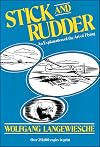
I’ve always been fascintated by flying and, since building myself a computer that can cope with it, I’ve been using a flight simulator to teach myself how to fly. Stick and Rudder is one of those texts that anyone learning to fly is recommended to read. It was first published in 1944 when getting people (read: men) to fly was somewhat of a US government requirement.
Getting people in the air was one thing. Helping them stay there was an increasing problem. The world had rushed headlong show more into flight but hadn’t put as much thought into what people might do while they were up there. It turned out that they were likely to do many things that seemed logical but were actually going to kill them.
Along came Wolfgang who compiled articles he’d written for aviation magazines along with a section by a colleague and a classic was born. The fact that it is still widely read today when aviation technology has changed beyond recognition belies the fact that, when it comes down to it, the fundamentals of flying remain unchanged.
As someone who has literally only had 2 hours and 55 minutes’ real flying time (Piper PA-28) in his life (and prob. over 100 on a sim), Langewiesche’s lessons are invaluable. The basic premise is this: it’s all about making sure that your angle of attack isn’t too high. I don’t think there was any situation described in the book in which death wasn’t immediately preceeded by stalling and stalling by too high an angle of attack.
If the phrase “angle of attack” is a mystery to you, it’s either because you have no interest in flying and don’t need to know or because you do have an interest in flying but have been learning the wrong things. It’s you, budding aviator, who needs to get a copy of this. Some it is a bit repetitive, but that’s probably necessary. It’s essential reading.
You can probably leave aside all the quaint advice about tightening the stays between your wings and landing aircraft with wheels under the tail. However, you ignore the rest of the book at your peril … and that of anyone with you or beneath you.
For more reviews and the 1001 Books Spreadsheet, visit http://arukiyomi.com show less
Getting people in the air was one thing. Helping them stay there was an increasing problem. The world had rushed headlong show more into flight but hadn’t put as much thought into what people might do while they were up there. It turned out that they were likely to do many things that seemed logical but were actually going to kill them.
Along came Wolfgang who compiled articles he’d written for aviation magazines along with a section by a colleague and a classic was born. The fact that it is still widely read today when aviation technology has changed beyond recognition belies the fact that, when it comes down to it, the fundamentals of flying remain unchanged.
As someone who has literally only had 2 hours and 55 minutes’ real flying time (Piper PA-28) in his life (and prob. over 100 on a sim), Langewiesche’s lessons are invaluable. The basic premise is this: it’s all about making sure that your angle of attack isn’t too high. I don’t think there was any situation described in the book in which death wasn’t immediately preceeded by stalling and stalling by too high an angle of attack.
If the phrase “angle of attack” is a mystery to you, it’s either because you have no interest in flying and don’t need to know or because you do have an interest in flying but have been learning the wrong things. It’s you, budding aviator, who needs to get a copy of this. Some it is a bit repetitive, but that’s probably necessary. It’s essential reading.
You can probably leave aside all the quaint advice about tightening the stays between your wings and landing aircraft with wheels under the tail. However, you ignore the rest of the book at your peril … and that of anyone with you or beneath you.
For more reviews and the 1001 Books Spreadsheet, visit http://arukiyomi.com show less

There's not much I can add to the discussion about the relevancy of this book, almost 75 years after it was first written. Much of it is centered about important flight fundamentals that should honestly be included in any flight training. (Thankfully, my CFIs do a great job and I did not find any of the "shocking" truths about the airplane controls to be actually all that radical, but what I already knew to be true.)
One thing that may not be terribly relevant today is the discussions on show more landing, as they pertain mostly to taildraggers. Not that people don't fly conventional-gear aircraft anymore, it is just less common. Nose-wheel airplanes are sort of mentioned as novelty items. Lots of discussion is also made on rudderless and "stall-proof" airplanes, of which I haven't encountered any. Not sure if they were just hyped up or pipe dreams, but as far as my limited knowledge of airplanes goes, any airplane can have its critical angle of attack exceeded by any idiot, and I have yet to meet an airplane without a rudder.
I would say if you skip any section of this book, it would be the last few chapters. Chapter 18 discusses flight safety. It is definitely dated. Read the Nall Report instead. Really. The author of the chapter states that weather is not a deadly problem for most pilots. I disagree. Chapter 19 is mostly a discussion of v-speeds, which is a useful discussion, but the author makes it sound as if it's impossible to determine what these numbers actually are for any given airplane. I'm not sure if AFM/POH documents didn't exist back "in the day" or if they just sucked, but v-speeds are easy to determine for modern airplanes.
All that said, I highly recommend reading this book to any pilot, student or not. You'll probably find out something new or at least have a better conceptual understanding of what you're doing when you're up in the air, and that is always valuable. show less
One thing that may not be terribly relevant today is the discussions on show more landing, as they pertain mostly to taildraggers. Not that people don't fly conventional-gear aircraft anymore, it is just less common. Nose-wheel airplanes are sort of mentioned as novelty items. Lots of discussion is also made on rudderless and "stall-proof" airplanes, of which I haven't encountered any. Not sure if they were just hyped up or pipe dreams, but as far as my limited knowledge of airplanes goes, any airplane can have its critical angle of attack exceeded by any idiot, and I have yet to meet an airplane without a rudder.
I would say if you skip any section of this book, it would be the last few chapters. Chapter 18 discusses flight safety. It is definitely dated. Read the Nall Report instead. Really. The author of the chapter states that weather is not a deadly problem for most pilots. I disagree. Chapter 19 is mostly a discussion of v-speeds, which is a useful discussion, but the author makes it sound as if it's impossible to determine what these numbers actually are for any given airplane. I'm not sure if AFM/POH documents didn't exist back "in the day" or if they just sucked, but v-speeds are easy to determine for modern airplanes.
All that said, I highly recommend reading this book to any pilot, student or not. You'll probably find out something new or at least have a better conceptual understanding of what you're doing when you're up in the air, and that is always valuable. show less
A Flier's World (1943) [collection of articles published in Life & Harper's by Wolfgang Langewiesche
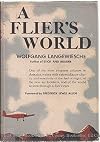
Explains what makes an airplane fly and describes the impressions of an airman.
A collection of articles on flight which embrace not only the scientific aspects but also personal adventures and interpretations. For the author, through years of flying, can tell, almost in layman's terms, the secrets of air, structure and construction of planes; tales of the pioneers; the paradoxes and contradictions of familiar logic and aerial sensitivity; -- he makes clear the progress from the theoretical show more to the practical as years of experience uncovered facts that could be applied to airborne actuality. There is a section on ocean flights and the ""how-gozit"" of commercial flying; on weather, wind and allied fronts; on an air view of the world and its history; on private flying; A book for the enthusiast, professional or amateur, which should indicate a wide market, and almost as interesting for the both-feet-on-the-ground reader. show less
A collection of articles on flight which embrace not only the scientific aspects but also personal adventures and interpretations. For the author, through years of flying, can tell, almost in layman's terms, the secrets of air, structure and construction of planes; tales of the pioneers; the paradoxes and contradictions of familiar logic and aerial sensitivity; -- he makes clear the progress from the theoretical show more to the practical as years of experience uncovered facts that could be applied to airborne actuality. There is a section on ocean flights and the ""how-gozit"" of commercial flying; on weather, wind and allied fronts; on an air view of the world and its history; on private flying; A book for the enthusiast, professional or amateur, which should indicate a wide market, and almost as interesting for the both-feet-on-the-ground reader. show less
I thought this was a book about drag queens. Turns out it's about flying. I suspect that in the final analysis, the two aren't very different. I'll let you all know when I finish.
***
"Someone once said that if you will look at an airplane long enough, sit in it long enough, fool with the controls long enough you will decide you can fly it."
Not this cowboy. Call Bernoulli's Principle whatever you want, it's still voodoo.
***
"Someone once said that if you will look at an airplane long enough, sit in it long enough, fool with the controls long enough you will decide you can fly it."
Not this cowboy. Call Bernoulli's Principle whatever you want, it's still voodoo.
Lists
You May Also Like


Associated Authors
Statistics
- Works
- 7
- Also by
- 3
- Members
- 560
- Popularity
- #44,619
- Rating
- 4.3
- Reviews
- 11
- ISBNs
- 9
- Favorited
- 1