
Ken Mochizuki (1954–2025)
Author of Baseball Saved Us
About the Author
Ken Mochizuki was born in Seattle, Washington in 1954. He grew up in the Beacon Hill neighborhood of south Seattle. He graduated from the University of Washington in 1976 with a BA in Communications. Mochizuki was a journalist and actor for many years before writing his picture books and novel, show more Beacon Hill Boys. (Bowker Author Biography) show less
Disambiguation Notice:
(yid) VIAF:31194217
Image credit: via author's website
Works by Ken Mochizuki
Associated Works
On the Wings of Peace: Writers and Illustrators Speak Out for Peace, in Memory of Hiroshima and Nagasaki (1995) — Contributor — 105 copies, 1 review
Tagged
Common Knowledge
- Legal name
- Mochizuki, Ken Steven
- Other names
- Izuki, Steven
- Birthdate
- 1954-05-18
- Date of death
- 2025-09-20
- Gender
- male
- Education
- Cleveland High School, Seattle, Washington
University of Washington (BA|Communications) - Occupations
- Asian American advocate
actor
newspaper journalist
children's book author
Asian Pacific American historian - Organizations
- East/West Players, Los Angeles
International Examiner, Seattle
Northwest Nikkei - Agent
- Rosemary Stimola
- Cause of death
- esophageal cancer
- Nationality
- USA
- Birthplace
- Seattle, Washington, USA
- Associated Place (for map)
- Washington, USA
Members
Reviews

A young Japanese-American boy narrates this story of his experiences in an internment camp during World War II, describing how his father helped to create a baseball field and league in the camp, and how he played with one of the children's teams. Not very good at first, the boy improves, and when he and his family return home after the war, his new skills give him a means of finding his place with his peers...
Having recently read Marissa Moss's Barbed Wire Baseball, a picture-book biography show more of Kenichi "Zeni" Zenimura, a Japanese-American baseball player who did indeed create a baseball league at the Gila River internment camp, I was reminded of Baseball Saved Us, which I read years ago, when it first came out. It's clear that Ken Mochizuki's fictional story is inspired by Zenimura's real life one, although his own parents' experiences in the Minodoka camp in Idaho must surely have also been an influence. I found the story here moving, although I did think that the transition from camp to post-camp life was very abrupt. One moment the boy is hitting a home run in a baseball game at the camp, and then on the next page his family is back home on the west coast. Although this was rather jarring - there needed to be some bridging incident, to tie the two parts of the story together, I think - I nevertheless found the narrative engaging, and entered into the main character's feelings throughout. The artwork was likewise engrossing, building upon the emotional undercurrents in each scene. Created in an unusual medium - scratched out from encaustic beeswax on paper, and then colored with oil paint - it was very expressive, and often had an interesting sepia tone that matched the story quite well. All in all, a solid children's book about a very difficult and shameful moment in American history, one I would recommend to picture-book readers looking for stories about the internment of the Japanese in World War II, or about baseball as a meaningful experience in a child's life. show less
Having recently read Marissa Moss's Barbed Wire Baseball, a picture-book biography show more of Kenichi "Zeni" Zenimura, a Japanese-American baseball player who did indeed create a baseball league at the Gila River internment camp, I was reminded of Baseball Saved Us, which I read years ago, when it first came out. It's clear that Ken Mochizuki's fictional story is inspired by Zenimura's real life one, although his own parents' experiences in the Minodoka camp in Idaho must surely have also been an influence. I found the story here moving, although I did think that the transition from camp to post-camp life was very abrupt. One moment the boy is hitting a home run in a baseball game at the camp, and then on the next page his family is back home on the west coast. Although this was rather jarring - there needed to be some bridging incident, to tie the two parts of the story together, I think - I nevertheless found the narrative engaging, and entered into the main character's feelings throughout. The artwork was likewise engrossing, building upon the emotional undercurrents in each scene. Created in an unusual medium - scratched out from encaustic beeswax on paper, and then colored with oil paint - it was very expressive, and often had an interesting sepia tone that matched the story quite well. All in all, a solid children's book about a very difficult and shameful moment in American history, one I would recommend to picture-book readers looking for stories about the internment of the Japanese in World War II, or about baseball as a meaningful experience in a child's life. show less
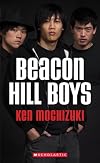
Dan Inagaki is 16 in early 1970s Seattle. He chafes under the Japanese ways of his parents and resents comparisons to his older brother Brad, an athlete and scholar. Dan and his friends float through life, frustrated at the opportunities they'll never have and the stereotypes they can't and won't live up to. Dan is particularly interested in the Japanese internment and his father's war experiences but cannot get the full story out of anyone. It's his comparative American cultures class that show more begins to give him a glimpse of his parents' histories. show less
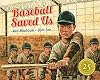
Baseball Saved Us - Mochizuki
5 stars
This is a classic picture book first published in 1993. The text, written at a third or fourth grade level, is a fictionalized first person memoir of Japanese American incarceration during WW2. The narrator is a school age child who begins the story with the stark reality of the relocation. The simple text conveys the shame, anger, and physical discomfort along with the disintegration of the family as life in the concentration camp becomes their reality. show more Realizing the need for constructive occupation and moral boosting, the boy’s father builds a baseball diamond and organizes a league.
The story is well written, but the illustrations make this book timeless. All of the pictures are sepia toned leaving no doubts of the heat and dust of the internment camp. Pictures of the baseball diamond include the surrounding barbed wire fence and the guard tower. The best illustrations are close ups of the young Shorty at bat. (The narrator is never named. Shorty is a racist nickname that followed him even after the war.) His sheer determination to hit the ball over the wires and past the guard tower is written on his face. This book is a bit too long and wordy for me to have used it as a read aloud with kindergarteners, but the pictures tell the story and younger children responded to them. show less
5 stars
This is a classic picture book first published in 1993. The text, written at a third or fourth grade level, is a fictionalized first person memoir of Japanese American incarceration during WW2. The narrator is a school age child who begins the story with the stark reality of the relocation. The simple text conveys the shame, anger, and physical discomfort along with the disintegration of the family as life in the concentration camp becomes their reality. show more Realizing the need for constructive occupation and moral boosting, the boy’s father builds a baseball diamond and organizes a league.
The story is well written, but the illustrations make this book timeless. All of the pictures are sepia toned leaving no doubts of the heat and dust of the internment camp. Pictures of the baseball diamond include the surrounding barbed wire fence and the guard tower. The best illustrations are close ups of the young Shorty at bat. (The narrator is never named. Shorty is a racist nickname that followed him even after the war.) His sheer determination to hit the ball over the wires and past the guard tower is written on his face. This book is a bit too long and wordy for me to have used it as a read aloud with kindergarteners, but the pictures tell the story and younger children responded to them. show less
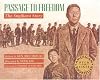
If you ever doubt your faith in mankind, this true story will restore it for you.
Passage to Freedom tells the amazing story of Chiune Sugihara, who single-handedly saved thousands of Jews from the Nazis. His story was told by his son Hiroki to the author, based on Hiroki's recollections. Hiroki was five in 1940 when his father, Chiune Sugihara, who was the Japanese consul in Lithuania, was begged by Jewish refugees fleeing the Nazi onslaught for visas to escape. The Sugiharas were stationed show more in Kaunas, the temporary capital of Lithuania, situated between Germany and the Soviet Union. The Jews who came to them were from Poland. Ironically, the Lithuanian Jews were not allowed to leave, but at this time, in June, 1940, the Soviets agreed to let Polish Jews leave if they could get travel documents.
Chiune cabled his government for permission, but it was denied. He cabled twice more, and again his government said "absolutely not." But he could not say no to what was right. As the Japanese proverb said, “Even a hunter cannot kill a bird that comes to him for refuge.” He gathered his family together and explained to them:
"I have to do something. I may have to disobey my government, but if I don’t I will be disobeying God.”
As Ron Greene reports in a book on Chiune Sugihara:
"For 29 days, from July 31 to August 28, 1940, Mr. and Mrs. Sugihara sat for endless hours writing and signing visas by hand. Hour after hour, day after day, for these three weeks, they wrote and signed visas. They wrote over 300 visas a day, which would normally be one month's worth of work for the consul. Yukiko also helped him register these visas. At the end of the day, she would massage his fatigued hands. He did not even stop to eat. His wife supplied him with sandwiches.” (VISAS FOR LIFE: The Remarkable Story of Chiune and Yukiko Sugihara by Ron Greene.) "
As Passage to Freedom ends, the family is being transferred to Berlin. Even as the train pulled out, Chiune was still signed visas, handing the permission papers out through the windows of the train. Hiroki said, "Back then, I did not fully understand what the three of them [his mother, father, and aunt] had done, or why it was so important. I do now.”
An afterword by (the adult) Hiroki explains that following their departure, the family was imprisoned for 18 months in a Soviet internment camp, and thereafter, Chiune was asked to resign from diplomatic service. In the 1960’s, Chiune started hearing from people who called themselves “Sugihara survivors” and he received a “Righteous Among Nations” Award from the Holocaust organization in Israel. He was the first and only Asian to receive this honor.
The sepia-toned illustrations by talented Dom Lee are excellent, and seem very realistic. Resembling photographs from the 1940’s, they were created by etching on beeswax applied to paper, and then painting over the etchings.
Evaluation: I cannot stress how inspirational this story is. As Hiroki says, “It is a story that proves that one person can make a difference.” And in fact, the book is dedicated not only to Chiune Sugihara and his family, but also “to all others who place the welfare of others before themselves.” Today, two generations later, it is estimated that there may be more than 40,000 who owe their lives to the Sugiharas.
Although I recommend this book for all ages, it would make an excellent introduction to the Holocaust for children. (There is nothing explicitly frightening here; just the acknowledgment that these people would die if not helped by the Sugiharas.)
Certainly more people would know about this story if Steven Spielberg made a movie about it! (Sugihara has been called “the Japanese Schindler.”) But PBS did make a documentary. You can watch an excerpt here. Even this 6 minute clip will affect you powerfully. show less
Passage to Freedom tells the amazing story of Chiune Sugihara, who single-handedly saved thousands of Jews from the Nazis. His story was told by his son Hiroki to the author, based on Hiroki's recollections. Hiroki was five in 1940 when his father, Chiune Sugihara, who was the Japanese consul in Lithuania, was begged by Jewish refugees fleeing the Nazi onslaught for visas to escape. The Sugiharas were stationed show more in Kaunas, the temporary capital of Lithuania, situated between Germany and the Soviet Union. The Jews who came to them were from Poland. Ironically, the Lithuanian Jews were not allowed to leave, but at this time, in June, 1940, the Soviets agreed to let Polish Jews leave if they could get travel documents.
Chiune cabled his government for permission, but it was denied. He cabled twice more, and again his government said "absolutely not." But he could not say no to what was right. As the Japanese proverb said, “Even a hunter cannot kill a bird that comes to him for refuge.” He gathered his family together and explained to them:
"I have to do something. I may have to disobey my government, but if I don’t I will be disobeying God.”
As Ron Greene reports in a book on Chiune Sugihara:
"For 29 days, from July 31 to August 28, 1940, Mr. and Mrs. Sugihara sat for endless hours writing and signing visas by hand. Hour after hour, day after day, for these three weeks, they wrote and signed visas. They wrote over 300 visas a day, which would normally be one month's worth of work for the consul. Yukiko also helped him register these visas. At the end of the day, she would massage his fatigued hands. He did not even stop to eat. His wife supplied him with sandwiches.” (VISAS FOR LIFE: The Remarkable Story of Chiune and Yukiko Sugihara by Ron Greene.) "
As Passage to Freedom ends, the family is being transferred to Berlin. Even as the train pulled out, Chiune was still signed visas, handing the permission papers out through the windows of the train. Hiroki said, "Back then, I did not fully understand what the three of them [his mother, father, and aunt] had done, or why it was so important. I do now.”
An afterword by (the adult) Hiroki explains that following their departure, the family was imprisoned for 18 months in a Soviet internment camp, and thereafter, Chiune was asked to resign from diplomatic service. In the 1960’s, Chiune started hearing from people who called themselves “Sugihara survivors” and he received a “Righteous Among Nations” Award from the Holocaust organization in Israel. He was the first and only Asian to receive this honor.
The sepia-toned illustrations by talented Dom Lee are excellent, and seem very realistic. Resembling photographs from the 1940’s, they were created by etching on beeswax applied to paper, and then painting over the etchings.
Evaluation: I cannot stress how inspirational this story is. As Hiroki says, “It is a story that proves that one person can make a difference.” And in fact, the book is dedicated not only to Chiune Sugihara and his family, but also “to all others who place the welfare of others before themselves.” Today, two generations later, it is estimated that there may be more than 40,000 who owe their lives to the Sugiharas.
Although I recommend this book for all ages, it would make an excellent introduction to the Holocaust for children. (There is nothing explicitly frightening here; just the acknowledgment that these people would die if not helped by the Sugiharas.)
Certainly more people would know about this story if Steven Spielberg made a movie about it! (Sugihara has been called “the Japanese Schindler.”) But PBS did make a documentary. You can watch an excerpt here. Even this 6 minute clip will affect you powerfully. show less
Lists
Awards


You May Also Like


Associated Authors
Statistics
- Works
- 11
- Also by
- 1
- Members
- 2,823
- Popularity
- #9,088
- Rating
- 4.3
- Reviews
- 201
- ISBNs
- 69
- Languages
- 2
- Favorited
- 1