
Debra Austin
Author of Daughter of Kura
Works by Debra Austin
Tagged
Common Knowledge
- Gender
- female
- Education
- BS|Physics
- Occupations
- Obstetrician
writer - Places of residence
- California, USA
- Associated Place (for map)
- California, USA
Members
Reviews
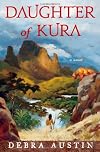
Daughter of Kura is a coming-of-age story set in southeastern Africa during prehistoric times. Snap's grandmother is the Mother of Kura, the leader of their ukoo. One day Snap will be the clan's Mother, but for now she is concerned with having to choose her winter mate for the first time.
At the end of the summer, the Kura women return to their village from their nomadic harvesting and men from other clans arrive in the hopes of being bonded to one of the Kura women for the winter. While the show more bonding is usually a cause for celebration, sadness prevails in Snap's kao after the unexpected death of her mother's usual mate. Whistle (Snap's mother) chooses a newcomer named Bapoto who is famed for his hunting skills, while Snap chooses a young long-walker named Ash.
While Snap and Ash seem to be a perfect match, there is tension in the kao. Bapoto has strange ideas and is constantly talking about the Great One. He encouraged the men to perform rituals before their hunts. He expects others to thank the Great One for any and all blessings and becomes upset with anyone who does not acquiesce to his request. He also begins to receive visions from the Great One, which only he can interpret. After the death of Snap's grandmother, Whistle becomes Mother and Bapoto the highest ranking male. In his new position Bapoto is able to exert much more control over the people of Kura. When Snap questions Bapoto one too many times, she must risk her life to be true to herself and her ukoo's traditions.
Daughter of Kura was very slow going for me at the start (this was confounded by the fact that the majority of the characters have sound names like rustle and warble making it difficult for me to keep the secondary characters straight), but once I got into the story, I found it very compelling. Despite the fact that Snap is in many ways very different from the reader, she is surprisingly sympathetic.
The world Austin imagines for Snap and the rest of the Kura is finely-wrought and her author's note serves to put it in context. Austin notes that "the geologic features, technologies, and social systems that form the structure of [the protagonist's] life are constructed from a combination of reasonably secure scientific facts, plausible theories, and wild (but not provably wrong) speculation" (303). show less
At the end of the summer, the Kura women return to their village from their nomadic harvesting and men from other clans arrive in the hopes of being bonded to one of the Kura women for the winter. While the show more bonding is usually a cause for celebration, sadness prevails in Snap's kao after the unexpected death of her mother's usual mate. Whistle (Snap's mother) chooses a newcomer named Bapoto who is famed for his hunting skills, while Snap chooses a young long-walker named Ash.
While Snap and Ash seem to be a perfect match, there is tension in the kao. Bapoto has strange ideas and is constantly talking about the Great One. He encouraged the men to perform rituals before their hunts. He expects others to thank the Great One for any and all blessings and becomes upset with anyone who does not acquiesce to his request. He also begins to receive visions from the Great One, which only he can interpret. After the death of Snap's grandmother, Whistle becomes Mother and Bapoto the highest ranking male. In his new position Bapoto is able to exert much more control over the people of Kura. When Snap questions Bapoto one too many times, she must risk her life to be true to herself and her ukoo's traditions.
Daughter of Kura was very slow going for me at the start (this was confounded by the fact that the majority of the characters have sound names like rustle and warble making it difficult for me to keep the secondary characters straight), but once I got into the story, I found it very compelling. Despite the fact that Snap is in many ways very different from the reader, she is surprisingly sympathetic.
The world Austin imagines for Snap and the rest of the Kura is finely-wrought and her author's note serves to put it in context. Austin notes that "the geologic features, technologies, and social systems that form the structure of [the protagonist's] life are constructed from a combination of reasonably secure scientific facts, plausible theories, and wild (but not provably wrong) speculation" (303). show less
 This review was written for LibraryThing Early Reviewers.
I really enjoyed this book. It was quite different and made me have to stretch my way of thinking to try to imagine what life may have been like for our ancesters half a million years ago.
Snap is a girl just entering the realm of adults. She lives in a small village in Africa that has a matriarchal form of leadership. Snap's grandmother and eventually her mother are the leaders of their tribe and hold the highest rank. Eventually Snap is destined to hold this same rank, that of being the show more Mother of their village, Kura. That is until Bapoto arrives.
Bapoto is essentially the prehistoric version of a sociopathic, narcissistic cult leader who uses his beliefs to gain power and to subjegate women. (Funny how some things literally NEVER change!) He comes to the village and takes Snap's mother has his mate, and deviously tries to turn everyone in the village to his beliefs in the "great one," which of course includes the idea that it's the men who should be in power. Snap cannot understand how ANYONE could believe in this "spirit." But many people adopt Bapoto's beliefs and Snap is forced to flee her village to start her own settlement with her mate, Ash. The rest of the story is about how Snap creates a new life for herself and her family, and their attempts to defeat Bapoto.
I got very hooked on this story and finished it in two days. It's not great literature, but it's original, inventive, and engrossing. I'm not sure if the author meant it to be, but more than just a coming of age story, this book is a cautionary tale about how religion may have been created by men in order to subjegate women and take their power in society. It's certainly an interesting tale and worth your time. This book entertained me and made me think--an enjoyable combination. show less
Snap is a girl just entering the realm of adults. She lives in a small village in Africa that has a matriarchal form of leadership. Snap's grandmother and eventually her mother are the leaders of their tribe and hold the highest rank. Eventually Snap is destined to hold this same rank, that of being the show more Mother of their village, Kura. That is until Bapoto arrives.
Bapoto is essentially the prehistoric version of a sociopathic, narcissistic cult leader who uses his beliefs to gain power and to subjegate women. (Funny how some things literally NEVER change!) He comes to the village and takes Snap's mother has his mate, and deviously tries to turn everyone in the village to his beliefs in the "great one," which of course includes the idea that it's the men who should be in power. Snap cannot understand how ANYONE could believe in this "spirit." But many people adopt Bapoto's beliefs and Snap is forced to flee her village to start her own settlement with her mate, Ash. The rest of the story is about how Snap creates a new life for herself and her family, and their attempts to defeat Bapoto.
I got very hooked on this story and finished it in two days. It's not great literature, but it's original, inventive, and engrossing. I'm not sure if the author meant it to be, but more than just a coming of age story, this book is a cautionary tale about how religion may have been created by men in order to subjegate women and take their power in society. It's certainly an interesting tale and worth your time. This book entertained me and made me think--an enjoyable combination. show less
This review was written for LibraryThing Early Reviewers.
Daughter of Kura by Debra Austin is a story about a prehistoric girl called Snap who lives in a matriarchal society of hunters and gatherers in Southeast Africa. Their lives rotate around the seasons, with important ceremonies such as the Naming being held in the Spring and the Bonding in the Fall. She is the third most important female in her community. However, when her grandmother dies and her mother takes a mate who has strange, new ideas and is forcing these new ideas upon her Mother show more and the rest of the people, Snap feels her way of life threatened. When her own mate doesn’t return in time for the Bonding Ceremony, a new mate is forced upon her. Unable to accept this final insult to her position, she strikes out on her own.
The author tells an interesting story and although most of the details are speculation, it all flows together well. This is a story of what life might have been like thousands of years ago and I found it an enjoyable read. show less
The author tells an interesting story and although most of the details are speculation, it all flows together well. This is a story of what life might have been like thousands of years ago and I found it an enjoyable read. show less
The premise behind Daughter of Kura really intrigued me and I had high hopes for it. But…I just felt that everything was a bit forced. The writing was okay, but the author kept repeating herself in certain things like the bits about the society’s sign language and such but did not really describe the differences in the characters. I found some of the circumstances a bit hard to believe. Granted, it’s fiction, but it was sort of depicted as a “history” so even with suspension of show more belief, I just couldn’t buy some scenarios. Maybe it was the fact that the plot was somewhat thin and there wasn’t much to grab onto. I guess I was expecting this book to be more character and plot driven rather than morals driven. I’m sure there are many people that would enjoy it more, I just unfortunately wasn’t one of them. show less
This review was written for LibraryThing Early Reviewers.Lists
Statistics
- Works
- 1
- Members
- 84
- Popularity
- #216,910
- Rating
- 3.4
- Reviews
- 13
- ISBNs
- 9
- Languages
- 2
