
Ronald Carter
Author of Cambridge Grammar of English Paperback with CD ROM: A Comprehensive Guide
About the Author
Ronald Carter is Professor of Modern English Language at the University of Nottingham, UK, and has written and edited more than 30 books, including most recently Language and Creativity (2004). He is the author and editor of 12 books with Routledge, and has edited and co-edited five Routledge show more series. show less
Image credit: The University of Nottingham
Works by Ronald Carter
Seeing Through Language: A Guide To Styles Of English Writing (The Language Library) (1990) 30 copies
Sailing Ships 1 copy
Associated Works
Tagged
Common Knowledge
- Gender
- male
Members
Reviews
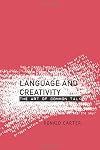
What is being creative? For many, the gift of a few geniuses, miraculously inspired and whose exceptional talents serve only purely aesthetical benefits.
Well, drawing upon CANCODE (Cambridge And Nottingham Corpus of Discourses in English) a massive computerised source of data containing several millions of utterances in British English and recorded in various contexts, the linguist Ronald Carter brushes aside this post-Romantic vision of creativity to demonstrate that, it is in fact a show more feature of us all that serves deeply socio-cultural purposes, beyond the mere pleasure it procures.
The millions of conversations provided by CANCODE show we are indeed delivering performances after performances every time we are conversing. From the wealth of figures of speech, other numerous plays with languages and, up to certain metalinguistic characteristics the author insists: we do not only use language, we create and re-create it constantly. Creativity is therefore not the sole feature of isolated individuals serving solely artistic purposes only but, also, a sociocultural fact inherent to us all.
Far from devaluing the creativity of artists whose works survived the test of time -to become part of a canon, for instance (not everything worth the same!)- Ronald Carter on the contrary invites us here to recognise and evaluate to its just value creativity as its expresses itself in our everyday interactions, yet considered dull and devoid of interest. Such an approach does more than enlightening with a new perspective our conversations. It also opens new paths in all the fields concerned by creativity per se -from psychology to art and literature.
Sure, this is a difficult book! It's loaded with linguistic terminology and not quite engaging, but for whose willing to digest it (200 pages are not that bad!) it interestingly (and convincingly!) smashes into pieces a whole idea surrounding the act of creating, both in its scope and its purposes. Beyond its academic rigour, here's therefore a must read for anyone baffled by the notion of creativity. show less
Well, drawing upon CANCODE (Cambridge And Nottingham Corpus of Discourses in English) a massive computerised source of data containing several millions of utterances in British English and recorded in various contexts, the linguist Ronald Carter brushes aside this post-Romantic vision of creativity to demonstrate that, it is in fact a show more feature of us all that serves deeply socio-cultural purposes, beyond the mere pleasure it procures.
The millions of conversations provided by CANCODE show we are indeed delivering performances after performances every time we are conversing. From the wealth of figures of speech, other numerous plays with languages and, up to certain metalinguistic characteristics the author insists: we do not only use language, we create and re-create it constantly. Creativity is therefore not the sole feature of isolated individuals serving solely artistic purposes only but, also, a sociocultural fact inherent to us all.
Far from devaluing the creativity of artists whose works survived the test of time -to become part of a canon, for instance (not everything worth the same!)- Ronald Carter on the contrary invites us here to recognise and evaluate to its just value creativity as its expresses itself in our everyday interactions, yet considered dull and devoid of interest. Such an approach does more than enlightening with a new perspective our conversations. It also opens new paths in all the fields concerned by creativity per se -from psychology to art and literature.
Sure, this is a difficult book! It's loaded with linguistic terminology and not quite engaging, but for whose willing to digest it (200 pages are not that bad!) it interestingly (and convincingly!) smashes into pieces a whole idea surrounding the act of creating, both in its scope and its purposes. Beyond its academic rigour, here's therefore a must read for anyone baffled by the notion of creativity. show less
This book focuses on the presence and frequency of creativity within spoken English and provides a thorough introduction into the features through which this creativity is indicated, such as poetic language like repetition and playful language like punning. It also takes into account the different factors which affect and relate to creativity within language, in particular the social context in which the language occurs, as well as how different approaches can be taken towards the analysis show more of creativity within language.
I did find this book to be a difficult read, however, as the writing does not seem to be structured to be as clear as it could be. It seems to me as though the author repeats himself quite often, saying the same things in different ways. He also seems to go off at a tangent quite a lot before returning to a previously mentioned point. Sometimes I had the feeling that I was going round in circles whilst reading this. I would need to read it again and be a bit more analytical to work out exactly what was difficult about it, but these were my initial impressions. There is also a lot of difficult vocabulary/jargon which I´m sure was sometimes necessary and sometimes not. Nevertheless, all in all it was still an interesting read. show less
I did find this book to be a difficult read, however, as the writing does not seem to be structured to be as clear as it could be. It seems to me as though the author repeats himself quite often, saying the same things in different ways. He also seems to go off at a tangent quite a lot before returning to a previously mentioned point. Sometimes I had the feeling that I was going round in circles whilst reading this. I would need to read it again and be a bit more analytical to work out exactly what was difficult about it, but these were my initial impressions. There is also a lot of difficult vocabulary/jargon which I´m sure was sometimes necessary and sometimes not. Nevertheless, all in all it was still an interesting read. show less
You May Also Like


Associated Authors
Statistics
- Works
- 43
- Also by
- 2
- Members
- 656
- Popularity
- #38,460
- Rating
- 4.3
- Reviews
- 2
- ISBNs
- 135
- Languages
- 2