
Garret Keizer
Author of The Unwanted Sound of Everything We Want: A Book About Noise
About the Author
Garret Keizer is a frequent contributor to Harper's Magazine. He lives with his family in northeastern Vermont
Works by Garret Keizer
Associated Works
Tagged
Common Knowledge
- Gender
- male
- Occupations
- priest (Episcopal)
English teacher
writer - Nationality
- USA
- Birthplace
- New Jersey, USA
- Places of residence
- Vermont, USA
- Associated Place (for map)
- USA
Members
Reviews

Rage, resentment, envy, jealousy, and hatred— these emotions seem to dominate our times. They rule our highways, our workplaces, our homes, and our hearts.
In this provocative book of essays, writer Garret Keizer considers anger in all its baffling forms. Poignantly aware of his own temper, and of his ties to a religion that glorifies meekness, the author looks at anger as a paradox in our struggle to remain human in the midst of an infuriating world. Interweaving personal anecdotes, show more mythological stories, sacred texts, and Keizer's insightful observations, The Enigma of Anger will prove a welcome companion for anyone who has ever wrestled with wrath-or wished to make better use of it. show less
In this provocative book of essays, writer Garret Keizer considers anger in all its baffling forms. Poignantly aware of his own temper, and of his ties to a religion that glorifies meekness, the author looks at anger as a paradox in our struggle to remain human in the midst of an infuriating world. Interweaving personal anecdotes, show more mythological stories, sacred texts, and Keizer's insightful observations, The Enigma of Anger will prove a welcome companion for anyone who has ever wrestled with wrath-or wished to make better use of it. show less
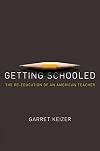
Politics is not the only art of the possible. Teaching, Keizer constantly reminds us in this memoir, is as fraught with misunderstandings (both accidental and willful) as it is (among most teachers, anyway) full of can-do idealism. The ups-and-downs of Keizer's return to teaching after more than a decade away from the classroom make for an engaging story, even if his prose may not appeal to those seeking more action than reflection. But indeed Keizer's book is at its best when he challenges show more his own assumptions about teaching and about his performance, bringing his reader along for the process of second-guessing. Any readers who have themselves ever taught will likely identify with this image of teaching as ever unfinished, always falling short (often spectacularly, always unfortunately) of its highest goals, and never fully measurable (despite the best efforts of administrators and their elaborate computer systems).
Keizer manages to speak of his successes and failures without losing the reader's sympathy and without flattening out his depiction of the students and fellow teachers he works with. While he doesn't hide his opinions about some cultural and political directions taken by those shaping public education, the book never quite becomes the manifesto that some readers may hope for and others may fear. Still, the book struggles at times to balance its impulse to generalize against the narrative weight of one teacher's particular experiences over the course of a year in a corner of the country--rural, northern Vermont--that will likely be unfamiliar to most of the audience. This may be why I found Keizer's exposition of his internal, emotional balancing act (while maintaining as professional and coolly rational a facade as possible) to be the most fully realized and successful feature of the book. Certainly, Keizer never stops fashioning his persona as an author, but it is in his apparently candid reflections on his own reactions (he would likely agree that "strategies" would not quite be a fair characterization) that he seems, momentarily, to cease holding back. Ever the dedicated teacher, Keizer shields his students' vulnerabilities from the reader's judgment while, at least occasionally, serving up his own. show less
Keizer manages to speak of his successes and failures without losing the reader's sympathy and without flattening out his depiction of the students and fellow teachers he works with. While he doesn't hide his opinions about some cultural and political directions taken by those shaping public education, the book never quite becomes the manifesto that some readers may hope for and others may fear. Still, the book struggles at times to balance its impulse to generalize against the narrative weight of one teacher's particular experiences over the course of a year in a corner of the country--rural, northern Vermont--that will likely be unfamiliar to most of the audience. This may be why I found Keizer's exposition of his internal, emotional balancing act (while maintaining as professional and coolly rational a facade as possible) to be the most fully realized and successful feature of the book. Certainly, Keizer never stops fashioning his persona as an author, but it is in his apparently candid reflections on his own reactions (he would likely agree that "strategies" would not quite be a fair characterization) that he seems, momentarily, to cease holding back. Ever the dedicated teacher, Keizer shields his students' vulnerabilities from the reader's judgment while, at least occasionally, serving up his own. show less
 This review was written for LibraryThing Early Reviewers.
I have wondered at times if I am, in fact, more sensitive to noise than the average person. Noise that others seem to be able to shrug off is physically painful to me. The slight variations in the noise the room fan makes in the middle of the night can drive me to distraction. So I was drawn to this book, which is part science and part curmudgeonly meditation on the problem of noise.
I was impressed with the author's willingness to look at noise as an issue of class. The poor are expected to show more tolerate what the rich would not, with noise as with so many other quality-of-life issues. And the author is not afraid to look at his own contribution to that issue, asking what is more important: his need for air travel to research a book, or a child under the flight path trying to learn to read a book?
I think he missed a few opportunities, but overall, a worthwhile book on a too-seldom heard topic. show less
I was impressed with the author's willingness to look at noise as an issue of class. The poor are expected to show more tolerate what the rich would not, with noise as with so many other quality-of-life issues. And the author is not afraid to look at his own contribution to that issue, asking what is more important: his need for air travel to research a book, or a child under the flight path trying to learn to read a book?
I think he missed a few opportunities, but overall, a worthwhile book on a too-seldom heard topic. show less
This review was written for LibraryThing Early Reviewers.This book, if you were lucky, is your chance to read the diary of that one teacher who meant so much to you but who seemed inexplicably old and distant sometimes. Like the couple in the romcom movie who meet cute and who suddenly realize that they care for each other in the strangest circumstances, teachers and students forever reenact the strange ballet of the adult parenting the children of others and finding themselves falling for each other and being frustrated with each other and angry show more at the hurts the world throws at them. This book captures the feelings accurately and, as with all of Keizer's writings, with a rough hewn grace. show less
This review was written for LibraryThing Early Reviewers.Lists
Awards


You May Also Like


Associated Authors
Statistics
- Works
- 11
- Also by
- 5
- Members
- 638
- Popularity
- #39,509
- Rating
- 3.8
- Reviews
- 39
- ISBNs
- 32
