
Clyde S. Kilby (1902–1986)
Author of A Mind Awake: An Anthology of C. S. Lewis
About the Author
Works by Clyde S. Kilby
Brothers and Friends: The Diaries of Major Warren Hamilton Lewis: An Intimate Portrait of C.S. Lewis (1982) — Editor — 76 copies
A Well of Wonder: Essays on C. S. Lewis, J. R. R. Tolkien, and the Inklings (2016) 41 copies, 1 review
Associated Works
Shadows of Imagination: The Fantasies of C. S. Lewis, J. R. R. Tolkien, and Charles Williams (Crosscurrents: Modern Critiques) (1969) — Contributor — 49 copies
Tagged
Common Knowledge
- Canonical name
- Kilby, Clyde S.
- Legal name
- Kilby, Clyde Samuel
- Birthdate
- 1902-9-26
- Date of death
- 1986-10-18
- Gender
- male
- Education
- University of Arkansas (BA ∙ 1929)
New York University (PhD|by correspondence) - Organizations
- Wheaton College
Marion E. Wade Center - Awards and honors
- Mythopoeic Scholarship Award in Inklings Studies (1971)
Alumni grant, Wheaton College (1948-49)
Senior Teacher of the Year Award, Wheaton College (1964)
Illinois Author of the Year, Illinois Association of Teachers of English (1973) - Nationality
- USA
- Birthplace
- Johnson City, Tennessee, USA
- Places of residence
- Wheaton, Illinois, USA
- Place of death
- Columbus, Mississippi, USA
- Associated Place (for map)
- USA
Members
Reviews

In Tolkien & The Silmarillion, Clyde S. Kilby recounts his friendship with J.R.R. Tolkien and his time reading drafts of The Silmarillion, then unpublished. Kilby writes of Tolkien’s writing process, “Something of the extent of Tolkien’s perfectionism may be sensed by noting that he, like C.S. Lewis, thought a story properly composed only after the author had first done the whole thing in poetry and then turned it back into prose. Some of the manuscript of The Silmarillion is in verse show more form. It is a concept reminiscent of Horace’s dictum that an author rework his writings for nine years before giving them to the public” (pg. 32). In addition to his impressions of Tolkien as a writer, Kilby offers glimpses of Tolkien’s life, his appreciation of the English countryside and language, as well as his religious convictions and connection to the Inklings – including Tolkien, C.S. Lewis, and Charles Williams. The work does not serve as a full biography, however; Humphrey Carpenter’s later book, Tolkien: A Biography, fulfills that role. Kilby also offers a glimpse of things Tolkien did not fully complete. He writes, “He has the intention of completing a full account of the Second Age of Middle-earth under the title The Akallabeth, a word made up of kalab meaning ‘fall down,’ with the doubled ‘l’ giving it intensity, i.e., the ‘great fall’” (pg. 23). When Christopher Tolkien edited The Silmarillion for publication after his father’s death, The Akallabêth consisted of approximately thirty pages, having never expanded to fit a complete volume on its own. Kilby’s Tolkien & The Silmarillion will primarily appeal to those interested in Tolkien’s writing process, especially readers of Christopher Tolkien’s History of Middle-earth. show less
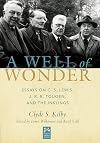
Clyde Kilby (1902-1986) is remembered fondly by students he taught literature and writing to at Wheaton College. He is known more widely still for being an early evangelical champion of C.S. Lewis, J.R.R. Tolkien and the Inklings. He founded Wheaton's Marion Wade Collection which houses manuscripts and letters from Lewis, Tolkien, Owen Barfield, Charles Williams, Dorothy Sayers, G.K. Chesterton and George Macdonald.
In A Well of Wonder(Mount Tabor Books, 2016), editors Loren Wilkinson & Keith show more Call draw together various essays and chapters which Kilby wrote about this collection of writers. The chapters of this book come from published articles from Kilby (in Christianity Today, Intervarsity Magazine, journals, student publications, etc), book chapters and interviews. The book opens with a Poetic tribute to Kilby from Luci Shaw. Part one of the book contains Kilby's writings on Lewis, part two Tolkien, and part three, the Inklings and the Christian imagination. Wilkinson writes an introduction and an afterward which showcase both the influence that Lewis et al. had on Kilby and the sense of wonder Kilby imparted to Wilkinson in his student days.
Kilby met Lewis only once in 1953, but had a deep appreciation for Lewis' imagination and his ability to communicate difficult and deep theological truths in a accessible and winsome manner. The essays in chapter one range from in-depth examinations of Lewis's writings, to discussions of Lewis' life and character. Kilby knew the Lewis corpus well. He focuses most of his comments on Lewis's literary works (e.g. his fiction, Children's literature, and biography, Surprised by Joy) but he appreciated the clarity of Mere Christianity, Miracles and others of Lewis's apologetic writings.
Kilby met Tolkien later, in 1964 while visiting Oxford. The two men struck up a friendship and began writing each other. Kilby would return to Oxford in the summer 1966 to attempt to help Tolkien prepare The Silmarillion for publication (though it became clear that Tolkien would never finish it). There is a good longish essay about Kilby and Tolkien's friendship and Kilby's observations (chapter 15). Kilby takes Tolkien at his word that there is no Christian allegory undergirding his Middle Earth myths, but he does probe The Silmarillion and LOTRs for the echoes of the biblical story (as well as the Hobbit and shorter tales like Leaf by Niggle).
In the final section, there is a couple of good essays on Williams and his influence on (and differences from) Lewis and Tolkien, a good essay on Dorothy Sayers, and a couple of chapters about the formation and growth of the Wade Collection and reflections on reading and writing fiction well from a Christian perspective. I particularly appreciated Kilby's discussion of Williams.
Kilby was an incisive reader of Lewis and Tolkien (and the others). I learned a great deal from his close readings and was charmed by his remembrances of Lewis, and especially Tolkien. These reflections are more appreciative than critical. He doesn't explore the ambiguities of Lewis's relationship with Mrs. Moore as later biographies would. He also has very little to say about the cooling off of Tolkien and Lewis's friendship when Williams joined the Inklings (or later when Lewis married Joy Davidman). Kilby showed little interest in the sordid and questionable details of his heroes lives, and focused instead on glimmer of light he saw in these men and their luminous prose.
To me, the introduction and afterward are part of the fun of this book. I was a student at Regent when Wilkinson taught full time and have seen how he brings people to the well of wonder, as Kilby had done for him (and Lewis and the Inklings did for Kilby). It is the grand-daddy of Christian fantasy writing, George Macdonald, who gets the final word in Wilkinson's afterward:
Kilby loved this group of British Christian writers because they slaked his thirst and he saw through them to the Source. I recommend this book for anyone who shares Kilby's appreciation for Lewis and Tolkien (and those who just don't get it). I give it five stars. ★★★★★
I received a copy of this book from Paraclete Books in exchange for my honest review. Mount Tabor Books is an imprint of Paraclete. show less
In A Well of Wonder(Mount Tabor Books, 2016), editors Loren Wilkinson & Keith show more Call draw together various essays and chapters which Kilby wrote about this collection of writers. The chapters of this book come from published articles from Kilby (in Christianity Today, Intervarsity Magazine, journals, student publications, etc), book chapters and interviews. The book opens with a Poetic tribute to Kilby from Luci Shaw. Part one of the book contains Kilby's writings on Lewis, part two Tolkien, and part three, the Inklings and the Christian imagination. Wilkinson writes an introduction and an afterward which showcase both the influence that Lewis et al. had on Kilby and the sense of wonder Kilby imparted to Wilkinson in his student days.
Kilby met Lewis only once in 1953, but had a deep appreciation for Lewis' imagination and his ability to communicate difficult and deep theological truths in a accessible and winsome manner. The essays in chapter one range from in-depth examinations of Lewis's writings, to discussions of Lewis' life and character. Kilby knew the Lewis corpus well. He focuses most of his comments on Lewis's literary works (e.g. his fiction, Children's literature, and biography, Surprised by Joy) but he appreciated the clarity of Mere Christianity, Miracles and others of Lewis's apologetic writings.
Kilby met Tolkien later, in 1964 while visiting Oxford. The two men struck up a friendship and began writing each other. Kilby would return to Oxford in the summer 1966 to attempt to help Tolkien prepare The Silmarillion for publication (though it became clear that Tolkien would never finish it). There is a good longish essay about Kilby and Tolkien's friendship and Kilby's observations (chapter 15). Kilby takes Tolkien at his word that there is no Christian allegory undergirding his Middle Earth myths, but he does probe The Silmarillion and LOTRs for the echoes of the biblical story (as well as the Hobbit and shorter tales like Leaf by Niggle).
In the final section, there is a couple of good essays on Williams and his influence on (and differences from) Lewis and Tolkien, a good essay on Dorothy Sayers, and a couple of chapters about the formation and growth of the Wade Collection and reflections on reading and writing fiction well from a Christian perspective. I particularly appreciated Kilby's discussion of Williams.
Kilby was an incisive reader of Lewis and Tolkien (and the others). I learned a great deal from his close readings and was charmed by his remembrances of Lewis, and especially Tolkien. These reflections are more appreciative than critical. He doesn't explore the ambiguities of Lewis's relationship with Mrs. Moore as later biographies would. He also has very little to say about the cooling off of Tolkien and Lewis's friendship when Williams joined the Inklings (or later when Lewis married Joy Davidman). Kilby showed little interest in the sordid and questionable details of his heroes lives, and focused instead on glimmer of light he saw in these men and their luminous prose.
To me, the introduction and afterward are part of the fun of this book. I was a student at Regent when Wilkinson taught full time and have seen how he brings people to the well of wonder, as Kilby had done for him (and Lewis and the Inklings did for Kilby). It is the grand-daddy of Christian fantasy writing, George Macdonald, who gets the final word in Wilkinson's afterward:
The water itself, that dances and sings, and slakes the wonderful thirst—symbol and picture of that draught for which the woman of Samaria made her prayer to Jesus . . .this water is its own self, its own truth, and is therein a truth of God. Let him who would know the truth of the Maker, become sorely athirst and drink the brook by the way—then lift up his heart—not at the moment to the maker of oxygen and hydrogen, but to the Inventor and mediator of thirst and water, that man might foresee a little of what his soul may find in God. (337).
Kilby loved this group of British Christian writers because they slaked his thirst and he saw through them to the Source. I recommend this book for anyone who shares Kilby's appreciation for Lewis and Tolkien (and those who just don't get it). I give it five stars. ★★★★★
I received a copy of this book from Paraclete Books in exchange for my honest review. Mount Tabor Books is an imprint of Paraclete. show less
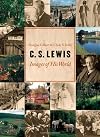
Great Photo Essay on the life of C.S. Lewis. Useful information and makes the land of Lewis come alive. It provides a backdrop for Narnia
Fantastic overview of the world CS Lewis lived in. Excellent photos and text combine to bring his story to life.
Lists
You May Also Like


Associated Authors
Statistics
- Works
- 17
- Also by
- 2
- Members
- 2,037
- Popularity
- #12,617
- Rating
- 3.9
- Reviews
- 11
- ISBNs
- 35
- Languages
- 1