

Carol Ann Lee
Author of The Hidden Life of Otto Frank
About the Author
Image credit: Carol Ann Lee, August 19, 2011, pictured at the Edinburgh International Book Festival
Works by Carol Ann Lee
Somebody's Mother, Somebody's Daughter: True Stories from Victims and Survivors of the Yorkshire Ripper (2019) 38 copies, 1 review
A Passion for Poison: A true crime story like no other, the extraordinary tale of the schoolboy teacup poisoner (2021) 23 copies
Tagged
Common Knowledge
- Birthdate
- 1969-03-20
- Gender
- female
- Education
- Université de Manchester (Architecture et histoire de l'art)
- Organizations
- Fonds Anne Franck, Angleterre (Collaboratrice)
Musée juif de Manchester (Collaboratrice) - Nationality
- UK
- Birthplace
- Wakefield, Yorkshire, Angleterre, Royaume-Uni
- Places of residence
- Amsterdam, Netherlands
- Associated Place (for map)
- Amsterdam, Netherlands
Members
Reviews
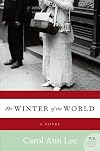
Carol Ann Lee's THE WINTER OF THE WORLD (2007) pretty much sucked me in from page one. And I'm a little embarrassed that I loved it so much. Because it's basically a love story set against the background of the Great War. The principals are Alex, an English war correspondent covering the war in France and Belgium, and Ted, an infantry officer serving in the trenches - these two have been close friends since their school days - and Clare, who marries Ted in the early days of the war, coming show more between the two very close friends. Both Ted and Alex are orphans, and Clare, who was molested by her stepfather, has some serious baggage of her own, and she feels an immediate, visceral attraction to Alex when Ted introduces them. This sets the stage for an ongoing and tortuous love triangle that continues throughout the war years, moving from the home front in London to hotels and field hospitals in France, where Clare is serving as a nurse. Ms Lee has done some serious research about the major battles of the war, and it shows, with the Somme and Passchendaele figuring into the plot, as does "the Tin Nose Shop, a military hospital where masks are fashioned for veterans whose faces have been disfigured or shot away. The story encompasses all of the war years, as well as the years immediately following, with the interment of the Unknown Warrior in Westminster Abbey, including all the planning, secrecy and solemn pomp and ceremony that accompanied it.
Love story or not, this is a damn good book. Beautifully written, thoroughly researched, there is nothing sappy or Hallmark-ey about it. I loved it. My very highest recommendation.
- Tim Bazzett, author of the memoir, BOOKLOVER show less
Love story or not, this is a damn good book. Beautifully written, thoroughly researched, there is nothing sappy or Hallmark-ey about it. I loved it. My very highest recommendation.
- Tim Bazzett, author of the memoir, BOOKLOVER show less
Somebody's Mother, Somebody's Daughter: True Stories from Victims and Survivors of the Yorkshire Ripper by Carol Ann Lee
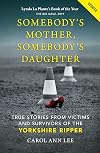
For anyone interested in learning more about the victims and survivors of Peter Sutcliffe's five year reign of terror, rather than the cowardly one-note killer himself or the inept police detectives who failed to apprehend him, this is the definitive account of the 'Yorkshire Ripper'. Carole Anne Lee gives a voice to the women who were silenced and lets the survivors of horrific violent attacks, especially those who weren't believed by the police, put forward the truth where possible.
As the show more author points out, most books about Sutcliffe have been written by men about men - either the killer or the 'all male Ripper Squad', who also condemned or dismissed most of the thirteen murdered women as prostitutes or 'women of loose morals'. When young women like Josephine Whitaker, who worked in a building society in Halifax and was walking home from visiting her grandparents, or Barbara Leach, a student at the University of Bradford, were killed, they were labelled 'respectable' by the police and press and deemed worthy of sympathy, whereas the deaths of early victims like Wilma McCann and Emily Jackson were disparaged because of the areas where they were killed or rumours about their personal lives. Unlike Hallie Rubenhold's account of Jack the Ripper's victims in The Five, however, Carole Anne Lee doesn't seek to exonerate the non-'respectable' women, but instead makes clear that all of the women were killed because they were vulnerable. Sutcliffe didn't hate prostitutes, he hated women - but sex workers were easy prey.
My heart ached for the twenty two women named in the book, from Marcella Claxton, who survived the attack but faced racist judgement from the police and had to fight for compensation, to Emily Jackson, who was selling herself to save her family, and the last victim, Jacqueline Hill, such an inspiring young woman who was murdered 100 yards from her door. The detectives and key developments in the investigation - over five years - are covered, but the focus is firmly on the women, as they deserve. I was a bit disappointed in that respect that Lee included Sutcliffe's own testimony on the women's deaths - she could have left that chapter as one sentence: 'He confessed in great detail to murdering thirteen women and attacking seven others' - but I recognise that there is a kind of closure in his words, especially for women like Marcella.
I read Michael Bilton's book first and noticed the lack of female perspective due to the victims - Bilton rattles on about the detectives while reducing the women to body parts and soiled ground - so reading Lee's well researched and compassionate account of the very real women who were 'irreplaceable in their own right' as well as members of 'an exclusive club that you don't want to be part of' has been like resetting my knowledge of a dark period of local history. show less
As the show more author points out, most books about Sutcliffe have been written by men about men - either the killer or the 'all male Ripper Squad', who also condemned or dismissed most of the thirteen murdered women as prostitutes or 'women of loose morals'. When young women like Josephine Whitaker, who worked in a building society in Halifax and was walking home from visiting her grandparents, or Barbara Leach, a student at the University of Bradford, were killed, they were labelled 'respectable' by the police and press and deemed worthy of sympathy, whereas the deaths of early victims like Wilma McCann and Emily Jackson were disparaged because of the areas where they were killed or rumours about their personal lives. Unlike Hallie Rubenhold's account of Jack the Ripper's victims in The Five, however, Carole Anne Lee doesn't seek to exonerate the non-'respectable' women, but instead makes clear that all of the women were killed because they were vulnerable. Sutcliffe didn't hate prostitutes, he hated women - but sex workers were easy prey.
My heart ached for the twenty two women named in the book, from Marcella Claxton, who survived the attack but faced racist judgement from the police and had to fight for compensation, to Emily Jackson, who was selling herself to save her family, and the last victim, Jacqueline Hill, such an inspiring young woman who was murdered 100 yards from her door. The detectives and key developments in the investigation - over five years - are covered, but the focus is firmly on the women, as they deserve. I was a bit disappointed in that respect that Lee included Sutcliffe's own testimony on the women's deaths - she could have left that chapter as one sentence: 'He confessed in great detail to murdering thirteen women and attacking seven others' - but I recognise that there is a kind of closure in his words, especially for women like Marcella.
I read Michael Bilton's book first and noticed the lack of female perspective due to the victims - Bilton rattles on about the detectives while reducing the women to body parts and soiled ground - so reading Lee's well researched and compassionate account of the very real women who were 'irreplaceable in their own right' as well as members of 'an exclusive club that you don't want to be part of' has been like resetting my knowledge of a dark period of local history. show less
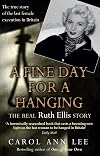
I watched a BBC documentary on Ruth Ellis and was intrigued enough by her story to want to read more. Carol Ann Lee's biography is probably the most objective, in that the author is a woman and the book was written fairly recently, but Ruth's life - and the crime she was executed for - remains a complex subject.
Did Ruth Ellis shoot her lover, David Blakely? Yes. Did she deserve to be put to death for her crime? She thought yes, but Lee suggests that Ellis was also a victim - of Blakely, show more society, and the justice system - and I would tend to agree. Ruth Ellis, the last woman to be hanged in the UK, was executed more for who she was and what she looked like, rather than the severity of her crime. A working class nightclub manageress with peroxide blonde hair and two children to two different men could not be allowed to shoot a middle class playboy and be seen to get away with her crime.
I felt for Ruth, but also wanted to shake her. Just dump him, and get out of that toxic relationship! Her history of abuse and aspirations to better herself, however, combined to trap her into thinking she couldn't live without Blakely, who clearly didn't love or respect her. So easy to sympathise, but troubling to read. Not that Lee shies away from painting an honest portrait of Ruth herself - she gave up everything to try and possess her lover, including an independent life and her own children.
A fascinating account of the last woman to be hanged for murder in the UK. show less
Did Ruth Ellis shoot her lover, David Blakely? Yes. Did she deserve to be put to death for her crime? She thought yes, but Lee suggests that Ellis was also a victim - of Blakely, show more society, and the justice system - and I would tend to agree. Ruth Ellis, the last woman to be hanged in the UK, was executed more for who she was and what she looked like, rather than the severity of her crime. A working class nightclub manageress with peroxide blonde hair and two children to two different men could not be allowed to shoot a middle class playboy and be seen to get away with her crime.
I felt for Ruth, but also wanted to shake her. Just dump him, and get out of that toxic relationship! Her history of abuse and aspirations to better herself, however, combined to trap her into thinking she couldn't live without Blakely, who clearly didn't love or respect her. So easy to sympathise, but troubling to read. Not that Lee shies away from painting an honest portrait of Ruth herself - she gave up everything to try and possess her lover, including an independent life and her own children.
A fascinating account of the last woman to be hanged for murder in the UK. show less
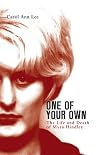
Although the book was 400+ pages of small print, I read it all in a day, more or less in one sitting. It was gripping, to say the least. I'd never read a book on the Moors Murders though I'd read plenty about it online and shorter pieces in other true crime books. I think this is the only book anyone would have to read to get a thorough review of the case. Myra is quite impenetrable but I think this author comes about as close as it's possible to go, to pull back all the masks and show her show more for who she really was. Ian Brady is much easier to understand as a typical serial child-killer, and one with a diagnosed mental illness.
To use a comparison from the book, Myra reminds me a lot of the Nazi war criminals. If she had never met Ian Brady, she probably would have become an ordinary housewife and never committed any violent crimes at all. Most of the Nazi war criminals who weren't immediately arrested went on to lead ordinary, nonviolent postwar lives, and I'm sure that if Myra had been released from prison at some point after she got out from under Brady's spell, she wouldn't have committed any more crimes like the atrocities she and Brady had done together. Yet she was fully responsible for what she did. I think she genuinely TRIED to feel remorseful, if only because everyone demanded it, but she seems to have been incapable of the depth of feeling, the empathy, necessary for that. The nasty things she said about her victims' parents behind their backs is proof positive of that. It's like she was just defective, like some wiring was missing inside her.
To use another comparison, the case kinds of reminds me of the situation in Truman Capote's true crime classic In Cold Blood: two people who might neither have been terribly dangerous by themselves come together and feed off each other and commit far greater crimes than either of them would have been capable of alone. Ian Brady needed Myra to do what he did. To begin with he needed a woman's help to lure the children into the car, but he also needed someone to confide in, and someone who would worship him and egg him on.
Way to go, Carol Ann Lee. This book meets the gold standard for true crime: thoroughly researched, accurate, insightful and not sensationalized a bit. You achieved what you set out to do. show less
To use a comparison from the book, Myra reminds me a lot of the Nazi war criminals. If she had never met Ian Brady, she probably would have become an ordinary housewife and never committed any violent crimes at all. Most of the Nazi war criminals who weren't immediately arrested went on to lead ordinary, nonviolent postwar lives, and I'm sure that if Myra had been released from prison at some point after she got out from under Brady's spell, she wouldn't have committed any more crimes like the atrocities she and Brady had done together. Yet she was fully responsible for what she did. I think she genuinely TRIED to feel remorseful, if only because everyone demanded it, but she seems to have been incapable of the depth of feeling, the empathy, necessary for that. The nasty things she said about her victims' parents behind their backs is proof positive of that. It's like she was just defective, like some wiring was missing inside her.
To use another comparison, the case kinds of reminds me of the situation in Truman Capote's true crime classic In Cold Blood: two people who might neither have been terribly dangerous by themselves come together and feed off each other and commit far greater crimes than either of them would have been capable of alone. Ian Brady needed Myra to do what he did. To begin with he needed a woman's help to lure the children into the car, but he also needed someone to confide in, and someone who would worship him and egg him on.
Way to go, Carol Ann Lee. This book meets the gold standard for true crime: thoroughly researched, accurate, insightful and not sensationalized a bit. You achieved what you set out to do. show less
Awards


You May Also Like


Associated Authors
Statistics
- Works
- 20
- Members
- 1,060
- Popularity
- #24,289
- Rating
- 4.0
- Reviews
- 20
- ISBNs
- 103
- Languages
- 9
- Favorited
- 1
