
Calvin Miller
Author of The Singer
About the Author
Dr. Calvin Miller is Professor of Preaching and Pastoral Studies at Samford University, Beeson Divinity School, in Birmingham, Alabama
Series
Works by Calvin Miller
Into the Depths of God: Where Eyes See the Invisible, Ears Hear the Inaudible, and Minds Conceive the Inconceivable (2000) 230 copies
Weddings, Funerals and Special Events: The Personal Ministry of Public Occasions (1987) 194 copies, 1 review
The Christ of Easter: Readings for the Season of Resurrection : 48 Days of Devotions (2004) 99 copies
The Vanishing Evangelical: Saving the Church from Its Own Success by Restoring What Really Matters (2013) 34 copies, 1 review
Fruit of the Spirit: Goodness: Cultivating Spirit-Given Character (Fruit of the Spirit Study Series) (2008) 28 copies
Kindness: Cultivating Spirit-given Character: a Six-week Study (Fruit of the Spirit) (2002) 15 copies
Peace: Cultivating Spirit-given Character // a Six-week Study (Fruit of the Spirit Study Guide) (2008) 12 copies
Fruit of the Spirit: Faithfulness: Cultivating Spirit-Given Character (Fruit of the Spirit) (2008) 10 copies
A Revegetative Guide for Alaska 2 copies
George Washington Carver 1 copy
God beminnen als de Kelten 1 copy
O sabor da Alegria 1 copy
Overture of Light, An 1 copy
Two Wise Hearts 1 copy
Jesus on Leadership 1 copy
The Seeable Sermon 1 copy
with wings like eagles 1 copy
Associated Works
Being totally true when you're in the pew (Christian lifestyle series) (1992) — some editions — 4 copies
Tagged
Common Knowledge
Members
Reviews
"Deny not, Regis, how long you have lived...
you have always lived
In the very vastness of My heart
As the waiting portrait of My eternal being."
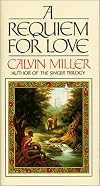
I was drawn by the title of this biblical allegory, A Requiem for Love by author Calvin Miller, as someone who very much enjoyed the classic epic poem Paradise Lost by John Milton.
Indeed, I also enjoyed the lyrical flow of this mix of fantasy and poetry that tells of Regis and Regina, a man and woman in love at the heart of creation.
Granted, I didn't show more agree with all the spiritual points in the tale. And it bothered me to see how much time the story spends on Regina's downward spiral and not on Regis's, as if the responsibility of everything that goes wrong is mostly hers.
I mean, if Regis were so strong in the Earthmaker's love and truth and wasn't dealing with his own hard struggle, wouldn't Regis have been strong enough in his convictions not to give up all that was sacred and eat the forbidden fruit when Regina asked him to? Might he have thought there could be another way? There had to have been more going south with him already, not just with Regina.
Nevertheless, I appreciate how this work sings, and even with its inevitable tragedy, the ending is one that resounds with hope. show less
you have always lived
In the very vastness of My heart
As the waiting portrait of My eternal being."
I was drawn by the title of this biblical allegory, A Requiem for Love by author Calvin Miller, as someone who very much enjoyed the classic epic poem Paradise Lost by John Milton.
Indeed, I also enjoyed the lyrical flow of this mix of fantasy and poetry that tells of Regis and Regina, a man and woman in love at the heart of creation.
Granted, I didn't show more agree with all the spiritual points in the tale. And it bothered me to see how much time the story spends on Regina's downward spiral and not on Regis's, as if the responsibility of everything that goes wrong is mostly hers.
I mean, if Regis were so strong in the Earthmaker's love and truth and wasn't dealing with his own hard struggle, wouldn't Regis have been strong enough in his convictions not to give up all that was sacred and eat the forbidden fruit when Regina asked him to? Might he have thought there could be another way? There had to have been more going south with him already, not just with Regina.
Nevertheless, I appreciate how this work sings, and even with its inevitable tragedy, the ending is one that resounds with hope. show less
I judged this book by its cover and it paid off. Before picking up this memoir all I had was a recommendation from a colleague and the beautiful cover to go by. I knew that Miller had written a famous Christian fantasy trilogy, but I have never got around to reading it.
Miller hooked me from the first page. This is the sort of prose you'll encounter:
"Memory arrives sometime after we get here, and generally abandons us long before we leave here. So the umbilical trot that squirts us into the show more world is unremembered, and the EKG we need to keep it all going is likely to abandon us too suddenly to allow us to write it all down before our passing." (xiii)
Miller wrote his life story with the pen of a poet through the eyes of a story-teller. He discovers meaning in each chapter of his life.
I do wish he spent less time writing about his childhood and more about his life as a pastor, but that's a selfish wish. In the end, each chapter is well worth reading and reflecting upon.
The final chapter is particularly fruitful for reflection. He asked himself what he would do differently if he had his life to live over again. His conclusions near the end of his life have certainly given me cause to think during the middle of mine. show less
Miller hooked me from the first page. This is the sort of prose you'll encounter:
"Memory arrives sometime after we get here, and generally abandons us long before we leave here. So the umbilical trot that squirts us into the show more world is unremembered, and the EKG we need to keep it all going is likely to abandon us too suddenly to allow us to write it all down before our passing." (xiii)
Miller wrote his life story with the pen of a poet through the eyes of a story-teller. He discovers meaning in each chapter of his life.
I do wish he spent less time writing about his childhood and more about his life as a pastor, but that's a selfish wish. In the end, each chapter is well worth reading and reflecting upon.
The final chapter is particularly fruitful for reflection. He asked himself what he would do differently if he had his life to live over again. His conclusions near the end of his life have certainly given me cause to think during the middle of mine. show less
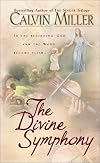
I was drawn by the beautiful titles gracing the pairing of biblical allegory novellas in The Divine Symphony: A Requiem for Love and A Symphony in Sand by author Calvin Miller.
I enjoyed the lyrical flow in this mix of biblical fiction, fantasy, and poetry that tells of Regis and Regina, a man and woman at the heart of creation, as well as their Maker's plan for their descendants' redemption.
Granted, it bothered me to see how much time the first allegory spends on Regina's downward spiral and show more not on Regis's. If he were so strong in the Earthmaker's love and truth and wasn't dealing with his own hard struggle, wouldn't Regis have been strong enough in his convictions not to give up all that was sacred and eat the forbidden fruit when Regina asked him to? Might he have thought there could be another way?
Also, there were times I got lost in the second allegory and couldn't see the point behind certain developments.
Nevertheless, haunting passages would grab me and resonate, like:
Hate is bread—baked slowly
In the oven of our narcissism
And eaten with such haste
That we devour our hands,
And never notice till
We reach to touch what we adore
And find our fingers gone.
My goodness. Think about it.
And of course, given the core of the second allegory, the characters sometimes break into ebullient song about the incomparable Child soon to come to earth:
"The vast Earthmaker, cosmic in His Grace,
Has locked Himself within a little space."
"Let every mountain range declare with joy
The lion roars and God is born a Boy."
Indeed, this author's work sings of tragedy and triumph in a literary symphony that resounds with hope. show less
I enjoyed the lyrical flow in this mix of biblical fiction, fantasy, and poetry that tells of Regis and Regina, a man and woman at the heart of creation, as well as their Maker's plan for their descendants' redemption.
Granted, it bothered me to see how much time the first allegory spends on Regina's downward spiral and show more not on Regis's. If he were so strong in the Earthmaker's love and truth and wasn't dealing with his own hard struggle, wouldn't Regis have been strong enough in his convictions not to give up all that was sacred and eat the forbidden fruit when Regina asked him to? Might he have thought there could be another way?
Also, there were times I got lost in the second allegory and couldn't see the point behind certain developments.
Nevertheless, haunting passages would grab me and resonate, like:
Hate is bread—baked slowly
In the oven of our narcissism
And eaten with such haste
That we devour our hands,
And never notice till
We reach to touch what we adore
And find our fingers gone.
My goodness. Think about it.
And of course, given the core of the second allegory, the characters sometimes break into ebullient song about the incomparable Child soon to come to earth:
"The vast Earthmaker, cosmic in His Grace,
Has locked Himself within a little space."
"Let every mountain range declare with joy
The lion roars and God is born a Boy."
Indeed, this author's work sings of tragedy and triumph in a literary symphony that resounds with hope. show less
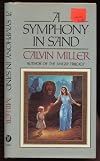
The Earthmaker plans to send an incomparable Child to the earth that needs Him in a poetical allegory by author Calvin Miller, A Symphony in Sand.
Ah! Isn't that title a thing of beauty?
Having read the previous book in this trilogy, I already had a feel for the author's style. Still, there were times I got lost in this second allegory and couldn't see the point behind certain developments.
But then haunting passages would grab me and resonate, like:
Hate is bread—baked slowly
In the oven of show more our narcissism
And eaten with such haste
That we devour our hands,
And never notice till
We reach to touch what we adore
And find our fingers gone.
My goodness. Think about it.
And of course, given the core of this story, the characters sometimes break into ebullient song:
"The vast Earthmaker, cosmic in His Grace,
Has locked Himself within a little space."
"Let every mountain range declare with joy
The lion roars and God is born a Boy."
Readers who'd appreciate a combination of biblical fiction, fantasy, and poetry would do well to check out this author's work. show less
Ah! Isn't that title a thing of beauty?
Having read the previous book in this trilogy, I already had a feel for the author's style. Still, there were times I got lost in this second allegory and couldn't see the point behind certain developments.
But then haunting passages would grab me and resonate, like:
Hate is bread—baked slowly
In the oven of show more our narcissism
And eaten with such haste
That we devour our hands,
And never notice till
We reach to touch what we adore
And find our fingers gone.
My goodness. Think about it.
And of course, given the core of this story, the characters sometimes break into ebullient song:
"The vast Earthmaker, cosmic in His Grace,
Has locked Himself within a little space."
"Let every mountain range declare with joy
The lion roars and God is born a Boy."
Readers who'd appreciate a combination of biblical fiction, fantasy, and poetry would do well to check out this author's work. show less
Lists
You May Also Like


Associated Authors
Statistics
- Works
- 133
- Also by
- 4
- Members
- 8,503
- Popularity
- #2,831
- Rating
- 3.8
- Reviews
- 46
- ISBNs
- 198
- Languages
- 4
- Favorited
- 5
