
Pamela Paul
Author of My Life with Bob: Flawed Heroine Keeps Book of Books, Plot Ensues
About the Author
Pamela Paul is currently an editor at American Demographics magazine, where she reports on social, political, and media trends. She is also a frequent New York correspondent for The Economist. In addition, her work has appeared in magazines such as Elle, Redbook, and Time Out New York
Image credit: Author Pamela Paul at the 2019 Texas Book Festival in Austin, Texas, United States. By Larry D. Moore, CC BY-SA 4.0, https://commons.wikimedia.org/w/index.php?curid=83643683
Works by Pamela Paul
By the Book: Writers on Literature and the Literary Life from The New York Times Book Review (2014) 356 copies, 28 reviews
Pornified: How Pornography Is Damaging Our Lives, Our Relationships, and Our Families (2005) 257 copies, 7 reviews
Secret to Attracting Woman: How to Meet Your Perfect Girl and Make Her Beg to Be Your Girlfriend (2012) 1 copy
The Path 1 copy
Associated Works
Tagged
Common Knowledge
- Birthdate
- 20th century
- Gender
- female
- Organizations
- New York Times
- Agent
- Lydia Wills (Paradigm)
- Nationality
- USA
- Places of residence
- London, England, UK
Paris, France
Chiang Mai, Thailand
New York, New York, USA
Westchester County, New York, USA
Members
Reviews
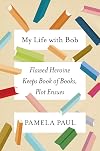
My Life with Bob
I knew I would love this book. I listen to Pamela Paul each week as she leads a podcast for the New York Times Book Review. Her personality is at once self-deprecating, but again sure and confident of her ability to lead the conversation. Reading her memoir has been a pleasure. The literary technique she uses is to frame each segment in her life around the books she was reading at the time. Bob is her Book of Books, a listing of all the books she has read since age 16. So show more with the record in hand, she carefully unfolds the story of her teen years through her adult years in a way that is at once engaging and familiar.
Favorite Quote
Page 237
Ultimately, the line between writer and reader blurs. Where, after all, does the story one person puts on a page end and the person who reads those pages and makes them her own begin? To whom do books belong? The books we read and the books we write are both ours and not ours. They’re also theirs.
This makes all of us spies among friends. When we read, we are spying on someone else’s imagination and inhabiting it; the authors and their characters are momentarily our friends, even if they betray us, or we them. Even if we dislike the book or give it a negative review or give the book away when we’re done. We peer into the lives they lived and the lives they conjured out of observation and inventiveness, dipping into them and then departing from their pages taking with us what we will. show less
I knew I would love this book. I listen to Pamela Paul each week as she leads a podcast for the New York Times Book Review. Her personality is at once self-deprecating, but again sure and confident of her ability to lead the conversation. Reading her memoir has been a pleasure. The literary technique she uses is to frame each segment in her life around the books she was reading at the time. Bob is her Book of Books, a listing of all the books she has read since age 16. So show more with the record in hand, she carefully unfolds the story of her teen years through her adult years in a way that is at once engaging and familiar.
Favorite Quote
Page 237
Ultimately, the line between writer and reader blurs. Where, after all, does the story one person puts on a page end and the person who reads those pages and makes them her own begin? To whom do books belong? The books we read and the books we write are both ours and not ours. They’re also theirs.
This makes all of us spies among friends. When we read, we are spying on someone else’s imagination and inhabiting it; the authors and their characters are momentarily our friends, even if they betray us, or we them. Even if we dislike the book or give it a negative review or give the book away when we’re done. We peer into the lives they lived and the lives they conjured out of observation and inventiveness, dipping into them and then departing from their pages taking with us what we will. show less
Bibliotherapy or bibliomania? That seems to be the question that the author wishes to answer for herself within the pages of this delightfully deceptive and engagingly written book about reading and the life of the mind. “Bob,” you will understand, is not about a “Robert;” in fact, it’s not about a person at all. Rather, “Bob” is actually “BOB,” an acronym that Paul has created that stands for “Book of Books,” her personal ledger in which she dutifully records dates, show more titles and authors of literary works that she has tackled – not always successfully – throughout her checkered past.
Begun during the summer of 1988, and added to continuously since then, Bob is really just a frame upon which Paul stretches the pelt of her story, which includes elements of memoir, travelogue, soap opera and bildungsroman. One salient feature of her writing is a brutal honesty; another is a gift for description that gives the reader a “you are there” sensation. Remembering a shy and lonely childhood (Paul was the only girl among seven male siblings), she relates that, “Whenever my brothers were paired off into bedrooms, I felt banished; I could hear them whispering among themselves through thin walls. At any moment, one of them might wrestle me to the ground, pin me down, and let a gob of saliva dangle threateningly over my face.” For Paul, reading during those early years represented an escape hatch, a portal by which she could enter another world, or as poet Emily Dickenson wrote: “There is no frigate like a book/to take us lands away.” Later, the author read for enlightenment as well as entertainment, but by her own admission, her passion for the written word could border on obsession, as detailed in this passage: “Some people are perfectly content with just the reading of books…I am one of the other sort…My sort wants the book in its entirety. We need to touch it, to examine the weight of its paper and the way the text is laid out on the page. People like me open books and inhale the binding, favoring the scents of certain glues over others, breathing them in like incense even as the chemicals poison our brains. We consume them.” Geez, Louise, show some enthusiasm, why don’t you?
Although the real story here is the experiences of the author, Paul expertly weaves the disparate threads of work, family, travel, and human relationships into a telling tapestry that continually references the books that have informed and influenced her decisions. These titles, of course, are duly registered in her book of books, which becomes a metaphorical mirror, reflecting the image of a searching soul. Quoting from A Journey of One’s Own by Thalia Zepatos, Paul decides to abandon (for a time), the mind-numbing world of cube farms and corporate stooges. Concluding that the bigger the risk, the bigger the rewards, she sets off for Thailand, with no knowledge of the language, landscape or customs of that country, other than what was relayed in a Lonely Planet guidebook. “Maybe instead of just reading about other women’s stories, I could become a person worthy of my own,” Paul writes.
One troubling note in all this is that Paul seems to only superficially engage with the books that she reads. Bob contains only titles and authors; there are no annotations regarding what she thought of the work itself, or how she interpreted its meaning. Also left unsaid is how she manages to read so much in a given period of time. Did Paul ever take Evelyn Wood’s speed reading course? To this reviewer, it appears to be a case of quantity over quality. However, in all fairness to Paul, in a chapter sub-titled, “Why Read?,” she digs for a deeper understanding of her own motivations and involvement with ink and paper: “It’s about experiencing something I would otherwise never have the chance to experience. To know what it’s like to be a merchant marine in the South Pacific precisely because I never will be a merchant marine in the South Pacific…Books answer that persistent question ‘But what is that really like?’ By putting you in the place of a character unlike yourself in a situation unlike your own, a good book forges a connection with the other. You get to know, in some way, someone you never would have otherwise known.”
Everyone likes, perhaps even needs, a happy ending. Despite some stumbles, such as a first marriage that lasted barely a year, Paul eventually finds true love, has children and, after the requisite ink-stained-wretch period of overworked and underpaid writing jobs, is hired as editor of the New York Times Book Review. This is about as close to “having it all” as it gets, to be reader, writer, mother, wife. Flipping through the pages of Bob, and reflecting on where she has been and where she is now, Paul concludes her tale by stating, “My clues are all here, on these pages. On the pages of my Book of Books…Even if we don’t keep a physical Books of Books, we all hold our books somewhere inside of us and live by them. They become our stories.” Well said, from one exceedingly well read. This thought provoking and passionate paean to the world of the written word is highly recommended to all those who agree with William Ellery Channing, who said that “It is chiefly through books that we enjoy intercourse with superior minds. In the best books, [great intellects] talk to us, give us their most precious thoughts, and pour their souls into ours.”
PLEASE NOTE: This review is based on an advance reader’s edition of this book. Goodreads Giveaway randomly chose me to receive this book free from the publisher. I was under no obligation to write a review. The opinions I have expressed are my own. Passages quoted may differ from the finished product, which at the time of review, was not yet available. Review by Michael F. Bemis. show less
Begun during the summer of 1988, and added to continuously since then, Bob is really just a frame upon which Paul stretches the pelt of her story, which includes elements of memoir, travelogue, soap opera and bildungsroman. One salient feature of her writing is a brutal honesty; another is a gift for description that gives the reader a “you are there” sensation. Remembering a shy and lonely childhood (Paul was the only girl among seven male siblings), she relates that, “Whenever my brothers were paired off into bedrooms, I felt banished; I could hear them whispering among themselves through thin walls. At any moment, one of them might wrestle me to the ground, pin me down, and let a gob of saliva dangle threateningly over my face.” For Paul, reading during those early years represented an escape hatch, a portal by which she could enter another world, or as poet Emily Dickenson wrote: “There is no frigate like a book/to take us lands away.” Later, the author read for enlightenment as well as entertainment, but by her own admission, her passion for the written word could border on obsession, as detailed in this passage: “Some people are perfectly content with just the reading of books…I am one of the other sort…My sort wants the book in its entirety. We need to touch it, to examine the weight of its paper and the way the text is laid out on the page. People like me open books and inhale the binding, favoring the scents of certain glues over others, breathing them in like incense even as the chemicals poison our brains. We consume them.” Geez, Louise, show some enthusiasm, why don’t you?
Although the real story here is the experiences of the author, Paul expertly weaves the disparate threads of work, family, travel, and human relationships into a telling tapestry that continually references the books that have informed and influenced her decisions. These titles, of course, are duly registered in her book of books, which becomes a metaphorical mirror, reflecting the image of a searching soul. Quoting from A Journey of One’s Own by Thalia Zepatos, Paul decides to abandon (for a time), the mind-numbing world of cube farms and corporate stooges. Concluding that the bigger the risk, the bigger the rewards, she sets off for Thailand, with no knowledge of the language, landscape or customs of that country, other than what was relayed in a Lonely Planet guidebook. “Maybe instead of just reading about other women’s stories, I could become a person worthy of my own,” Paul writes.
One troubling note in all this is that Paul seems to only superficially engage with the books that she reads. Bob contains only titles and authors; there are no annotations regarding what she thought of the work itself, or how she interpreted its meaning. Also left unsaid is how she manages to read so much in a given period of time. Did Paul ever take Evelyn Wood’s speed reading course? To this reviewer, it appears to be a case of quantity over quality. However, in all fairness to Paul, in a chapter sub-titled, “Why Read?,” she digs for a deeper understanding of her own motivations and involvement with ink and paper: “It’s about experiencing something I would otherwise never have the chance to experience. To know what it’s like to be a merchant marine in the South Pacific precisely because I never will be a merchant marine in the South Pacific…Books answer that persistent question ‘But what is that really like?’ By putting you in the place of a character unlike yourself in a situation unlike your own, a good book forges a connection with the other. You get to know, in some way, someone you never would have otherwise known.”
Everyone likes, perhaps even needs, a happy ending. Despite some stumbles, such as a first marriage that lasted barely a year, Paul eventually finds true love, has children and, after the requisite ink-stained-wretch period of overworked and underpaid writing jobs, is hired as editor of the New York Times Book Review. This is about as close to “having it all” as it gets, to be reader, writer, mother, wife. Flipping through the pages of Bob, and reflecting on where she has been and where she is now, Paul concludes her tale by stating, “My clues are all here, on these pages. On the pages of my Book of Books…Even if we don’t keep a physical Books of Books, we all hold our books somewhere inside of us and live by them. They become our stories.” Well said, from one exceedingly well read. This thought provoking and passionate paean to the world of the written word is highly recommended to all those who agree with William Ellery Channing, who said that “It is chiefly through books that we enjoy intercourse with superior minds. In the best books, [great intellects] talk to us, give us their most precious thoughts, and pour their souls into ours.”
PLEASE NOTE: This review is based on an advance reader’s edition of this book. Goodreads Giveaway randomly chose me to receive this book free from the publisher. I was under no obligation to write a review. The opinions I have expressed are my own. Passages quoted may differ from the finished product, which at the time of review, was not yet available. Review by Michael F. Bemis. show less
There is hardly a page in this book that doesn't have something underlined. For me, someone who is so anal-retentive about books that even my non-reader friends tease me about it, this is a huge deal. But, if you're a lifelong reader like I am, there are so many wonderful, insightful, yes-I-do-this-too, it's-not-just-me kind of things that after two chapters I just had to break out a pencil and start marking this up. It's a joy! I took my time reading this, and even so, it seemed too short. show more I've already purchased a hard copy and given two copies as gifts for no reason, that's how much I love this book. Pamela's sharp, self-deprecating wit, and her perfect wording for teenage/young 20's angst is so outstanding. How can one person be so specific in talking about books and her life that it feels universal? That's the kind of bookish, readerly magic that you'll find in these pages. Simply wonderful, and the best thing I've read so far this year. show less
 This review was written for LibraryThing Early Reviewers.
Dear Pamela Paul,
Please come and live with me and be my literary big sister.
I am,
Yours devotedly in reading.
No, for real. Every reader must read this book. Pamela's descriptions of the joys (and sorrows) of reading are beautiful. She is exquisitely thoughtful in connecting the books she records in Bob (her Book of Books, in which she lists everything she's read since age 17) to her life, or to her reflections of the life she was living at the time she read a particular book. She also show more discusses many of her travels, giving them equally thoughtful and literary treatment. Seriously, this is the book about reading that I wish I could have written. show less
Please come and live with me and be my literary big sister.
I am,
Yours devotedly in reading.
No, for real. Every reader must read this book. Pamela's descriptions of the joys (and sorrows) of reading are beautiful. She is exquisitely thoughtful in connecting the books she records in Bob (her Book of Books, in which she lists everything she's read since age 17) to her life, or to her reflections of the life she was living at the time she read a particular book. She also show more discusses many of her travels, giving them equally thoughtful and literary treatment. Seriously, this is the book about reading that I wish I could have written. show less
This review was written for LibraryThing Early Reviewers.Lists
Awards


You May Also Like


Associated Authors
Statistics
- Works
- 14
- Also by
- 1
- Members
- 1,881
- Popularity
- #13,680
- Rating
- 3.8
- Reviews
- 107
- ISBNs
- 33
- Languages
- 5

