
Thomas Savage (1915–2003)
Author of The Power of the Dog
About the Author
Thomas Savage was born in 1915 in Salt Lake City. His literary career spans five decades & thirteen novels, most notably "The Power of the Dog" (L,B, 1967) & "I Heard My Sister Speak My Name" (L,B, 1977). His most recent novel, "The Corner of Rife & Pacific" (Morrow, 1988), was nominated for the show more PEN/Faulkner Award, won the Pacific Northwest Booksellers Association Award, & was one of "Publisher's Weekly's" fifteen best novels of 1988. He was also the recipient of a Guggenheim Fellowship in 1980. (Bowker Author Biography) show less
Image credit: Portrait of Thomas Savage. Midnight Line.Thomas Savage. Boston: Little, Brown, and Company, 1976. Back cover.
Works by Thomas Savage
Associated Works
The Saturday Evening Post Stories 1962 — Contributor — 3 copies
Het Beste Boek 23: Mijn huis heeft vensters op de zee / Dokter Abelman / de laatste nijdas / De mussen van de Marcuskerk / Een kind zag teveel 2 copies, 1 review
Prólogo de amor - O voo da fênix - Um pacto com Deus - Fugindo da China vermelha (1965) — Contributor — 1 copy
Tagged
Common Knowledge
- Birthdate
- 1915-04-25
- Date of death
- 2003-07-25
- Gender
- male
- Relationships
- Savage, Elizabeth (wife)
- Nationality
- USA
- Associated Place (for map)
- USA
Members
Reviews
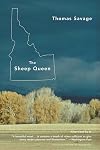
This is the western saga of the Sweringen family. Emma Russell Sweringen is dubbed the Sheep Queen because in 1909 she had 10,000 head of Idaho sheep. Impressive for that time period, considering her gender. Men were supposed to be the dominant members of the family and yet Emma was so powerful she was not one to be messed with. She ran a tight operation and had high standards. Her daughter did nothing but disappoint yet she doted on her grandson. Time moves forward and backwards in Savage's show more story. It is all about family, identity and legacy. Grandson, Tom, is all grown up with a family of his own when he is contacted by a woman claiming to be the granddaughter of the Sheep Queen; professing to be his sister. Amy is adopted and looking for her roots. Tom does not want to accept her but even he understands the power of identity. The theme of loss is also pervasive, sometimes subtle and sometimes profound. There is triumph in discovery. The controversy surrounding giving up children for adoption - should people research their biological families? What is the harm in that? What are the rewards? I found myself asking if one needs to pack up their entire life and physically move to escape ancestral ghosts. show less
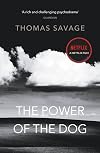
Phenomenal work that bolsters the American Western landscape not only as a fixed setting but also as an omnipresent entity pulling the strings of tension and repulsion between its characters. There is also the study of opposites, embodied by two brothers, Phil and George, though they are also similar in a number of ways, bound by their childhood, their routines. This study shape-shifts into a shovel, a pick-axe that unearths the substratum of normality, and the shallow ground it traipses on show more prior is a scheme to fit in, a self-denial of a desire inhumed. Domineering Phil, the definition of the White American Man of his era is excluded internally, away from the emotional terrain of heteronormativity; while quiet, gentle George settles well there, marrying Rose and sending her son to school, externally perceived as the odd one at the beginning.
A calf is castrated in detail on the first page. Masculinity is wielded as the anti-feminine (“Phil’s almost pathological cultivation of nonsissy appearance”). Masculinity is the anti-homosexual mask (read internalised homophobia); the establishment that dominates, subjugates. Utterances of misogyny are scattered all over the narrative, with its textured psychological probe underneath, as well as racial discrimination, from the mouth of the repressed, with the same degree as its repugnance of the female form (“…the place had the offensive odor of women.”) The latter is exhibited by Phil’s utter dislike of Rose, which makes a household of discomfort, while her son is bullied for his “unmanliness.” And something else brews beyond his disdain of the son, besides a reflection of a self hidden (“You do wonder sometimes if people are what you think they are, or if you only think that they are and they are what they are and not what you think”), a past love resurrects from their separate search of solitude (the lake, the river), their shared sight of a dog running across the hills. But that castration comes into view again, foreshadowing, alluding not only to a shocking demise, but the rigid parameters of Being a Man. Revenge does what it does best here—good with its hands, braids its sly ropes adroitly. And this is tragic in the many ways it reveals unsuccessful confrontations with the self, yet this also washes everything with relief. Unforgettable, and undeniable for its piercing brilliance.
A+ essay by Annie Proulx in the Vintage edition, bridging Savage’s biography with the work. show less
A calf is castrated in detail on the first page. Masculinity is wielded as the anti-feminine (“Phil’s almost pathological cultivation of nonsissy appearance”). Masculinity is the anti-homosexual mask (read internalised homophobia); the establishment that dominates, subjugates. Utterances of misogyny are scattered all over the narrative, with its textured psychological probe underneath, as well as racial discrimination, from the mouth of the repressed, with the same degree as its repugnance of the female form (“…the place had the offensive odor of women.”) The latter is exhibited by Phil’s utter dislike of Rose, which makes a household of discomfort, while her son is bullied for his “unmanliness.” And something else brews beyond his disdain of the son, besides a reflection of a self hidden (“You do wonder sometimes if people are what you think they are, or if you only think that they are and they are what they are and not what you think”), a past love resurrects from their separate search of solitude (the lake, the river), their shared sight of a dog running across the hills. But that castration comes into view again, foreshadowing, alluding not only to a shocking demise, but the rigid parameters of Being a Man. Revenge does what it does best here—good with its hands, braids its sly ropes adroitly. And this is tragic in the many ways it reveals unsuccessful confrontations with the self, yet this also washes everything with relief. Unforgettable, and undeniable for its piercing brilliance.
A+ essay by Annie Proulx in the Vintage edition, bridging Savage’s biography with the work. show less
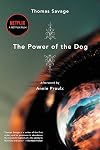
The film starring Benedict Cumberbatch brought this work to my attention. The film was quite fine, but the book is better, filling in some back story and adding perspectives that did not make it to the screen.
Two grown brothers have inherited a Montana cattle ranch from their parents, "the Old Gent and the Old Lady", who have retired (a strange concept for ranchers in the early 20th century, no?) to a luxury hotel in Salt Lake City. The older brother, Phil, has had the benefit of a show more university education, and has not forgotten much of it, while the younger brother, George, flunked out. George's mental exercise consists of keeping the books, and reading the Saturday Evening Post, whereas Phil likes to keep his mind more scientifically and philosophically engaged outside of working hours. The refinements of life have slipped away from both of them with the withdrawal of their parents, but they have settled into complementary roles in the management of the ranch. Phil has a mean streak, likely born of frustrations he doesn't care to examine too closely. He is prone to wry humor at the expense of his brother and the mostly illiterate hired hands; he refuses to bathe in the house, won't wear gloves to protect his talented hands while doing rough work, and needs to be better at everything than those around him. After 25 years of raising cattle, herding them to the railway once a year and shipping them off to market, neither of the brothers appear interested in a night "upstairs" at one of the saloons in town, nor have they engaged in any romantic interludes as far as we can tell. Until, that is, George takes an interest in a suicide's widow and her teenaged son Peter. Peter is brilliant, determined to be a doctor like his father, but socially inept in ways that make him an easy target for cowboys with liquor for brains, and for Phil's particular brand of toxic humor. When George marries his fragile Rose and brings her home to the ranch, the stage is set for upheaval. This novel is part classic Western, part psychological thriller, and part character study. Extremely well-done. show less
Two grown brothers have inherited a Montana cattle ranch from their parents, "the Old Gent and the Old Lady", who have retired (a strange concept for ranchers in the early 20th century, no?) to a luxury hotel in Salt Lake City. The older brother, Phil, has had the benefit of a show more university education, and has not forgotten much of it, while the younger brother, George, flunked out. George's mental exercise consists of keeping the books, and reading the Saturday Evening Post, whereas Phil likes to keep his mind more scientifically and philosophically engaged outside of working hours. The refinements of life have slipped away from both of them with the withdrawal of their parents, but they have settled into complementary roles in the management of the ranch. Phil has a mean streak, likely born of frustrations he doesn't care to examine too closely. He is prone to wry humor at the expense of his brother and the mostly illiterate hired hands; he refuses to bathe in the house, won't wear gloves to protect his talented hands while doing rough work, and needs to be better at everything than those around him. After 25 years of raising cattle, herding them to the railway once a year and shipping them off to market, neither of the brothers appear interested in a night "upstairs" at one of the saloons in town, nor have they engaged in any romantic interludes as far as we can tell. Until, that is, George takes an interest in a suicide's widow and her teenaged son Peter. Peter is brilliant, determined to be a doctor like his father, but socially inept in ways that make him an easy target for cowboys with liquor for brains, and for Phil's particular brand of toxic humor. When George marries his fragile Rose and brings her home to the ranch, the stage is set for upheaval. This novel is part classic Western, part psychological thriller, and part character study. Extremely well-done. show less
Shameful confession: I saw the movie before I read the book.
Less shameful confession: I loved this book way more than the movie.
[Spoilers ahoy for both book and film.]
Don't get me wrong, Campion's interpretation was visually beautiful and the music was amazing, but The Power of the Dog is a book so built on character interiority, unexpressed emotion, and repressed history that just can't be translated visually. The silences between characters could mean anything--I did a lot of projecting show more and assumption--and at the same time Campion has stripped away Savage's delicate, onion-peeling revelation of homosexuality so repressed as to be almost forgotten, replacing it with a naked (sorry) declaration and a kind of internal acceptance--or, at least, acknowledgement--that rings false for the time and place and Savage's character. The one-two punch of the book's climax is reduced to one reveal in the film, and while I definitely enjoyed that payoff, it did feel as though the film took too long to get there.
As I just said in my review of Isaac Asimov's Foundation, I'm a creature of character, and boy does Savage deliver--though never neglecting that sense of place that Annie Proulx, in the afterword included in my edition, calls "landscape fiction." Though the Burbank ranch feels less isolated when we know that the small town of Beech and even the much bigger town (even city?) of Herndon are close enough to drive to, run errands, and drive back in a day, there's still a great sense of distance. Maybe I can just imagine it well because I used to leave near Salt Lake City, so I know what it's like to have mountains piling up overhead and deceptively big distances.
Savage makes the dichotomy of personalities among our key players much more apparent. While in the film it's hard to see much affection between George and Rose, in the book his love for her comes across in their conversation, not just the fact that it exists at all but that he's willing to discuss his feelings rather than repress them, as Phil has bullied him into over the years. Kindness vs. deliberate cruelty is on display, as are the consequences: Rose's doctor husband committed suicide in part because his practice failed after Beech residents disapproved of his caring for a dying prostitute; and in part because of shame when Phil, encountering a drunk Johnny while in town, ridiculed, embarrassed, and physically assaulted him largely just because he knew he could. In comparison to George, who literally goes out of his way to apologize for Phil's behavior, his brother deliberately seeks out the soft spots in those he takes a disliking to and skewers them. Phil sees only weakness in Rose's hospitality for the visiting descendants of the original inhabitants of the ranch's land* and her desire to share meat and hides that would otherwise go to waste with Jewish traveling salesmen. Johnny and Rose suffer for their kindnesses; George, with all his money, has enough respect not to be outright bullied, but the ranch hands do give him the silent treatment in contrast to their camaraderie with Phil. Meanwhile, Phil's bullying of the outcast gets overlooked, even admired by the rough-and-tumble ranch hands of all ages and the town folks of Beech who are not the "Sassiety" folks of Herndon that he scorns.
[* As an aside, I do think that Campion's tweak to have Edward, the son of a chief, give Rose finely made gloves is an interesting symbolic contrast to Phil's refusal to wear gloves. Just as beauty and the perceived protection of new wealth may be gifts that cannot protect her from cruelty, so Phil's display of hypermasculine toughness in refusing gloves ultimately leaves him more vulnerable than he realizes.]
In contrast, we come to see Phil's interest in Peter, Rose's son who is clearly gay, is not necessarily predatory sexual interest from the moment he has a change of heart (at least, not that he tells himself or us): after seeing the boy's hard-earned imperviousness to the ranch hands' bullying, Phil's impressed enough by the boy's personal toughness to keep him close with the deliberate goal of upsetting Rose further and speeding up what he sees as the inevitable dissolution of George's marriage.
Peter is his own interesting character, as we perhaps learn the least about him from himself. It felt as though Savage relayed more of his actions than his thoughts, compared to the other characters, perhaps in reflection of the thick skin Peter has built up in response to the physical and verbal bullying he gets from his classmates in Beech. Interestingly, both Johnny and Rose wonder if this level of "coldness" or detachment will actually make him a more successful doctor than Johnny was (p. 190), even though the influence of kindness in his life has clearly made an impression--even if his interpretation of "removing obstacles in the way of those who love or need you" (p. 47) might seem questionable.
Ultimately, this deeply psychological story full of character details and depth, while never neglecting setting or the slow accumulation of hints and suggestions, and the interweaving of forward plot movement with alternating perspectives that illuminate just-passed actions, created a very satisfying whole. Savage's style and insight certainly makes me interested in his semi-autobiographical novel I Heard My Sister Speak My Name/The Sheep Queen, which, Proulx tells us, shows the direct influence of people in his life on the characters in The Power of the Dog. I do hope I eventually encounter Savage's books again.
Quote Roundup
p. 9) [Phil's] was a keen, sharp, inquiring mind--an engaged mind--that confounded cattle buyers and salesmen who supposed that one who dressed as Phil dressed, who talked as Phil talked, must be simple and illiterate, one with such hair and such hands. But his habits and appearance required strangers to alter their conception of an aristocrat to one who can afford to be himself.
I was impressed by all the class commentary, from social and financial climbers, house-poor Easterners seeking marriage connections with wealthy rangers, and, of course, that wealth and (in the right company) intellect can allow some level of acceptance of differences. How different Phil might have been if he'd leaned into the protection of his family wealth instead of toxic masculinity.
p. 37) And thus do we excuse our failures, by admitting them.
This feels very true. Johnny and Rose both acknowledge their weaknesses to themselves and give into them. Peter knows his worth, does not see his differences as weaknesses, and manages to survive because of that distance. Quite a remarkable thing to pick up on his own, without examples in his life.
p. 47) Peter: "I'll never mind what people say."
Johnny: "And Peter, please don't say it quite like that. Most who don't mind--most of them grow hard, get hard. You must be kind, you must be kind. I think the man you will become could hurt people terribly, because you're strong."
Here are the big differences between Peter and Phil: the latter minded immensely and became the kind of person who could "hurt people terribly;" the former leaned into his father's advice to be kind, even when not totally sure what that meant. I'm sure I'm not the only one who read Peter as on the Autism spectrum--the stimming, the trouble detecting emotions, the focused dedication to goals. In a way, he and Phil both looked to role models to "fix" their outward behavior; we don't really know Bronco Henry's personality, but we know that Peter did see his father's strengths even while acknowledging his weaknesses.
p. 60) [The ranch hands enter Rose's restaurant and Phil notices that Peter is, as then put, a "sissy".]
[*** omitting one word, since I don't know what it means and, since this section's from Phil's perspective, it's probably at least insulting if not outright offensive]
Now, some people can get along with them, just as some can get along with Jews and ***, and that's their business. But Phil couldn't abide them. He didn't know why, but they made him uncomfortable, right down to his guts. Why in hell didn't they snap out of it and get human?
And that's when I knew we were in for a very different ride with Savage than we were with Campion. Far more psychologically interesting and, probably, historically accurate. Just how repressed is Phil? Does he recognize his own hypocrisy? Or is it Peter's inability and/or unwillingness to change himself and conform that really gets Phil's goat, Phil the ultimate conformer?
p. 90) In a section focused on the "Old Lady" and "Old Gent"--George and Phil's parents--we learn that the Burbanks were set apart and considered the highest of society in Montana. This must have been quite isolating, and it's possible that Phil's extremes of transforming himself into a working ranch man might be in part a response to those feelings of alienation. After all, They could not suit Phil, they could not please him, and his glances reminded them of their useless lives [because the ranch functioned just fine without them]. After certain unpleasant episodes, the old people took a corner suite at the best hotel in Salt Lake City...made friends with others like themselves.
I'm intrigued about those "certain unpleasant episodes", which Savage does not describe, at least not aside from Phil's general being a major family killjoy.
p. 112) George is such a sweet romantic. Who'd have thought?
p. 127) [The ranch hands aren't comfortable around George.] He had a queer authority without even knowing it, an ability to upset you, maybe because he so seldom opened his talker and his silence made you look in upon yourself, on the guilt you always knew was there.
This is from Phil's perspective, and it's interesting to think that his "you" is more personal than he realizes. Surely not everyone feels guilty about something, right?
p. 141) Savage writes hilariously about the stilted conversations that ensued when the educated Burbank parents invited their wealthy but less book-learned neighbors to fancy dinners, describing how subjects such as weather and cabbage are "leapt on with almost hysterical enthusiasm" just to have something to say that will not emphasize their educational gaps. I've definitely experienced some awkward meals like this in my time, for different reasons.
p. 177) [From a section written from the perspective of Edward, son of the chief of the tribe that used to live where the Burbank ranch now is. When leaving with his own son to visit their ancestors' home, his wife gives him beautifully beaded gloves she's made, to sell if he needs money.]
It crossed his mind that she must be putting money aside for the boy. ... He doubted that he'd have the courage to offer the gloves for sale. He had never sold anything, the thought of selling brought blood like a hot hand to his face. It was women, who have little pride and no need of it, who sell and profit.
Yep. If you want to improve the economy long-term, invest in women-owned businesses. It's been proved time and again.
p. 197) Phil, when angry, would speak his mind no matter who was present ... George supposed Phil was right--speaking up and not bottling up everything.
Oh, the irony...
p. 263) The first big reveal, and a bit of an explanation: Phil knew, God knows he knew, what it was to be a pariah, and he had loathed the world, should it loath him first.
Ouch. A twinge of sympathy for the unrepentant jerk, just in time for, well, the second big reveal.
I want to say just a little bit more about this page: Savage cracks open the mystery of Phil in a single page, in just three economical paragraphs: his eagerness for someone who admires him enough to want to be like him, the trauma of the loss of Bronco Henry, how touch-starved he is, and the secrets in his own past--his inability to cope with being different the way Peter now does. Peter's own thought on the following page, "as he stood feeling the hand the gripped his shoulder, he seemed to hear a voice whispering that he was as special as he believed himself to be," is both sad and scary. show less
Less shameful confession: I loved this book way more than the movie.
[Spoilers ahoy for both book and film.]
Don't get me wrong, Campion's interpretation was visually beautiful and the music was amazing, but The Power of the Dog is a book so built on character interiority, unexpressed emotion, and repressed history that just can't be translated visually. The silences between characters could mean anything--I did a lot of projecting show more and assumption--and at the same time Campion has stripped away Savage's delicate, onion-peeling revelation of homosexuality so repressed as to be almost forgotten, replacing it with a naked (sorry) declaration and a kind of internal acceptance--or, at least, acknowledgement--that rings false for the time and place and Savage's character. The one-two punch of the book's climax is reduced to one reveal in the film, and while I definitely enjoyed that payoff, it did feel as though the film took too long to get there.
As I just said in my review of Isaac Asimov's Foundation, I'm a creature of character, and boy does Savage deliver--though never neglecting that sense of place that Annie Proulx, in the afterword included in my edition, calls "landscape fiction." Though the Burbank ranch feels less isolated when we know that the small town of Beech and even the much bigger town (even city?) of Herndon are close enough to drive to, run errands, and drive back in a day, there's still a great sense of distance. Maybe I can just imagine it well because I used to leave near Salt Lake City, so I know what it's like to have mountains piling up overhead and deceptively big distances.
Savage makes the dichotomy of personalities among our key players much more apparent. While in the film it's hard to see much affection between George and Rose, in the book his love for her comes across in their conversation, not just the fact that it exists at all but that he's willing to discuss his feelings rather than repress them, as Phil has bullied him into over the years. Kindness vs. deliberate cruelty is on display, as are the consequences: Rose's doctor husband committed suicide in part because his practice failed after Beech residents disapproved of his caring for a dying prostitute; and in part because of shame when Phil, encountering a drunk Johnny while in town, ridiculed, embarrassed, and physically assaulted him largely just because he knew he could. In comparison to George, who literally goes out of his way to apologize for Phil's behavior, his brother deliberately seeks out the soft spots in those he takes a disliking to and skewers them. Phil sees only weakness in Rose's hospitality for the visiting descendants of the original inhabitants of the ranch's land* and her desire to share meat and hides that would otherwise go to waste with Jewish traveling salesmen. Johnny and Rose suffer for their kindnesses; George, with all his money, has enough respect not to be outright bullied, but the ranch hands do give him the silent treatment in contrast to their camaraderie with Phil. Meanwhile, Phil's bullying of the outcast gets overlooked, even admired by the rough-and-tumble ranch hands of all ages and the town folks of Beech who are not the "Sassiety" folks of Herndon that he scorns.
[* As an aside, I do think that Campion's tweak to have Edward, the son of a chief, give Rose finely made gloves is an interesting symbolic contrast to Phil's refusal to wear gloves. Just as beauty and the perceived protection of new wealth may be gifts that cannot protect her from cruelty, so Phil's display of hypermasculine toughness in refusing gloves ultimately leaves him more vulnerable than he realizes.]
In contrast, we come to see Phil's interest in Peter, Rose's son who is clearly gay, is not necessarily predatory sexual interest from the moment he has a change of heart (at least, not that he tells himself or us): after seeing the boy's hard-earned imperviousness to the ranch hands' bullying, Phil's impressed enough by the boy's personal toughness to keep him close with the deliberate goal of upsetting Rose further and speeding up what he sees as the inevitable dissolution of George's marriage.
Peter is his own interesting character, as we perhaps learn the least about him from himself. It felt as though Savage relayed more of his actions than his thoughts, compared to the other characters, perhaps in reflection of the thick skin Peter has built up in response to the physical and verbal bullying he gets from his classmates in Beech. Interestingly, both Johnny and Rose wonder if this level of "coldness" or detachment will actually make him a more successful doctor than Johnny was (p. 190), even though the influence of kindness in his life has clearly made an impression--even if his interpretation of "removing obstacles in the way of those who love or need you" (p. 47) might seem questionable.
Ultimately, this deeply psychological story full of character details and depth, while never neglecting setting or the slow accumulation of hints and suggestions, and the interweaving of forward plot movement with alternating perspectives that illuminate just-passed actions, created a very satisfying whole. Savage's style and insight certainly makes me interested in his semi-autobiographical novel I Heard My Sister Speak My Name/The Sheep Queen, which, Proulx tells us, shows the direct influence of people in his life on the characters in The Power of the Dog. I do hope I eventually encounter Savage's books again.
Quote Roundup
p. 9) [Phil's] was a keen, sharp, inquiring mind--an engaged mind--that confounded cattle buyers and salesmen who supposed that one who dressed as Phil dressed, who talked as Phil talked, must be simple and illiterate, one with such hair and such hands. But his habits and appearance required strangers to alter their conception of an aristocrat to one who can afford to be himself.
I was impressed by all the class commentary, from social and financial climbers, house-poor Easterners seeking marriage connections with wealthy rangers, and, of course, that wealth and (in the right company) intellect can allow some level of acceptance of differences. How different Phil might have been if he'd leaned into the protection of his family wealth instead of toxic masculinity.
p. 37) And thus do we excuse our failures, by admitting them.
This feels very true. Johnny and Rose both acknowledge their weaknesses to themselves and give into them. Peter knows his worth, does not see his differences as weaknesses, and manages to survive because of that distance. Quite a remarkable thing to pick up on his own, without examples in his life.
p. 47) Peter: "I'll never mind what people say."
Johnny: "And Peter, please don't say it quite like that. Most who don't mind--most of them grow hard, get hard. You must be kind, you must be kind. I think the man you will become could hurt people terribly, because you're strong."
Here are the big differences between Peter and Phil: the latter minded immensely and became the kind of person who could "hurt people terribly;" the former leaned into his father's advice to be kind, even when not totally sure what that meant. I'm sure I'm not the only one who read Peter as on the Autism spectrum--the stimming, the trouble detecting emotions, the focused dedication to goals. In a way, he and Phil both looked to role models to "fix" their outward behavior; we don't really know Bronco Henry's personality, but we know that Peter did see his father's strengths even while acknowledging his weaknesses.
p. 60) [The ranch hands enter Rose's restaurant and Phil notices that Peter is, as then put, a "sissy".]
[*** omitting one word, since I don't know what it means and, since this section's from Phil's perspective, it's probably at least insulting if not outright offensive]
Now, some people can get along with them, just as some can get along with Jews and ***, and that's their business. But Phil couldn't abide them. He didn't know why, but they made him uncomfortable, right down to his guts. Why in hell didn't they snap out of it and get human?
And that's when I knew we were in for a very different ride with Savage than we were with Campion. Far more psychologically interesting and, probably, historically accurate. Just how repressed is Phil? Does he recognize his own hypocrisy? Or is it Peter's inability and/or unwillingness to change himself and conform that really gets Phil's goat, Phil the ultimate conformer?
p. 90) In a section focused on the "Old Lady" and "Old Gent"--George and Phil's parents--we learn that the Burbanks were set apart and considered the highest of society in Montana. This must have been quite isolating, and it's possible that Phil's extremes of transforming himself into a working ranch man might be in part a response to those feelings of alienation. After all, They could not suit Phil, they could not please him, and his glances reminded them of their useless lives [because the ranch functioned just fine without them]. After certain unpleasant episodes, the old people took a corner suite at the best hotel in Salt Lake City...made friends with others like themselves.
I'm intrigued about those "certain unpleasant episodes", which Savage does not describe, at least not aside from Phil's general being a major family killjoy.
p. 112) George is such a sweet romantic. Who'd have thought?
p. 127) [The ranch hands aren't comfortable around George.] He had a queer authority without even knowing it, an ability to upset you, maybe because he so seldom opened his talker and his silence made you look in upon yourself, on the guilt you always knew was there.
This is from Phil's perspective, and it's interesting to think that his "you" is more personal than he realizes. Surely not everyone feels guilty about something, right?
p. 141) Savage writes hilariously about the stilted conversations that ensued when the educated Burbank parents invited their wealthy but less book-learned neighbors to fancy dinners, describing how subjects such as weather and cabbage are "leapt on with almost hysterical enthusiasm" just to have something to say that will not emphasize their educational gaps. I've definitely experienced some awkward meals like this in my time, for different reasons.
p. 177) [From a section written from the perspective of Edward, son of the chief of the tribe that used to live where the Burbank ranch now is. When leaving with his own son to visit their ancestors' home, his wife gives him beautifully beaded gloves she's made, to sell if he needs money.]
It crossed his mind that she must be putting money aside for the boy. ... He doubted that he'd have the courage to offer the gloves for sale. He had never sold anything, the thought of selling brought blood like a hot hand to his face. It was women, who have little pride and no need of it, who sell and profit.
Yep. If you want to improve the economy long-term, invest in women-owned businesses. It's been proved time and again.
p. 197) Phil, when angry, would speak his mind no matter who was present ... George supposed Phil was right--speaking up and not bottling up everything.
Oh, the irony...
p. 263) The first big reveal, and a bit of an explanation: Phil knew, God knows he knew, what it was to be a pariah, and he had loathed the world, should it loath him first.
Ouch. A twinge of sympathy for the unrepentant jerk, just in time for, well, the second big reveal.
Lists
Awards


You May Also Like


Associated Authors
Statistics
- Works
- 20
- Also by
- 6
- Members
- 935
- Popularity
- #27,473
- Rating
- 4.0
- Reviews
- 41
- ISBNs
- 70
- Languages
- 10
- Favorited
- 1