
Piers Vitebsky
Author of Shamanism
About the Author
Piers Vitebsky is an anthropologist & Head of Social Sciences at the Scott Polar Research Institute, University of Cambridge, England. He is author of "Dialogues with the Dead". 050
Works by Piers Vitebsky
Associated Works
Tagged
Common Knowledge
- Gender
- male
- Occupations
- anthropologist
professor - Organizations
- Scott Polar Research Institute
University of Cambridge - Short biography
- PIERS VITEBSKY is the head of anthropology and Russian northern studies at the Scott Polar Research Institute at the University of Cambridge.
- Nationality
- UK
- Associated Place (for map)
- UK
Members
Reviews
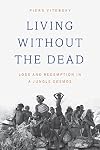
I first read this book a couple of years ago when I was taking courses in anthropology for my minor in university. Back then, it already made a great impression on me. At the time, I had to finish it fairly quickly in order to write an assignment on it, leading me to skip certain chapters and passages. Ever since, the book remained firmly planted in the back of my mind, and recently I have bought my own copy in order to re-read at my own pace simply for my own enjoyment. I am therefore show more writing this review as a layperson.
In this book, Vitebsky describes his ethnographic fieldwork among the Lanjia Sora in southern Odisha from the 1970s onwards, and especially the abandonment of the animist religion and way of life by the younger generations of Sora.
Despite the scientific nature of the work, Vitebsky writes in an accessible style which is for the most part easy to follow. Large sections read almost like a novel, and even when reading it for the second time around, I desperately wanted to keep on reading. Some passages of thorough analysis are of course present, and take some more careful reading to follow the train of thought. Despite this slowing my reading, Vitebsky’s account is striking.
The first part of the book especially, which deals with Vitebsky’s early fieldwork in Soraland in the late 1970s, speaks to the imagination, as he describes his gradual integration in and his understanding of this culture, language and religion. In addition to the text, the photographs taken by the author bring this world, remote in terms of both space and time, intimately close to the reader.
In a way, the book feels like a tragedy, as the culture that the author had come to understand and love no longer exists today as it did then. The second part of the book deals with Vitebsky’s return to the Sora after a long absence from 1992 onwards, and discusses much of what has changed since. This was more difficult for me to read the first time around, both because I shared the author’s sense of loss, and because it seemed I had also slowly come to understand this culture while reading, and now having to learn yet another worldview was perhaps too much. This second time around, the animist way was already familiar to me, which made reading about the new more manageable.
Personally, I think that this book brings much more than knowledge about this remote tribe in India. Coming to understand a worldview so distant from one’s own is a valuable experience, and shows us the wonderful diversity of our world, as well as a mutual understanding between human beings. In fact, I think this book could be a positive experience for almost anyone, whether they know they are interested in anthropology or not.
Vitebsky writes at the end of the book that it has been a privilege to be accepted into the lives of so many Sora over the years. Likewise it feels like a privilege to be led by the author through his experiences among the Sora, and get to know so many people’s lives intimately through his words. show less
In this book, Vitebsky describes his ethnographic fieldwork among the Lanjia Sora in southern Odisha from the 1970s onwards, and especially the abandonment of the animist religion and way of life by the younger generations of Sora.
Despite the scientific nature of the work, Vitebsky writes in an accessible style which is for the most part easy to follow. Large sections read almost like a novel, and even when reading it for the second time around, I desperately wanted to keep on reading. Some passages of thorough analysis are of course present, and take some more careful reading to follow the train of thought. Despite this slowing my reading, Vitebsky’s account is striking.
The first part of the book especially, which deals with Vitebsky’s early fieldwork in Soraland in the late 1970s, speaks to the imagination, as he describes his gradual integration in and his understanding of this culture, language and religion. In addition to the text, the photographs taken by the author bring this world, remote in terms of both space and time, intimately close to the reader.
In a way, the book feels like a tragedy, as the culture that the author had come to understand and love no longer exists today as it did then. The second part of the book deals with Vitebsky’s return to the Sora after a long absence from 1992 onwards, and discusses much of what has changed since. This was more difficult for me to read the first time around, both because I shared the author’s sense of loss, and because it seemed I had also slowly come to understand this culture while reading, and now having to learn yet another worldview was perhaps too much. This second time around, the animist way was already familiar to me, which made reading about the new more manageable.
Personally, I think that this book brings much more than knowledge about this remote tribe in India. Coming to understand a worldview so distant from one’s own is a valuable experience, and shows us the wonderful diversity of our world, as well as a mutual understanding between human beings. In fact, I think this book could be a positive experience for almost anyone, whether they know they are interested in anthropology or not.
Vitebsky writes at the end of the book that it has been a privilege to be accepted into the lives of so many Sora over the years. Likewise it feels like a privilege to be led by the author through his experiences among the Sora, and get to know so many people’s lives intimately through his words. show less
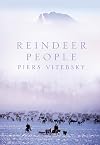
A fascinating story of the Eveny people of Siberia; I heard an interview with the author on "To the Best of Our Knowledge" and had to go out and read the book. Vitebsky recounts several of his visits to the region and his understanding of the reindeer-herding culture and some of their spiritual practices (as well as their history through the Soviet and immediate post-Soviet periods).
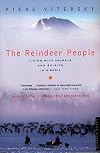
I thought this was a really good ethnography for a couple of reasons. The first is simply that it is well written. Vitebsky definitely knows how to describe a scene. He does a great job of conveying the environment. Readers will get a vivid sense of exactly how cold it is in Siberia (at times -90!). Also, his descriptions of the landscape are fabulous. Many of my students also commented that this book read like a novel, and while I disagree to some extent, I do think that the book is very show more engaging. He also does a good job conveying the families and groups of nomads that he lived with.
The second reason I liked The Reindeer People was that it was full of lots of different types of information about the Eveny (not to be confused with the neighboring Evenki). He talks about religion, shamanism, and ritual, but also economics and politics. He addresses anthropological "staples" such as kinship, gender, and language, but also places the Eveny within a global context showing how they have been affected at various times by communism and capitalism. show less
The second reason I liked The Reindeer People was that it was full of lots of different types of information about the Eveny (not to be confused with the neighboring Evenki). He talks about religion, shamanism, and ritual, but also economics and politics. He addresses anthropological "staples" such as kinship, gender, and language, but also places the Eveny within a global context showing how they have been affected at various times by communism and capitalism. show less
Many people have criticised this book for not being as much of an account of 'shamanism' as they wanted it to be, but personally I appreciated the insight into Saami culture given by Piers, especially when one takes into account how much we learn of a culture simply through observation and living with a people.
Piers has an interesting narrative voice, I don't find it particularly gripping, but it's still fairly easy to read, and flows well. He introduces each 'character', and the landscape, show more with description and effective dialogue to convey the sense of personality, the coldness, the desolate landscape and the politics of trying to be an indigenous person in Russia.
I particularly appreciate his devotion to describing how fundamental the reindeer are to the lives of these people. The reindeer are everything to the indigenous people he stays with within this book, and Piers takes the time to both explore with us the historical basis in this, and how it is evolving in contemporary times.
It is a different life, when everything you come to depend upon comes from the reindeer, the tundra, the taiga, the snow. The fleeting mentions of spirits and ritual are enough to give one a sense that this is a culture still profoundly influenced by the past, even though it is being destroyed by the present, and may not survive to our distant future. show less
Piers has an interesting narrative voice, I don't find it particularly gripping, but it's still fairly easy to read, and flows well. He introduces each 'character', and the landscape, show more with description and effective dialogue to convey the sense of personality, the coldness, the desolate landscape and the politics of trying to be an indigenous person in Russia.
I particularly appreciate his devotion to describing how fundamental the reindeer are to the lives of these people. The reindeer are everything to the indigenous people he stays with within this book, and Piers takes the time to both explore with us the historical basis in this, and how it is evolving in contemporary times.
It is a different life, when everything you come to depend upon comes from the reindeer, the tundra, the taiga, the snow. The fleeting mentions of spirits and ritual are enough to give one a sense that this is a culture still profoundly influenced by the past, even though it is being destroyed by the present, and may not survive to our distant future. show less
Awards

You May Also Like


Associated Authors
Statistics
- Works
- 13
- Also by
- 2
- Members
- 1,176
- Popularity
- #21,864
- Rating
- 3.8
- Reviews
- 17
- ISBNs
- 55
- Languages
- 9