
Winifred E Watson (1906–2002)
Author of Miss Pettigrew Lives for a Day
About the Author
Image credit: via Babelio.com
Works by Winifred E Watson
Tagged
Common Knowledge
- Birthdate
- 1906-10-20
- Date of death
- 2002-08-05
- Gender
- female
- Nationality
- UK
- Birthplace
- England, UK
- Place of death
- Newcastle upon Tyne, Tyne and Wear, England, UK
- Associated Place (for map)
- England, UK
Members
Reviews
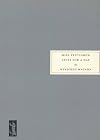
Winifred Watson's classic novel of 1938, 'Miss Pettigrew Lives for a Day', is a satire on the social scene of the 1930s, when the Bright Young Things held court. Miss Pettigrew is of indeterminate middle age, a spinster gentlewoman who has had to work to earn her keep, but isn't very good at it. We meet her in dire straits, unemployed and undernourished, on her way to an interview for a potential job.
When 'Miss Pettigrew' was first offered for publication, Watson was better known for the show more type of steamy, working class historical romance that Catherine Cookson later made her own. Her publisher Methuen was nervous about the change in direction that 'Miss Pettigrew' represented and so Watson wrote another pot boiler, while at the same time criticising their reluctance to publish the book she considered to be her best work. She was right. Both novels were published in 1938 and 'Miss Pettigrew' outstripped 'Upyonder', becoming an international success.
Bigoted views about Jewish people and Italians aside, it's a charming, clever and hilarious book. Its title character is a delightful blend of innocence and mischief, her thus-far sheltered existence belying her perception and ability to command all manner of tricky situations.
Over a period of less than 24 hours, she becomes indispensable in the life of the young woman whose bachelorette flat with its state of the art all-electric modcons she arrives at thinking she's going to be interviewed for a job. Delysia LaFosse (a stage name of monumental brilliance) has three men on the go, something that scandalises Miss Pettigrew initially. She soon accepts the modern ways of her hostess and is rapidly introduced to a social whirl of intrigues, alcohol and drugs. The scene in which Miss LaFosse thrusts a packet of powder onto Miss Pettigrew's lap and she misidentifies it as Beecham's made me laugh out loud. Quite a few things made me laugh out loud. It's a wonderful cheeky wink of a book.
The bravura with which Miss Pettigrew rises to the occasion of her new circumstance, finding inner strengths from her experiences as a governess of sorts in the houses of the wealthy, is stellar. Watson writes everything from Miss Pettigrew's perspective, so we get to hear her inner thoughts as well as witness the impact her forthrightness has on others and herself. The story is pacey, but never rushed. The characters are larger than life, but never unbelievable. The spearing of sexual politics, the appreciation of the change in social morals, and the sense that social boundaries are beginning to relax all add to the depth of what at first glance appears to be a frothy confection of a novel.
She so enjoys her foray into the world of the Bright Young Things, relishing the acceptance a change in clothing, hairstyle and makeup garners her, that she almost forgets she will have to return to real life. Her inner thoughts reveal to us the hardships she has suffered, from a restrictive childhood to the drudgery of needing to work and not being able to hold down a job, and in the way her dowdiness gives others silent permission to dismiss her or to bully her. It's no wonder she embraces her time in the social spotlight so readily. I liked the way Delysia and her friends treated Miss Pettigrew, too, with acceptance and genuine liking, something that is due to their approach to life but also to the freedom Miss Pettigrew begins to feel, permitting her to be herself.
There was something of 'The Making of a Marchioness' about this story, except with more realism. Watson doesn't overdo Miss Pettigrew's backstory, but the detail is enough to recognise it as the kind of life many women experienced in the interwar years. Miss Pettigrew would have come of age as the First World War ended, a time when young men were thin on the ground.
It was only 17 hours in terms of the story, but I will miss spending time with Miss Pettigrew and Miss LaFosse. show less
When 'Miss Pettigrew' was first offered for publication, Watson was better known for the show more type of steamy, working class historical romance that Catherine Cookson later made her own. Her publisher Methuen was nervous about the change in direction that 'Miss Pettigrew' represented and so Watson wrote another pot boiler, while at the same time criticising their reluctance to publish the book she considered to be her best work. She was right. Both novels were published in 1938 and 'Miss Pettigrew' outstripped 'Upyonder', becoming an international success.
Bigoted views about Jewish people and Italians aside, it's a charming, clever and hilarious book. Its title character is a delightful blend of innocence and mischief, her thus-far sheltered existence belying her perception and ability to command all manner of tricky situations.
Over a period of less than 24 hours, she becomes indispensable in the life of the young woman whose bachelorette flat with its state of the art all-electric modcons she arrives at thinking she's going to be interviewed for a job. Delysia LaFosse (a stage name of monumental brilliance) has three men on the go, something that scandalises Miss Pettigrew initially. She soon accepts the modern ways of her hostess and is rapidly introduced to a social whirl of intrigues, alcohol and drugs. The scene in which Miss LaFosse thrusts a packet of powder onto Miss Pettigrew's lap and she misidentifies it as Beecham's made me laugh out loud. Quite a few things made me laugh out loud. It's a wonderful cheeky wink of a book.
The bravura with which Miss Pettigrew rises to the occasion of her new circumstance, finding inner strengths from her experiences as a governess of sorts in the houses of the wealthy, is stellar. Watson writes everything from Miss Pettigrew's perspective, so we get to hear her inner thoughts as well as witness the impact her forthrightness has on others and herself. The story is pacey, but never rushed. The characters are larger than life, but never unbelievable. The spearing of sexual politics, the appreciation of the change in social morals, and the sense that social boundaries are beginning to relax all add to the depth of what at first glance appears to be a frothy confection of a novel.
She so enjoys her foray into the world of the Bright Young Things, relishing the acceptance a change in clothing, hairstyle and makeup garners her, that she almost forgets she will have to return to real life. Her inner thoughts reveal to us the hardships she has suffered, from a restrictive childhood to the drudgery of needing to work and not being able to hold down a job, and in the way her dowdiness gives others silent permission to dismiss her or to bully her. It's no wonder she embraces her time in the social spotlight so readily. I liked the way Delysia and her friends treated Miss Pettigrew, too, with acceptance and genuine liking, something that is due to their approach to life but also to the freedom Miss Pettigrew begins to feel, permitting her to be herself.
There was something of 'The Making of a Marchioness' about this story, except with more realism. Watson doesn't overdo Miss Pettigrew's backstory, but the detail is enough to recognise it as the kind of life many women experienced in the interwar years. Miss Pettigrew would have come of age as the First World War ended, a time when young men were thin on the ground.
It was only 17 hours in terms of the story, but I will miss spending time with Miss Pettigrew and Miss LaFosse. show less

Miss Pettigrew Lives for a Day is a book with two settings. It's either a charming, frothy Cinderella-esque fantasy where the eponymous character, teetering on the verge of destitution in 1930s London, sees her life transformed over the course of a single day following an accidental encounter with glamorous nightclub singer Delysia; or a brick-to-the-face of antisemitism, xenophobia, and that weird interwar insistence that what a woman really loves is a man who'll shake her, tell her they're show more an idiot, and insist that "obviously she needs a little physical correction." Oof. The ratio of froth:yuck was such that I was able to get through the book. But while I've heard so many people recommend this as a much-loved comfort read, I don't think I'll be coming back to it. show less
Why have I never heard of this book before? First published in 1938, Miss Pettigrew’s day starts when her employment agency sends her to the wrong address. What follows is twenty-four hours of epiphanies in which she learns about life, courtesy of a nightclub singer. ‘Miss Pettigrew Lives for a Day’ by Winifred Watson was a revelation and has quickly claimed its place as one of my favourite novels.
Miss Pettigrew is a governess, not a very good one, and finds herself forced to take jobs show more as a housemaid or looking after children she would rather not know. Then one day an error leads her to the apartment of Delysia LaFosse, a nightclub singer with a complicated love life. She tries to tell Miss LaFosse she has come about the job, but Miss LaFosse does not listen. As the story progresses, no children appear, but by now Miss Pettigrew is proving adept at solving Delysia’s small difficulties.
On the surface, this is a frothy story of gowns, flirting, lipstick, negligées and men, suitable and unsuitable. Beneath the surface, it is a novel about throwing away the bounds of class and venturing into the unknown. It is about taking a deep breath and being brave in order to change your life. I was rooting for Guinevere Pettigrew and was particularly pleased with the ending, as I am sure she was too.
My enjoyment of the novel was supplemented by the gorgeous line drawings, this edition by Persephone features the original illustrations by Mary Thomsom.
Read more of my book reviews at http://www.sandradanby.com/book-reviews-a-z/ show less
Miss Pettigrew is a governess, not a very good one, and finds herself forced to take jobs show more as a housemaid or looking after children she would rather not know. Then one day an error leads her to the apartment of Delysia LaFosse, a nightclub singer with a complicated love life. She tries to tell Miss LaFosse she has come about the job, but Miss LaFosse does not listen. As the story progresses, no children appear, but by now Miss Pettigrew is proving adept at solving Delysia’s small difficulties.
On the surface, this is a frothy story of gowns, flirting, lipstick, negligées and men, suitable and unsuitable. Beneath the surface, it is a novel about throwing away the bounds of class and venturing into the unknown. It is about taking a deep breath and being brave in order to change your life. I was rooting for Guinevere Pettigrew and was particularly pleased with the ending, as I am sure she was too.
My enjoyment of the novel was supplemented by the gorgeous line drawings, this edition by Persephone features the original illustrations by Mary Thomsom.
Read more of my book reviews at http://www.sandradanby.com/book-reviews-a-z/ show less
"Men are awful," said Miss Dubarry miserably.
"I quite agree," said Miss Pettigrew.
Well, what's not to love about this book? It's a whirlwind of fun and adventure and romance. The rapid-fire dialogue is delicious. Puts me in mind of the dialogue in "His Girl Friday." What I wouldn't give to see this movie in early color starring Cary Grant as Michael, Irene Dunne as Delysia, K. Hepburn as Miss Dubarry, Clark Gable as Nick, and Agnes Moorehead as Miss Pettigrew.
"When you're over thirty-five," show more lectured Miss Dubarry, "make-up must be sparing. There's nothing worse than a middle-aged woman with too much make-up. It accentuates her age, not lessens it. Only a very young, unlined face can stand the lavish emphasis of too many cosmetics. The effect must be delicate, artistic, the possibility never strained that it can, after all, be natural, so that the beholder is left wondering which it is, art or nature."
Brilliant.
I haven't watched the 2008 film yet. I will and I hope it does this delightful book justice. This is the sort of book where you turn the last page with a wistful smile, a misty eye, and deep, satisfying sigh. show less
"I quite agree," said Miss Pettigrew.
Well, what's not to love about this book? It's a whirlwind of fun and adventure and romance. The rapid-fire dialogue is delicious. Puts me in mind of the dialogue in "His Girl Friday." What I wouldn't give to see this movie in early color starring Cary Grant as Michael, Irene Dunne as Delysia, K. Hepburn as Miss Dubarry, Clark Gable as Nick, and Agnes Moorehead as Miss Pettigrew.
"When you're over thirty-five," show more lectured Miss Dubarry, "make-up must be sparing. There's nothing worse than a middle-aged woman with too much make-up. It accentuates her age, not lessens it. Only a very young, unlined face can stand the lavish emphasis of too many cosmetics. The effect must be delicate, artistic, the possibility never strained that it can, after all, be natural, so that the beholder is left wondering which it is, art or nature."
Brilliant.
I haven't watched the 2008 film yet. I will and I hope it does this delightful book justice. This is the sort of book where you turn the last page with a wistful smile, a misty eye, and deep, satisfying sigh. show less
Lists
Awards


You May Also Like


Associated Authors
Statistics
- Works
- 7
- Members
- 2,694
- Popularity
- #9,536
- Rating
- 4.1
- Reviews
- 175
- ISBNs
- 21
- Languages
- 7