
Frances Hodgson Burnett (1849–1924)
Author of The Secret Garden
About the Author
Frances Hodgson Burnett wrote for children and adults, publishing both plays and novels. She was born in Manchester, England, on November 24, 1849. Her father, who owned a furniture store, died when she was only four years old. Her mother struggled to keep the family business running while trying show more to raise five children. Finally, because of the failing Manchester economy, the family sold the store and immigrated to the United States. In 1865 they settled just outside of Knoxville, Tennessee. Hoping to offset her family's continuing financial troubles, Burnett began to submit her stories to women's magazines. She was immediately successful. In the late 1860s her stories were published in nearly every popular American magazine. Burnett helped to support her family with income from the sale of her stories, even saving enough to finance a trip back to England, where she stayed for over a year. In 1879, Burnett published her first stories for children; two of her most popular are A Little Princess and The Secret Garden. In contrast to an extremely successful career, Burnett's personal life held many challenges. Her son Lionel was diagnosed with tuberculosis at age 15, from which he never recovered. His death inspired several stories about dead or dying children. Burnett lived her later years on Long Island, New York. She died in 1924. (Bowker Author Biography) show less
Image credit: Famous Americans CD-ROM & Book (Dover Electronic Clip Art)
Series
Works by Frances Hodgson Burnett
Children's Classic Compendium: Anne of Green Gables / Little Princess / Wizard of Oz (1999) 39 copies
The Secret Garden (Hallmark Gift Books) 36 copies
The Queen Crosspatch Treasury: The Troubles of Queen Silver-Bell As Told to Queen Crosspatch (1992) 26 copies
The Secret Garden : A New version of the Favorite Children's Classic By Archie Oliver (2003) 23 copies
The Secret Garden (Mandarin Companion Graded Readers: Level 1, Simplified Chinese Edition) (2014) 15 copies
Level 2: The Secret Garden Book and Multi-ROM with MP3 Pack (Pearson English Active Readers) (2015) 6 copies
A Little Princess [1917 film] — Author — 5 copies
The Secret Garden (Mandarin Companion Graded Readers: Level 1, Traditional Chinese Edition) (2016) — Author — 5 copies
The Secret Garden 5 copies
Little Lord Fauntleroy: A Drama in Three Acts, Founded on the Story of the Same Name (2012) 4 copies, 1 review
The Lost Prince 4 copies
The secret garden. Con espansione online: The Secret Garden + downloadable audio (2011) 4 copies, 1 review
Little Lord Fauntleroy (Illustrated): The 1886 Classic Edition with Original Illustrations (2025) 4 copies
Lost Prince (Puffin Books) 3 copies
Project X Origins Graphic Texts: Dark Blue Book Band, Oxford Level 16: The Secret Garden (2016) 3 copies
The Children's Illustrated Classics (The Secret Garden; A Little Princess; Anne of Green Gables) (2021) 3 copies
Reading & Training : Frances Hodgson Burnett : The secret garden {2008} [book + sound recording] (2007) — Writer — 3 copies
Classic Starts: A Little Princess by Retold from the Frances Hodgson Burnett original (2013-09-05) (2013) 3 copies
Die schönsten Kinderbuch-Klassiker: Der geheime Garten, Alice hinter den Spiegeln, Anne auf Green Gables, Black Beauty, Heidi (2018) 2 copies
A Little Princess (Abridged) 2 copies
Burnett Frances H.. - La Piccola Principessa. Favola Di Coraggio, Tra Sopravvivenza...E Libri (1 BOOKS) (2017) 2 copies
Children's Classics : The Secret Garden, a Little Princess, Ann of Green Gables, Little Women. (2009) 2 copies
Classic Collection: 5 Book Set: The Secret Garden, Black Beauty, The Wizard of Oz, Alices Adventures in Wonderland, Anne of Green Gables. (2010) 2 copies
In the Closed Room; Racketty-Packetty House; The Land of the Blue Flower; The Little Hunchback Zia; My Robin (2007) 2 copies
Princesa Sara: Sara Crewe o Lo que sucedió en el pensionado de la señorita Minchin (2021) 2 copies, 1 review
Children's Classics Adapted and Illustrated (Children's Classics, Volumes 1, 2, 3, and 4) (2009) 2 copies
Le petit Lord Fauntleroy 1 copy
Panna szlachetnego rodu 1 copy
Sara Crewe Little Saint Elizabeth and Other Stories by Frances Hodgson Burnett (1914) 1 copy, 1 review
SST 64 - Una nobile donna 1 copy
Lracketty-Packetty House 1 copy
Through One Administration 1 copy
El pequeño lord 1 copy
Lítil prinsessa 1 copy
世界名作ものがたり 小公子 1 copy
Der verbotene Garten 1 copy
De kleine prinses 1 copy
St. Nicholas Vol XIII. No. 8 June 1886 : An Illustrated Magazine for Young Folks — Contributor — 1 copy
T. Tembarom 1 copy
Methods of Lady Walderhurst 1 copy
His Grace of Osmonde. Being the portion of the history of that nobleman's life omitted in ... 'A Lady of Quality.". (2011) 1 copy
The Secret Garden 1 copy
IlPiccolo Lord 1 copy
The Secret Garden: By Frances Hodgson Burnett (Illustrated) FREE Alice's Adventures In Wonderland 1 copy
Gratitude 1 copy
Prinzessin Sara 1 copy
Miss Crespigney 1 copy
Secret Garden, the 1 copy
In the garden 1 copy
In the Closed Room 1 copy
El jardín secreto 1 copy
Frances Hodgson Burnett Ultimate Collection: 40 Children's Books, Novels, & Short Stories (2019) 1 copy
The Secret Garden: FREE Wuthering Heights By Emily Bronte, Illustrated [Quora Media] (100 Greatest Novels of All Time Book 11) (2017) 1 copy
The Secret Garden 1 copy
The Secret Garden 1 copy
T. Tembarom 1 copy
Robin 1 copy
Secret, Garden, the 1 copy
Himitsu no hanazono (ひみつの花園) 1 copy
Associated Works
Granny's Wonderful Chair and Its Tales of Fairy Times (1856) — Introduction, some editions — 212 copies, 3 reviews
A Little Princess [and] The Secret Garden [Double Feature Video] (1995) — Original books — 156 copies, 3 reviews
Queens of the Abyss: Lost Stories from the Women of the Weird (2020) — Contributor — 156 copies, 4 reviews
Forbidden Journeys: Fairy Tales and Fantasies by Victorian Women Writers (1992) — Contributor — 141 copies
Weird Women: Classic Supernatural Fiction by Groundbreaking Female Writers: 1852-1923 (2020) — Contributor — 108 copies, 2 reviews
The Graphic Canon of Children's Literature: The World's Greatest Kids' Lit as Comics and Visuals (2014) — Contributor — 101 copies, 1 review
Our Haunted Shores: Tales from the Coasts of the British Isles (2022) — Contributor — 67 copies, 2 reviews
Alternative Alices: Visions and Revisions of Lewis Carroll's Alice Books : An Anthology (1997) — Contributor — 43 copies, 1 review
Classic Children’s Stories 1 copy
Tagged
Common Knowledge
- Canonical name
- Hodgson Burnett, Frances
- Legal name
- Hodgson Burnett, Frances Eliza
- Other names
- Hodgson, Frances Eliza
- Birthdate
- 1849-11-24
- Date of death
- 1924-10-29
- Gender
- female
- Education
- The Select Seminary for Young Ladies and Gentlemen
- Occupations
- novelist
writer
playwright
children's book author - Relationships
- Burnett, Swan (ex-husband)
- Short biography
- Frances Eliza Hodgson Burnett (24 November 1849 – 29 October 1924) was a British-American novelist and playwright.
- Nationality
- UK (birth)
USA (naturalized, 1905) - Birthplace
- 141 York Street, Cheetham, Manchester, Lancashire, England, UK
- Places of residence
- Plandome, Long Island, New York, USA
Great Maytham Hall, Rolvenden, Kent, England, UK
London, Middlesex, England, UK
Paris, Île-de-France, France
Washington, D.C., USA
Knoxville, Tennessee, USA (show all 7)
Manchester, Greater Manchester, England, UK - Place of death
- Plandome, New York, USA
- Burial location
- Roslyn Cemetery, Roslyn, New York, USA
- Map Location
- USA
Members
Discussions
A Little Princess Discussion in Hogwarts Express (March 2008)
Reviews

This is one of my favorite books and has been since I was eight years old. I love seeing her overcome the obstacles in her life, usually by sheer grit and determination, and do so without losing her humanity.
As the daughter of an Englishman in India during Victorian times, it is expected that at some point, she would be sent home to England for schooling. This is partly because of the prejudices of the time and because they felt that the Indian climate was not healthy for children. The book show more opens when Sara is seven years old and taken to the London boarding school where she is expected to live for the next decade. She is heartbroken at being separated from her beloved father but puts a brave face on it for him. Having spent all her life around adults, she is rather serious and unusually observant. Her initial take on Miss Minchin is spot-on and proves so throughout the book.
During the first part of the book, we see Sara settling into school life and making friends. As something of a misfit herself, Sara leans towards other outcasts like herself. One of her first friends is Ermengarde, a little girl who is overweight and a slow learner. She is bullied unmercifully by other girls and Miss Minchin. I loved seeing Sara take Ermengarde under her wing and find a faithful and loyal friend. Next is Lottie, a very young child who is far too young to have been sent away to school. Lottie has been spoiled by her family and has learned to use her motherless state to get what she wants. I liked the first scene between Sara and Lottie, with Sara's quiet empathy and kindness saving the day. Finally comes Sara's friendship with Becky, the school's scullery maid. Once again, Sara's innate compassion and empathy lead her to befriend a young girl very different from herself but with whom she can also see their similarities.
The first four years of Sara's life at Miss Minchin's pass quickly with brief vignettes of her life during that time. Then comes her eleventh birthday and the day her life changed. As Sara and her schoolmates enjoy an elaborate birthday party, Miss Minchin receives a visit from Captain Crewe's lawyer. The man brings the unwelcome news that Captain Crewe is dead of fever and that he died broke and in debt due to a bad investment. Miss Minchin is furious that she is out the money she has spent, adding to her resentment and dislike of Sara. Thinking better of just throwing the girl out on the street, she turns Sara into an unpaid servant.
I ached for Sara, whose life was completely upended. She wasn't even allowed time to grieve her father's death before facing the drastic changes in her life. It breaks my heart every time to see her try to hang on to her upbeat attitude while enduring the abuse of others. During this time, Sara's ability to lose herself in the worlds her imagination creates makes her life a little more bearable. It was infinitely satisfying to see Sara's inner strength as she survived the appalling treatment. There were a few bright spots in her life - occasional surreptitious visits from Ermengarde or Lottie, the rat she befriends, and unexpected kindnesses from outsiders.
Another bright spot in her life occurs when a new neighbor moves in next door—an Englishman who has been ill and has an Indian servant with a mischievous pet monkey. Sara spotting several items from India through his windows brings back good memories of her life there. An unexpected visit to her attic room by the monkey also introduces her to Ram Dass, the Indian servant, an event that will profoundly affect her life. We get a glimpse into the neighbor's life, Mr. Carrisford, and discover an unexpected connection to Sara. I always love the events of these final chapters. Sara's life goes from immeasurably hard and very close to breaking her spirit to returning her to her previously privileged life. But this time, her experiences give her an added depth of understanding of the world around her and a desire to help others.
I've seen others comment that Sara is "too perfect" or Miss Minchin "too awful." When I read it, I consider that this book was written in 1905. At that time, books for children were deliberately written as moral tales, designed to show children the difference between right and wrong. So, while the characters' attitudes may be somewhat exaggerated, there is enough realism to make them believable. I especially enjoyed seeing that Sara knows how to get under Miss Minchin's skin with a simple look and that she isn't too good to lose her temper now and then.
I also must add that it's hard to talk about this story without mentioning the films that have been made from it. There are three that I am aware of: the 1939 version with Shirley Temple, the 1986 version with Maureen Lipman (a British TV mini-series), and the 1995 version starring Liesel Matthews. In my opinion, only one of them is worth watching. The Shirley Temple version vaguely resembles the book, with an added romance between two characters who don't exist in the story, an odd dream sequence, and a wholly made-up ending resulting in Sara's father still being alive. The 1995 version changes the time and location from Victorian London to World War One New York and again changes the ending to reuniting with her father. The 1987 version, on the other hand, is a faithful adaptation of the book. I loved seeing some of my favorite scenes come alive, from the French lesson to the bun shop scene to the revelation of Sara and "the Indian Gentleman's" connection. I highly recommend this film to anyone who loves the book. (It can be found on YouTube in its original six episodes) show less
As the daughter of an Englishman in India during Victorian times, it is expected that at some point, she would be sent home to England for schooling. This is partly because of the prejudices of the time and because they felt that the Indian climate was not healthy for children. The book show more opens when Sara is seven years old and taken to the London boarding school where she is expected to live for the next decade. She is heartbroken at being separated from her beloved father but puts a brave face on it for him. Having spent all her life around adults, she is rather serious and unusually observant. Her initial take on Miss Minchin is spot-on and proves so throughout the book.
During the first part of the book, we see Sara settling into school life and making friends. As something of a misfit herself, Sara leans towards other outcasts like herself. One of her first friends is Ermengarde, a little girl who is overweight and a slow learner. She is bullied unmercifully by other girls and Miss Minchin. I loved seeing Sara take Ermengarde under her wing and find a faithful and loyal friend. Next is Lottie, a very young child who is far too young to have been sent away to school. Lottie has been spoiled by her family and has learned to use her motherless state to get what she wants. I liked the first scene between Sara and Lottie, with Sara's quiet empathy and kindness saving the day. Finally comes Sara's friendship with Becky, the school's scullery maid. Once again, Sara's innate compassion and empathy lead her to befriend a young girl very different from herself but with whom she can also see their similarities.
The first four years of Sara's life at Miss Minchin's pass quickly with brief vignettes of her life during that time. Then comes her eleventh birthday and the day her life changed. As Sara and her schoolmates enjoy an elaborate birthday party, Miss Minchin receives a visit from Captain Crewe's lawyer. The man brings the unwelcome news that Captain Crewe is dead of fever and that he died broke and in debt due to a bad investment. Miss Minchin is furious that she is out the money she has spent, adding to her resentment and dislike of Sara. Thinking better of just throwing the girl out on the street, she turns Sara into an unpaid servant.
I ached for Sara, whose life was completely upended. She wasn't even allowed time to grieve her father's death before facing the drastic changes in her life. It breaks my heart every time to see her try to hang on to her upbeat attitude while enduring the abuse of others. During this time, Sara's ability to lose herself in the worlds her imagination creates makes her life a little more bearable. It was infinitely satisfying to see Sara's inner strength as she survived the appalling treatment. There were a few bright spots in her life - occasional surreptitious visits from Ermengarde or Lottie, the rat she befriends, and unexpected kindnesses from outsiders.
Another bright spot in her life occurs when a new neighbor moves in next door—an Englishman who has been ill and has an Indian servant with a mischievous pet monkey. Sara spotting several items from India through his windows brings back good memories of her life there. An unexpected visit to her attic room by the monkey also introduces her to Ram Dass, the Indian servant, an event that will profoundly affect her life. We get a glimpse into the neighbor's life, Mr. Carrisford, and discover an unexpected connection to Sara. I always love the events of these final chapters. Sara's life goes from immeasurably hard and very close to breaking her spirit to returning her to her previously privileged life. But this time, her experiences give her an added depth of understanding of the world around her and a desire to help others.
I've seen others comment that Sara is "too perfect" or Miss Minchin "too awful." When I read it, I consider that this book was written in 1905. At that time, books for children were deliberately written as moral tales, designed to show children the difference between right and wrong. So, while the characters' attitudes may be somewhat exaggerated, there is enough realism to make them believable. I especially enjoyed seeing that Sara knows how to get under Miss Minchin's skin with a simple look and that she isn't too good to lose her temper now and then.
I also must add that it's hard to talk about this story without mentioning the films that have been made from it. There are three that I am aware of: the 1939 version with Shirley Temple, the 1986 version with Maureen Lipman (a British TV mini-series), and the 1995 version starring Liesel Matthews. In my opinion, only one of them is worth watching. The Shirley Temple version vaguely resembles the book, with an added romance between two characters who don't exist in the story, an odd dream sequence, and a wholly made-up ending resulting in Sara's father still being alive. The 1995 version changes the time and location from Victorian London to World War One New York and again changes the ending to reuniting with her father. The 1987 version, on the other hand, is a faithful adaptation of the book. I loved seeing some of my favorite scenes come alive, from the French lesson to the bun shop scene to the revelation of Sara and "the Indian Gentleman's" connection. I highly recommend this film to anyone who loves the book. (It can be found on YouTube in its original six episodes) show less

When bad-tempered Mary Lennox is orphaned, she is taken from India to the moors of Yorkshire to live at her uncle Archibald Craven's lonely manor house. The estate holds more than one mystery for Mary to solve, but all of the mysteries hinge on the mysterious walled garden, locked up by Mr. Craven ten years ago. Can Mary find a way to get in? What will she discover there, if she does?
I think the thing that keeps me coming back to this book is that it can be read on so many different levels. show more It has a great plot that is perennially attractive to children -- what child doesn't long to solve a mystery and discover a secret place that is theirs alone? And if you go a little deeper, there's a lot of fascinating character development as Mary goes from someone completely unlikeable to a true heroine. There are interesting themes, like the healing power of nature, the danger of living up to negative expectations, and the importance of human connections. I'm always drawn to this book in the springtime, and I think I always will be, no matter how old I am. Readers of all ages will connect with this lovely story. show less
I think the thing that keeps me coming back to this book is that it can be read on so many different levels. show more It has a great plot that is perennially attractive to children -- what child doesn't long to solve a mystery and discover a secret place that is theirs alone? And if you go a little deeper, there's a lot of fascinating character development as Mary goes from someone completely unlikeable to a true heroine. There are interesting themes, like the healing power of nature, the danger of living up to negative expectations, and the importance of human connections. I'm always drawn to this book in the springtime, and I think I always will be, no matter how old I am. Readers of all ages will connect with this lovely story. show less

Before there was A Little Princess - that beloved classic of children's literature that has long been one of the cornerstones of girlhood reading - there was Sarah Crewe, a heroine whose story began, not with the publication of the 1903 novel, but with the serialization of a shorter, earlier version of the tale, in 1888. This volume, Sara Crewe: Or What Happened at Miss Minchin's, is a lovely reproduction of that earlier version, which first appeared in the pages of St. Nicholas Magazine. As show more someone who loved the longer novel as a girl, Sara Crewe is something I've long wanted to read, and what better time than now, shortly before I begin my reread of A Little Princess itself, for our January group discussion in my girls' school story group?
It was a rather surreal experience for me, reading this, as I am so familiar with the later story: everything felt familiar, and yet somewhat strange as well. Almost like seeing a well-known and well-loved image through a distorted lens. Many things were the same: the heroine, the school, the nasty proprietess - and don't we all love to hate Miss Minchin! But there were differences as well, some, like the absence of Becky, immediately noticeable, while others, such as the overall tone, taking a little longer to register. It seemed to me, when reading, that A Little Princess had a far less intrusive narrator than this predecessor, perhaps because Burnett had more space to show, rather than to tell, in her later revision.
It's an interesting thought that, like some of the other reviewers here, I might have preferred this, had I read it first - and it is an enjoyable little period piece - but the reality is that, compared to the fuller version, it felt incomplete and rushed to me. I wanted more! Fortunately, that more exists, as A Little Princess. Recommended primarily to those who are interested in the history of this story, and in reading an earlier version of it. show less
It was a rather surreal experience for me, reading this, as I am so familiar with the later story: everything felt familiar, and yet somewhat strange as well. Almost like seeing a well-known and well-loved image through a distorted lens. Many things were the same: the heroine, the school, the nasty proprietess - and don't we all love to hate Miss Minchin! But there were differences as well, some, like the absence of Becky, immediately noticeable, while others, such as the overall tone, taking a little longer to register. It seemed to me, when reading, that A Little Princess had a far less intrusive narrator than this predecessor, perhaps because Burnett had more space to show, rather than to tell, in her later revision.
It's an interesting thought that, like some of the other reviewers here, I might have preferred this, had I read it first - and it is an enjoyable little period piece - but the reality is that, compared to the fuller version, it felt incomplete and rushed to me. I wanted more! Fortunately, that more exists, as A Little Princess. Recommended primarily to those who are interested in the history of this story, and in reading an earlier version of it. show less
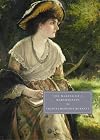
Emily Fox-Seton is a single, well bred woman in her early 30s, with some education but absolutely no money. She must therefore work for a living, surviving by running errands for various wealthy people around London. When one of her employers invites her for a summer holiday at a country estate, Emily is ecstatically grateful, hoping only to be useful to her patroness in return for this perceived generosity. In the course of her visit, however, she unknowingly catches the eye of the Marquis show more of Walderhurst, who is one of the richest men in England. Emily’s subsequent adventures lead her to a markedly different future from the one she always imagined – one that could be full of danger as well as happiness.
This is an absolutely lovely book, and I enjoyed every minute of it! The overall structure is very fairy-tale-esque, but Burnett subverts expectations as well as fulfilling them. For example, Emily is a sweet and innocent heroine, but she’s not particularly bright or witty. Similarly, Lord Walderhurst is far from an ideal hero: he’s repressed, insensitive, and patronizing toward Emily for much of the novel. Yet the book still manages to be heartwarming and romantic! The second half of the book is paced very slowly and has a melodramatic aspect to it, as Emily is confronted with resentful people who wish her harm. The novel definitely has some flaws – particularly when it comes to non-PC descriptions of Indian characters (there are couple) – but overall I really liked it. show less
This is an absolutely lovely book, and I enjoyed every minute of it! The overall structure is very fairy-tale-esque, but Burnett subverts expectations as well as fulfilling them. For example, Emily is a sweet and innocent heroine, but she’s not particularly bright or witty. Similarly, Lord Walderhurst is far from an ideal hero: he’s repressed, insensitive, and patronizing toward Emily for much of the novel. Yet the book still manages to be heartwarming and romantic! The second half of the book is paced very slowly and has a melodramatic aspect to it, as Emily is confronted with resentful people who wish her harm. The novel definitely has some flaws – particularly when it comes to non-PC descriptions of Indian characters (there are couple) – but overall I really liked it. show less
Lists
Comfort Reads (1)
Read in 2014 (1)
AP Lit (1)
Check Library (1)
Garden-fiction (1)
Unread books (1)
Carole's List (1)
KID BOOKS (1)
6th Grade (1)
BitLife (1)
Garden (1)
BBC Big Read (1)
2024 Reads (1)
Ambleside Year 3 (1)
READ IN 2021 (1)
Sonlight Books (1)
BBC Big Read (1)
Favourite Books (1)
4th Grade Books (1)
Sense of place (2)
Folio Society (2)
Elevenses (2)
Out of Copyright (2)
Persephone (2)
A Novel Cure (2)
Ambleside Books (2)
Female Author (2)
Elementary Reads (1)
READ IN 2022 (1)
Books About Boys (1)
Ambleside Y3 (1)
Ambleside Year 7 (1)
Overdue Podcast (1)
Spring Reading (1)
Kindness (1)
1910s (1)
Spring Books (1)
1970s (1)
Victorian Period (1)
Enfants sans (1)
Awards


You May Also Like


Associated Authors
Statistics
- Works
- 359
- Also by
- 39
- Members
- 77,049
- Popularity
- #159
- Rating
- 4.1
- Reviews
- 1,186
- ISBNs
- 3,254
- Languages
- 32
- Favorited
- 143


