
Guy Consolmagno
Author of Turn Left at Orion: A Hundred Night Sky Objects to See in a Small Telescope - and How to Find Them
About the Author
Brother Guy Consolmagno, S.J., Ph.D. (Tucson, Arizona and Castel Gandolfo, Italy), is an astronomer at the Vatican Observatory. At the Vatican, he serves as curator of one of the largest meteorite collections in the world. He obtained his Ph.D. in Planetary Science from the University of Arizona show more and went on to teach at MIT until 1983, when he joined the Peace Corps. show less
Works by Guy Consolmagno
Turn Left at Orion: A Hundred Night Sky Objects to See in a Small Telescope - and How to Find Them (2011) 505 copies, 4 reviews
Would You Baptize an Extraterrestrial?: . . . and Other Questions from the Astronomers' In-box at the Vatican Observatory (2014) 122 copies, 6 reviews
Tagged
Common Knowledge
- Birthdate
- 1952-09-19
- Gender
- male
- Education
- University of Detroit Jesuit High School
Massachusetts Institute of Technology (BA | 1974)
Massachusetts Institute of Technology (MA | 1975)
University of Arizona (Ph.D. | 1978) - Occupations
- astronomer
planetary scientist - Organizations
- Catholic Church
Society of Jesus
Vatican Observatory
Harvard College Observatory
Massachusetts Institute of Technology
Peace Corps (show all 8)
Lafayette College
American Astronomical Society - Nationality
- USA
- Places of residence
- Detroit, Michigan, USA (birthplace)
- Associated Place (for map)
- Michigan, USA
Members
Reviews
Would You Baptize an Extraterrestrial?: . . . and Other Questions from the Astronomers' In-box at the Vatican Observatory by Guy Consolmagno
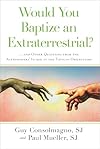
Why does the Vatican have an observatory? Can science and religion exist together? What really happened to Galileo? Does the Bible have anything to say about the Big Bang? Does science have anything to say about the Bible?
And, oh yes, would you baptize an extraterrestrial?
This is a very lively discussion, a dialog between two Jesuit scientists, a planetary scientist and a physicist, about Christianity, science, cosmology, conflicts and resonances between science and religion, and what show more questions each can address. Consolmagno and Mueller are both men of faith and men of science, people who felt called to the religious life, and to do science as part of that religious life. They're thoughtful, serious, and each has his own sense of humor and interests outside the realms of science and religion.
The discussion of Galileo is detailed, nuanced, and supported by a fairly detailed chronology of the major events, scientific, personal, and political.
Without giving either man's answer to the question about baptizing an extraterrestrial, I will say that that discussion also goes in some interesting and unexpected directions.
If you think that the Bible has to be read literally and doing otherwise is sinful, or if you think religion is nonsense that no intelligent person could take seriously, this is not the book for you. On the other hand, if you are interested in how two intelligent men who are both working scientists and members of a Catholic religious order think about these questions and about what they're doing both scientifically and as men of faith, this truly is a fascinating read, or listen.
Highly recommended.
I bought this book. show less
And, oh yes, would you baptize an extraterrestrial?
This is a very lively discussion, a dialog between two Jesuit scientists, a planetary scientist and a physicist, about Christianity, science, cosmology, conflicts and resonances between science and religion, and what show more questions each can address. Consolmagno and Mueller are both men of faith and men of science, people who felt called to the religious life, and to do science as part of that religious life. They're thoughtful, serious, and each has his own sense of humor and interests outside the realms of science and religion.
The discussion of Galileo is detailed, nuanced, and supported by a fairly detailed chronology of the major events, scientific, personal, and political.
Without giving either man's answer to the question about baptizing an extraterrestrial, I will say that that discussion also goes in some interesting and unexpected directions.
If you think that the Bible has to be read literally and doing otherwise is sinful, or if you think religion is nonsense that no intelligent person could take seriously, this is not the book for you. On the other hand, if you are interested in how two intelligent men who are both working scientists and members of a Catholic religious order think about these questions and about what they're doing both scientifically and as men of faith, this truly is a fascinating read, or listen.
Highly recommended.
I bought this book. show less
Would You Baptize an Extraterrestrial?: .... and Other Questions from the Astronomers' In-box at the Vatican Observatory by Guy Consolmagno
Book presents two Vatican astronomers, both Jesuits, discussing various "frequently asked questions" in dialogue form. The dialogue form comes off a little hokey, and their discussion isn't always satisfying. But it was a smooth, enjoyable read/listen.
Perhaps the most enjoyable sections pertain to the "demotion" of Plato, in which the Vatican astronomers actually played a part. (Like Pluto? Blame the Pope! Not really.)
The religion-vs-science discussion gave me a few new insights, but was show more mostly stuff I'd heard before, and not always presented as well as I think it could be. In my experience, a very high percentage of Protestants and Catholics still have a primitive, antagonistic understanding of "science versus religion." It might well be great for them, but it wasn't for me.
Despite the legendary Jesuit training, which includes work in philosophy, at various points I felt the authors were missing key philosophical distinctions—and not just skimming past them because they were outside of scope. The dialogue format ought to be good for addressing such objections, but since it was always a friendly, additive dialogue, there's little room for "wait, what about?" objections.
The "Star of Bethlehem" discussion irritated me for downplaying evidence that "stars" could indeed be positive—one need only look at Justin's account of Mithridates' birth—and in underplaying the possibility it's a straight-up theologoumenon. Although the authors take great pains to emphasize the modernity (and silliness) of "fundamentalism," their hermeneutic toolbox is nothing close to the full Catholic one.
The speed I listen to an audiobook says a lot about it. Here I was always listening at more than 1x speed—the material isn't that dense. Sometimes I was listening to it at 2x, which I mostly only do when I want to get past a topic. show less
Perhaps the most enjoyable sections pertain to the "demotion" of Plato, in which the Vatican astronomers actually played a part. (Like Pluto? Blame the Pope! Not really.)
The religion-vs-science discussion gave me a few new insights, but was show more mostly stuff I'd heard before, and not always presented as well as I think it could be. In my experience, a very high percentage of Protestants and Catholics still have a primitive, antagonistic understanding of "science versus religion." It might well be great for them, but it wasn't for me.
Despite the legendary Jesuit training, which includes work in philosophy, at various points I felt the authors were missing key philosophical distinctions—and not just skimming past them because they were outside of scope. The dialogue format ought to be good for addressing such objections, but since it was always a friendly, additive dialogue, there's little room for "wait, what about?" objections.
The "Star of Bethlehem" discussion irritated me for downplaying evidence that "stars" could indeed be positive—one need only look at Justin's account of Mithridates' birth—and in underplaying the possibility it's a straight-up theologoumenon. Although the authors take great pains to emphasize the modernity (and silliness) of "fundamentalism," their hermeneutic toolbox is nothing close to the full Catholic one.
The speed I listen to an audiobook says a lot about it. Here I was always listening at more than 1x speed—the material isn't that dense. Sometimes I was listening to it at 2x, which I mostly only do when I want to get past a topic. show less
Turn Left at Orion: Hundreds of Night Sky Objects to See in a Home Telescope - and How to Find Them by Guy Consolmagno
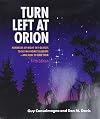
After tinkering not very successfully with a beginner 76 mm telescope for about six months, this book showed me what I was missing and gave me the confidence in myself and my equipment that I really needed. The charts are well-organised, favouring objects that are interesting and easy to find, and are very easy to relate to the view through the eyepiece. The background information has a can-do attitude that stresses that there's something in the sky for any telescope user, and that you show more should make no apologies for whatever equipment you happen to use. These days I'm out under the skies more often and with more purpose than ever before. show less
Would You Baptize an Extraterrestrial?: . . . and Other Questions from the Astronomer's In-box at the Vatican Observatory by Guy Consolmagno
Would you baptize an extraterrestrial tackles six space-related conundrums for Catholics, as requested numerous times by people who discover the Vatican has its own astronomical observatory. It actually employs astronomers, in Rome and Tucson AZ, and participates in the International Astronomy Union (IAU) proceedings. The questions are broken out as days of the week (The authors rest and give acknowledgments on the seventh). The questions range from the age old to the ultramodern:
Day 1: How show more does the bible rationalize the Big Bang (If there was a Big Bang, it just proves God created the universe)
Day 2: What happened to Pluto (Nothing happened. We just relabeled it after revising definitions)
Day 3: What about Galileo (He was asking for it, and really, he got off pretty lightly)
Day 4: What was the star of Bethlehem (Could have been anything, and it doesn’t matter)
Day 5: What happens after the world ends (Doesn’t matter how or when; faith, hope and love will survive – Saint Paul)
Day 6: Would you baptize an extraterrestrial. (Only if she asks, because Catholics would not baptize anyone who didn’t specifically request it and understand the commitment it represents. And only if the Church OKs it)
The arguments to get to these answers are long, involved, and Jesuit. They attempt to appear fair and balanced, but there is no one representing any other side. So you just read it for what it is, a Jesuit perspective on the universe.
The book is very chatty. It is laid out as a dialog between two Jesuit astronomers, a cross between a comedy team and a tag team. They try to be funny and keep it light. Each day their conversation takes place in a new locale in the world, to which they try to attach relevance, or at least lightheartedness. Their Roman Catholic religion is sanitized, flexible and openminded. They admit that science advances, while religious stories remain fixed and simply get reinterpreted. If it turns out something in the bible is proven wrong by science, that text should just be interpreted figuratively (as directed by Augustine himself). As science provides solid answers, religion can just back off the literal and reclassify as figurative, thus keeping the bible relevant and vital. That is how a scientist can also be a Catholic priest. By making the bible more Talmudic than specific, we can all rest easier. And knowing God’s love should put minds at ease on these issues. And finally, it is God’s self restraint that permits science to exist at all. If God had chosen to interfere in the world (with miracles and his wrath) the laws of physics would be meaningless. This proves God’s command of the universe.
It was interesting that the authors attacked Protestant fundamentalists for their literalism. They claim there was no literal interpretation of the bible before fundamentalists got hold of it and caused all these controversies. And they freely trash astrology, which they say just doesn’t work, unlike Catholicism, which does. And they missed or ignored the irony in the reclassification of Pluto. The same bureaucratic, unfair process of the IAU changing the status of Pluto through committees and general assembly votes was precisely the process that produced the standard King James bible.
Would you baptize an extraterrestrial doesn’t break a lot of new ground, but the authors clearly had a big bang writing it. show less
Day 1: How show more does the bible rationalize the Big Bang (If there was a Big Bang, it just proves God created the universe)
Day 2: What happened to Pluto (Nothing happened. We just relabeled it after revising definitions)
Day 3: What about Galileo (He was asking for it, and really, he got off pretty lightly)
Day 4: What was the star of Bethlehem (Could have been anything, and it doesn’t matter)
Day 5: What happens after the world ends (Doesn’t matter how or when; faith, hope and love will survive – Saint Paul)
Day 6: Would you baptize an extraterrestrial. (Only if she asks, because Catholics would not baptize anyone who didn’t specifically request it and understand the commitment it represents. And only if the Church OKs it)
The arguments to get to these answers are long, involved, and Jesuit. They attempt to appear fair and balanced, but there is no one representing any other side. So you just read it for what it is, a Jesuit perspective on the universe.
The book is very chatty. It is laid out as a dialog between two Jesuit astronomers, a cross between a comedy team and a tag team. They try to be funny and keep it light. Each day their conversation takes place in a new locale in the world, to which they try to attach relevance, or at least lightheartedness. Their Roman Catholic religion is sanitized, flexible and openminded. They admit that science advances, while religious stories remain fixed and simply get reinterpreted. If it turns out something in the bible is proven wrong by science, that text should just be interpreted figuratively (as directed by Augustine himself). As science provides solid answers, religion can just back off the literal and reclassify as figurative, thus keeping the bible relevant and vital. That is how a scientist can also be a Catholic priest. By making the bible more Talmudic than specific, we can all rest easier. And knowing God’s love should put minds at ease on these issues. And finally, it is God’s self restraint that permits science to exist at all. If God had chosen to interfere in the world (with miracles and his wrath) the laws of physics would be meaningless. This proves God’s command of the universe.
It was interesting that the authors attacked Protestant fundamentalists for their literalism. They claim there was no literal interpretation of the bible before fundamentalists got hold of it and caused all these controversies. And they freely trash astrology, which they say just doesn’t work, unlike Catholicism, which does. And they missed or ignored the irony in the reclassification of Pluto. The same bureaucratic, unfair process of the IAU changing the status of Pluto through committees and general assembly votes was precisely the process that produced the standard King James bible.
Would you baptize an extraterrestrial doesn’t break a lot of new ground, but the authors clearly had a big bang writing it. show less
Awards

You May Also Like


Associated Authors
Statistics
- Works
- 18
- Members
- 953
- Popularity
- #27,013
- Rating
- 4.1
- Reviews
- 13
- ISBNs
- 36
- Languages
- 4

