
Terence Dickinson (1943–2023)
Author of Exploring the Night Sky: The Equinox Astronomy Guide for Beginners
About the Author
Image credit: via Goodreads
Works by Terence Dickinson
Exploring the Sky by Day: The Equinox Guide to Weather and the Atmosphere (1988) 302 copies, 1 review
From the Big Bang to Planet X: The 50 Most-Asked Questions about the Universe ... And Their Answers (1993) 28 copies
Guardare la notte 2 copies
The Universe... And Beyond 1 copy
The Hubble Space Telescope 1 copy
SkyNews Magazine May/June 2016 — Editor — 1 copy
Associated Works
Tagged
Common Knowledge
- Canonical name
- Dickinson, Terence
- Birthdate
- 1943-11-10
- Date of death
- 2023-02-01
- Gender
- male
- Occupations
- Science writer
editor (Astronomy magazine)
planetarium instructor - Organizations
- St. Lawrence College, Ontario, Canada
SkyNews Magazine - Awards and honors
- Order of Canada ( [1995])
New York Academy of Sciences Book of the Year
Sandford Fleming Medal
Asteroid Namesake ("5272 Dickinson")
Klumpke-Roberts Award (1996) - Short biography
- Born in 1943, Dickinson is a leading amateur astronomer and author. He has written 25 books and numerous articles in SkyNews magazine.
- Nationality
- Canada
- Birthplace
- Toronto, Ontario, Canada
- Places of residence
- Yarker, Ontario, Canada
- Associated Place (for map)
- Ontario, Canada
Members
Reviews
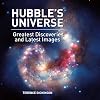
I thought this book would make me feel small and insignificant, but . . . it never did. Not once. Surprisingly, this book made me feel content where I am and with my place in this world. Not because it "made me feel a part of something greater", or something cliche like that. Rather . . . it made me me feel like no matter what awful things go down in this world, no matter what crappy decisions I make in this life--no matter what disgusting things happen on Earth, the universe keeps on doing show more its thing. Yeah, I (and the Earth--and everything that happens on it) am small and insignificant, but that's probably a good thing, considering what we're doing to each other and the planet itself. And despite that, the universe keeps expanding, keeps growing, keeps creating new stars, etc. The scope of the universe is huge, and seeing/realizing this scale is so calming.
The pictures in this massive book are jaw-dropping and gorgeous. I think I stared at each of them for fifteen minutes. There's just so much to see.
Most of the actual science descriptions went over my head, though. I have no background in astronomy, and I picked this up out of sheer curiosity. So as someone not familiar with all these science-y terms, stuff like dark matter and dark energy went through my eyes and out my ears. I read over passages three times and couldn't absorb any of it. I can't complain too much though, because those pictures . . . damn, those pictures.
I wish the book had a sort of conclusion, because after some pictures with captions the book just . . . stopped. And the index began. There wasn't even so much as a concluding paragraph, and it kind of left me feeling disappointed.
But again, those pictures. This book is so worth picking up for those pictures. show less
The pictures in this massive book are jaw-dropping and gorgeous. I think I stared at each of them for fifteen minutes. There's just so much to see.
Most of the actual science descriptions went over my head, though. I have no background in astronomy, and I picked this up out of sheer curiosity. So as someone not familiar with all these science-y terms, stuff like dark matter and dark energy went through my eyes and out my ears. I read over passages three times and couldn't absorb any of it. I can't complain too much though, because those pictures . . . damn, those pictures.
I wish the book had a sort of conclusion, because after some pictures with captions the book just . . . stopped. And the index began. There wasn't even so much as a concluding paragraph, and it kind of left me feeling disappointed.
But again, those pictures. This book is so worth picking up for those pictures. show less
Dickinson writes about the heavens with the infectious passion of an expert tour guide. The sky charts are beautiful and clearly explained. An exceptional book for someone who's been kind of thinking about learning more about the night sky.
My one minor criticism is in the section on telescopes and binoculars. While it contains clear and useful advice, I felt like the technical details Dickinson gives were beyond me. (This comes around again in the astrophotography section.) Presumably, show more Dickinson sacrificed a couple of pages of Optics 101 for length, focus, and style - but it would've helped me. Of course, maybe the point is that you can enjoy stargazing without the investment of money which requires you to understand the equipment better. Which, again, is a fantastic point for a newbie considering a WalMart trash scope. show less
My one minor criticism is in the section on telescopes and binoculars. While it contains clear and useful advice, I felt like the technical details Dickinson gives were beyond me. (This comes around again in the astrophotography section.) Presumably, show more Dickinson sacrificed a couple of pages of Optics 101 for length, focus, and style - but it would've helped me. Of course, maybe the point is that you can enjoy stargazing without the investment of money which requires you to understand the equipment better. Which, again, is a fantastic point for a newbie considering a WalMart trash scope. show less
Granted...I picked this book up after the charts had already run out. I love stargazing and was hoping to get a little more insight into night photography and general gazing. I already have some excellent star books. This adds a little info but nothing any good stargazing book wouldn't already cover. If this is the first stargazing book you are picking up I think you will find it very good.
Unfortunately, the book is older. In the few times he mentions photography he is still using 35mm film show more :) He does list the lens that he uses. He said for some things you need at least 200mm but a lot of his pictures were taken with a 50mm which I was happy to find out because I have a nice 50mm lens but my 200mm lens is not as nice ;) show less
Unfortunately, the book is older. In the few times he mentions photography he is still using 35mm film show more :) He does list the lens that he uses. He said for some things you need at least 200mm but a lot of his pictures were taken with a 50mm which I was happy to find out because I have a nice 50mm lens but my 200mm lens is not as nice ;) show less
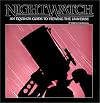
Review by Leo Enright, March 1984.
There are hundreds of amateur astronomers who would like to have
an introductory guide to their hobby, but have never found a satisfactory one.
They have turned away from the introductory manuals with their charts, lists,
and drawings but no apparent hint at the excitement and wonder of viewing the
heavens. They have been equally repulsed by a type of book that presented
them with theory or jargon or technical explanations based on a prior knowledge
of advanced show more mathematics or the rudiments of spherical trigonometry.
Little wonder that novice amateurs, and many others who are potentially
serious observers, should despair of ever finding a guide to the heavens that
does not either appear absolutely lifeless, or on the other hand talk down to
them and make unfair demands and unwarranted assumptions.
The new book, Nightwatch: An Equinox Guide To Viewing The Universe,
written by Terence Dickinson and illustrated by Victor Costanzo and Adolf
Schaller, appears to be a long-overdue answer to the needs of many amateur
astronomers. Far from being a traditional introductory manual, this invitingly
colourful book presents in words and pictures a personable, almost friendly,
introduction to the kind of observational astronomy that has captivated its
author for many years. A unique publication, it is really a combination of
three things: an introductory, non-technical textbook of astronomy, a collection
of stunning amateur and professional photographs, and a manual and
star atlas with spiral binding for use at the telescope as well as the desk.
A few of the chapter titles reveal the range of topics considered:
Discovering The Cosmos, Backyard Astronomy, Stargazing Equipment, The Planets,
Moon and Sun, and Solar and Lunar Eclipses. The second chapter, The Universe
In Eleven Steps presents a kind of "powers of ten" view of the cosmos with the
first of the eleven illustrations (all beautifully done by artist Adolf
Schaller) being that of a cube of space large enough to contain the earth, the
second one considerably larger than the earth-moon system, and the third the
inner solar system, and so on with each cube a million times larger in volume
than the previous one—until the tenth cube contains superclusters of galaxies
in our region of the cosmos, and the last one is larger than the observable
universe.
The contents of Chapters Four and Six form an excellent star atlas
for any beginning observer in the Northern Hemisphere; in fact, they can be
an assurance for him that he will not have to buy any other atlas for at least
a couple of years. In Chapter Four, the seasonal maps, to third and fourth
magnitude, placed opposite photographic-type planetarium projections of the
visible sky, provide simple-to-follow "road maps" of the heavens with arrows
emanating from the Big Dipper, the area whence even the most inexperienced
observer can learn to navigate the heavens and learn the stellar configurations.
Chapter Six contains twenty, much more detailed star charts, each
an area of 55° x 45° with stars to fifth magnitude and many galaxies, clusters,
and other inviting objects considerably fainter. A handy feature on all the
charts is a list of information beside all the telescopically interesting
objects: magnitude, diameter, luminosity, distance, sometimes other special
facts or a brief comment about the view to be expected in a small telescope or
binoculars. Information that may be useful at the telescope is in blue; other
facts not relevant to observing are in red and do not pose a distraction to the
observer who uses a red flashlight when consulting his atlas. The moon chart,
too, is an excellent one listing over 120 distinctive features.
Unlike many guide-books, this one is very practical and up-to-date
in recommending what the novice should consider when purchasing his first telescope
or binoculars. Chapter 5 explains the traps that many buyers have fallen
into in recent years and the factors a wise consumer must consider before making
his initial purchase; otherwise, a once or twice-used piece of equipment may
spend many years gathering dust in a closet.
One of the most welcome sections is the one called Telescope Experience in Chapter 6 for it tells the
beginner that observing is a skill at which
he must work; his first telescope is not a television that shows him M42 on
Channel 21 and the technicolor vistas he saw in the observatory photographs
would not be seen even if he looked through the eyepiece of the telescope that
took those ninety-minute photographs. Excellent recommendations are given about
recording observations and about using the "star-hopping" method of locating
objects rather than relying on setting circles. The section on telescope
accessories is adequate for all but the advanced observer, and the comments on
eyepieces are up-to-date, non-technical, and should be very beneficial to the
beginner who may be perplexed by the array of types currently available.
Coverage of the topic of astrophotography is wisely very limited—being no more
than two and a half pages—because recent developments have made it a specialized
area which the enthusiast is better to explore in periodical literature
or pamphlets devoted exclusively to the subject. Well told anecdotes add a
"human-interest" to the book. There is a fascinating little story on page 117
of the ancient Chinese astronomer, Gan De, who in 364 B.C. observed one of the
moons of Jupiter and wrote that the planet had "apparently... a small reddish
star appended to its side." The story of the discovery of the first asteroids
in the 19th Century and of the search for a "missing" planet in the asteroid
belt of our solar system is unlike all other texts on the subject; it is done
without any reference to the Titius-Bodes Law and all technical and mathematical
terms are avoided. The author's retelling of his witnessing the awesome spectacle
of the 1979 solar eclipse made the chapter on eclipses a special kind of
personal writing.
The last chapter, Resources, could be among the most useful for
the beginning amateur. The coverage is both thorough and very appropriate,
listing, and commenting on, not just the standard annual publications and the
periodicals, but also the best of the useful guidebooks and general astronomy
references, as well as the suppliers of equipment and accessories, organizations
and clubs, and the major observatories in North America.
A few typographical errors appear, but none of them detracts from
the generally fine production of the book. The third column on page 118 refers
to an illustration of Jupiter which is "far larger in the telescope than any
other planet." The illustration showing this is not on page 113 (as stated)
but on page 110. Also on page 118, the warning about trying to observe Mercury
from a location with an unobstructed horizon should not appear on the Jupiter
and Saturn charts; it already appeared on the previous page below the Mercury
chart. On Page 112, the words "telescopic subject" should be "telescopic
object", and on page 115 the last word is misspelled; the Martian area is
"Tharsis", not "Tharis". The chart on page 120 lists Mars in the constellation
Capricornus in June 1991, whereas it should be in the constellation Cancer.
On page 143, the last sentence of the third paragraph incorrectly refers to
"the ancient description stella cometes, Latin for hairy star"; rather, the
sentence should be: "The English word comet is derived from cometes (italicized)
which is synonymous with the Latin phrase "stella crinita"—translated as "hairy
star". Finally on the back cover a painting depicting a view from one of the
far distant satellites of our solar system is credited as a "photograph by
Ron Miller" (Short of it being a trick photograph, I doubt it!!)
It is very hard to imagine any amateur stargazer who would not
be fascinated by at least some parts of this guide to the night sky, whether
it is the outstanding, sometimes stunning, photography, the handy informative
star charts, the contagious enthusiasm of a knowledgeable author, or his many
hints about how to become a better observer. Nightwatch: An Equinox Guide To
Viewing The Universeis strongly recommended as the best of its kind. show less
There are hundreds of amateur astronomers who would like to have
an introductory guide to their hobby, but have never found a satisfactory one.
They have turned away from the introductory manuals with their charts, lists,
and drawings but no apparent hint at the excitement and wonder of viewing the
heavens. They have been equally repulsed by a type of book that presented
them with theory or jargon or technical explanations based on a prior knowledge
of advanced show more mathematics or the rudiments of spherical trigonometry.
Little wonder that novice amateurs, and many others who are potentially
serious observers, should despair of ever finding a guide to the heavens that
does not either appear absolutely lifeless, or on the other hand talk down to
them and make unfair demands and unwarranted assumptions.
The new book, Nightwatch: An Equinox Guide To Viewing The Universe,
written by Terence Dickinson and illustrated by Victor Costanzo and Adolf
Schaller, appears to be a long-overdue answer to the needs of many amateur
astronomers. Far from being a traditional introductory manual, this invitingly
colourful book presents in words and pictures a personable, almost friendly,
introduction to the kind of observational astronomy that has captivated its
author for many years. A unique publication, it is really a combination of
three things: an introductory, non-technical textbook of astronomy, a collection
of stunning amateur and professional photographs, and a manual and
star atlas with spiral binding for use at the telescope as well as the desk.
A few of the chapter titles reveal the range of topics considered:
Discovering The Cosmos, Backyard Astronomy, Stargazing Equipment, The Planets,
Moon and Sun, and Solar and Lunar Eclipses. The second chapter, The Universe
In Eleven Steps presents a kind of "powers of ten" view of the cosmos with the
first of the eleven illustrations (all beautifully done by artist Adolf
Schaller) being that of a cube of space large enough to contain the earth, the
second one considerably larger than the earth-moon system, and the third the
inner solar system, and so on with each cube a million times larger in volume
than the previous one—until the tenth cube contains superclusters of galaxies
in our region of the cosmos, and the last one is larger than the observable
universe.
The contents of Chapters Four and Six form an excellent star atlas
for any beginning observer in the Northern Hemisphere; in fact, they can be
an assurance for him that he will not have to buy any other atlas for at least
a couple of years. In Chapter Four, the seasonal maps, to third and fourth
magnitude, placed opposite photographic-type planetarium projections of the
visible sky, provide simple-to-follow "road maps" of the heavens with arrows
emanating from the Big Dipper, the area whence even the most inexperienced
observer can learn to navigate the heavens and learn the stellar configurations.
Chapter Six contains twenty, much more detailed star charts, each
an area of 55° x 45° with stars to fifth magnitude and many galaxies, clusters,
and other inviting objects considerably fainter. A handy feature on all the
charts is a list of information beside all the telescopically interesting
objects: magnitude, diameter, luminosity, distance, sometimes other special
facts or a brief comment about the view to be expected in a small telescope or
binoculars. Information that may be useful at the telescope is in blue; other
facts not relevant to observing are in red and do not pose a distraction to the
observer who uses a red flashlight when consulting his atlas. The moon chart,
too, is an excellent one listing over 120 distinctive features.
Unlike many guide-books, this one is very practical and up-to-date
in recommending what the novice should consider when purchasing his first telescope
or binoculars. Chapter 5 explains the traps that many buyers have fallen
into in recent years and the factors a wise consumer must consider before making
his initial purchase; otherwise, a once or twice-used piece of equipment may
spend many years gathering dust in a closet.
One of the most welcome sections is the one called Telescope Experience in Chapter 6 for it tells the
beginner that observing is a skill at which
he must work; his first telescope is not a television that shows him M42 on
Channel 21 and the technicolor vistas he saw in the observatory photographs
would not be seen even if he looked through the eyepiece of the telescope that
took those ninety-minute photographs. Excellent recommendations are given about
recording observations and about using the "star-hopping" method of locating
objects rather than relying on setting circles. The section on telescope
accessories is adequate for all but the advanced observer, and the comments on
eyepieces are up-to-date, non-technical, and should be very beneficial to the
beginner who may be perplexed by the array of types currently available.
Coverage of the topic of astrophotography is wisely very limited—being no more
than two and a half pages—because recent developments have made it a specialized
area which the enthusiast is better to explore in periodical literature
or pamphlets devoted exclusively to the subject. Well told anecdotes add a
"human-interest" to the book. There is a fascinating little story on page 117
of the ancient Chinese astronomer, Gan De, who in 364 B.C. observed one of the
moons of Jupiter and wrote that the planet had "apparently... a small reddish
star appended to its side." The story of the discovery of the first asteroids
in the 19th Century and of the search for a "missing" planet in the asteroid
belt of our solar system is unlike all other texts on the subject; it is done
without any reference to the Titius-Bodes Law and all technical and mathematical
terms are avoided. The author's retelling of his witnessing the awesome spectacle
of the 1979 solar eclipse made the chapter on eclipses a special kind of
personal writing.
The last chapter, Resources, could be among the most useful for
the beginning amateur. The coverage is both thorough and very appropriate,
listing, and commenting on, not just the standard annual publications and the
periodicals, but also the best of the useful guidebooks and general astronomy
references, as well as the suppliers of equipment and accessories, organizations
and clubs, and the major observatories in North America.
A few typographical errors appear, but none of them detracts from
the generally fine production of the book. The third column on page 118 refers
to an illustration of Jupiter which is "far larger in the telescope than any
other planet." The illustration showing this is not on page 113 (as stated)
but on page 110. Also on page 118, the warning about trying to observe Mercury
from a location with an unobstructed horizon should not appear on the Jupiter
and Saturn charts; it already appeared on the previous page below the Mercury
chart. On Page 112, the words "telescopic subject" should be "telescopic
object", and on page 115 the last word is misspelled; the Martian area is
"Tharsis", not "Tharis". The chart on page 120 lists Mars in the constellation
Capricornus in June 1991, whereas it should be in the constellation Cancer.
On page 143, the last sentence of the third paragraph incorrectly refers to
"the ancient description stella cometes, Latin for hairy star"; rather, the
sentence should be: "The English word comet is derived from cometes (italicized)
which is synonymous with the Latin phrase "stella crinita"—translated as "hairy
star". Finally on the back cover a painting depicting a view from one of the
far distant satellites of our solar system is credited as a "photograph by
Ron Miller" (Short of it being a trick photograph, I doubt it!!)
It is very hard to imagine any amateur stargazer who would not
be fascinated by at least some parts of this guide to the night sky, whether
it is the outstanding, sometimes stunning, photography, the handy informative
star charts, the contagious enthusiasm of a knowledgeable author, or his many
hints about how to become a better observer. Nightwatch: An Equinox Guide To
Viewing The Universeis strongly recommended as the best of its kind. show less
Lists
Awards


You May Also Like


Associated Authors
Statistics
- Works
- 43
- Also by
- 1
- Members
- 3,227
- Popularity
- #7,930
- Rating
- 4.2
- Reviews
- 18
- ISBNs
- 71
- Languages
- 3
- Favorited
- 1