

Max Eastman (1883–1969)
Author of Reflections on the Failure of Socialism
About the Author
Image credit: Source: George Grantham Bain Collection,
LoC Prints and Photographs Division
(LC-DIG-ggbain-05770)
LoC Prints and Photographs Division
(LC-DIG-ggbain-05770)
Series
Works by Max Eastman
Lot's wife 7 copies
Poems of five decades 5 copies
Venture 2 copies
Non-Communicative Art 1 copy
Sosialismens fallitt 1 copy
Is the truth obscene? 1 copy
The Liberator 1 copy
Associated Works
American Poetry: The Twentieth Century, Volume One: Henry Adams to Dorothy Parker (2000) — Contributor — 479 copies, 1 review
Did You Ever See a Dream Walking? American Conservative Thought in the Twentieth Century (1970) — Contributor — 86 copies
Greenwich Village Poetry Anthology — Contributor — 1 copy
Tagged
Common Knowledge
- Canonical name
- Eastman, Max
- Legal name
- Eastman, Max Forrester
- Other names
- EASTMAN, Max Forrester
EASTMAN, Max - Birthdate
- 1883-01-04
- Date of death
- 1969-03-25
- Gender
- male
- Education
- Williams College
- Occupations
- poet
editor
teacher - Relationships
- Eastman, Crystal (sister)
- Nationality
- USA
- Birthplace
- Canandaigua, New York, USA
- Places of residence
- Canandaigua, New York, USA (birth)
Bridgetown, Barbados (death) - Place of death
- Bridgetown, Barbados
- Associated Place (for map)
- Canandaigua, New York, USA
Members
Reviews

Max Eastman was a prolific author and public intellectual for roughly forty years from the 1920's through the 1950's. If you have ever seen the movie "Reds" starring Warren Beatty and Diane Keaton, you might recall the supporting character played by Edward Hermann. This was Max Eastman. Eastman has the distinction of having been editor of radical left-wing publications "The Masses" and "The Liberator int the 1920's and was one of the contributing editors of National Review in the mid to late show more 50's before resigning due to conflicts with William F. Buckley, Jr. over what Eastman regarded as an unacceptable Catholic spirit that infused the magazine.
Along the journey Eastman seems to have known in some capacity many of the most famous intellectuals and writers of the 20th century. This book was originally published under the title "Great Companions" in 1942 and reissued in 1959 under the present title. I don't know which of these essays was added to the 1959 edition and it would appear that all of them were originally published as contributions to various periodicals and in his book entitled Heroes I Have Known. The edition I have would have benefited from footnotes or an introduction that included the original publication dates and identified the magazines or books where they first appeared.
There is a sense in all of these recollections that Eastman regarded his subjects as heroic, but he is not simply given over to hero worship. In several of these relationships Eastman was engaged in interviewing these companions for material for what turned out to be these articles. He relates that he would produce a notebook and pencil to take notes that he would later on, same day, transcribe so that he would not have to rely on recall from a distance with all of the errors to which distant memories are prone. Moreover, some of these relationships involved professional collaborations and therefore a financial stake in the relationship, e.g., the translations Trotsky's books and articles following his exile from Stalin's Soviet Union. In some cases Eastman sought a blurb from the subject of one his own books, e.g. Sigmund Freud who was one half of a chapter titled "Marx and Freud". Freud flatly turned him down.
Eastman was an excellent stylist and storyteller. He is not afraid to criticize his companions for character defects, intellectual contradictions and political folly. He is tough on Hemingway and describes a breach in their friendship due to a comment published by Eastman that Hemingway chose to interpret as a critique of Hemingway's sexual prowess. This resentment actually caused a comic opera physical altercation in the editorial offices of Hemingway's publisher Scribner's in the presence of his editor, Max Perkins.
Eastman, although an admirer of Freud and an early subject of psychoanalysis in the United States, was unsparing in his critique of Freud's indifference to the employment of scientific methods to provide verification of his theories.
Eastman was a great friend to and admirer of Charlie Chaplin and was critical of the way the Justice Department prevented his return to the US in the aftermath of Chaplin's public assignment of blame for the Cold War on America. That said, Eastman was candid in his criticism of Chaplin for getting it all wrong where the Soviet Union was concerned. He does, in all fairness, note that Chaplin gave away the money for the Stalin Prize to one Abbe Pierre, the "rag picker of Paris" for distribution to the poor.
The most moving of the essays is the last one devoted to his first hero, his mother Annis Ford Eastman. It is a beautiful tribute to a very fine woman, mother and minister executed with a son's appreciation without being in the least maudlin.
All of the essays are well done and worth your time and they are both entertaining and enlightening by an author who is candid, critical and sympathetic in his treatment of these famous public personae whom he knew and regarded in some sense as his friends and heroes. show less
Along the journey Eastman seems to have known in some capacity many of the most famous intellectuals and writers of the 20th century. This book was originally published under the title "Great Companions" in 1942 and reissued in 1959 under the present title. I don't know which of these essays was added to the 1959 edition and it would appear that all of them were originally published as contributions to various periodicals and in his book entitled Heroes I Have Known. The edition I have would have benefited from footnotes or an introduction that included the original publication dates and identified the magazines or books where they first appeared.
There is a sense in all of these recollections that Eastman regarded his subjects as heroic, but he is not simply given over to hero worship. In several of these relationships Eastman was engaged in interviewing these companions for material for what turned out to be these articles. He relates that he would produce a notebook and pencil to take notes that he would later on, same day, transcribe so that he would not have to rely on recall from a distance with all of the errors to which distant memories are prone. Moreover, some of these relationships involved professional collaborations and therefore a financial stake in the relationship, e.g., the translations Trotsky's books and articles following his exile from Stalin's Soviet Union. In some cases Eastman sought a blurb from the subject of one his own books, e.g. Sigmund Freud who was one half of a chapter titled "Marx and Freud". Freud flatly turned him down.
Eastman was an excellent stylist and storyteller. He is not afraid to criticize his companions for character defects, intellectual contradictions and political folly. He is tough on Hemingway and describes a breach in their friendship due to a comment published by Eastman that Hemingway chose to interpret as a critique of Hemingway's sexual prowess. This resentment actually caused a comic opera physical altercation in the editorial offices of Hemingway's publisher Scribner's in the presence of his editor, Max Perkins.
Eastman, although an admirer of Freud and an early subject of psychoanalysis in the United States, was unsparing in his critique of Freud's indifference to the employment of scientific methods to provide verification of his theories.
Eastman was a great friend to and admirer of Charlie Chaplin and was critical of the way the Justice Department prevented his return to the US in the aftermath of Chaplin's public assignment of blame for the Cold War on America. That said, Eastman was candid in his criticism of Chaplin for getting it all wrong where the Soviet Union was concerned. He does, in all fairness, note that Chaplin gave away the money for the Stalin Prize to one Abbe Pierre, the "rag picker of Paris" for distribution to the poor.
The most moving of the essays is the last one devoted to his first hero, his mother Annis Ford Eastman. It is a beautiful tribute to a very fine woman, mother and minister executed with a son's appreciation without being in the least maudlin.
All of the essays are well done and worth your time and they are both entertaining and enlightening by an author who is candid, critical and sympathetic in his treatment of these famous public personae whom he knew and regarded in some sense as his friends and heroes. show less
Accounts of 12 people Eastman knew and with reservations in some cases admire, mostly on the left to some extent, some actively so such as Debs and Trotsky, others more liteary/artistic -- Mark Twain, Anatole FRamce, Charlie Chaplin, Isadora Duncan.

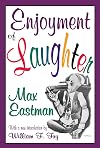
Comninmes an essay on poetry with an anthology of enjoyable examples including some of my fsvorites such as "The Haystacl in the Flood" by William Morris.
Lists
Economics (1)
You May Also Like


Associated Authors
Statistics
- Works
- 42
- Also by
- 13
- Members
- 316
- Popularity
- #74,770
- Rating
- 4.1
- Reviews
- 4
- ISBNs
- 34
- Languages
- 1
- Favorited
- 1
