
J. B. Jackson (1909–1996)
Author of A Sense of Place, a Sense of Time
About the Author
Works by J. B. Jackson
Associated Works
The Glorious American Essay: One Hundred Essays from Colonial Times to the Present (2020) — Contributor — 119 copies
Tagged
Common Knowledge
- Canonical name
- Jackson, J. B.
- Legal name
- Jackson, John Brinckerhoff
- Other names
- Jackson, Brinck
- Birthdate
- 1909-09-25
- Date of death
- 1996-08-28
- Gender
- male
- Education
- Harvard University (BA|1932)
Institut Le Rosey - Occupations
- writer
publisher
artist - Organizations
- United States Army (WWII)
- Awards and honors
- PEN/Diamonstein-Spielvogel Award for the Art of the Essay (1995)
Silver Star (WWII) - Nationality
- USA
- Birthplace
- Dinard, France
- Places of residence
- La Cienega, New Mexico, USA
- Place of death
- Santa Fe, New Mexico, USA
- Associated Place (for map)
- New Mexico, USA
Members
Reviews
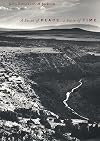
Recently I watched a couple one-hour documentaries about John Brinckerhoff Jackson on Kanopy. Both documentaries do a good job of explaining what J.B. Jackson, as he's more familiarly known, wrote and taught about. He was very articulate and full of knowledge and ways of connecting information, so there is surprisingly little overlap in the films, even though "Figure in a Landscape: A Conversation with J.B. Jackson" and "J.B. Jackson and the Love of Everyday Places" were made around the same show more time, in the late 1980s. Seeing the movies gave me more background on the man rather than his writings, of which I'd already had a little bit of familiarity. The first book I'd obtained was "A Sense of Place, a Sense of Time," which was written around the time of the films, after Jackson ceased lecturing on landscape history. Although Jackson wrote plenty, mostly in the magazine he created, "Landscape," the documentaries, this book, and other books come across as means of summarizing near the end of his life his approach to landscape history in the United States and the places he found most interesting.
"A Sense of Place, a Sense of Time" includes one essay from "Landscape" magazine, with the other thirteen published here or there in books or magazines. Jackson excelled at long essays (if he were around now he'd be a much-read "longform" writer), and therefore his books act as collections of essays, all built around his distinctive approach to studying the American landscape. In a nutshell, he looked at the cities and rural areas of the United States as they were used, not judging or critiquing them based on aesthetics or other criteria. He was interested in how people used landscapes and therefore what marks people made on the land. In a way, his approach echoes that of Robert Venturi and Denise Scott Brown, though I don't think Jackson wrote about Las Vegas. Although it's been a while since I've read the essays, some highlights from "A Sense of Place, a Sense of Time" include the cover essay, as well as "The Accessible Landscape," "The Past and Future Park," "Vernacular Gardens," and "Roads Belong in the Landscape." Among may other things, these reveal how Jackson had a way of hooking people with the titles of his essays. show less
"A Sense of Place, a Sense of Time" includes one essay from "Landscape" magazine, with the other thirteen published here or there in books or magazines. Jackson excelled at long essays (if he were around now he'd be a much-read "longform" writer), and therefore his books act as collections of essays, all built around his distinctive approach to studying the American landscape. In a nutshell, he looked at the cities and rural areas of the United States as they were used, not judging or critiquing them based on aesthetics or other criteria. He was interested in how people used landscapes and therefore what marks people made on the land. In a way, his approach echoes that of Robert Venturi and Denise Scott Brown, though I don't think Jackson wrote about Las Vegas. Although it's been a while since I've read the essays, some highlights from "A Sense of Place, a Sense of Time" include the cover essay, as well as "The Accessible Landscape," "The Past and Future Park," "Vernacular Gardens," and "Roads Belong in the Landscape." Among may other things, these reveal how Jackson had a way of hooking people with the titles of his essays. show less
A pretty interesting collection of essays (published in 1970) about how we conceive of and manipulate the landscape, knowingly or otherwise, and how American attitudes towards and use of the landscape have developed and changed through our history.
Raccolta di saggi multiforme, in grado di esplorare elementi legati alla lettura e all'abitazione del territorio per niente banali.
"J. B. Jackson, a pioneer in the field of landscape studies, here takes us on a tour of American landscapes past and present, showing how our surroundings reflect important changes in our culture. Because we live in urban and industrial environments that are constantly evolving, says Jackson, time and movement are increasingly important to us, place and permanence less so. We no longer gain a feeling of community from where we live or assemble but from common work hours, habits, and customs. show more Jackson examines the new vernacular landscape of trailers, parking lots, trucks, loading docks, and suburban garages, which all reflect this emphasis of motility and transience; he redefines roads as scenes of work and leisure and social intercourse - as places rather than as means of getting to places; he argues that pubic parks are now primarily for children, older people, and nature lovers, while more mobile or gregarious people seek recreation in shopping malls, in the street, and in sports arenas; he discusses the form and function of dwellings in New Mexico, from prehistoric Pueblo villages to mobile homes; and he criticizes the tendency of some environmentalists to venerate nature instead of interacting with it and learning to share it with others. Written with Jackson's customary lucidity and elegance, this book reveals his passion for vernacular culture, his insights into a style of life that blurs the boundaries between work and leisure, between middle and working classes, and between public and private spaces." From Amazon. show less
Lists
Awards

You May Also Like


Associated Authors
Statistics
- Works
- 13
- Also by
- 2
- Members
- 735
- Popularity
- #34,565
- Rating
- 3.8
- Reviews
- 6
- ISBNs
- 20
- Languages
- 2
- Favorited
- 5