
Dolores Hayden
Author of Building Suburbia: Green Fields and Urban Growth, 1820-2000
About the Author
Dolores Hayden is professor of architecture and urbanism and professor of American studies at Yale University
Image credit: doloreshayden.com
Works by Dolores Hayden
The Grand Domestic Revolution: A History of Feminist Designs for American Homes, Neighborhoods and Cities (1981) 145 copies, 2 reviews
Seven American Utopias: Architecture of Communitarian Socialism, 1790-1975 (1976) 61 copies, 1 review
Associated Works
Tagged
Common Knowledge
- Birthdate
- c. 1950
- Gender
- female
- Education
- Mount Holyoke College (BA, Architecture)
University of Cambridge
Harvard Graduate School of Design - Occupations
- professor
architect
author - Organizations
- Yale University
Massachusetts Institute of Technology - Awards and honors
- American Library Association Notable Book Award
National Endowment for the Arts Award for Excellence in Design Research - Nationality
- USA
- Associated Place (for map)
- USA
Members
Reviews
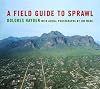
Dolores Hayden's great glossary of sprawl uses aerial photographs by Jim Wark to further describe the American suburban phenomenon. Many of the terms are humorous, though not in the sense that sprawl is funny — in the way some expressions are latched on to some pretty absurd ways we use the land. There's the familiar "duck," "drive-through," and "strip," but also "ball pork" (a stadium built with public funds for a privately owned ball team), "litter on a stick" (billboards), and "ozoner" show more (drive-in movie theater). By using these and other terms (be it by creating new terms or using existing ones), Hayden makes the various components and results of sprawl memorable. Like Alex S. MacLean, seeing the landscape of America's (sub)urbanism from the air is one of the best ways to convey the scale of destruction and monotony that this country will have to face up to and remedy one of these days. show less
This was an interesting book to have read. I enjoyed how she brought together the various anecdotes and statistics throughout the 20th century. I also enjoyed all of the building and neighborhood layouts.
However, I felt that this book expected to be preaching to the choir. Her main thesis was that smaller village-like mixed-use communities, with production, consumption, and habitation areas close together, would allow women more freedom in their lives. Although it traced patterns of the show more "industrial," "haven," and "neighborhood" housing strategies, I did not feel that it made a nod towards arguing that these cover all of the relevant territory (I'm not quite convinced on this), that they are that closely linked to gender/family structure stereotypes (this I happen to buy), and that they are not as strongly related to class and race/nationality considerations (this I doubt).
Neither did she give more than short-term anecdotal evidence of the effectiveness of neighborhood housing; it would have been good to provide some triangulation. I realize that not many experimental communities of this type have survived long-term (due to political pressures), but it would be wise to acknowledge that these communities may be successful due to self-selection, the short terms of many of the systems, the excitement surrounding new ventures, etc., and shore up the potential of the strategies with other supporting theories, models, and findings. For example, the fact that people living in mixed-use neighborhoods tend to be more healthy due to walking suggests that people will take advantage of these services and have the potential to be involved in a community. In this way she tends to come across as writing too much for a civic planning audience, one that already has experiences to revisit in light of her framework, rather than for laypeople, who have much thinner experience. Her writing style, on the other hand, is clear and unambiguous to this layperson.
Important and recommended, but supplementation would be good. show less
However, I felt that this book expected to be preaching to the choir. Her main thesis was that smaller village-like mixed-use communities, with production, consumption, and habitation areas close together, would allow women more freedom in their lives. Although it traced patterns of the show more "industrial," "haven," and "neighborhood" housing strategies, I did not feel that it made a nod towards arguing that these cover all of the relevant territory (I'm not quite convinced on this), that they are that closely linked to gender/family structure stereotypes (this I happen to buy), and that they are not as strongly related to class and race/nationality considerations (this I doubt).
Neither did she give more than short-term anecdotal evidence of the effectiveness of neighborhood housing; it would have been good to provide some triangulation. I realize that not many experimental communities of this type have survived long-term (due to political pressures), but it would be wise to acknowledge that these communities may be successful due to self-selection, the short terms of many of the systems, the excitement surrounding new ventures, etc., and shore up the potential of the strategies with other supporting theories, models, and findings. For example, the fact that people living in mixed-use neighborhoods tend to be more healthy due to walking suggests that people will take advantage of these services and have the potential to be involved in a community. In this way she tends to come across as writing too much for a civic planning audience, one that already has experiences to revisit in light of her framework, rather than for laypeople, who have much thinner experience. Her writing style, on the other hand, is clear and unambiguous to this layperson.
Important and recommended, but supplementation would be good. show less
The Grand Domestic Revolution: A History of Feminist Designs for American Homes, Neighborhoods, and Cities by Dolores Hayden

This history of a little-known intellectual tradition challenging patriarchal notions of "women's place" and "women's work" offers a new interpretation of the history of American feminism and a new interpretation of the history of American housing and urban design. Hayden shows how the material feminists' political ideology led them to design physical space to create housewives' cooperatives, kitchenless houses, day-care centers, public kitchens, and community dining halls. In their show more insistence that women be paid for domestic labor, the material feminists won the support of many suffragists and of novelists such as Edward Bellamy and William Dean Howells, who helped popularize their cause. Ebenezer Howard, Rudolph Schindler, and Lewis Mumford were among the many progressive architects and planners who promoted the reorganization of housing and neighborhoods around the needs of employed women. In reevaluating these early feminist plans for the environmental and economic transformation of American society and in recording the vigorous and many-sided arguments that evolved around the issues they raised, Hayden brings to light basic economic and spacial contradictions which outdated forms of housing and inadequate community services still create for American women and for their families. - from the publisher show less

In her book The Power of Place: Urban Landscapes as Public History Dolores Hayden looks at public history in general and specifically at the public history projects done by her organization, The Power of Place, in Los Angeles. As she points out in the first section the vast majority of public history displays in the United States were built to commemorate the white, male politicians and generals who “built” the nation. Hayden argues that we need to create public history displays that show more remember the people, the butchers, bakers, candlestick makers, tinkers, and tailors male and female and of every color who, in reality, built the nation. Preservation efforts, another focus of public history, have primarily targeted mansions and architecturally unique buildings at the expense of buildings that were found everywhere and housed the vast majority of citizens and their workplaces.
To broaden our public memory Hayden and her group worked on a variety of projects. They attempted to acquire historical designation for an early Japanese flower market, worked on turning an abandoned firehouse into a museum, and they built and installed public displays remembering the contributions of individuals and communities. Not all their projects were successful. The market’s owners refused to cooperate fearing economic loss. The firehouse burned before the project was completed. Even the failed projects required a wide array of talents.
Hayden discusses all of the people whose skills are needed on these projects and the book is amply illustrated with images of successful projects. Her accounts of the successes as well the failures make this book a required read for anyone contemplating a public history project. She provides a wealth of ideas and strategies to aid in creating a project and bringing it to completion. The best lines in the book are quotes she has chosen to illustrate a point but her writing is very straightforward and readable. I recommend this book to anyone interested in museums and public history, because I first learned about this book from a reading list in the University of Massachusetts at Amherst’s Public History graduate program I am confident that I am not the only one who thinks well of it. show less
To broaden our public memory Hayden and her group worked on a variety of projects. They attempted to acquire historical designation for an early Japanese flower market, worked on turning an abandoned firehouse into a museum, and they built and installed public displays remembering the contributions of individuals and communities. Not all their projects were successful. The market’s owners refused to cooperate fearing economic loss. The firehouse burned before the project was completed. Even the failed projects required a wide array of talents.
Hayden discusses all of the people whose skills are needed on these projects and the book is amply illustrated with images of successful projects. Her accounts of the successes as well the failures make this book a required read for anyone contemplating a public history project. She provides a wealth of ideas and strategies to aid in creating a project and bringing it to completion. The best lines in the book are quotes she has chosen to illustrate a point but her writing is very straightforward and readable. I recommend this book to anyone interested in museums and public history, because I first learned about this book from a reading list in the University of Massachusetts at Amherst’s Public History graduate program I am confident that I am not the only one who thinks well of it. show less
Lists
Awards


You May Also Like


Associated Authors
Statistics
- Works
- 10
- Also by
- 4
- Members
- 959
- Popularity
- #26,864
- Rating
- 3.7
- Reviews
- 17
- ISBNs
- 24
- Languages
- 2