
William Horwood
Author of Duncton Wood
About the Author
Series
Works by William Horwood
Associated Works
Reader's Digest Condensed Books 1985 vM: The State of Stony Lonesome / Find a Safe Place / Callanish / At the Going down of the Sun (1985) 8 copies
Livros Condensados: Na Esteira do Assassino | Lembrando Anne Frank | Soldadinhos de Chumbo | Callanish (1991) — Author — 6 copies
Reader's Digest Condensed Books: The Sound of Wings • The Suitcases • The Keys of the Kingdom • Callanish (1984) — Author — 4 copies
Reader's Digest Condensed Books: Strong Medicine • Callanish • Who Has Seen the Wind • Stillwatch 1 copy
Reader's Digest Condensed Books: The Suitcases / Octavia's Hill / Callanish / Robbery Under Arms (1985) — Author — 1 copy
Tagged
Common Knowledge
- Birthdate
- 1944-05-12
- Gender
- male
- Education
- Bristol University
Buckinghamshire College of Higher Education - Occupations
- writer
- Nationality
- UK
- Birthplace
- Oxford, Oxfordshire, England, UK
- Places of residence
- Oxford, Oxfordshire, England, UK
East Kent, England, UK
Bristol, Gloucestershire, England, UK - Map Location
- England, UK
Members
Reviews
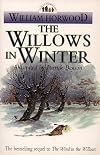
A sequel to The Wind In The Willows would clearly be a most welcome thing.
This isn't it. It falls badly flat.
It has none of the subtlety, the beauty or the humour of the original. The characters are the originals, with a couple of new ones. Who appear, then are discarded. Mole's Nephew hardly speaks. Portly, a minor player who returns, can barely do so for being so cold. Even Badger has been reduced to black and white without any colour, even grey. Why is there no glorious Pickwickian show more chapter of Badger's promised High Tea? The only character given any space at all is Toad, who is just the same old caricature. That's not enough to be a sequel to a book of Willows' stature. Even the metaphysics is sadly lacking; we revisit the Piper at the Gates of Dawn's island and Mole waxes philosophical, but there's just nothing to it. Everything here is as thin and washed-out as a Winter afternoon. It was very difficult to even finish this. show less
This isn't it. It falls badly flat.
It has none of the subtlety, the beauty or the humour of the original. The characters are the originals, with a couple of new ones. Who appear, then are discarded. Mole's Nephew hardly speaks. Portly, a minor player who returns, can barely do so for being so cold. Even Badger has been reduced to black and white without any colour, even grey. Why is there no glorious Pickwickian show more chapter of Badger's promised High Tea? The only character given any space at all is Toad, who is just the same old caricature. That's not enough to be a sequel to a book of Willows' stature. Even the metaphysics is sadly lacking; we revisit the Piper at the Gates of Dawn's island and Mole waxes philosophical, but there's just nothing to it. Everything here is as thin and washed-out as a Winter afternoon. It was very difficult to even finish this. show less
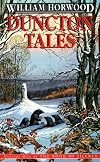
I love this book, because it's Duncton. And who couldn't love the monastic delving moles of the Charnel, or Rooster's epic escape only minutes before the bridge crashes down into the river? It's also an interesting take that the enemy is no longer moles of the 'wrong' religion, but moles of the 'right' religion who want to implement it too zealously.
And if it feels a little like an after-thought tie-in novel, well, maybe it is?
The structure is deliberately playing on the idea of tales and show more tale telling, but it goes a little over the top in places - I think you get 4 nested tales, where the authorial voice is telling a tale to a mole, of Privet telling a tale to the Duncton moles, of Hamble telling a tale to Privet, of the Charnel Moles telling a tale to Rooster about how they have kept their delving secrets since Hilbert. show less
And if it feels a little like an after-thought tie-in novel, well, maybe it is?
The structure is deliberately playing on the idea of tales and show more tale telling, but it goes a little over the top in places - I think you get 4 nested tales, where the authorial voice is telling a tale to a mole, of Privet telling a tale to the Duncton moles, of Hamble telling a tale to Privet, of the Charnel Moles telling a tale to Rooster about how they have kept their delving secrets since Hilbert. show less

I found this book deeply absorbing. It is considerably more anthropomorphic than Watership Down (Horwood's moles seem to have more cultural paraphernalia than Adams's rabbits), but it retains enough of that 'animal' feeling to give a frisson of alienness to the setting, and the characters and setting are beautifully delineated. When the author makes it this easy to identify with a young, slightly timid mole, then a big bad mole does become quite a believable and threatening villain, show more especially when an account of his tough background adds to the sense of depth. MB 15-vi-2007
Re-reading this, I am struck by how much the author shows his love, not only for his characters, but for the setting of English woodland in which much of the action takes place (and the Welsh wildlands too). The description is full of tiny observational snippets about where particular wild flowers grow, or which trees drop their leaves first in August. Combined with the curious melange of Anglo-Celtic myth and poetry, with a drop of Oriental mysticism and martial arts, and with a high emotional and spiritual tone, the result is still a compelling allegorical fantasy. Mrs Bookworm put this on the Out pile, but I am reluctant to part with it. MB 1-vii-2022 show less
Re-reading this, I am struck by how much the author shows his love, not only for his characters, but for the setting of English woodland in which much of the action takes place (and the Welsh wildlands too). The description is full of tiny observational snippets about where particular wild flowers grow, or which trees drop their leaves first in August. Combined with the curious melange of Anglo-Celtic myth and poetry, with a drop of Oriental mysticism and martial arts, and with a high emotional and spiritual tone, the result is still a compelling allegorical fantasy. Mrs Bookworm put this on the Out pile, but I am reluctant to part with it. MB 1-vii-2022 show less

I love this book. The story of James MacAskill Stonor is interwoven with that of Cuillin, last of the Skye sea eagles. In 1917 Liam MacAskill, Jim's father sees a lone sea eagle near his home on the Isle of Skye. Years later he shares his stories with the young Jim and the tale of the eagle, and the near extinction of the species, exerts a strange influence on Jim's life as an artist.
This is a book filled with loneliness - the loneliness of Cuillin, flying the dark sea to find others of her show more kind; the loneliness of Jim, as a young boy growing up in an English coastal town and as a man trying to find his place in life; the loneliness of Liam, haunted by the First World War, estranged from wife and children. A story of exile; of the search for a home and family; of the ability to "fly true" and live a life to the best of your ability.
Horwood's writing hits my emotions, he is a wonderful story teller. The stories of the eagles reflect Jim's own journey through life, so the two strands of the novel reinforce each other, adding to the power of the story. I found this as enthralling on re-reading as I did the first time I read it. show less
This is a book filled with loneliness - the loneliness of Cuillin, flying the dark sea to find others of her show more kind; the loneliness of Jim, as a young boy growing up in an English coastal town and as a man trying to find his place in life; the loneliness of Liam, haunted by the First World War, estranged from wife and children. A story of exile; of the search for a home and family; of the ability to "fly true" and live a life to the best of your ability.
Horwood's writing hits my emotions, he is a wonderful story teller. The stories of the eagles reflect Jim's own journey through life, so the two strands of the novel reinforce each other, adding to the power of the story. I found this as enthralling on re-reading as I did the first time I read it. show less
Lists
Awards


You May Also Like


Associated Authors
Statistics
- Works
- 28
- Also by
- 7
- Members
- 5,494
- Popularity
- #4,534
- Rating
- 3.8
- Reviews
- 84
- ISBNs
- 168
- Languages
- 12
- Favorited
- 11
