
Leslie Dunton-Downer
Author of Essential Shakespeare Handbook
About the Author
Works by Leslie Dunton-Downer
Associated Works
Tagged
Common Knowledge
- Canonical name
- Dunton-Downer, Leslie
- Gender
- female
- Occupations
- lecturer (Harvard University)
Members
Reviews
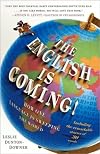
I too was disappointed in this book - the subject is one of my favourites (development of language). The author's writing style leaves a lot to be desired (she goes off onto tangents that end up having nothing to do with the original statement ), she starts a lot of sentences with "and" and some them just go on and on and on. She also doesn't seem to know her subject very well - at the end of the book she suggests dropping the plural "s" in favour of "een" which I think she mentions occurs show more in Arabic - well, if she knew anything about Old English, she would known that "en" was used at times to denote the plural (e.g. children, oxen) and perhaps could be revived. She also seems to not have a grasp of the use of the present continuous which perfectly well expresses a thought or action in the here and now "(I am feeling optimistic" - her example of "I feel optimistic" obviously does not describe a feeling in the moment, as the simple present expresses habitual actions or thought) so English does not need to borrow from Spanish to express different types of "present" actions.
Jane Austen used the vague "their" to express unknown gender - e.g. "Someone left their book here", so this is not "recent" as she suggests a result of the women's movement of the 60's and 70's (I have been using it all my life, before the 1960's dawned!).
I too have an issue with the American rah rah approach - everything in the modern world has not come out of that country. Just to point out another error, Mary Quant (British) coined the term "miniskirt", not America.
If you want to read something interesting, well written and full of life, try Bill Bryson's books on language.
I picked this up to read when I was feeling unwell - it didn't help!
Not saying others wouldn't enjoy it...I was just very disappointed. show less
Jane Austen used the vague "their" to express unknown gender - e.g. "Someone left their book here", so this is not "recent" as she suggests a result of the women's movement of the 60's and 70's (I have been using it all my life, before the 1960's dawned!).
I too have an issue with the American rah rah approach - everything in the modern world has not come out of that country. Just to point out another error, Mary Quant (British) coined the term "miniskirt", not America.
If you want to read something interesting, well written and full of life, try Bill Bryson's books on language.
I picked this up to read when I was feeling unwell - it didn't help!
Not saying others wouldn't enjoy it...I was just very disappointed. show less

It would be a good idea to take at least an introductory course on linguistics before trying to write a book about it.
For example 'th' represents two different sounds in English, which is why Old English had two different letters.
For example 'th' represents two different sounds in English, which is why Old English had two different letters.
Lists
You May Also Like


Associated Authors
Statistics
- Works
- 4
- Also by
- 1
- Members
- 562
- Popularity
- #44,483
- Rating
- 3.8
- Reviews
- 2
- ISBNs
- 15
- Languages
- 2