
Howard W. French
Author of Born in Blackness: Africa, Africans, and the Making of the Modern World, 1471 to the Second World War
About the Author
Works by Howard W. French
Born in Blackness: Africa, Africans, and the Making of the Modern World, 1471 to the Second World War (2021) 374 copies, 2 reviews
China's Second Continent: How a Million Migrants Are Building a New Empire in Africa (2014) 236 copies, 5 reviews
Everything Under the Heavens: How the Past Helps Shape China's Push for Global Power (2017) 135 copies, 3 reviews
The Second Emancipation: Nkrumah, Pan-Africanism, and Global Blackness at High Tide (2025) 48 copies, 1 review
Tagged
Common Knowledge
- Birthdate
- 1957-10-14
- Gender
- male
- Occupations
- journalist
journalism professor
photographer
writer - Organizations
- New York Times
Columbia University Graduate School of Journalism - Relationships
- French, Agnès
- Birthplace
- Washington, D.C., USA
- Map Location
- USA
Members
Reviews
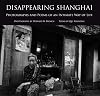
Howard French's photos, taken beginning in 2003, capture the disappearing Shanghai I came to know when I moved there to work in 1989. Small rooms with entire families living in them, filled with everyday things turned into small treasures. Calendars or advertisements on the wall to provide color. The ever-present TV. And the alleys, with men sitting--always men. And almost always smoking.
And yet many of these small rooms and barren alleys seem to hold more life than the usually soulless show more buildings that are replacing them. French's photographs, in black & white, which seems appropriate somehow, take me back to those days in Shanghai and to the honor of being invited into someone's small home--and given the feast of lifetime. (Although food is curiously absent from most of his pictures.)
If only Qiu Xiaolong's poems and prose could speak of those times in as concise and accurate a manner. Or is it that, as a non-Chinese, I saw things the same way French did?
My wife, who is Shanghainese, said we should buy this book so our daughter will be able to see how people used to live. It will serve that purpose well. show less
And yet many of these small rooms and barren alleys seem to hold more life than the usually soulless show more buildings that are replacing them. French's photographs, in black & white, which seems appropriate somehow, take me back to those days in Shanghai and to the honor of being invited into someone's small home--and given the feast of lifetime. (Although food is curiously absent from most of his pictures.)
If only Qiu Xiaolong's poems and prose could speak of those times in as concise and accurate a manner. Or is it that, as a non-Chinese, I saw things the same way French did?
My wife, who is Shanghainese, said we should buy this book so our daughter will be able to see how people used to live. It will serve that purpose well. show less
Born in Blackness: Africa and the Making of the Modern World: Africa, Africans, and the Making of the Modern World, 1471 to the Second World War by Howard W. French
This book basically changed my take on history in general. Why it has to come from a journalist rather than a historian is a sad commentary on historians. French makes an overwhelmingly convincing case for the centrality of African slavery in the economic success that vaulted Western nations to the forefront of world power. The enormous profits from sugar plantations fueled the industrial revolution in England and elsewhere, for instance. French writes clearly and compellingly, although the show more book could use a bit better organization. His personal travels to some of the places that were so important in the past but have now been pretty much erased from mainstream history are fascinating. He also makes the important point that Africa was not just a stopping point as part of a more important quest to reach Asia, it was a prime destination on its own, first for the gold of the Gold Coast (present day Ghana) and later for the slaves that were essential for plantation agriculture, especially in the West Indies where European diseases had killed most of the native population. This book should be required reading for every history class in America. show less
China's Second Continent: How a Million Migrants Are Building a New Empire in Africa by Howard W. French
Excellent Writing and Interviews
"China's Second Continent" is an extremely well-written and easy to read book. It is a collection of anecdotes and data that comes together to create the complicated and very nuanced story of China's understandable overseas expansion.
French's style is pleasing to read. Traveling in different parts of Africa, he conducts interviews with a multitude of interested parties, including government ministers, small-time Chinese traders, prostitutes, heads of state-run show more Chinese companies, union organizers, and workers for Chinese companies. French never backs away from his own personal thoughts and opinions of the people he meets, which is quite refreshing. Throughout his travels, he keeps a running commentary of his thesis, that China's long-term relationship with Africa extends far beyond quid-pro-qua mineral extraction and is headed towards a relationship whereby African countries will contribute to China's bread basket. French believes that this is a new and different form of imperialism.
There are two relationships dealt with in this book: that of individual Chinese entrepreneurs who migrate to Africa, and that of state-run Chinese companies who seem to fly by night in order to build infrastructure in exchange for natural resource or transportation concessions. The entrepreneurs are all colorful characters, well-described by French. The state-run company managers and workers are all tight-lipped, giving the reader the impression that there are nefarious plans at work. While many Africans, Europeans, and Americans complain that China's infrastructure projects in Africa are ramshackle and poor quality, leaving Africans with white elephants that they must manage, they are at least helping to build infrastructure, something the managers and high-level government workers say. Without direct Chinese investment, projects would drag on and never materialize, or only materialize in the form of hard-to-see investments in education, property management, and so forth.
Is China's investment, both large and small, in the country helpful? There is no solid conclusion here, but the evidence French presents seems to suggest that because there is no "capacity development" to maintain the large infrastructure contracts, the large, official investment is unhelpful.
Beyond the academic and economic conclusions, French is an excellent writer. The chapters in "China's Second Continent" are good-sized chunks that give a good picture of each country he visits, concentrating on the theme of meeting Chinese migrants. show less
"China's Second Continent" is an extremely well-written and easy to read book. It is a collection of anecdotes and data that comes together to create the complicated and very nuanced story of China's understandable overseas expansion.
French's style is pleasing to read. Traveling in different parts of Africa, he conducts interviews with a multitude of interested parties, including government ministers, small-time Chinese traders, prostitutes, heads of state-run show more Chinese companies, union organizers, and workers for Chinese companies. French never backs away from his own personal thoughts and opinions of the people he meets, which is quite refreshing. Throughout his travels, he keeps a running commentary of his thesis, that China's long-term relationship with Africa extends far beyond quid-pro-qua mineral extraction and is headed towards a relationship whereby African countries will contribute to China's bread basket. French believes that this is a new and different form of imperialism.
There are two relationships dealt with in this book: that of individual Chinese entrepreneurs who migrate to Africa, and that of state-run Chinese companies who seem to fly by night in order to build infrastructure in exchange for natural resource or transportation concessions. The entrepreneurs are all colorful characters, well-described by French. The state-run company managers and workers are all tight-lipped, giving the reader the impression that there are nefarious plans at work. While many Africans, Europeans, and Americans complain that China's infrastructure projects in Africa are ramshackle and poor quality, leaving Africans with white elephants that they must manage, they are at least helping to build infrastructure, something the managers and high-level government workers say. Without direct Chinese investment, projects would drag on and never materialize, or only materialize in the form of hard-to-see investments in education, property management, and so forth.
Is China's investment, both large and small, in the country helpful? There is no solid conclusion here, but the evidence French presents seems to suggest that because there is no "capacity development" to maintain the large infrastructure contracts, the large, official investment is unhelpful.
Beyond the academic and economic conclusions, French is an excellent writer. The chapters in "China's Second Continent" are good-sized chunks that give a good picture of each country he visits, concentrating on the theme of meeting Chinese migrants. show less
Born in Blackness: Africa, Africans, and the Making of the Modern World, 1471 to the Second World War by Howard W. French
When I considered the subtitle of this book, my first thought was, well, that's rather ambitious. Did the work live up to expectation? Pretty much. To a large degree this is just a popularization of the concept of there being an "Atlantic World" that has come to dominate much of academic history since the 1990s. What you get, as a reader, is about 50% history, 30% reportage and memoir, and 20% polemic. The issue is that this composition makes for something of a roundabout reading experience. show more However, I do think that French is quite justified in pushing a hard point that, as the Columbian Age fades away, it was built on the backs of African folks, and many people would desperately like to avoid that issue. Besides that the real guts of this work is built on the experience of Western empire-building ca. 1500-1700, particularly from the perspective of the Portuguese. show less
Lists
Awards


China's Second Continent: How a Million Migrants Are Building a New Empire in Africa (Team Favorites – Ayyub Ibrahim – Human Rights and International Development Analyst – 2021)
China's Second Continent: How a Million Migrants Are Building a New Empire in Africa (Regional Reading – Asia – 2020)
China's Second Continent: How a Million Migrants Are Building a New Empire in Africa (Regional Reading – Asia – 2019)
China's Second Continent: How a Million Migrants Are Building a New Empire in Africa (Regional Reading – Sub Saharan Africa – 2019)
China's Second Continent: How a Million Migrants Are Building a New Empire in Africa (Regional Reading – Sub Saharan Africa – 2018)
Born in Blackness: Africa, Africans, and the Making of the Modern World, 1471 to the Second World War (Thematic Reading Lists – Africa – 2023)
Born in Blackness: Africa, Africans, and the Making of the Modern World, 1471 to the Second World War (Thematic Reading Lists – Africa – 2022)
Everything Under the Heavens: How the Past Helps Shape China's Push for Global Power (Team Favorites – Alexander Stafford – Defence affairs writer – 2018)
Everything Under the Heavens: How the Past Helps Shape China's Push for Global Power (Regional Reading – Asia – 2020)


You May Also Like


Associated Authors
Statistics
- Works
- 7
- Members
- 1,099
- Popularity
- #23,376
- Rating
- 4.0
- Reviews
- 19
- ISBNs
- 34
- Languages
- 4