
Michela Wrong
Author of In the Footsteps of Mr. Kurtz: Living on the Brink of Disaster in Mobutu's Congo
About the Author
Michela Wrong has worked as a foreign correspondent for Reuters, the BBC, and the Financial Times. She has writen about Africa for Slate.com and is a frequent commentator on African affairs in the media. Her first book. In the Footsteps of Mr. Kurtz, won the James Stern Silver Pen Award for show more Nonfiction. She lives in London. show less
Image credit: Michela Wrong. Photo courtesy of Chatham House.
Works by Michela Wrong
In the Footsteps of Mr. Kurtz: Living on the Brink of Disaster in Mobutu's Congo (2001) 612 copies, 13 reviews
Do Not Disturb: The Story of a Political Murder and an African Regime Gone Bad (2020) 120 copies, 2 reviews
Tagged
Common Knowledge
- Birthdate
- 1961
- Gender
- female
- Education
- University of Cambridge (Jesus College)
- Occupations
- journalist
- Organizations
- Reuters
- Nationality
- UK
- Places of residence
- Italy
Zaire
Cote D'Ivoire
Members
Reviews
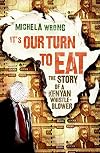
If you have any interest in Kenya, or how corruption works in Africa, or how aid agencies can exacerbate corruption, READ THIS BOOK. Wrong is a careful, clear writer who pulls no punches. Nobody comes across as a hero here, but in telling the story of John Githongo, who exposed a huge corruption scandal within the Kenyan govt. to the world, Wrong manages to be both pragmatic and hopeful. I found myself not only nodding but exclaiming out loud in agreement, as well as wincing at times at the show more mirror of Kenyan society held up in this book. If I could give more than five stars, I would. show less
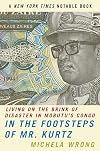
More than a biography of Mobutu Sese Seko Kuku Ngbedu wa za Banga, Michela Wrong set up to write a love letter to the Congo. Even though Mobutu was a dictator and the first and only president of Zaire, the history of his homeland is a tale that is just as interesting to tell. It is a story of great triumphs and devastating downfalls; a cautionary tale of corruption, greed and betrayal.
It is a small detail of In the Footsteps of Mr. Kurtz, but I appreciated knowing Mobutu's origin story of show more his love of leopard print. I am sure it is exaggerated, but the story goes that Mobutu's grandfather used to ridicule him for being afraid of leopards. After killing one its skin became Mobutu's personal fashion plate for his hats. I like to think every time Mobutu wore a leopard print hat he was giving his grandfather the proverbial middle finger.
As an aside...Every time someone saw me with In the Footsteps of Mr. Kurtz in my hands they would murmur, "ah...Heart of Darkness..." followed by either "I hated that book" or "I loved that book." No one ever said it was just okay. show less
It is a small detail of In the Footsteps of Mr. Kurtz, but I appreciated knowing Mobutu's origin story of show more his love of leopard print. I am sure it is exaggerated, but the story goes that Mobutu's grandfather used to ridicule him for being afraid of leopards. After killing one its skin became Mobutu's personal fashion plate for his hats. I like to think every time Mobutu wore a leopard print hat he was giving his grandfather the proverbial middle finger.
As an aside...Every time someone saw me with In the Footsteps of Mr. Kurtz in my hands they would murmur, "ah...Heart of Darkness..." followed by either "I hated that book" or "I loved that book." No one ever said it was just okay. show less
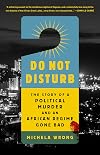
In 1994, the world was shocked when the Hutu majority in Rwanda unleashed a mass genocide against the country’s minority Tutsi population. This sparked a response from the Rwandan Patriot Front (RPF), composed mostly of Tutsi expats already at war with the Hutu government, to invade the country from Uganda to stop the killings. Led by Paul Kagame, they took power, claiming they would be an inclusive government blending both the Hutu and Tutsi cultures to create a democratic country. Kagame show more was proclaimed a hero by Western politicians, who for decades afterwards continued to support his new regime with money, turning a blind eye, even as he soon proclaimed himself President for life, suppressing free speech and centering power solely in Tutsi hands.
Do Not Disturb is Wrong’s detailed account of what actually led to the Rwandan genocide, and more importantly, its aftermath once the RPF took power. She centers the story around a former RPF intelligence officer, Patrick Karegeya, who ultimately fell out of favor with Kagame and fled to South Africa where he attempted to form a rival party to his regime. This would lead to him being found strangled in a hotel room, with strong evidence pointing to his being killed by Rwandan agents following orders of the country’s president. Then in stark detail, Wrong outlines how Kagame also orchestrated numerous murders of other Tutsi expats opposing his regime in the decades since he took power.
The book makes for an uncomfortable read. However, in this engaging history, Wrong uncovers truths that the Western powers downplay to this day, wanting to continue the myth that Kagame and his government ended the genocide with clean hands. In fact, as her investigative reporting shows, the RPF might have actually sparked the initial genocide, and once in power, carried out their own mass killings among the Hutu majority. With two decades spent as a reporter in Africa, the author’s expert knowledge is put to good use in presenting a chilling story that the rest of the world needs to know. Wrong has created a highly readable book that I found hard to put down. show less
Do Not Disturb is Wrong’s detailed account of what actually led to the Rwandan genocide, and more importantly, its aftermath once the RPF took power. She centers the story around a former RPF intelligence officer, Patrick Karegeya, who ultimately fell out of favor with Kagame and fled to South Africa where he attempted to form a rival party to his regime. This would lead to him being found strangled in a hotel room, with strong evidence pointing to his being killed by Rwandan agents following orders of the country’s president. Then in stark detail, Wrong outlines how Kagame also orchestrated numerous murders of other Tutsi expats opposing his regime in the decades since he took power.
The book makes for an uncomfortable read. However, in this engaging history, Wrong uncovers truths that the Western powers downplay to this day, wanting to continue the myth that Kagame and his government ended the genocide with clean hands. In fact, as her investigative reporting shows, the RPF might have actually sparked the initial genocide, and once in power, carried out their own mass killings among the Hutu majority. With two decades spent as a reporter in Africa, the author’s expert knowledge is put to good use in presenting a chilling story that the rest of the world needs to know. Wrong has created a highly readable book that I found hard to put down. show less
I was in downtown Seoul, getting desperate, as one does in the situation I was in, when salvation came in the shape of a second hand bookshop. Not speaking Korean meant that I quickly ran out of reading options so I usually had to take what I could get and hope for the best.
As it turns out, "In the Footsteps of Mr Kurtz" was about as good as I could hope for. Part (sad) history of the Democratic Republic of the Congo (or Zaire as it was then) and part reference to the then (no less sad) show more current events in Mobutu's Zaire, Wrong gets it right (ho ho) in showing, with a wry sense of humour, how dictator Mobutu was able to rule Zaire for so long, and how he managed to fleece so much from the state and from donor countries.
Some countries seem to have no luck and the Democratic Republic of the Congo is one of those countries, from its colonisation by the Belgians and the near-genocidal misrule of King Leopold to Zaire and Mobutu to more recent examples. Does Wrong think there is a ray of positive future for the Congolese? Not really, no. show less
As it turns out, "In the Footsteps of Mr Kurtz" was about as good as I could hope for. Part (sad) history of the Democratic Republic of the Congo (or Zaire as it was then) and part reference to the then (no less sad) show more current events in Mobutu's Zaire, Wrong gets it right (ho ho) in showing, with a wry sense of humour, how dictator Mobutu was able to rule Zaire for so long, and how he managed to fleece so much from the state and from donor countries.
Some countries seem to have no luck and the Democratic Republic of the Congo is one of those countries, from its colonisation by the Belgians and the near-genocidal misrule of King Leopold to Zaire and Mobutu to more recent examples. Does Wrong think there is a ray of positive future for the Congolese? Not really, no. show less
Lists
Awards


You May Also Like


Statistics
- Works
- 6
- Members
- 1,347
- Popularity
- #19,100
- Rating
- 3.9
- Reviews
- 27
- ISBNs
- 39
- Languages
- 2
- Favorited
- 3