
Wangari Maathai (1940–2011)
Author of Unbowed: A Memoir
About the Author
Wangari Maathai is the founder of the Green Belt Movement, which has planted over forty-five million trees across Kenya since 1977. In 2002, she was elected to Kenya's Parliament, and in 2003, she was appointed deputy minister for the Environment and Natural Resources, posts she held until 2007. show more Maathai was awarded the Nobel Peace Prize in 2004. In 2009, she was appointed a United Nations Messenger of Peace by UN Secretary-General Ban Ki-moon. show less
Works by Wangari Maathai
Replenishing the Earth: Spiritual Values for Healing Ourselves and the World (2010) 59 copies, 1 review
Indomável, uma luta pela liberdade 3 copies
Die Wunden der Schöpfung heilen: Wie wir zu uns selbst finden, wenn wir unsere Erde erneuern (2012) 2 copies, 2 reviews
Recycle and Plant 1 copy
Associated Works
One Can Make a Difference: Original stories by the Dali Lama, Paul McCartney, Willie Nelson, Dennis Kucinch, Russel Simmons, Bridgitte Bardot, Martina ... Dozens of Other… (2008) — Contributor — 29 copies, 1 review
Tagged
Common Knowledge
- Legal name
- Wangari Muta Maathai
- Other names
- Маатаи, Вангари
- Birthdate
- 1940-04-01
- Date of death
- 2011-09-25
- Gender
- female
- Education
- Mount St. Scholastica (BS|Biology)
University of Pittsburgh (MS)
University of Nairobi (PhD|Veterinary Medicine) - Occupations
- biologist
teacher - Organizations
- Alpha Kappa Alpha Sorority, Incorporated - honorary member
- Awards and honors
- Nobel Prize (Peace, 2004)
- Cause of death
- ovarian cancer (complications)
- Nationality
- Kenya
- Birthplace
- Ihithe, Tetu, Kenya
- Places of residence
- Ihithe, Kenya (birth)
- Associated Place (for map)
- Kenya
Members
Reviews
Kenya.
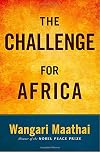
Wangari Maathai brings a wealth of knowledge, experience, and evidence to this sweeping critique of colonial and post-colonial policy in Africa. Though she often gives examples from Kenya, she addresses issues from many African nations and micro-nations. I don't agree with all of her arguments and opinions, but some are so persuasively made that I assume I ought to rethink the ones I questioned. I still have a strong impression that she reveals her own tension about how to validate show more and reclaim African history pre-colonialism. She has plenty to say about what's been problematic about colonial and post-colonial policies and practices, but little critique of pre-colonial life. This creates some over-valorization, but raises the excellent question of how to reclaim a suppressed and forgotten history. show less
Wangari Maathai brings a wealth of knowledge, experience, and evidence to this sweeping critique of colonial and post-colonial policy in Africa. Though she often gives examples from Kenya, she addresses issues from many African nations and micro-nations. I don't agree with all of her arguments and opinions, but some are so persuasively made that I assume I ought to rethink the ones I questioned. I still have a strong impression that she reveals her own tension about how to validate show more and reclaim African history pre-colonialism. She has plenty to say about what's been problematic about colonial and post-colonial policies and practices, but little critique of pre-colonial life. This creates some over-valorization, but raises the excellent question of how to reclaim a suppressed and forgotten history. show less
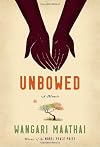
The most refreshing aspect of this book is its author's humility and "ordinary extraordinariness": though Dr. Maathai has been the recipient of numerous international awards and has for the past few decades been one of Africa's most prominent leaders, she tells her story in a humble tone that speaks of profound inner peace.
Much like Archbishop Desmond Tutu's tale of the South African Truth and Reconciliation Commission, No Future Without Forgiveness, Maathai's memoir allows us to understand show more that many of those who are recognized for success in making deep and lasting positive changes in the world have led lives as pedestrian as "our" own: like so many others Wangari Maathai has gone to school, gotten married, gotten divorced, been evicted, lost her job...her life is no different than that of millions of others; the difference lies in the ways she has chosen to react to adversity and opposition.
The memoir deals primarily with the birth and growth of the Green Belt Movement, the organization she founded thirty years ago to encourage sustainable environmental policy, to promote reforestation and conservation. Cutting across this tale are the side-stories of Kenyan politics, particularly as they deal with environmental policy and human rights issues.
While the focus of the memoir is on Africa, there are lessons to be learned in the United States as well. I found heartening her assessment of the American spirit. In describing her return to her native Kenya after six years of study in the United States, she spoke of this country hopefully: "There is a persistence, a seriousness, and a vision to America: It seems to know where it is going and it will go in that direction, whether you like it or not. In America, if you can find your place you can be treated very well, because its people are very generous. But you have to be tenacious, innovative, and strong. Besides, you have to keep moving, because the machine will grind on, whether you are on board or not" (pp. 95-96). show less
Much like Archbishop Desmond Tutu's tale of the South African Truth and Reconciliation Commission, No Future Without Forgiveness, Maathai's memoir allows us to understand show more that many of those who are recognized for success in making deep and lasting positive changes in the world have led lives as pedestrian as "our" own: like so many others Wangari Maathai has gone to school, gotten married, gotten divorced, been evicted, lost her job...her life is no different than that of millions of others; the difference lies in the ways she has chosen to react to adversity and opposition.
The memoir deals primarily with the birth and growth of the Green Belt Movement, the organization she founded thirty years ago to encourage sustainable environmental policy, to promote reforestation and conservation. Cutting across this tale are the side-stories of Kenyan politics, particularly as they deal with environmental policy and human rights issues.
While the focus of the memoir is on Africa, there are lessons to be learned in the United States as well. I found heartening her assessment of the American spirit. In describing her return to her native Kenya after six years of study in the United States, she spoke of this country hopefully: "There is a persistence, a seriousness, and a vision to America: It seems to know where it is going and it will go in that direction, whether you like it or not. In America, if you can find your place you can be treated very well, because its people are very generous. But you have to be tenacious, innovative, and strong. Besides, you have to keep moving, because the machine will grind on, whether you are on board or not" (pp. 95-96). show less
Wangari Maathai is my hero. If you're at all interested in the environmental movement in Africa, in the struggle for democracy in Kenya, read this book.
Her book is not only an account of her amazing life, but of the 20th century from the perspective of an African activist change-maker who came of age in the 60s. This book is a good idealistic shot-in-the-arm for anyone who feels tired, cynical, or let down by social change movements.
Her book is not only an account of her amazing life, but of the 20th century from the perspective of an African activist change-maker who came of age in the 60s. This book is a good idealistic shot-in-the-arm for anyone who feels tired, cynical, or let down by social change movements.
This is the memoir of Wangari Maathai who went from being a girl in a Kikuyu village to being the winner of the 2004 Nobel Peace Prize, the first African woman to win this award, the first to earn a PhD in East and Central Africa and to head a university department in Kenya. She began the Green Belt Movement in 1977 which has been responsible for planting 51 million trees in Africa and helping more than 30,000 women gain employment. She served as a member of Parliament
and assistant minister show more for the environment in 2003-2005 after significant struggles and opposition in her journey to get there.
I enjoyed her descriptions of rural village life in Kenya in the 1940s and 50s. I also appreciated her recount of the difficulties she faced getting involved in politics and environmentalism, in particular the challenge of being expected to be subservient as an African woman.
I did feel, however, that the memoir was much less personal as it went on, and more about her public life and achievements. There was very little comment on her feelings and personal life as an adult. She faced great difficulties after her very public divorce and at one point had to leave her children with her ex-husband, but very little is detailed about any of this or her response to it. Overall I found this to be a powerful story of courage and persistence by an inspiring woman. show less
and assistant minister show more for the environment in 2003-2005 after significant struggles and opposition in her journey to get there.
I enjoyed her descriptions of rural village life in Kenya in the 1940s and 50s. I also appreciated her recount of the difficulties she faced getting involved in politics and environmentalism, in particular the challenge of being expected to be subservient as an African woman.
I did feel, however, that the memoir was much less personal as it went on, and more about her public life and achievements. There was very little comment on her feelings and personal life as an adult. She faced great difficulties after her very public divorce and at one point had to leave her children with her ex-husband, but very little is detailed about any of this or her response to it. Overall I found this to be a powerful story of courage and persistence by an inspiring woman. show less
Lists
Awards


You May Also Like


Associated Authors
Statistics
- Works
- 16
- Also by
- 6
- Members
- 1,250
- Popularity
- #20,520
- Rating
- 3.9
- Reviews
- 19
- ISBNs
- 50
- Languages
- 10
- Favorited
- 4
