
David Christiana
Author of The First Snow
Works by David Christiana
Drawer in a drawer 2 copies
Feene i drømmeland fra A til Å — Illustrator — 1 copy
Associated Works
Disney Fairies: Fairy Dust and the Quest for the Egg (2005) — Illustrator, some editions — 1,041 copies, 23 reviews
Disney Fairies: Fairy Haven and the Quest for the Wand (2007) — Illustrator, some editions — 660 copies, 6 reviews
The Emperor's New Clothes : An All-Star Retelling of the Classic Fairy Tale (with Audio CD) (1998) — Illustrator — 260 copies, 6 reviews
Disney Fairies: Fairies and the Quest for Never Land (2010) — Illustrator, some editions — 160 copies, 1 review
Tagged
Common Knowledge
- Canonical name
- Christiana, David
- Gender
- male
- Occupations
- illustrator
- Nationality
- USA
- Associated Place (for map)
- USA
Members
Reviews
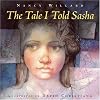
Sasha's mom gives her a bright yellow ball to play with on a rainy day. It bounces through the door in the mantel clock's shadow and over a bridge of butterflies, and Sasha follows. Sasha then finds a farmer had planted her ball in hopes that it might grow "flowers gold as finch's wings . . . a golden hen . . . and starlight-covered jelly beans." Sasha finds all manner of hidden "things worn or wished on, old or lost." The farmer, who is the King of Keys, eventually gives her back her yellow show more ball, and she finds herself back in her own living room. Her house may be "small and plain," but a hundred pencils writing on sheets of gold could not hold "the strange adventures / shadows hide." Scholastic Book Wizard has identified this as a K-2 level story, but I would have to disagree. This story is incredibly mature for it's children's literature mask, and I believe third to seventh graders would enjoy this more than a young child. While the illustrations do allow for a childish charm, the content of the story is definitely hard to understand at such a young age because of the poetic depth that the author has included. I would not want to introduce this as poetry at a young age as well because children may feel discouraged from the start and feel that they will never understand poetry if it's all like this. Speaking of the illustrations, I believe that this book should have won a Caldecott or been a Caldecott honor. The art is incredible and majestic. I believe that is what has always drawn me to this book despite still having confusion about the story. I am giving this story a 3/5. While the poetry and cadence of the story is beautiful, as well as the illustrations, I feel that this would be too confusing at a young age and I would refrain from using this in my classroom until the higher grades. show less

I did not care for this one. I did like the rhythm of the words and the silliness of the images and the reference to other nursery rhymes. That being said, I simply didn't get this book at all.

This beautifully illustrated storybook is both visually and cognitively stimulating. Yolen’s tale deals with the classic debate over what constitutes “goodness”. He forces the reader to consider both the superficial manifestation of one’s goodness and an in depth examination of it as a moral virtue when tried under extreme circumstances. Although a seemingly easy read, this book compels the reader to grapple with complex moral issues and personal prejudices about the nature of show more goodness. Teachers looking to teach argument and debate should definitely consider this an excellent resource that will engage all levels of readers. show less
Griselle was about to be married to a man named Bo, but right before their wedding he was sent to war and he never returned. Since he never returned, she devoted her time to the stray animals of Paris. While on her way to feed the animals, the stone angels near the cathedral complimented her on how great a woman she was. While the angels were giving Griselle praise, the gargoyles at the top of the cathedral was very displeased. The gargoyles decided to make a wager between themselves and the show more stone angels. Their wager was that the gargoyles will send a devilish child to Griselle which would prove how good of a woman she really is. On Christmas Eve, Griselle awoke to a child with candy corn hair, a nose touching his chin and black teeth. This child was not your ordinary child. He tried hard to destroy everything around him, but Griselle remained kind to him. The gargoyles prayed to their gods to help Griselle lose the bet. The next day a man presented himself as Bo and told Griselle that he was her husband, but was really just a test from the gargoyles. "Bo" demanded the child to be disciplined and even spanked him. Just when the gargoyles thought they won the bet, Griselle stuck up for the child and told "Bo" to leave. "Bo" left and ultimately the stone angels won the bet. Many years later Griselle dies and Little Bo vanishes, but if you look closely at the stone angel you will see a little boy with candy corn hair, a nose touching his chin, and black teeth. Children can learn about good versus evil, not to judge a book by its' cover, and to be wary of people. Children may also learn to see the good in everyone. The illustrations are rich and eye capturing. show less
Awards


You May Also Like


Associated Authors
Statistics
- Works
- 9
- Also by
- 7
- Members
- 361
- Popularity
- #66,479
- Rating
- 3.7
- Reviews
- 11
- ISBNs
- 19