
Stephen L. Carter
Author of The Emperor of Ocean Park
About the Author
Stephen L. Carter was born in Washington, D.C. on October 26, 1954. He received a bachelor's degree in history from Stanford University in 1976 and a law degree from Yale University in 1979. After graduation, he served as a law clerk for Judge Spottswood W. Robinson, III, of the United States Court show more of Appeals for the District of Columbia Circuit, and for Supreme Court Justice Thurgood Marshall. In 1982, he joined the Yale University faculty and is currently the William Nelson Cromwell Professor of Law. He is the author of numerous non-fiction works including Reflections of an Affirmative Action Baby (1991); The Culture of Disbelief: How American Law and Politics Trivialize Religious Devotion (1993); The Confirmation Mess: Cleaning Up the Federal Appointments Process (1994); Integrity (1996); The Dissent of the Governed: A Meditation on Law, Religion, and Loyalty (1998); Civility: Manners, Morals, and the Etiquette of Democracy (1998); and God's Name in Vain: The Wrongs and Rights of Religion in Politics (2000). He has also written several fiction works including The Emperor of Ocean Park and Jericho's Fall. He was the first non-theologian to receive the prestigious Louisville-Grawemeyer Award in religion. (Bowker Author Biography) show less
Image credit: Elena Seibert
Series
Works by Stephen L. Carter
The Culture of Disbelief: How American Law and Politics Trivialize Religious Devotion (1993) — Author — 901 copies, 5 reviews
Invisible: The Forgotten Story of the Black Woman Lawyer Who Took Down America's Most Powerful Mobster (2018) 282 copies, 23 reviews
The Dissent of the Governed : A Meditation on Law, Religion, and Loyalty (1998) 61 copies, 2 reviews
Associated Works
The Dark End of the Street: New Stories of Sex and Crime by Today's Top Authors (2010) — Contributor — 97 copies, 22 reviews
Tagged
Common Knowledge
- Other names
- Shields, A. L.
- Birthdate
- 1954-10-26
- Gender
- male
- Education
- Stanford University (B.A. ∙ 1976)
Yale University (J.D. ∙ 1979)
Ithaca High School - Occupations
- professor (Law)
columnist
writer
novelist - Organizations
- Yale University
- Awards and honors
- Thurmond Arnold Moot Court Competition (best oralist)
- Nationality
- USA
- Birthplace
- Washington, D.C., USA
- Places of residence
- Ithaca, New York, USA
Cheshire, Connecticut, USA
New Haven, Connecticut, USA
Harlem, Manhattan, New York, New York, USA
Washington, D.C., USA - Associated Place (for map)
- USA
Members
Reviews
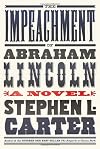
Although this novel is suffused throughout with deep historical knowledge and a rich, mostly convincing alternative history, it's structured and plotted as a mystery and a thriller, with clues dropping this way and that for mystery solvers to pick up and consider, and the threat of violence always around the corner. Lincoln himself makes relatively few appearances: I had the feeling that Carter didn't want to bring him too much to the forefront for fear of making some kind of mistake of fact show more or characterization. But nothing about Lincoln's speech or behavior, when he did appear, rang false to me. The book centers around Abigail Canner, a middle-class black woman in her early twenties, ambitious but ethical and modest, although always the smartest person in the room. Having worked her way into a clerk position at a prestigious white law firm by means of recommendations and a careful omission of personal details, she arrives just as the firm begins its work as Lincoln's defense at his impeachment by the Senate in late 1867. Not long after, one of the partners is murdered in the street together with another young black woman identified as a prostitute. Canner knows there is far more to this than anyone will admit, and works to discover it despite being ordered to cease investigation by her boss. Aiding her is the young white law clerk of the firm, Jonathan Hilliman, a much more ordinary person whose race, class, and sex give him access to places and people Canner would not be able to access herself.
Carter, a Yale professor of law, is much better writing about political and legal intrigue than about the subtler forms of competition within families and social classes, or for that matter the details and aftermath of violent assault, so while I loved the legal wrangling and the scenes of the trial on the Senate floor, the Austen-like scenes of both villainous and helpful ladies, and some of the action scenes as the book neared its climax, left me somewhat unconvinced. Let it be known, too, that I'm not the kind of reader who cares to figure out "who done it"; I just want to believe in the characters and trust the author to wrap it up in a way that makes sense. Carter succeeds admirably, while painting a vivid picture of the lives of middle-class and upper middle-class black people on the edge of the South in the mid-nineteenth century. show less
Carter, a Yale professor of law, is much better writing about political and legal intrigue than about the subtler forms of competition within families and social classes, or for that matter the details and aftermath of violent assault, so while I loved the legal wrangling and the scenes of the trial on the Senate floor, the Austen-like scenes of both villainous and helpful ladies, and some of the action scenes as the book neared its climax, left me somewhat unconvinced. Let it be known, too, that I'm not the kind of reader who cares to figure out "who done it"; I just want to believe in the characters and trust the author to wrap it up in a way that makes sense. Carter succeeds admirably, while painting a vivid picture of the lives of middle-class and upper middle-class black people on the edge of the South in the mid-nineteenth century. show less
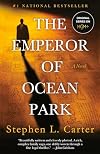
An 800-page novel that should have been a 400-page novel. More than 200 pages pass before the plot begins to rouse itself, and the first-person narration is so discursive, verbose and prissy that it presents a serious test of patience.
Talcott Garland's father Oliver Garland, a kind of Clarence Thomas figure but without the imputation of sexual misbehavior, has just died, leaving poor Talcott (as we find out on page 256) a puzzle that he must solve to find the mysterious "arrangements" that show more were left for him. Meanwhile, multiple teams of shady operatives of various levels of fearsomeness are after the same arrangements. Although these operatives are clearly capable of violence, Oliver's powerful underworld buddy Jack Ziegler has pledged to keep Talcott and his family safe, so there's rarely any real sense of physical danger. The plot consists mostly of Talcott evading and/or interacting with the operatives, trying to solve the puzzle, and (not least) trying to hold his marriage to his narcissistic, unfaithful wife Kimmer together while navigating the treacherous waters of academic politics.
If the lead character in a first-person book is a straight arrow (Talcott doesn't drink, curse or fight), there needs to be a more unpredictable friend, ally, or enemy — think of Easy Rawlins' friend Mouse in Walter Mosley's "Devil in a Blue Dress." Unfortunately, for most of the book Talcott has no one to depend on except his pastor/counselor Dr. Morris Young, a specialist in smug, fatuous relationship advice that's accepted by the narrator (and, I think, by the author) as sage counsel. Jack Ziegler is a snakily vivid character, but can't transcend the weight of his author's moral judgment. Kimmer is clearly toxic, but (being inside Talcott's head) the reader has to put up with countless paragraphs of mooning over her. Talcott and Kimmer's toddler son Bentley is a bundle of baby-speak cuteness without personality. One of the operatives, Maxine, springs suddently to life and gives the reader some hope that Talcott might actually find a path to a verve all his own, but she disappears. Almost all of Talcott's colleagues are far more interested in status games than in being rounded individuals, capable of kindness as well as spite. Talcott doesn't trust any of them, and they don't trust him, no doubt because he's never cracked a joke in his life.
The cover of my 2007 Vintage paperback edition includes several misleading blurbs, including one from the NYTBR calling it "high-spirited and fleet of foot," although it is low-spirited and plodding, and one from John Grisham calling it a "legal thriller," which it is not: there isn't a single courtroom scene in the book. show less
Talcott Garland's father Oliver Garland, a kind of Clarence Thomas figure but without the imputation of sexual misbehavior, has just died, leaving poor Talcott (as we find out on page 256) a puzzle that he must solve to find the mysterious "arrangements" that show more were left for him. Meanwhile, multiple teams of shady operatives of various levels of fearsomeness are after the same arrangements. Although these operatives are clearly capable of violence, Oliver's powerful underworld buddy Jack Ziegler has pledged to keep Talcott and his family safe, so there's rarely any real sense of physical danger. The plot consists mostly of Talcott evading and/or interacting with the operatives, trying to solve the puzzle, and (not least) trying to hold his marriage to his narcissistic, unfaithful wife Kimmer together while navigating the treacherous waters of academic politics.
If the lead character in a first-person book is a straight arrow (Talcott doesn't drink, curse or fight), there needs to be a more unpredictable friend, ally, or enemy — think of Easy Rawlins' friend Mouse in Walter Mosley's "Devil in a Blue Dress." Unfortunately, for most of the book Talcott has no one to depend on except his pastor/counselor Dr. Morris Young, a specialist in smug, fatuous relationship advice that's accepted by the narrator (and, I think, by the author) as sage counsel. Jack Ziegler is a snakily vivid character, but can't transcend the weight of his author's moral judgment. Kimmer is clearly toxic, but (being inside Talcott's head) the reader has to put up with countless paragraphs of mooning over her. Talcott and Kimmer's toddler son Bentley is a bundle of baby-speak cuteness without personality. One of the operatives, Maxine, springs suddently to life and gives the reader some hope that Talcott might actually find a path to a verve all his own, but she disappears. Almost all of Talcott's colleagues are far more interested in status games than in being rounded individuals, capable of kindness as well as spite. Talcott doesn't trust any of them, and they don't trust him, no doubt because he's never cracked a joke in his life.
The cover of my 2007 Vintage paperback edition includes several misleading blurbs, including one from the NYTBR calling it "high-spirited and fleet of foot," although it is low-spirited and plodding, and one from John Grisham calling it a "legal thriller," which it is not: there isn't a single courtroom scene in the book. show less

Mild spoilers.
I think I relished Palace Council more while reading it than I did the first two Carter novels (The Emperor of Ocean Park and New England White). There are more breadcrumbs to follow and more delicious foreshadowing to savor this time around. In this novel he successfully marries the story he wants to tell with the way he's telling it. In the others, he had compelling stories, but was mired by too much introspection and slow pacing. Here we have a compelling story that is told show more in a compelling way. The novel is a polished product that seems much more deliberately crafted than the first two. The thought and design are more obvious, but not limiting or controlling. Plus there were many historical figures worked in and all that realism makes the whole story less fictional if you know what I mean. The scenes with Kennedy, Hughes and Nixon make you think things like that probably really did happen. Who doesn't love a conspiracy?
That's what's at the heart of Palace Council; a conspiracy to control top levels of government. Like most juicy conspiracies, it takes place over a period of decades and involves many people. If you like fiction that is simple with all of the dots connected up for you don't read this. If you like short casts of characters because remembering someone who only showed up for a couple of minutes 300 pages ago is too hard, don't read this book. If you don't like extremely abstruse details becoming important and then connecting up in vague and non-obvious ways, don't read this. Really. You'll just be frustrated. If you like all those things and don't need the solution handed to you and don't have the memory of a goldfish, go right ahead.
That being said, I think the underlying conspiracy, the Project as it's called, could have been more concrete. As it is you have to draw a lot of lines to connect the dots yourself. Were certain deaths part of the Project or just collateral damage or coincidental? While I can make those conclusions, there isn't enough evidence to support them and it makes the big reveal have less effect than it should considering the build up.
And the build up is good. Carter uses chapter headings and titles to telegraph a lot of the action. I like this method a lot better than the cliff-hanger type of chapter endings that so many thriller writers use these days. As if their stories don't have their own impetus to drive them forward, the fake tension created by this method is just annoying. With Palace Council we get a chapter called Arrest and so now we know what's going to happen, but not specifically enough so we read it. Instead of leaving you hanging at the arrest and starting another chapter to resolve it, we get the entire scenario delivered from lead up to final exits. Very nice. The tension flow is even and the scenes aren't too stagey.
Another source of tension is in the character relationship between Eddie and Aurelia. Their relationship is important, but it's not allowed to overshadow the conspiracy itself. It wasn't a given that they would get together, but you root for them. Separately it is obvious that each will only get so far, but together you know they can solve the mystery and when they finally do join forces it isn't sappy or overdone. It's satisfying, but still somewhat tense and not a guarantee of happiness. Great verisimilitude.
Once again Carter is not here to stand on the soapbox and preach about race relations. He doesn't have to, the circumstances each character finds himself or herself in speaks loudly enough. That and the times themselves; the mid 1950s to the mid 1970s were all about racial equality and the struggle for civil rights. Carter uses many factual examples of that struggle, but they are never delivered with haranguing, accusatory speeches. Starkly portrayed they have more impact. Although I know these things happened, they still shock me that people treated each other this way over something so stupid. Humans are weird.
The loose connection to a certain segment of the darker nation is nice, but not necessary and you don't need to read the first two novels before this one. Because it takes place so much earlier than the other two, it could even be read before the others, but his talent and expertise shine greater here and you can discern his growth as a writer if you read them in publication order. I hope he writes another one. And if you read this, Mr. Carter, more Mona!
Read more: http://thebookmarque.blogspot.com/2011/01/palace-council-by-stephen-l-carter-200... show less
I think I relished Palace Council more while reading it than I did the first two Carter novels (The Emperor of Ocean Park and New England White). There are more breadcrumbs to follow and more delicious foreshadowing to savor this time around. In this novel he successfully marries the story he wants to tell with the way he's telling it. In the others, he had compelling stories, but was mired by too much introspection and slow pacing. Here we have a compelling story that is told show more in a compelling way. The novel is a polished product that seems much more deliberately crafted than the first two. The thought and design are more obvious, but not limiting or controlling. Plus there were many historical figures worked in and all that realism makes the whole story less fictional if you know what I mean. The scenes with Kennedy, Hughes and Nixon make you think things like that probably really did happen. Who doesn't love a conspiracy?
That's what's at the heart of Palace Council; a conspiracy to control top levels of government. Like most juicy conspiracies, it takes place over a period of decades and involves many people. If you like fiction that is simple with all of the dots connected up for you don't read this. If you like short casts of characters because remembering someone who only showed up for a couple of minutes 300 pages ago is too hard, don't read this book. If you don't like extremely abstruse details becoming important and then connecting up in vague and non-obvious ways, don't read this. Really. You'll just be frustrated. If you like all those things and don't need the solution handed to you and don't have the memory of a goldfish, go right ahead.
That being said, I think the underlying conspiracy, the Project as it's called, could have been more concrete. As it is you have to draw a lot of lines to connect the dots yourself. Were certain deaths part of the Project or just collateral damage or coincidental? While I can make those conclusions, there isn't enough evidence to support them and it makes the big reveal have less effect than it should considering the build up.
And the build up is good. Carter uses chapter headings and titles to telegraph a lot of the action. I like this method a lot better than the cliff-hanger type of chapter endings that so many thriller writers use these days. As if their stories don't have their own impetus to drive them forward, the fake tension created by this method is just annoying. With Palace Council we get a chapter called Arrest and so now we know what's going to happen, but not specifically enough so we read it. Instead of leaving you hanging at the arrest and starting another chapter to resolve it, we get the entire scenario delivered from lead up to final exits. Very nice. The tension flow is even and the scenes aren't too stagey.
Another source of tension is in the character relationship between Eddie and Aurelia. Their relationship is important, but it's not allowed to overshadow the conspiracy itself. It wasn't a given that they would get together, but you root for them. Separately it is obvious that each will only get so far, but together you know they can solve the mystery and when they finally do join forces it isn't sappy or overdone. It's satisfying, but still somewhat tense and not a guarantee of happiness. Great verisimilitude.
Once again Carter is not here to stand on the soapbox and preach about race relations. He doesn't have to, the circumstances each character finds himself or herself in speaks loudly enough. That and the times themselves; the mid 1950s to the mid 1970s were all about racial equality and the struggle for civil rights. Carter uses many factual examples of that struggle, but they are never delivered with haranguing, accusatory speeches. Starkly portrayed they have more impact. Although I know these things happened, they still shock me that people treated each other this way over something so stupid. Humans are weird.
The loose connection to a certain segment of the darker nation is nice, but not necessary and you don't need to read the first two novels before this one. Because it takes place so much earlier than the other two, it could even be read before the others, but his talent and expertise shine greater here and you can discern his growth as a writer if you read them in publication order. I hope he writes another one. And if you read this, Mr. Carter, more Mona!
Read more: http://thebookmarque.blogspot.com/2011/01/palace-council-by-stephen-l-carter-200... show less
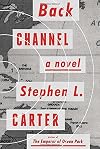
This is an amazing book. Back Channel crackles with energy as Stephen L. Carter develops an alternative history plot that startles the reader and yet seems all too plausible. The protagonist, 19-year old Cornell sophomore Margo Jensen, is an unlikely person to form the back channel between Khrushchev and JFK during the Cuban Missile Crisis but her naivete and spunk is what really fuels the book. The dialog rings true, the characters all feel real, and the historic backdrop is dramatic and show more accurate. Back Channel is a must read. show less
Lists
Awards


You May Also Like


Associated Authors
Statistics
- Works
- 22
- Also by
- 7
- Members
- 6,818
- Popularity
- #3,585
- Rating
- 3.5
- Reviews
- 171
- ISBNs
- 160
- Languages
- 10
- Favorited
- 9


