
John Porcellino
Author of Thoreau at Walden
About the Author
Image credit: Photo by Tugboat Press
Series
Works by John Porcellino
King-Cat Comics & Stories No. 60 3 copies
King-Cat Comics & Stories No. 48 3 copies
The Ones that Everybody Knows 3 copies
3 Poems About Fog 3 copies
The Kukoc Cat named Maisie 2 copies
King-Cat Comics & Stories No. 9 2 copies
On Ruby Hill: Poems, 1997-2002 2 copies
King-Cat Comics & Stories No. 38 2 copies
Cehsoikoe No. 8 1 copy
Cehsoikoe No. 6 1 copy
Cehsoikoe No. 4 1 copy
King-Cat: Comix & Stories 1 copy
Long Way Home 1 copy
Now We Are Forty 1 copy
My Word! 1 copy
Cehsoikoe No. 3 1 copy
Cehsoikoe No. 2 1 copy
Cehsoikoe No. 12 1 copy
Cehsoikoe No. 7 1 copy
Cehsoikoe No. 10 1 copy
Cehsoikoe No. 9 1 copy
Associated Works
An Anthology of Graphic Fiction, Cartoons, and True Stories (2000) — Contributor — 385 copies, 3 reviews
An Anthology of Graphic Fiction, Cartoons, and True Stories: v. 2 (2008) — Contributor — 169 copies, 2 reviews
Tagged
Common Knowledge
- Birthdate
- 1968-09-18
- Gender
- male
- Nationality
- USA
- Birthplace
- Chicago, Illinois, USA
- Places of residence
- Chicago, Illinois, USA
Denver, Colorado, USA
South Beloit, Illinois, USA - Associated Place (for map)
- Illinois, USA
Members
Discussions
John Porcellino in Other People's Libraries (May 2021)
Reviews

I love reading graphic adaptations of classic works, and it doesn't get much more classic than Thoreau's Walden. I went through a period in my youth where I was fascinated by "alternative" religious experiences, and I know that the transcendentalists probably didn't consider their philosophy a religion, but they sort of get mushed together for me. It's all about how you choose to live in the world, right? I think most people know something about the Walden story - Thoreau sort of ducked out show more of life, built himself a cabin in the woods and lived there alone for a couple of years, reading and writing and thinking and growing stuff and eating what he grew. This is a very short book, and the drawings are very spare, and it does not attempt to recount the entire book, but rather to capture its essence in a few pithy phrases. It definitely succeeds - whether you are familiar with the Walden story or not, you come away with an understanding not just of Thoreau's experience, but his motivations. There are also extensive endnotes, which explain why the author chose the phrases he did, and fill in the background a little (such as explaining that Thoreau's cabin was only about a mile from the town of Concord, and he went there often during his stay at the pond, so he wasn't exactly living the full hermit life). It also blows my mind that, in his early 20s, Thoreau built this cabin himself. I know it was a different time (the mid-1800s) when maybe that wasn't such a big deal, but I still feel like that alone is a pretty monumental accomplishment, totally separate from all he achieved intellectually. I do believe that studying and remembering these efforts does continue to inform and enrich our modern way of life. show less
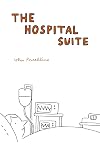
this is an odd book and a quick read.
parts of it (the health issues, hospitalization/hospital experiences) were fascinating and relatable; other parts were a little hokey for my liking (tipping into religion (catholocism and zen buddhism) and alternative alternative medicine, pretty extra alternative). to each their own, and if things porcellino tried helped well... bless his heart.
the book isn't just about the author's failing body and struggling mind, but also the ways in which he felt show more his life was also failing - his relationships, his lack of socialization (*very* pre-pandemic), employment as a comic artist and health food store employee, etc.
one of the struggles for me with this book - as a person with chronic illness and just an all around messed up body - happened with porcellino who, desperate for relief and answers turns to quackery and away from science. i have first-hand experience with 'hurry up and wait', sitting in limbo waiting for answers, or surgery, or results, or to be told we just aren't sure. being on the healthcare conveyor belt is exhausting, resilience is challenged, and strength eventually becomes next to non-existent. so i understand desperation, especially when one feels so monumentally shitty and deeply in pain 100% of the time, with no relief in sight. i struggle with the thought of someone else in dire circumstances taking a page from porcellino's book and doing their own research into alternative therapies and practitioners then choosing that over science and medicine.
i really don't want to crap on the guy for trying to get well - he did what he needed to do. but it's not going to be the right path for most.
porcellino has a simplistic illustration style, and he is a wordy illustrator. (if that makes any sense? he's a chatty cathy as my grandma would say.) so... i dunno. i appreciated the work, and using this illustrated memoir style to tell a sicklit story, but I didn't love it. show less
parts of it (the health issues, hospitalization/hospital experiences) were fascinating and relatable; other parts were a little hokey for my liking (tipping into religion (catholocism and zen buddhism) and alternative alternative medicine, pretty extra alternative). to each their own, and if things porcellino tried helped well... bless his heart.
the book isn't just about the author's failing body and struggling mind, but also the ways in which he felt show more his life was also failing - his relationships, his lack of socialization (*very* pre-pandemic), employment as a comic artist and health food store employee, etc.
one of the struggles for me with this book - as a person with chronic illness and just an all around messed up body - happened with porcellino who, desperate for relief and answers turns to quackery and away from science. i have first-hand experience with 'hurry up and wait', sitting in limbo waiting for answers, or surgery, or results, or to be told we just aren't sure. being on the healthcare conveyor belt is exhausting, resilience is challenged, and strength eventually becomes next to non-existent. so i understand desperation, especially when one feels so monumentally shitty and deeply in pain 100% of the time, with no relief in sight. i struggle with the thought of someone else in dire circumstances taking a page from porcellino's book and doing their own research into alternative therapies and practitioners then choosing that over science and medicine.
i really don't want to crap on the guy for trying to get well - he did what he needed to do. but it's not going to be the right path for most.
porcellino has a simplistic illustration style, and he is a wordy illustrator. (if that makes any sense? he's a chatty cathy as my grandma would say.) so... i dunno. i appreciated the work, and using this illustrated memoir style to tell a sicklit story, but I didn't love it. show less

"King-Cat is one of my all-time favorite zines. John Porcellino's comics and stories are poignant, sharp, calming, simple, touching, and smart, and reading an issue of King-Cat is one of the most peaceful experiences I can hope to have regularly.In this issue you'll find stories and pretty illustrations related to John and Misun's move from San Francisco back to Denver. You probably won't find another writer-artist whose consciousness of his place in his environment is so enviable. 8.5" x show more 5.5", 32 pages."
- parcellpress.com show less
- parcellpress.com show less
This is in our collection for students to read in their independent reading circles within their English class. I've not paid much attention to it but as I read I loved it. The author only uses the words of Henry David Thoreau to tell the story of the two years he spent on Walden Pond. As I read memories of hiking around Walden Pond with my Grandmother and sisters flooded back (I had forgotten about those moments). And what I loved is that this graphic novel made me think about the pace of show more my own life. I will be bringing students attention to this novel as it introduces students to Walden Pond and Henry David Thoreau in a unique way and it may convince them to slow down and appreciate life for life's sake. show less
Lists
Awards


You May Also Like


Associated Authors
Statistics
- Works
- 95
- Also by
- 11
- Members
- 1,018
- Popularity
- #25,308
- Rating
- 3.8
- Reviews
- 40
- ISBNs
- 37
- Languages
- 5
- Favorited
- 6