
Sarah Churchwell
Author of Careless People: Murder, Mayhem and the Invention of The Great Gatsby
About the Author
Works by Sarah Churchwell
Associated Works
Myth America: Historians Take On the Biggest Legends and Lies About Our Past (2022) — Contributor — 286 copies, 5 reviews
The Sea, the Sea; A Severed Head: Introduction by Sarah Churchwell (Everyman's Library Contemporary Classics Series) (2016) — Introduction — 67 copies, 2 reviews
Middlebrow Moderns: Popular American Women Writers of the 1920s (2003) — Contributor, some editions — 17 copies
Tagged
Common Knowledge
- Canonical name
- Churchwell, Sarah
- Legal name
- Churchwell, Sarah Bartwell
- Birthdate
- 1970
- Gender
- female
- Education
- Vassar College (AB|English literature)
Princeton University (MA|English and American Literature)
Princeton University (PhD|English and American Literature) - Occupations
- university professor (American literature and the public understanding of the humanities)
- Organizations
- London University (School of Advanced Studies|professor of American literature and the public understanding of the humanities)
- Awards and honors
- Orwell Prize for Journalism
Writer in Residence at the Eccles Centre for American Studies (2015) - Agent
- Peter Robinson
- Short biography
- Sarah Bartlett Churchwell (born May 27, 1970) is a professor of American Literature and Public Understanding of the Humanities at the School of Advanced Study, University of London, UK. Her expertise is in 20th- and 21st-century American literature and cultural history, especially the 1920s and 1930s. She has appeared on British television and radio and has been a judge for the Booker Prize, the Baillie Gifford Prize, the Women's Prize for Fiction, and the David Cohen Prize for Literature. She is the director of the Being Human festival and the author of three books. In April 2021, she was long listed for the Orwell Prize for Journalism. [from: Wikipedia]
- Nationality
- USA
- Birthplace
- Virginia, USA
- Places of residence
- Winnetka, Illinois, USA
London, England, UK - Map Location
- USA
Members
Reviews
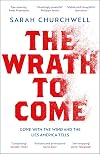
While only half-way through this book, I'm already astonished at how it exposes my very sketchy knowledge of the real history of the United States. I'm not American, so perhaps I can excuse myself a bit, but this is the author's main point - that millions of Americans are themselves ignorant of the unfinished business of the Civil War, slavery and its aftermath, even into the 21st century. This explains a lot of what is behind the electoral success of the Trump presidency and the continuing show more appeal of racist and chauvinistic policies - a willing denial of the failure, after the Civil war, to properly address integrate the Black Americans into American society and build an inclusive, genuinely democratic society.
Brilliantly, the author uses a detailed review of the book Margaret Mitchell's "Gone With The Wind" (1936) and the Hollywood blockbuster film based on it, to elaborate and support her arguments.
Highly recommended! show less
Brilliantly, the author uses a detailed review of the book Margaret Mitchell's "Gone With The Wind" (1936) and the Hollywood blockbuster film based on it, to elaborate and support her arguments.
Highly recommended! show less
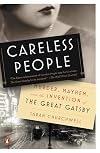
I love true crime, and I love The Great Gatsby (I think its concluding sentences are honestly some of the finest ever written), so that I would love this book seemed like a given. And I did love this book, even more than I expected.
Churchwell explores the fascinating, heartbreaking, scandalous. and, yes, careless, lives of the Fitzgeralds. From Scott and Zelda's seemingly never-ending alcohol consumption and partying, to Scott's deep felt disappointment at the lack of commercial success for show more what he considered his finest writing, and Zelda's descent into a series of heartrending breakdowns, Churchwell makes their world and the time period they lived in come alive in vivid color.
Churchwell also expertly weaves in the still-unsolved Hall-Mills murder case, and how its scandal, adultery, and immediacy as (tabloid) newspaper fodder may have influenced The Great Gatsby.
History, mystery, and literary theory all combine to make for a fascinating non-fiction read. show less
Churchwell explores the fascinating, heartbreaking, scandalous. and, yes, careless, lives of the Fitzgeralds. From Scott and Zelda's seemingly never-ending alcohol consumption and partying, to Scott's deep felt disappointment at the lack of commercial success for show more what he considered his finest writing, and Zelda's descent into a series of heartrending breakdowns, Churchwell makes their world and the time period they lived in come alive in vivid color.
Churchwell also expertly weaves in the still-unsolved Hall-Mills murder case, and how its scandal, adultery, and immediacy as (tabloid) newspaper fodder may have influenced The Great Gatsby.
History, mystery, and literary theory all combine to make for a fascinating non-fiction read. show less
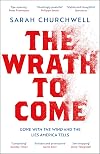
Draws interesting parallels between the sensibilities found in the book (and its writer) and broader currents running through America from Reconstruction to Trump. Looks at the histories of the novel and the film and fits them into larger narratives about the "lost cause" and the history of homegrown fascist groups. It could have been a little shorter and her speaking style (in the audio book) is a little exhausting, but overall the book tries to make a broad argument about where the country show more finds itself today and how similar it looks to where it found itself in the 1860s. show less

3.5
Churchwell does a good job with the research and just pure enthusiasm walking the reader through most of Fitzgerald's life. You will feel you know about him and his milieu after having read this. The murder angle just seems completely superfluous and continuously distracting. What's good is good though, I just found it entirely unnecessary.
Churchwell does a good job with the research and just pure enthusiasm walking the reader through most of Fitzgerald's life. You will feel you know about him and his milieu after having read this. The murder angle just seems completely superfluous and continuously distracting. What's good is good though, I just found it entirely unnecessary.
Lists
Awards


You May Also Like


Associated Authors
Statistics
- Works
- 5
- Also by
- 6
- Members
- 833
- Popularity
- #30,660
- Rating
- 3.5
- Reviews
- 19
- ISBNs
- 35
- Languages
- 1
- Favorited
- 1