
Linda Gordon (1) (1940–)
Author of The Second Coming of the KKK: The Ku Klux Klan of the 1920s and the American Political Tradition
For other authors named Linda Gordon, see the disambiguation page.
About the Author
Linda Gordon is a professor of history at New York University.
Image credit: from author's webpage
Works by Linda Gordon
The Second Coming of the KKK: The Ku Klux Klan of the 1920s and the American Political Tradition (2017) 276 copies, 4 reviews
Impounded: Dorothea Lange and the Censored Images of Japanese American Internment (2006) — Editor — 228 copies, 4 reviews
Dear sisters : dispatches from the women's liberation movement (2000) — Editor — 162 copies, 1 review
Feminism Unfinished: A Short, Surprising History of American Women's Movements (2014) 115 copies, 2 reviews
Associated Works
Unequal Sisters: A Multicultural Reader in U.S. Women's History {Second Edition} (1994) — Contributor — 98 copies
Clio's Consciousness Raised: New Perspectives on the History of Women (1974) — Contributor — 62 copies
Tagged
Common Knowledge
- Birthdate
- 1940
- Gender
- female
- Education
- Swarthmore College (BA)
Yale University (MA, PhD) - Occupations
- history professor
advisory board member - Organizations
- University of Massachusetts, Boston
University of Wisconsin-Madison
New York University
Signs: Journal of Women in Culture and Society - Nationality
- USA
- Birthplace
- Chicago, Illinois, USA
- Places of residence
- New York, New York, USA
Madison, Wisconsin, USA
Portland, Oregon, USA - Map Location
- USA
Members
Reviews
The Second Coming of the KKK: The Ku Klux Klan of the 1920s and the American Political Tradition by Linda Gordon
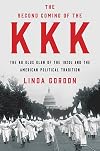
Gordon offers an explicitly presentist account of the KKK in the 1920s through the 50s. She emphasizes how mainstream the KKK was in certain areas, especially the midwest, and how it adapted in different regions, emphasizing the danger of black political and social participation in the South and the danger of Asians in the Pacific Northwest, while targeting Catholics in northern cities where they were more numerous than (the groups we now call) nonwhites. Its opportunism was both strength show more and weakness—when it raged against the corruption of elites (sound familiar?) and then engaged in self-dealing, self-enrichment, and other shenanigans itself, its credibility was diminished. Still, many white people were able to avoid endorsing the KKK and its ever-looming threat of mob violence because so many of its preferred social policies were enacted anyway, such as non-Western European immigration restrictions and exclusionary laws in the Pacific Northwest. I liked Gordon’s point that the really un-American idea is the idea that there is consensus on much of anything in America. The KKK is American (as apple pie) and so is antiracism—the question is which one will be relegated to the dustheap of history. show less
The Second Coming of the KKK: The Ku Klux Klan of the 1920s and the American Political Tradition by Linda Gordon
Linda Gordon's concise history of the rise and fall of the second Ku Klux Klan is a masterful study of American political culture and the psychology of white supremacy as a persistent force in the struggle to control the identity of the nation. The first KKK rose in the aftermath of the American Civil War and was a direct and violent response to Reconstruction, in which there was a brief effort to elevate the formerly enslaved people of the South to the status of citizens, and even office show more holders, and to secure their rights to education, property holding and self-employment.
The original Klan was a Southern white supremacist terrorist organization whose members were mostly Confederate veterans. They also attacked "carpetbaggers" and "scalawags", white Republican allies of the freedmen. With the end of Reconstruction and the abandonment of Southern blacks by the national Republican Party, the need for Klan vigilantism ceased and the KKK became inactive.
The second KKK was founded in 1915, largely inspired by D.W. Griffiths' cinematic epic "The Birth of a Nation" which glorified the Confederacy and the first Klan and portrayed blacks and their white allies in Reconstruction as corrupt, depraved and incompetent. The second Klan, like the first, was founded on white supremacy, but it was also fixated on religious and ethnic bigotry, fostering a hatred of Jews, Catholics, and immigrants from all "non-Nordic" lands. Unlike the original Klan, the second KKK was a national organization and some of its strongest "klaverns" or regional chapters, were in places like Oregon and Indiana.
Gordon demonstrates how respectable and mainstream the Klan of the 1920s appeared to a wide swath of the American people. It claimed it was defending "Americanism", (Protestant) Christianity, and family values and its membership overlapped with that of the Masons, the Chamber of Commerce, the Protestant churches and the American Legion. The Klan wielded enormous political power, electing dozens of governors and U.S. senators and hundreds of state legislators and local officials. The Democratic National Convention in 1924 was almost destroyed by a battle over a resolution to condemn the Klan. The measure failed by a fraction of a vote.
Eventually, the second KKK was discredited by the scandalous and criminal behavior of several of its leaders. But Gordon notes that the ideas of the Klan continued to influence American politics, reappearing in the form of Father Coughlin in the 1930s, and McCarthyism in the 1950s, and in the white backlash to the African American civil rights movement. She also likens the Klan to European fascism and the many foreign forms of ultra right-wing identity politics. In summary, Gordon's work is a first-rate argument that the Klan of the 1920s was not a collection of freaks, they were dominant in their sphere for a time, and their mentality is clearly still with us. show less
The original Klan was a Southern white supremacist terrorist organization whose members were mostly Confederate veterans. They also attacked "carpetbaggers" and "scalawags", white Republican allies of the freedmen. With the end of Reconstruction and the abandonment of Southern blacks by the national Republican Party, the need for Klan vigilantism ceased and the KKK became inactive.
The second KKK was founded in 1915, largely inspired by D.W. Griffiths' cinematic epic "The Birth of a Nation" which glorified the Confederacy and the first Klan and portrayed blacks and their white allies in Reconstruction as corrupt, depraved and incompetent. The second Klan, like the first, was founded on white supremacy, but it was also fixated on religious and ethnic bigotry, fostering a hatred of Jews, Catholics, and immigrants from all "non-Nordic" lands. Unlike the original Klan, the second KKK was a national organization and some of its strongest "klaverns" or regional chapters, were in places like Oregon and Indiana.
Gordon demonstrates how respectable and mainstream the Klan of the 1920s appeared to a wide swath of the American people. It claimed it was defending "Americanism", (Protestant) Christianity, and family values and its membership overlapped with that of the Masons, the Chamber of Commerce, the Protestant churches and the American Legion. The Klan wielded enormous political power, electing dozens of governors and U.S. senators and hundreds of state legislators and local officials. The Democratic National Convention in 1924 was almost destroyed by a battle over a resolution to condemn the Klan. The measure failed by a fraction of a vote.
Eventually, the second KKK was discredited by the scandalous and criminal behavior of several of its leaders. But Gordon notes that the ideas of the Klan continued to influence American politics, reappearing in the form of Father Coughlin in the 1930s, and McCarthyism in the 1950s, and in the white backlash to the African American civil rights movement. She also likens the Klan to European fascism and the many foreign forms of ultra right-wing identity politics. In summary, Gordon's work is a first-rate argument that the Klan of the 1920s was not a collection of freaks, they were dominant in their sphere for a time, and their mentality is clearly still with us. show less
The Second Coming of the KKK: The Ku Klux Klan of the 1920s and the American Political Tradition by Linda Gordon
My main reservation when picking up this book is that, even though it was only published in 2017, there has been a lot of water under the bridge since then. However, by hook or by crook, Gordon managed to somewhat "future-proof" themselves by not attempting to add any obvious afterthoughts on the results of the 2016 U.S. general election.
Be that as it may, Gordon's main agenda is trying to get to the bottom of how the Klan and its allies saw themselves, in trying to "protect" America for show more real Americans, who just happened to be White protestant folk of Northern European descent. The real element of mobilization might have been one of social climbing. Whatever else the Klan did, as a mass movement it brought together "fair to middling" working class people with the individuals who might have been their employers in small-to-middle sized business operations with a regional reach; just incidentally producing the muddle that "Middle Class" became in the United States, as consisting of the whole Bell Curve of the population with the 15% on either side neatly sliced off.
Of course, the most striking thing about the Klan in the 1920s is the breathtaking range of people the followers of the organization were concerned about; basically anyone associated with urbanity and mass industrial culture. Though Gordon finds that the typical Klan follower was probably as fascinated with the products of that culture (automobiles, airplanes, radio, etc.), so long as they did not have to understand the science that provided the foundation to those new toys; that might undercut religious faith.
There is much more one could talk about regarding this book, but another striking thing is how the Klan didn't quite ascend to the status of being an organized political party, though that might be a commentary on how the self-indulgent corruption of much of the Klan leadership undercut the message of personal and social purity that was the foundation of the Klan's message. The more cynical might observe that the Klan supporters basically got what they wanted in the form of putting laws on the books making eugenics and restrictions against undesired people immigrating to the United States policy. One of the few things that these folk didn't get was promulgating citizenship based on heritage on the books.
Anyway, this is still a good starting point to look at a time in American history that is still of dreary relevance. show less
Be that as it may, Gordon's main agenda is trying to get to the bottom of how the Klan and its allies saw themselves, in trying to "protect" America for show more real Americans, who just happened to be White protestant folk of Northern European descent. The real element of mobilization might have been one of social climbing. Whatever else the Klan did, as a mass movement it brought together "fair to middling" working class people with the individuals who might have been their employers in small-to-middle sized business operations with a regional reach; just incidentally producing the muddle that "Middle Class" became in the United States, as consisting of the whole Bell Curve of the population with the 15% on either side neatly sliced off.
Of course, the most striking thing about the Klan in the 1920s is the breathtaking range of people the followers of the organization were concerned about; basically anyone associated with urbanity and mass industrial culture. Though Gordon finds that the typical Klan follower was probably as fascinated with the products of that culture (automobiles, airplanes, radio, etc.), so long as they did not have to understand the science that provided the foundation to those new toys; that might undercut religious faith.
There is much more one could talk about regarding this book, but another striking thing is how the Klan didn't quite ascend to the status of being an organized political party, though that might be a commentary on how the self-indulgent corruption of much of the Klan leadership undercut the message of personal and social purity that was the foundation of the Klan's message. The more cynical might observe that the Klan supporters basically got what they wanted in the form of putting laws on the books making eugenics and restrictions against undesired people immigrating to the United States policy. One of the few things that these folk didn't get was promulgating citizenship based on heritage on the books.
Anyway, this is still a good starting point to look at a time in American history that is still of dreary relevance. show less
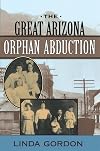
This recounting of an obscure but significant episode in American history has much to say about the intersection of race and religion. It raises many questions, not all of which it answers.
In an early chapter, we are introduced to Margarita Chacon, a devout parishioner and a teacher of home classes in catechism and literacy. She was also very unusual in that she was an Anglo woman married to a Mexican: "But no one seemed to think of Margarita as Anglo." She's left as an anomaly, until 250 show more pages later an emotional letter from an Anglo woman, a lapsed Catholic, makes it clear that in Morenci a white person could not be a practicing Catholic. In that time and place, one had to choose. Margarita Chacon gave up her "whiteness" and retained her Catholicism.
Other fascinating snippets are the author's thoughts on how the orphans boarded the train in New York as "Irish" and disembarked in Arizona as "white"; how the parish priest (who was French, had no idea of the nuances of race in the Southwest, and was basically tossed under the metaphorical bus) protested that he thought the Latinos of his parish were white because they were "not Negroes"; and how it emerged that the Mexican adoptive parents had expressed, and their priest had relayed to the New York orphanage, a preference for "fair" children -- by which they probably meant "not darker than us", but the nuns interpreted to mean "blond and pale". Had 57 black-haired, olive-skinned orphans of southern Italian extraction alighted from the train, the story might have been much different.
The book spends far too long setting the scene, devoting what seemed to me a disproportionate amount of space to the history of the copper mines and early days of Clifton-Morenci. Labour relations, strikes, and union issues are also thoroughly treated, but not in such a way to make them interesting to a non-specialist. It would have been a much shorter and more interesting book if it stuck to telling the story described in the title. show less
In an early chapter, we are introduced to Margarita Chacon, a devout parishioner and a teacher of home classes in catechism and literacy. She was also very unusual in that she was an Anglo woman married to a Mexican: "But no one seemed to think of Margarita as Anglo." She's left as an anomaly, until 250 show more pages later an emotional letter from an Anglo woman, a lapsed Catholic, makes it clear that in Morenci a white person could not be a practicing Catholic. In that time and place, one had to choose. Margarita Chacon gave up her "whiteness" and retained her Catholicism.
Other fascinating snippets are the author's thoughts on how the orphans boarded the train in New York as "Irish" and disembarked in Arizona as "white"; how the parish priest (who was French, had no idea of the nuances of race in the Southwest, and was basically tossed under the metaphorical bus) protested that he thought the Latinos of his parish were white because they were "not Negroes"; and how it emerged that the Mexican adoptive parents had expressed, and their priest had relayed to the New York orphanage, a preference for "fair" children -- by which they probably meant "not darker than us", but the nuns interpreted to mean "blond and pale". Had 57 black-haired, olive-skinned orphans of southern Italian extraction alighted from the train, the story might have been much different.
The book spends far too long setting the scene, devoting what seemed to me a disproportionate amount of space to the history of the copper mines and early days of Clifton-Morenci. Labour relations, strikes, and union issues are also thoroughly treated, but not in such a way to make them interesting to a non-specialist. It would have been a much shorter and more interesting book if it stuck to telling the story described in the title. show less
Lists
Awards


You May Also Like


Associated Authors
Statistics
- Works
- 19
- Also by
- 9
- Members
- 1,938
- Popularity
- #13,275
- Rating
- 3.8
- Reviews
- 20
- ISBNs
- 57
- Languages
- 1