
John Weal
Author of German jet aces of World War 2
About the Author
Series
Works by John Weal
Associated Works
British Warplanes of World War II : Combat Aircraft of the RAF and Fleet Air Arm 1939-1945 (1998) — Illustrator — 55 copies
Tagged
Common Knowledge
- Canonical name
- Weal, John
- Legal name
- Weal, John A.
- Gender
- male
- Nationality
- UK
- Associated Place (for map)
- UK
Members
Reviews
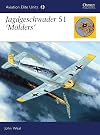
Yet another of Weal's monographs of Luftwaffe fighter wings, although this number strikes me as being one of the better ones. Still, if you're going to go "meta," they all basically tell the same story. Early war glory, the grind of the middle years of the war, and then fire-brigade duty, as separate sub-units were rushed from one "hot" zone to another, until the final collapse arrived.
What does provide further food for thought is some editorializing Weal indulges in at the end of the book. show more In 2005, the German government saw fit to withdraw the name of Werner Molders, the eminent combat leader intertwined in the story Weal is telling, as being an exemplar worthy of naming a unit after. This was ostensibly in deference to the Spanish Republic (Molders had served with the Condor Legion in the Spanish Civil War). However, it does show how much Weal was captured by his subject by how he goes on, in a personally aggrieved fashion, about the churlishness of it all. Of course, what goes around comes around, as the German Social Democrats now find themselves in the position of coming up with a credible, self-generated, military policy, which isn't self-disarmament; the joys of trying to find a usable past! show less
What does provide further food for thought is some editorializing Weal indulges in at the end of the book. show more In 2005, the German government saw fit to withdraw the name of Werner Molders, the eminent combat leader intertwined in the story Weal is telling, as being an exemplar worthy of naming a unit after. This was ostensibly in deference to the Spanish Republic (Molders had served with the Condor Legion in the Spanish Civil War). However, it does show how much Weal was captured by his subject by how he goes on, in a personally aggrieved fashion, about the churlishness of it all. Of course, what goes around comes around, as the German Social Democrats now find themselves in the position of coming up with a credible, self-generated, military policy, which isn't self-disarmament; the joys of trying to find a usable past! show less
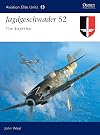
Over time, John Weal has written a whole raft of booklets for Osprey dealing with the German air arm during World War II, and I've read a good number of them. Generally speaking, for the fighter units, there's something of a meta-narrative. Units with leadership honed in the Spanish Civil War leading experiencing glory in the Blitzkrieg era, and then slowly being eroded over time, due to attrition, bad strategy, and losing the technology race to the Allies.
The so-called "Experten" had a show more somewhat different experience, being thrown together from dribs and drabs beginning in 1938, being a gap filler through the Battle of France, and then getting smashed in the Battle of Britain; very uninspiring stuff.
It took the war on the Eastern Front, to make this unit's reputation as, over time, its pilots racked up insane numbers of kills, most of which were achieved as the war turned against Berlin. This was due to the performance of men like Erich Hartmann, Gerhard Barkhorn, and Johannes Steinhoff. Hartmann and Barkhorn are the only men ever who had 300-plus "kills" in combat, whereas Steinhoff was the man who ultimately turned JG52 into the killing machine it became.
While more than twenty-years old at this point, this work is still worth reading. show less
The so-called "Experten" had a show more somewhat different experience, being thrown together from dribs and drabs beginning in 1938, being a gap filler through the Battle of France, and then getting smashed in the Battle of Britain; very uninspiring stuff.
It took the war on the Eastern Front, to make this unit's reputation as, over time, its pilots racked up insane numbers of kills, most of which were achieved as the war turned against Berlin. This was due to the performance of men like Erich Hartmann, Gerhard Barkhorn, and Johannes Steinhoff. Hartmann and Barkhorn are the only men ever who had 300-plus "kills" in combat, whereas Steinhoff was the man who ultimately turned JG52 into the killing machine it became.
While more than twenty-years old at this point, this work is still worth reading. show less
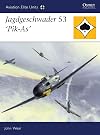
While this seems to be one of the better Luftwaffe unit histories that the author has written for Osprey, one basically knows the story here; rising to glory in 1940-1941 only to lose the battle of attrition. JG53's particular distinction might have been to reflect this dichotomy in somewhat sharper contrast than some of its sister units, in that it was graced with the presence of Werner Molders when he was glorified with the award of the Knight's Cross, only to be scapegoated with the show more running series of defeats Germany received in North Africa and the Mediterranean from late 1942 into 1943. show less

Considering all the different series that Osprey has published over the years, I still consider the "Aviation Elite" books some of the best, if only because they allowed the authors to go into somewhat more depth. This becomes particularly relevant for German units, considering the over five years of continuous combat they experienced. As for JG 27 in particular, I was mostly just aware of their service in North Africa, and didn't have a great of sense of their other operational deployments, show more particularly in defense of the Reich. Although pushing 20 years old, this booklet is still worth having. show less
You May Also Like


Associated Authors
Statistics
- Works
- 51
- Also by
- 4
- Members
- 1,359
- Popularity
- #18,912
- Rating
- 3.6
- Reviews
- 8
- ISBNs
- 101
- Languages
- 5