
Alfred Price (1936–2017)
Author of The Hardest Day: The Battle of Britain, 18 August 1940
About the Author
Dr Alfred Price served as an aircrew officer in the RAF, specialising in air fighting tactics. Now a full-time historian, he has written many books on aviation subjects, including The Luftwaffe Data Book, Battle over the Reich and One Day in a Long War.
Works by Alfred Price
Kampfflieger -Bombers of the Luftwaffe January 1942-September 1943,Volume 3 (Luftwaffe Colours) (2005) 30 copies
Targeting the Reich: Allied Photographic Reconnaissance over Europe, 1939-1945 (2003) 29 copies, 1 review
Battle Over the Reich: The Strategic Bomber Offensive against Germany Volume 2 Nov 1943-May 1945 (2005) 22 copies
Combat Development in World War Two: Bomber Aircraft (Combat Development in World War II) (1989) 16 copies
The History of U. S. Electronic Warfare, Vol. 2: The Renaissance Years, 1946 to 1964 (1989) 13 copies
The History of US Electronic Warfare. Volume III: Rolling Thunder Through Allied Force, 1964 to 2000 (2000) 11 copies
A Batalha do Radar 3 copies
Junkers Ju 87 Stuka 1 copy
Combat Planes of World War Two Series (Books 1 - 9; No vol. 8) (Combat Planes of World War Two, 1-9) (1971) 1 copy
Spitfire At War 1 copy
Associated Works
Tagged
Common Knowledge
- Birthdate
- 1936
- Date of death
- 2017-01-29
- Gender
- male
- Education
- Loughborough University (PhD ∙ History)
- Occupations
- military officer
historian - Organizations
- Royal Air Force
- Awards and honors
- Fellow, Royal Historical Society
- Nationality
- UK
- Associated Place (for map)
- UK
Members
Reviews
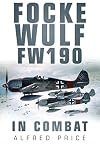
In light of recent long range drone military strikes, it seems that need for light attack, long range and endurance combat aircraft has become more prominent (manned, unmanned or mix, does not matter). Helicopters can perform well in this role but for pursuit of fast moving UAVs standard light attack fighter plane is the most suited. While modern turboprop or jet light attack aircraft are light-years away from WW2 strike aircraft it is nonetheless interesting to revisit war-birds of bygone show more era and maybe see where similar craft could be used in our times.
FW190 was by all means sturdy, powerful and highly efficient combat machine, so finding a good book about it, that is not only about the technical features (like rpm's, max speed etc) nor for modellers only (like gazillion side photos and art without much text), was a challenge. On a number of recommendations I picked up Alfred Price's story of the combat use of the aircraft.
And I have to admit it is excellently written and provides a lot of technical information, tactics used, and excellent photographs combined with stories from the both engineers that built the plane and pilots from various combat units (and there were quite a few of these - from standard fighter, fighter/bomber (night and day) to assault wings flying heavily armored versions against Allied bomber force - now these machines were truly wild) from both Eastern and Western fronts.
Truly interesting and battle tested aircraft with lots of features that Allies will match only with their next generation of fighters. Presentation of the evolution from initial fighters to F fighter-bombers, A8 and heavily armored F8's to Dora and finally sleek and "long nosed" Tank 152H was truly masterfully done by the author.
Very interesting book, highly recommended to all fans of military aviation. show less
FW190 was by all means sturdy, powerful and highly efficient combat machine, so finding a good book about it, that is not only about the technical features (like rpm's, max speed etc) nor for modellers only (like gazillion side photos and art without much text), was a challenge. On a number of recommendations I picked up Alfred Price's story of the combat use of the aircraft.
And I have to admit it is excellently written and provides a lot of technical information, tactics used, and excellent photographs combined with stories from the both engineers that built the plane and pilots from various combat units (and there were quite a few of these - from standard fighter, fighter/bomber (night and day) to assault wings flying heavily armored versions against Allied bomber force - now these machines were truly wild) from both Eastern and Western fronts.
Truly interesting and battle tested aircraft with lots of features that Allies will match only with their next generation of fighters. Presentation of the evolution from initial fighters to F fighter-bombers, A8 and heavily armored F8's to Dora and finally sleek and "long nosed" Tank 152H was truly masterfully done by the author.
Very interesting book, highly recommended to all fans of military aviation. show less
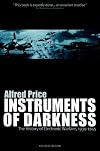
I have to admit it; I'm a tech-freak. I love to read about the technical aspect of military aviation, weapon systems, avionics, aerodynamics and stuff like that.
No victory in electronic warfare during WWI was lasting or absolute. Sooner or later your move would be followed by a countermove by the enemy. Thus the scientist had to stay at least one jump ahead at all times. The mapping of the enemy's technical and production capacity through electronic and other intelligence was essential. And show more every piece of intelligence had to be painstakingly put together in order to create an overall picture as clear possible.
And when to deploy new devises also had to be taken into consideration. Do we have a countermeasure to our own countermeasures? Like the 'Windows/Chaff' which was held back for some months as it was feared that the Germans had an equivalent - Düppel - in production. And if the Germans could see how efficient Windows/Chaff was they would begin air attacks on the UK using Düppel leaving the British radars blinded and British and Americans with no means to counter it.
Pure luck also played a part as when a JU-88 night fighter pilot lost his way and landed on an air base in the UK giving the scientist invaluable knowledge served undamaged at the end of the runway with so little fuel in the tanks that it was not even enough to make a fuel analysis.
I find this book as intriguing as any crime or spy novel. Easy to read and informative on a level where even I can follow. And as Dr. Alfred Price is one of my favorite authors I really had a good time reading it.
So if this subject has your interest, go get the book, find a good chair, sit down an submerge
By the way, I found this quotation as introduction to the last chapter in the book which I believe covers many things during war times:
"To inquire if and where we made mistakes is not to apologize. War is replete with mistakes because it is full of improvisations. In war we are always doing something for the first time. It would be a miracle if what we improvised under the stress of war should be perfect"
Vice-Admiral Hyman Rickover
Take care
J show less
No victory in electronic warfare during WWI was lasting or absolute. Sooner or later your move would be followed by a countermove by the enemy. Thus the scientist had to stay at least one jump ahead at all times. The mapping of the enemy's technical and production capacity through electronic and other intelligence was essential. And show more every piece of intelligence had to be painstakingly put together in order to create an overall picture as clear possible.
And when to deploy new devises also had to be taken into consideration. Do we have a countermeasure to our own countermeasures? Like the 'Windows/Chaff' which was held back for some months as it was feared that the Germans had an equivalent - Düppel - in production. And if the Germans could see how efficient Windows/Chaff was they would begin air attacks on the UK using Düppel leaving the British radars blinded and British and Americans with no means to counter it.
Pure luck also played a part as when a JU-88 night fighter pilot lost his way and landed on an air base in the UK giving the scientist invaluable knowledge served undamaged at the end of the runway with so little fuel in the tanks that it was not even enough to make a fuel analysis.
I find this book as intriguing as any crime or spy novel. Easy to read and informative on a level where even I can follow. And as Dr. Alfred Price is one of my favorite authors I really had a good time reading it.
So if this subject has your interest, go get the book, find a good chair, sit down an submerge
By the way, I found this quotation as introduction to the last chapter in the book which I believe covers many things during war times:
"To inquire if and where we made mistakes is not to apologize. War is replete with mistakes because it is full of improvisations. In war we are always doing something for the first time. It would be a miracle if what we improvised under the stress of war should be perfect"
Vice-Admiral Hyman Rickover
Take care
J show less

As I continue with the great work of reading through my collection of Osprey booklets, the question is always when will one of the older numbers seem obsolete. This booklet, dealing with the last of the Spitfires powered by the Merlin engine, and those with the Griffon engine, seems to be in that class. Price does have interesting things to tell the reader, but it winds up being such a grab bag of topics that it's hard to recommend unless you're a completist; though, if you are, cheap copies show more are available. show less

This is a very concise but balanced history of the Luftwaffe by an English airman. He has endeavoured to cut through the propaganda and myths of both sides of the WW II conflict to present how the actions of both sides were often foolish and mistaken but there were also great leaders and great advances in weapons and strategy on both sides which forced the apposing force to come up with a new weapon or strategy.
The war probably would have lasted longer and cost many more lives if Hitler had show more recognized the strategic advantage of the jet fighter and permitted it to be used against the Allied bombers sooner.
The real value of the volume is the many photographs of the planes flown by the Luftwaffe before and during WW II. Even aircraft that never made it out of the development stage are included. show less
The war probably would have lasted longer and cost many more lives if Hitler had show more recognized the strategic advantage of the jet fighter and permitted it to be used against the Allied bombers sooner.
The real value of the volume is the many photographs of the planes flown by the Luftwaffe before and during WW II. Even aircraft that never made it out of the development stage are included. show less
You May Also Like


Associated Authors
Statistics
- Works
- 102
- Also by
- 1
- Members
- 2,760
- Popularity
- #9,294
- Rating
- 3.7
- Reviews
- 27
- ISBNs
- 206
- Languages
- 10
- Favorited
- 1