
I. F. Clarke (1918–2009)
Author of Voices Prophesying War: Future Wars 1763-3749
About the Author
Works by I. F. Clarke
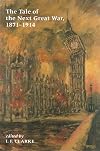
The Tale of the Next Great War, 1871-1914: Fictions of Future Warfare and Battles Still-To-Come (1995) 29 copies, 1 review
Tale of the Future from the Beginning to the Present Day: An Annotated Bibliography (1972) 19 copies, 1 review
Associated Works
Tagged
Common Knowledge
- Legal name
- Clarke, Ignatius Frederick
- Birthdate
- 1918-07-10
- Date of death
- 2009-11-05
- Gender
- male
- Awards and honors
- SFRA Pilgrim Award (1974)
- Nationality
- UK
- Associated Place (for map)
- UK
Members
Reviews

Voices Prophesying War is the classic study of future-war fiction. It technically begins in 1763, but I. F. Clarke's study really kicks off with 1871 and The Battle of Dorking, and the book's real focus is the period from 1880 to 1914, where future war fiction was immensely popular. Clarke traces its interaction with science and with politics, and these three chapters are the real heart of the book. Clarke's reading is wide and deep, and if it wasn't for him, I don't think contemporary show more literary critics would look at this body of work as its own distinctive genre, with its own features and projects. I found the post-Great War sections of the book less interesting, but then I would. show less

Free from academic jargon, Clarke traces the development of the future war.
The main focus is on a period starting with 1871's The Battle of Dorking by Sir George Tomkyns Chesney and going to 1978's The Third World War: A Future History by General Sir John Hackett et. al.
There were future war stories before Chesney's work. Clarke's 38 page checklist of titles goes back to 1763's The Reign of George VI. While predominantly a European phenomena, there were even a couple of American titles show more preceding Chesney, both predicting an American civil war: 1836's The Partisan Leader: A Tale of the Future from Edward William Sydney (actually Nathaniel Tucker) and 1860's Anticipations of the Future to serve as Lessons for the Present Time by Edmund Ruffin.
But Chesney's work was the one that took off. Translated into several languages, Chesney's skillfully told story of England being invaded by Germany spawned many, many imitators. He was a professional military man eager to influence public policy, and Hackett was the same. Clarke's regards The Third World War as the technical and realistic apogee of the genre.
Not every documentarian of future conflict was a military professional or as skillful a writer as Cheney, but the genre flourished in the European democracies prior to World War One. Clarke primarily concentrates on English examples but also covers German and French ones. The shifting alliances prior to the Great War are reflected in the enemies of each country's fiction.
Understandably, the bloom went off most European future war stories after World War One. The technology of mass murder and mayhem became part of a genuine anxiety over where science was taking humanity. American fiction, relatively unaffected by the war, reflected less anxiety.
After his "From the Somme to Hiroshima" chapter, Clarke's book starts to lose focus when he talks about the nuclearized future war story. While he mentions some obvious titles like Pat Frank's Alas Babylon and Whitley Strieber's and James Kunetka's Warday, the relevance of titles like Greg Bear's The Forge of God and C. J. Cherryh's Downbelow Station is less obvious given that they are not tales of exclusively human war or the immediate future that Chesney and Hackett wrote. Clarke himself later said he wished he hadn't continued his history past 1939.
Still, this is still the definitive work on the future war sub-genre of science fiction and a rewarding book with those interested in the place where politics, culture, war, and fantasy come together. show less
The main focus is on a period starting with 1871's The Battle of Dorking by Sir George Tomkyns Chesney and going to 1978's The Third World War: A Future History by General Sir John Hackett et. al.
There were future war stories before Chesney's work. Clarke's 38 page checklist of titles goes back to 1763's The Reign of George VI. While predominantly a European phenomena, there were even a couple of American titles show more preceding Chesney, both predicting an American civil war: 1836's The Partisan Leader: A Tale of the Future from Edward William Sydney (actually Nathaniel Tucker) and 1860's Anticipations of the Future to serve as Lessons for the Present Time by Edmund Ruffin.
But Chesney's work was the one that took off. Translated into several languages, Chesney's skillfully told story of England being invaded by Germany spawned many, many imitators. He was a professional military man eager to influence public policy, and Hackett was the same. Clarke's regards The Third World War as the technical and realistic apogee of the genre.
Not every documentarian of future conflict was a military professional or as skillful a writer as Cheney, but the genre flourished in the European democracies prior to World War One. Clarke primarily concentrates on English examples but also covers German and French ones. The shifting alliances prior to the Great War are reflected in the enemies of each country's fiction.
Understandably, the bloom went off most European future war stories after World War One. The technology of mass murder and mayhem became part of a genuine anxiety over where science was taking humanity. American fiction, relatively unaffected by the war, reflected less anxiety.
After his "From the Somme to Hiroshima" chapter, Clarke's book starts to lose focus when he talks about the nuclearized future war story. While he mentions some obvious titles like Pat Frank's Alas Babylon and Whitley Strieber's and James Kunetka's Warday, the relevance of titles like Greg Bear's The Forge of God and C. J. Cherryh's Downbelow Station is less obvious given that they are not tales of exclusively human war or the immediate future that Chesney and Hackett wrote. Clarke himself later said he wished he hadn't continued his history past 1939.
Still, this is still the definitive work on the future war sub-genre of science fiction and a rewarding book with those interested in the place where politics, culture, war, and fantasy come together. show less
The tale of the next Great War, 1871-1914 : fictions of future warfare and of battles still-to-come by I. F. Clarke
http://nhw.livejournal.com/176976.html
Worthy, but to be honest, a little dull. Clarke has written a couple of the key works on sf of this period, and this collection brings together 14 short stories anticipating developments in warfare between the Franco-Prussian war and Sarajevo 1914. Some of the best known works of the period are omitted, I suppose because Clarke has already collected them elsewhere. A couple of familiar names crop up here unexpectedly - Arthur Conan Doyle, Jack London, show more A.A. Milne (this last a short parody of the genre).
With relatively journalistic material like this, I tend to rate the stories (pebhaps unfairly) on their predictive ability. Jack London's tale of the Yellow Peril, wiped out by germ warfare, does not impress on this count. Conan Doyle's piece about submarines and Gustaf Janson's reflections on warplanes score well, but for me the standout story was an early one, the anonymous "Der Ruhm; or the Wreck of German Unity", published in Macmillan's in July 1871 shortly after the proclamation of the German Empire. The author correctly predicts the humiliation and collapse of Germany as a result of militarist overstretch. Of course it was rather less immediate than he anticipated, but it nonetheless happened not once but twice in the following seventy-five years. show less
Worthy, but to be honest, a little dull. Clarke has written a couple of the key works on sf of this period, and this collection brings together 14 short stories anticipating developments in warfare between the Franco-Prussian war and Sarajevo 1914. Some of the best known works of the period are omitted, I suppose because Clarke has already collected them elsewhere. A couple of familiar names crop up here unexpectedly - Arthur Conan Doyle, Jack London, show more A.A. Milne (this last a short parody of the genre).
With relatively journalistic material like this, I tend to rate the stories (pebhaps unfairly) on their predictive ability. Jack London's tale of the Yellow Peril, wiped out by germ warfare, does not impress on this count. Conan Doyle's piece about submarines and Gustaf Janson's reflections on warplanes score well, but for me the standout story was an early one, the anonymous "Der Ruhm; or the Wreck of German Unity", published in Macmillan's in July 1871 shortly after the proclamation of the German Empire. The author correctly predicts the humiliation and collapse of Germany as a result of militarist overstretch. Of course it was rather less immediate than he anticipated, but it nonetheless happened not once but twice in the following seventy-five years. show less

This book is about expectations and speculation about the future. I.e., sort of a history of predictions for the future: scientific, social, etc. Including sci-fi and non-fiction predicttions, etc. I found it quite fascinating when I read it, in the late 1980s.
You May Also Like


Associated Authors
Statistics
- Works
- 16
- Also by
- 3
- Members
- 170
- Popularity
- #125,473
- Rating
- 3.8
- Reviews
- 5
- ISBNs
- 26
- Favorited
- 1