
Nikolai Berdyaev (1874–1948)
Author of The Destiny of Man
About the Author
The Russian Orthodox religious philosopher Nikolai A. Berdyaev was born into an aristocratic family in Kiev, Ukraine. At the turn of the century, the Czarist government exiled him for his Marxist views. After the revolution he founded the Free Academy of Spiritual Culture and was given the chair of show more philosophy at the University of Moscow. He was imprisoned for his defense of religion and was driven into exile, first to Berlin (1922), then to Paris (1934). In Berlin, Berdyaev founded the Academy of the Philosophy of Religion, which he later moved to Clamart near Paris. Although Berdyaev's early interest was in Marxism, his view insisted that only transcendental critical idealism can solve the problem of truth. Berdyaev later became interested in mystical and religious ideas, and developed a process cosmology and theology. Berdyaev's last testament The Realm of Spirit and the Realm of Caesar was found after his death and put into publishable form by a group of his friends. Berdyaev was strongly committed to freedom and individualism, which caused him great difficulty with ecclesiastical and political authorities. Berdyaev died in 1948. (Bowker Author Biography) show less
Image credit: http://www.isfp.co.uk/russian_thinkers/nikolay_berdyaev.html
Works by Nikolai Berdyaev
Una nueva Edad Media Reflexiones acerca de los destinos de Rusia y de Europa (1990) 21 copies, 3 reviews
The Philosophy of Inequality: Letters to my Contemners, Concerning Social Philosophy (1990) 12 copies
El cristianismo y la lucha de clases : dignidad del cristianismo e indignidad de los cristianos 6 copies, 2 reviews
Wahrheit und Lüge des Kommunismus. 3 copies
UNA NUEVA EDAD MEDIA 1 copy
O hodnotě křesťanství 1 copy
Slavernij en vrijheid 1 copy
Николай Бердяев. Судьба России. Самопознание. Русская идея (3 главных произведения. Библиотека… 1 copy
Adevar si revelatie 1 copy
Смысл творчества 1 copy
Smisao istorije 1 copy
Il problema del comunismo 1 copy
Судьба России 1 copy
The Spiritual Crisis of the Intelligentsia: Articles on Societal and Religious Psychology (1907-1909) (2015) 1 copy
Nicholas Berdyaev 1 copy
Una nueva Edad Media 1 copy
О рабстве и свободе человека 1 copy
Ruh Sürgünü 1 copy
Światopogląd Dostojewskiego 1 copy
Autobiografia filozoficzna 1 copy
Mens en machine 1 copy
Leontiev (Лео́нтьев) 1 copy
The Fate Of Man In The Modern World (Судьба человека в современном мире: К пониманию нашей эпохи) 1 copy
BOTËKUPTIMI I DOSTOJEVSKIT 1 copy
Associated Works
Crime and Punishment [Norton Critical Edition, 3rd ed.] (1989) — Contributor — 1,297 copies, 6 reviews
Tagged
Common Knowledge
- Canonical name
- Berdyaev, Nikolai
- Legal name
- Berdyaev, Nikolai Alexandrovich
- Birthdate
- 1874-03-18
- Date of death
- 1948-03-24
- Gender
- male
- Education
- Kiev University
University of Heidelberg - Occupations
- religious philosopher
professor - Organizations
- Novyi Put'
University of Moscow - Relationships
- Kudasheva, Princess (mother)
- Short biography
- Berdyaev was born in Kiev into an aristocratic military family. He spent a solitary childhood at home, where his father's library allowed him to read widely. He read Hegel, Schopenhauer, and Kant when only fourteen years old and excelled at languages. Berdyaev decided on an intellectual career and entered the Kiev University in 1894. This was a time of revolutionary fervor among the students and the intelligentsia. Berdyaev became a Marxist and in 1898 was arrested in a student demonstration and expelled from the University. Later his involvement in illegal activities led to three years of internal exile in central Russia—a mild sentence compared to that faced by many other revolutionaries. In 1904 Berdyaev married Lydia Trusheff and the couple moved to Saint Petersburg, the Russian capital and center of intellectual and revolutionary activity. Berdyaev participated fully in intellectual and spiritual debate, eventually departing from radical Marxism to focus his attention on philosophy and spirituality. Berdyaev and Trusheff remained deeply committed to each other until the latter's death in 1945. A fiery 1913 article criticising the Holy Synod of the Russian Orthodox Church caused him to be charged with the crime of blasphemy, the punishment for which was exile to Siberia for life. The World War and the Bolshevik Revolution prevented the matter coming to trial. However, after the Russian Revolution of 1917, Berdyaev fell out with the Bolshevik regime, because of its totalitarianism and the domination of the state over the freedom of the individual. Nonetheless, he was permitted for the time being to continue to lecture and write. His disaffection culminated in 1919 Berdyaev with the foundation of his own private academy, the "Free Academy of Spiritual Culture". This was primarily a forum for him to lecture on the hot topics of the day, trying to present them from a Christian point of view. Berdyaev also presented his opinions in public lectures, and every Tuesday he hosted a meeting at his home. However, Christianity was illegal at the time, since the official policy of the Communist party required atheism.[1]
In 1920 Berdiaev was made professor of philosophy at the University of Moscow, although he had no academic qualifications. In the same year, he was accused of participating in a conspiracy against the government; he was arrested and jailed. It seems that the feared head of the Cheka, Felix Dzerzhinsky, came in person to interrogate him, and that he (Berdyaev) gave the man a solid dressing-down on the problems with Bolshevism. Berdyaev's prior record of revolutionary activity seems to have saved him from prolonged detention, as his friend Lev Kamenev was present at the interrogation. Aleksandr Solzhenitsyn, in his book The Gulag Archipelago, recounts the incident as follows: [Berdyaev] was arrested twice; he was taken in 1922 for a midnight interrogation with Dzerjinsky; Kamenev was also there. [...] But Berdyaev did not humiliate himself, he did not beg, he firmly professed the moral and religious principles by virtue of which he did not adhere to the party in power; and not only did they judge that there was no point in putting him on trial, but he was freed. Now there is a man who had a "point of view!" Berdyaev was eventually expelled from Russia in September 1922. He was among a carefully selected group of some 160 prominent writers, scholars, and intellectuals whose ideas the Bolshevik government found objectionable, who were sent into exile on the so-called "philosophers' ship". Overall, they were supporters neither of the Czarist regime nor of the Bolsheviks, preferring less autocratic forms of government. They included those who argued for personal liberty, spiritual development, Christian ethics, and a pathway informed by reason and guided by faith. At first Berdyaev and other émigrés went to Berlin, where Berdyaev founded an academy of philosophy and religion. But economic and political conditions in Weimar Germany caused him and his wife to move to Paris in 1923. He transferred his academy there, and taught, lectured, and wrote, working for an exchange of ideas with the French intellectual community. During the German occupation of France, Berdyaev continued to write books that were published after the war—some of them after his death. In the years that he spent in France, Berdyaev wrote fifteen books, including most of his most important works. He died at his writing desk in his home in Clamart, near Paris, in March 1948. (Wikipedia: Nikolai Berdyaev) - Nationality
- Russia
- Birthplace
- Lipky, Kiev, Russian Empire
- Places of residence
- Kiev, Russian Empire
Saint Petersburg, Russia
Vologda, Russia
Heidelberg, Germany
Berlin, Germany
Paris, France - Place of death
- Clamart, France
Members
Reviews
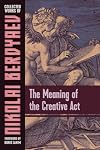
"The human spirit is in prison. Prison is what I call this world, the given world of necessity." So begins Nicolas Berdyaev in the introduction to this spiritually-charged book of religious philosophy. For Berdyaev confesses to being close to Manichean dualism, that is, seeing the material world of necessity as evil, a world without God and not created by God. We must, Berdyaev insists, go out of the world and overcome the world completely, "Freedom from the world is the pathos of this show more book."
Where should we go when we leave this world of necessity and materialism? According to Berdyaev, to a state of being that is "freedom in the spirit, life in divine love, life in the Pleroma." If the world `Pleroma' sounds familiar, you probably have some acquaintance with the spirituality of the ancient Gnostic religions. However, Berdyaev also confesses to being close to a pantheistic monism, that is, seeing the world as divine and man as divine by nature. If this sounds like a paradox . . . well, confessing to both views is, in fact, a paradox, to which Berdyaev readily admits, "Religious consciousness experiences the world to the fullest extent, both as completely apart from God and as fully divine, experiences evil both as falling away from divine reason, and as having an immanent meaning in the process of the world's development."
Again, this is a spiritually-charged book of religious existentialist philosophy where Berdyaev addresses such topics as redemption, asceticism, sex, love, beauty, morals and mysticism through the lens of creativity. For example, the author writes: "Philosophy is creativeness, and not adaptation or obedience. The liberation of philosophy as a creative act is its liberation from all dependence upon science, i.e. heroic resistance to every sort of adaptation to necessity." Berdyaev sees any pulling back from the fresh, clean air of living a spiritually authentic life as a plunge into slavery and sickness. On the same subject, we read, "Philosophy is palsied by a frightful disease - the disease of reflection and dissociation. . . . Reflection and doubt deprive philosophy of its active-creative character, make it passive."
For someone with a background and interest in the arts, Berdyaev's chapter on beauty and art could very well prove the most inspiring. Since, like Nietzsche, to begin to understand Berdyaev is to read his actual words, here are several quotes: "The artist is always a creator. Art is always a victory over the heaviness of "the world" - never adaptation to "the world". The act of art is directly opposed to every sort of added burden - in art there is liberation." ----- "In the strict sense of the word, creativity is neither Christian nor pagan: it rises above and beyond them. In the creative artistic act darkness is overcome and transfigured into beauty." ----- "The creative act of an artist is essentially the non-submission of this world and its distortions. The creative act is a daring upsurge past the limitations of this world into the world of beauty."
I love Nicolas Berdyaev. Perhaps because, like him, I experience all of life as spiritually-charged as well as feeling the Pleroma as my true home. Ah, paradox! I first read The Meaning of the Creative Act back in college and now that I have spent much of the last 40 years of my life devoted to creativity within music, literature and the arts, I appreciate his words and his intensity even more. To end, let me note that Bredyaev says how a truly beautiful culture will create great architecture and our culture is not beautiful; rather, in our epoch, the spirit of music has become a favorite relaxation and recreation for the general public. How true, Nicolas! How many times are we exposed to the insipid and obnoxious sound of muzak or pop or rock music in public places or working in an office? To aspire to a spiritual, creative, artistic life is to constantly do battle with omnipresent crude, drab, mediocre mass culture. Ah, Nicolas Berdyaev! We can learn so much from you brilliant vision. How much? To find out, please order this book - the sooner the better. show less
Where should we go when we leave this world of necessity and materialism? According to Berdyaev, to a state of being that is "freedom in the spirit, life in divine love, life in the Pleroma." If the world `Pleroma' sounds familiar, you probably have some acquaintance with the spirituality of the ancient Gnostic religions. However, Berdyaev also confesses to being close to a pantheistic monism, that is, seeing the world as divine and man as divine by nature. If this sounds like a paradox . . . well, confessing to both views is, in fact, a paradox, to which Berdyaev readily admits, "Religious consciousness experiences the world to the fullest extent, both as completely apart from God and as fully divine, experiences evil both as falling away from divine reason, and as having an immanent meaning in the process of the world's development."
Again, this is a spiritually-charged book of religious existentialist philosophy where Berdyaev addresses such topics as redemption, asceticism, sex, love, beauty, morals and mysticism through the lens of creativity. For example, the author writes: "Philosophy is creativeness, and not adaptation or obedience. The liberation of philosophy as a creative act is its liberation from all dependence upon science, i.e. heroic resistance to every sort of adaptation to necessity." Berdyaev sees any pulling back from the fresh, clean air of living a spiritually authentic life as a plunge into slavery and sickness. On the same subject, we read, "Philosophy is palsied by a frightful disease - the disease of reflection and dissociation. . . . Reflection and doubt deprive philosophy of its active-creative character, make it passive."
For someone with a background and interest in the arts, Berdyaev's chapter on beauty and art could very well prove the most inspiring. Since, like Nietzsche, to begin to understand Berdyaev is to read his actual words, here are several quotes: "The artist is always a creator. Art is always a victory over the heaviness of "the world" - never adaptation to "the world". The act of art is directly opposed to every sort of added burden - in art there is liberation." ----- "In the strict sense of the word, creativity is neither Christian nor pagan: it rises above and beyond them. In the creative artistic act darkness is overcome and transfigured into beauty." ----- "The creative act of an artist is essentially the non-submission of this world and its distortions. The creative act is a daring upsurge past the limitations of this world into the world of beauty."
I love Nicolas Berdyaev. Perhaps because, like him, I experience all of life as spiritually-charged as well as feeling the Pleroma as my true home. Ah, paradox! I first read The Meaning of the Creative Act back in college and now that I have spent much of the last 40 years of my life devoted to creativity within music, literature and the arts, I appreciate his words and his intensity even more. To end, let me note that Bredyaev says how a truly beautiful culture will create great architecture and our culture is not beautiful; rather, in our epoch, the spirit of music has become a favorite relaxation and recreation for the general public. How true, Nicolas! How many times are we exposed to the insipid and obnoxious sound of muzak or pop or rock music in public places or working in an office? To aspire to a spiritual, creative, artistic life is to constantly do battle with omnipresent crude, drab, mediocre mass culture. Ah, Nicolas Berdyaev! We can learn so much from you brilliant vision. How much? To find out, please order this book - the sooner the better. show less
"The human spirit is in prison. Prison is what I call this world, the given world of necessity." So begins Nicolas Berdyaev in the introduction to this spiritually-charged book of religious philosophy. For Berdyaev confesses to being close to Manichean dualism, that is, seeing the material world of necessity as evil, a world without God and not created by God. We must, Berdyaev insists, go out of the world and overcome the world completely, "Freedom from the world is the pathos of this show more book."
Where should we go when we leave this world of necessity and materialism? According to Berdyaev, to a state of being that is "freedom in the spirit, life in divine love, life in the Pleroma." If the world `Pleroma' sounds familiar, you probably have some acquaintance with the spirituality of the ancient Gnostic religions. However, Berdyaev also confesses to being close to a pantheistic monism, that is, seeing the world as divine and man as divine by nature. If this sounds like a paradox . . . well, confessing to both views is, in fact, a paradox, to which Berdyaev readily admits, "Religious consciousness experiences the world to the fullest extent, both as completely apart from God and as fully divine, experiences evil both as falling away from divine reason, and as having an immanent meaning in the process of the world's development."
Again, this is a spiritually-charged book of religious existentialist philosophy where Berdyaev addresses such topics as redemption, asceticism, sex, love, beauty, morals and mysticism through the lens of creativity. For example, the author writes: "Philosophy is creativeness, and not adaptation or obedience. The liberation of philosophy as a creative act is its liberation from all dependence upon science, i.e. heroic resistance to every sort of adaptation to necessity." Berdyaev sees any pulling back from the fresh, clean air of living a spiritually authentic life as a plunge into slavery and sickness. On the same subject, we read, "Philosophy is palsied by a frightful disease - the disease of reflection and dissociation. . . . Reflection and doubt deprive philosophy of its active-creative character, make it passive."
For someone with a background and interest in the arts, Berdyaev's chapter on beauty and art could very well prove the most inspiring. Since, like Nietzsche, to begin to understand Berdyaev is to read his actual words, here are several quotes: "The artist is always a creator. Art is always a victory over the heaviness of "the world" - never adaptation to "the world". The act of art is directly opposed to every sort of added burden - in art there is liberation." ----- "In the strict sense of the word, creativity is neither Christian nor pagan: it rises above and beyond them. In the creative artistic act darkness is overcome and transfigured into beauty." ----- "The creative act of an artist is essentially the non-submission of this world and its distortions. The creative act is a daring upsurge past the limitations of this world into the world of beauty."
I love Nicolas Berdyaev. Perhaps because, like him, I experience all of life as spiritually-charged as well as feeling the Pleroma as my true home. Ah, paradox! I first read The Meaning of the Creative Act back in college and now that I have spent much of the last 40 years of my life devoted to creativity within music, literature and the arts, I appreciate his words and his intensity even more. To end, let me note that Bredyaev says how a truly beautiful culture will create great architecture and our culture is not beautiful; rather, in our epoch, the spirit of music has become a favorite relaxation and recreation for the general public. How true, Nicolas! How many times are we exposed to the insipid and obnoxious sound of muzak or pop or rock music in public places or working in an office? To aspire to a spiritual, creative, artistic life is to constantly do battle with omnipresent crude, drab, mediocre mass culture. Ah, Nicolas Berdyaev! We can learn so much from you brilliant vision. How much? To find out, please order this book - the sooner the better. show less
Where should we go when we leave this world of necessity and materialism? According to Berdyaev, to a state of being that is "freedom in the spirit, life in divine love, life in the Pleroma." If the world `Pleroma' sounds familiar, you probably have some acquaintance with the spirituality of the ancient Gnostic religions. However, Berdyaev also confesses to being close to a pantheistic monism, that is, seeing the world as divine and man as divine by nature. If this sounds like a paradox . . . well, confessing to both views is, in fact, a paradox, to which Berdyaev readily admits, "Religious consciousness experiences the world to the fullest extent, both as completely apart from God and as fully divine, experiences evil both as falling away from divine reason, and as having an immanent meaning in the process of the world's development."
Again, this is a spiritually-charged book of religious existentialist philosophy where Berdyaev addresses such topics as redemption, asceticism, sex, love, beauty, morals and mysticism through the lens of creativity. For example, the author writes: "Philosophy is creativeness, and not adaptation or obedience. The liberation of philosophy as a creative act is its liberation from all dependence upon science, i.e. heroic resistance to every sort of adaptation to necessity." Berdyaev sees any pulling back from the fresh, clean air of living a spiritually authentic life as a plunge into slavery and sickness. On the same subject, we read, "Philosophy is palsied by a frightful disease - the disease of reflection and dissociation. . . . Reflection and doubt deprive philosophy of its active-creative character, make it passive."
For someone with a background and interest in the arts, Berdyaev's chapter on beauty and art could very well prove the most inspiring. Since, like Nietzsche, to begin to understand Berdyaev is to read his actual words, here are several quotes: "The artist is always a creator. Art is always a victory over the heaviness of "the world" - never adaptation to "the world". The act of art is directly opposed to every sort of added burden - in art there is liberation." ----- "In the strict sense of the word, creativity is neither Christian nor pagan: it rises above and beyond them. In the creative artistic act darkness is overcome and transfigured into beauty." ----- "The creative act of an artist is essentially the non-submission of this world and its distortions. The creative act is a daring upsurge past the limitations of this world into the world of beauty."
I love Nicolas Berdyaev. Perhaps because, like him, I experience all of life as spiritually-charged as well as feeling the Pleroma as my true home. Ah, paradox! I first read The Meaning of the Creative Act back in college and now that I have spent much of the last 40 years of my life devoted to creativity within music, literature and the arts, I appreciate his words and his intensity even more. To end, let me note that Bredyaev says how a truly beautiful culture will create great architecture and our culture is not beautiful; rather, in our epoch, the spirit of music has become a favorite relaxation and recreation for the general public. How true, Nicolas! How many times are we exposed to the insipid and obnoxious sound of muzak or pop or rock music in public places or working in an office? To aspire to a spiritual, creative, artistic life is to constantly do battle with omnipresent crude, drab, mediocre mass culture. Ah, Nicolas Berdyaev! We can learn so much from you brilliant vision. How much? To find out, please order this book - the sooner the better. show less
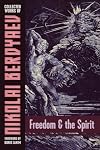
I like and agreed with much of this book; but some of his views are problematic when seen through the lens of Christian orthodoxy. His dependence on Boehme, despite his clear reservations, is most of what I take issue with.
Berdyaev's notion of freedom is analogous to Boehme's ungrund or abyss. That wouldn't be such a problem if Berdyaev didn't make claims such as that "it existed before being" and that "God has no control over it". He comes dangerously close to making an idol out of his show more notion of freedom. I certainly agree with the importance of freedom within Christianity, I only part company with the kind of interpretation he gives to freedom. He should have been more circumspect when borrowing a concept from Boehme like this one. Most Christian thinkers who have liked Boehme (myself included), have also been cautious in approaching his thought. It borrows far too much from systems like Kabbalah and Hermeticism. This does compromise Boehme's orthodoxy; sometimes in subtle and not so subtle ways. This is evident in some of his writings, more than in others. I have an interest in some of his ideas, but he is an author that one has to be very cautious in being influenced by. Berdyaev recognized that Boehme's thought was heterodox in some points, yet he still allowed himself an over dependence on him when it came to concepts like the ungrund, which wind up being the most problematic for Boehme's orthodoxy, i.e. relating to his erroneous views on the Trinity and his dualistic theism.
Apart from the above problems, which are not altogether minor, I liked most of this book. His comments on theosophy and anthroposophy are quite accurate and mirror my own criticisms. I do feel that he did not sufficiently recognize that his more positive take on Kabbalah, and previous forms of theosophy, is not totally consistent with his negative views on 19th century and 20th century theosophy and anthroposophy. Both do have roots in earlier forms of theosophy; especially in Steiner. Blavatsky and Steiner are largely the fruit of Europe's interest in Hermeticism, Kabbalah, Neo-Platonism, Hinduism, occultism, secret societies, etc. While I agree that both (especially Blavatsky) are an even more spiritually tainted brew than what came before, I cannot in all honesty fail to recognize some continuity between earlier occultic movements and those found in anthroposophy and theosophy. This ties in to what I said above about Boehme; Berdyaev was appropriately critical of those two movements, but failed to sufficiently recognize the problems with Boehme and the esoteric movements he himself was influenced by.
As it stands, this book was well worth reading, but I am a little disappointed in the above errors. I liked much more of the book than I disliked I have to say. I probably do like The Meaning Of History more, but this was a good second book to read by Berdyaev. If it wasn't for my above reservations, it might have been on par with what I've read of Florensky and Bulgakov. show less
Berdyaev's notion of freedom is analogous to Boehme's ungrund or abyss. That wouldn't be such a problem if Berdyaev didn't make claims such as that "it existed before being" and that "God has no control over it". He comes dangerously close to making an idol out of his show more notion of freedom. I certainly agree with the importance of freedom within Christianity, I only part company with the kind of interpretation he gives to freedom. He should have been more circumspect when borrowing a concept from Boehme like this one. Most Christian thinkers who have liked Boehme (myself included), have also been cautious in approaching his thought. It borrows far too much from systems like Kabbalah and Hermeticism. This does compromise Boehme's orthodoxy; sometimes in subtle and not so subtle ways. This is evident in some of his writings, more than in others. I have an interest in some of his ideas, but he is an author that one has to be very cautious in being influenced by. Berdyaev recognized that Boehme's thought was heterodox in some points, yet he still allowed himself an over dependence on him when it came to concepts like the ungrund, which wind up being the most problematic for Boehme's orthodoxy, i.e. relating to his erroneous views on the Trinity and his dualistic theism.
Apart from the above problems, which are not altogether minor, I liked most of this book. His comments on theosophy and anthroposophy are quite accurate and mirror my own criticisms. I do feel that he did not sufficiently recognize that his more positive take on Kabbalah, and previous forms of theosophy, is not totally consistent with his negative views on 19th century and 20th century theosophy and anthroposophy. Both do have roots in earlier forms of theosophy; especially in Steiner. Blavatsky and Steiner are largely the fruit of Europe's interest in Hermeticism, Kabbalah, Neo-Platonism, Hinduism, occultism, secret societies, etc. While I agree that both (especially Blavatsky) are an even more spiritually tainted brew than what came before, I cannot in all honesty fail to recognize some continuity between earlier occultic movements and those found in anthroposophy and theosophy. This ties in to what I said above about Boehme; Berdyaev was appropriately critical of those two movements, but failed to sufficiently recognize the problems with Boehme and the esoteric movements he himself was influenced by.
As it stands, this book was well worth reading, but I am a little disappointed in the above errors. I liked much more of the book than I disliked I have to say. I probably do like The Meaning Of History more, but this was a good second book to read by Berdyaev. If it wasn't for my above reservations, it might have been on par with what I've read of Florensky and Bulgakov. show less

I had to force myself to finish this one ("spiritual manliness," blah blah), but was at least treated for my pains to the most hyperbolic final sentence I've read in a long time. Behold: "So great is the worth of Dostoievsky that to have produced him is by itself sufficient justification for the existence of the Russian people in the world; and he will bear witness for his countrymen at the last judgment of the nations."
[earlier] It's starting to feel like Dostoevsky's just an excuse for show more Berdyaev to twist himself into a lot of theological assertions. show less
[earlier] It's starting to feel like Dostoevsky's just an excuse for show more Berdyaev to twist himself into a lot of theological assertions. show less
Lists
Awards

You May Also Like


Associated Authors
Statistics
- Works
- 129
- Also by
- 4
- Members
- 1,695
- Popularity
- #15,146
- Rating
- 4.2
- Reviews
- 37
- ISBNs
- 189
- Languages
- 21
- Favorited
- 6
