
David Biale (1949–2024)
Author of Cultures of the Jews: A New History
About the Author
David Biale is the Emmanuel Ringelblum Professor of Jewish History at the University of California, Davis. He lives in Berkeley, California.
Image credit: Biale giving a lecture at Jewish Museum Berlin in 2017
Series
Works by David Biale
The Norton Anthology of World Religions, Volume 2: Judaism, Christianity, Islam (2014) — Editor — 8 copies
Jewish Culture between Canon and Heresy (Stanford Studies in Jewish History and Culture) (2023) 7 copies
Thinking Impossibilities: The Intellectual Legacy of Amos Funkenstein (UCLA Clark Memorial Library Series) (2008) — Editor — 6 copies
Comparative Genocide 1 copy
Associated Works
Tagged
Common Knowledge
- Other names
- Biʼal, Daṿid
Bial, David Joseph - Birthdate
- 1949-07-25
- Date of death
- 2024-07-28
- Gender
- male
- Education
- Harvard University
University of California, Berkeley (BA|History)
University of California, Berkeley (MA|Modern European history)
UCLA (PhD|Jewish history) - Occupations
- professor (Jewish History)
- Organizations
- University of California, Davis
Graduate Theological Union
University of California, Berkeley - Awards and honors
- Guggenheim Fellowship (1999)
UC Davis Prize for Undergraduate Teaching and Scholarly Achievement (2011) - Relationships
- Biale, Rachel (widow)
- Nationality
- USA
Israel (dual) - Birthplace
- Los Angeles, California, USA
- Places of residence
- Los Angeles, California, USA
Israel
Binghamton, New York, USA
Berkeley, California, USA - Associated Place (for map)
- California, USA
Members
Reviews
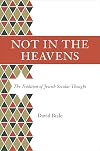
From a very young age I wondered what it meant that I was Jewish. When I was younger, I went to temple on high holidays and attended Hebrew School. After a short time, I got thrown out of Hebrew School (don’t ask), which lead to us going to temple less and less. Despite this total separation from the religion of Judaism, I was still a Jew (as other kids loved to point out). But why? If a Catholic person stopped going to church and didn’t believe in god, wouldn’t they no longer be show more Catholic? I wasn’t religious, I didn’t have a community of fellow Jews, and I times I was even embarrassed of my Jewishness; yet I was still a Jew. It’s obviously a religion, but equally obviously something more. A race? A nationality? An ethnicity? I don’t know.
In Not in the Heavens, Biale takes us on a journey from Maimonides to Spinoza to more modern day Jewish thinkers. First there are arguments over the meaning of god (a big white guy in the sky? Nature? Everything? Nothing?) and whether the bible is the word of god, a historical document, or just a book with some good (and bad) life lessons. From there, we move on to debates about how to revive Jewish culture—mainly whether or not Jews should revive Hebrew or spread Yiddish and, of course, how to look at ourselves. There’s some talk about Palestine and other fun stuff too.
This book is pretty dense and my brain has been very distracted, so I’ll end the review here. If this niche topic is something that interests you, I’d recommend reading this book. And then maybe hit me up and let’s talk about it. show less
In Not in the Heavens, Biale takes us on a journey from Maimonides to Spinoza to more modern day Jewish thinkers. First there are arguments over the meaning of god (a big white guy in the sky? Nature? Everything? Nothing?) and whether the bible is the word of god, a historical document, or just a book with some good (and bad) life lessons. From there, we move on to debates about how to revive Jewish culture—mainly whether or not Jews should revive Hebrew or spread Yiddish and, of course, how to look at ourselves. There’s some talk about Palestine and other fun stuff too.
This book is pretty dense and my brain has been very distracted, so I’ll end the review here. If this niche topic is something that interests you, I’d recommend reading this book. And then maybe hit me up and let’s talk about it. show less
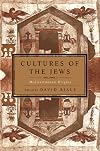
This book strength is also it's weakness: it is a collection of disparate essays from various authors, not a coherent presentation of Jewish history. On the one hand that provides an opportunity to present multiple viewpoints that one author or a strongly edited book wouldn't. On the other hand there are huge gaps in the story (nothing on Alexandrian Jewry for which we have written contemporaneous sources - Philo anyone?), annoying inconsistencies in terminology and vast differences in show more quality, depth and interest between chapter to chapter.
So one of the worst chapters is that on the Biblical period - it's more a hermeneutic interpretation of the bible rather than a cultural history of the period based on archeological evidence. You won't find any judgement here on the historical veracity of the Bible. The last chapter on Arabian Jewry is equally mediocre although from almost the opposite extreme: it takes Quranic & Hadith accounts of early Islam & Arabia almost as canonical history & tries to understand Arabian Jewry based on that (false) assumption. Having read Tom Holland's amazing book on this period, I can't take that chapter too seriously.
The best chapters were the ones on the Second Temple, Roman rule, and Babylonian Jewry. Lots of interesting insights and new ideas.
While understanding the structure, is it too much to ask that Biale do some editing to ensure consistency of terminology - like the anachronistic use of the name Palestine to describe the area can drive you crazy - why would a historian not use contemporaneous names? Plus the fact that the introduction and conclusion are from the one volume edition with nothing specific to each subdivision makes you wonder besides finding the authors, and writing a few pages, what does it mean that Biale was the editor?
The book also assumes that you know quite a bit of both the history of the Jews and of Judaism. While this project was originally intended to be a definitive and modern history of Judaism for an educated audience of non- scholars, that book stills need to be written. The closest and best (although it's outdated and sadly out of print) that comes close is Daniel Jeremy Silver's History of Judaism.
After a break I'll move on to Volume 2. Hopefully with more sources, the quality will improve.
PS my comment below is really an earlier and less well edited version of this review.I clicked on wrong thingee and it didn't a comment instead of a review. So yes, you can skip it. show less
So one of the worst chapters is that on the Biblical period - it's more a hermeneutic interpretation of the bible rather than a cultural history of the period based on archeological evidence. You won't find any judgement here on the historical veracity of the Bible. The last chapter on Arabian Jewry is equally mediocre although from almost the opposite extreme: it takes Quranic & Hadith accounts of early Islam & Arabia almost as canonical history & tries to understand Arabian Jewry based on that (false) assumption. Having read Tom Holland's amazing book on this period, I can't take that chapter too seriously.
The best chapters were the ones on the Second Temple, Roman rule, and Babylonian Jewry. Lots of interesting insights and new ideas.
While understanding the structure, is it too much to ask that Biale do some editing to ensure consistency of terminology - like the anachronistic use of the name Palestine to describe the area can drive you crazy - why would a historian not use contemporaneous names? Plus the fact that the introduction and conclusion are from the one volume edition with nothing specific to each subdivision makes you wonder besides finding the authors, and writing a few pages, what does it mean that Biale was the editor?
The book also assumes that you know quite a bit of both the history of the Jews and of Judaism. While this project was originally intended to be a definitive and modern history of Judaism for an educated audience of non- scholars, that book stills need to be written. The closest and best (although it's outdated and sadly out of print) that comes close is Daniel Jeremy Silver's History of Judaism.
After a break I'll move on to Volume 2. Hopefully with more sources, the quality will improve.
PS my comment below is really an earlier and less well edited version of this review.I clicked on wrong thingee and it didn't a comment instead of a review. So yes, you can skip it. show less
"The question of Jewish national identity- the attempt to fathom the entangled relations between Israel ad God, between Israel and other nations-- is one of the most resonant and unresolvable questions in the Bible." What is the demarcation between the chosen and non chosen? Why doesn't dispersion and exile lead to clear cut borders between cultures? David Biale's scholars takes us through the birth of Ancient Israel, Israel among nations, Hellenistic Judiasm, Greco-Roman Palestine, The show more Christian Empire, Babylonian, and the rise of Islam. The insights are breath taking. It is not an easy book to read. Next up for me is Volume II. show less
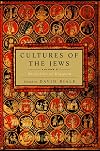
I likes watching the rise and fall of civilizations and its effect on the history of the Jewish people as we rolled through the Middle Ages on into early modern times. Parts of it were interesting but a good part of the book didn't grab me. I did think the chapter called Childbirth and Magic was spell bounding. On to Volume III.
Lists
Awards

You May Also Like


Associated Authors
Statistics
- Works
- 19
- Also by
- 1
- Members
- 860
- Popularity
- #29,750
- Rating
- 3.5
- Reviews
- 6
- ISBNs
- 51
- Languages
- 6