
Jacqui Carey
Author of 200 Braids to Twist, Knot, Loop, or Weave
About the Author
Image credit: Jacqui Carey
Series
Works by Jacqui Carey
Tagged
Common Knowledge
- Birthdate
- 1963
- Gender
- female
- Education
- Winchester School of Art
West Surrey College of Art and Design (BA|Hons|Woven Textiles|1985)
University of Southampton (MA ∙ Distinction ∙ 2008) - Occupations
- teacher
lecturer
writer
publisher - Organizations
- Beadwork 2000 (researcher|organizer)
Braid Society (co-founder) - Awards and honors
- Queen Elizabeth Scholarship (2005)
- Nationality
- UK
- Places of residence
- Devon, England, UK
- Associated Place (for map)
- England, UK
Members
Reviews
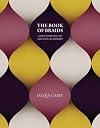
Although Ms. Carey has an annoying habit of not citing her sources and not using the original Japanese names of the braids, this book is still a treasure. Braid moves are broken down into repeatable units reminiscent of knitting or crochet stitches as a braid design framework.

This book is a detailed view of a 14th c. manuscript with embroidered binding, from several standpoints. Separate chapters discuss the provenance, the text, the binding, the embroidery, the stitches, the separate embroidered areas of the binding, and the making of a reconstruction of the binding. There are extensive footnotes, bibliography, and an index.
There is a wealth of closeup, detailed color photographs of the item, The stitches are diagrammed with probable ways they were created. In show more many cases, one cannot be certain without taking it apart, so these are educated analyses, not necesarrily rock-solid facts. The author is clear about what can be observed and what can be inferred.
This manuscript was written in Latin in England ca. 1380, by John Somer, a Franciscan friar. About 40 copies of his Kalendarium survive to the present day, so part of the discussion of provenance is narrowing down when this copy was made. I will let you read the text of this MS.8932 book if you wish to understand when this particular copy was created, bound, and decorated.
The text of Carey's book is readable and detailed; I found it fascinating and informative. I recommend this book for all people seeking to understand or reproduce this unique artifact, medieval almanacs, or are interested in embroidery of 14th c. England.
The book is available only on The Carey Company's website. The cost is reasonable (£25) but shipping to America is over half again as much in addition to that. It was worth it to me. show less
There is a wealth of closeup, detailed color photographs of the item, The stitches are diagrammed with probable ways they were created. In show more many cases, one cannot be certain without taking it apart, so these are educated analyses, not necesarrily rock-solid facts. The author is clear about what can be observed and what can be inferred.
This manuscript was written in Latin in England ca. 1380, by John Somer, a Franciscan friar. About 40 copies of his Kalendarium survive to the present day, so part of the discussion of provenance is narrowing down when this copy was made. I will let you read the text of this MS.8932 book if you wish to understand when this particular copy was created, bound, and decorated.
The text of Carey's book is readable and detailed; I found it fascinating and informative. I recommend this book for all people seeking to understand or reproduce this unique artifact, medieval almanacs, or are interested in embroidery of 14th c. England.
The book is available only on The Carey Company's website. The cost is reasonable (£25) but shipping to America is over half again as much in addition to that. It was worth it to me. show less

Interesting, particularly for a beginner like myself. I know only one pattern for braiding, that uses 16 strands to make a spiral round braid. The book presents a lot more shapes for braids, but uses only 8 strands for most of them, which feels skimpy to me - but I suspect I can expand them later on. The diagrams are excellent, both the layout for the beginning and the sequence diagrams that show the movements. I dislike most of the example braids - the author really loves working show more thick-and-thin, making part of the pattern through having fine threads against much thicker ones, and I think that's ugly and not useful. But they're only examples - and they do display well how the same pattern can produce very different-looking braids with minor changes. The book begins, of course, with equipment and materials, describing the braid-holder (marudai), the bobbins, and the weight and counter-weights; she shows everything from the traditional equipment to how to create equivalents from stuff lying around the house (cardboard, film canisters, pennies...). There's no mention of the foam disk that most Americans start with, though. She does assume you'll be using multiple threads, in ropes of many strands, and most of the example braids are made of silk or a silk substitute called biron, which are sold in such ropes. One thing that's not clearly shown, after the first braid at least, is just how thick the braids are - it's hard to tell, when all the examples are shown against a plain background (the first braid is shown across a hand, and it can be seen that it's about a little finger thick). It's an excellent, useful book. show less
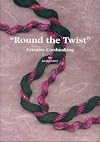
Maybe I'm dense, but this was the first book where the instructions for making cords made sense. Everything you need to know and what to do about various problems is explained. There are also beautiful inspiring pictures of cords made with different kinds of elements. Highly recommended.
You May Also Like


Statistics
- Works
- 19
- Members
- 1,277
- Popularity
- #20,087
- Rating
- 4.1
- Reviews
- 14
- ISBNs
- 21
- Languages
- 2
