
Henrik Drescher
Author of Simon's Book
About the Author
Henrik Drescher is an illustrator and author of over 27 children's books, including "Pat the Beastie" and "Simon's Book". His work regularly appears in the "New York Times Book Review" and other national and international publications. He lives in Auckland, New Zealand. (Bowker Author Biography)
Works by Henrik Drescher
Postal Seance: A Scientific Investigation into the Possibility of a Postlife Postal Existence (2004) 79 copies
China Book, 1 thru 10 1 copy
Dancers 1 copy
COMEUNDONE 1 copy
Unpainted Pictures 1 copy
H2O 1 copy
Geriatric Kamasutra 1 copy
(radiators) 1 copy
Faster Than Thought 1 copy
Stones Throw 1 copy
bleedthrough 1 copy
Associated Works
Tagged
Common Knowledge
- Birthdate
- 1955-12-15
- Gender
- male
- Nationality
- USA
- Birthplace
- Denmark
- Associated Place (for map)
- Denmark
Members
Reviews

In this highly entertaining metatextual adventure, a young artist pauses, in the act of drawing a story about a boy named Simon, and the frightening monster that he is confronting, and goes to bed. Simon, meanwhile, stuck on the page with this threatening beast, is rescued by some pens and a bottle of ink, who create an escape for him. Unfortunately, the monster pursues, until... but I'll let you discover that yourself! Suffice it to say, all ends well.
I enjoyed this picture-book, and keep show more vacillating between three and four stars, when it comes to my rating. The artwork is distinctive, with a kind of quirky charm that is very appealing: I particularly liked the monster, with his long snout! The story itself is engaging, with a chase sequence that young readers will find immensely exciting (although perhaps a little scary) and an ending that is most satisfyingly happy. All right, that settles it! Four stars it is... show less
I enjoyed this picture-book, and keep show more vacillating between three and four stars, when it comes to my rating. The artwork is distinctive, with a kind of quirky charm that is very appealing: I particularly liked the monster, with his long snout! The story itself is engaging, with a chase sequence that young readers will find immensely exciting (although perhaps a little scary) and an ending that is most satisfyingly happy. All right, that settles it! Four stars it is... show less
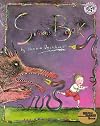
This is a wonderful piece of children’s metafiction. I’m a little disturbed that it appears in so few LibraryThing catalogues. The explanation, I hope, is that most people who own Simon’s Book are too young to be interested in cataloguing their books online. If this great book has actually become obscure, that’s a dirty shame.
I must have been three or four when this book appeared among my Christmas presents. I don’t remember if I had a creative bone in my body before I read it, but show more any interest I may have had in reading, writing, drawing, or creativity of any shape was surely stoked by Drescher’s story. It has a simple, clever structure that I still find inspiring twenty years later.
I’m not one of those who believe that little children should be protected from all dark and scary imagery, but I suppose a mild warning is in order: there’s a monster in this story, a very effective one. It has lots of hair, pointy teeth, a spiny back, human-like hands, and a long, heart-shaped snout. The snake-like vivified pens are even more potentially unsettling, and the inky scenery—augmented by lovely, atmospheric water color backgrounds—adds some menace to the already-tense chase scene that makes up most of the book. But the sweet-natured ending should comfort nightmare-prone readers. I don’t recall any unpleasant dreams incurred as a result of being read this book as a toddler.
Besides that, the incredible inventiveness of the story and illustrations gives the book a really wide appeal. I would recommend it to just about anyone, in fact, on the strength of Drescher’s skillful art and writing. It holds up well on every level. It deserves to be mentioned in the same breath with Neil Gaiman’s The Day I Swapped My Dad for Two Goldfish and The Wolves in the Walls. show less
I must have been three or four when this book appeared among my Christmas presents. I don’t remember if I had a creative bone in my body before I read it, but show more any interest I may have had in reading, writing, drawing, or creativity of any shape was surely stoked by Drescher’s story. It has a simple, clever structure that I still find inspiring twenty years later.
I’m not one of those who believe that little children should be protected from all dark and scary imagery, but I suppose a mild warning is in order: there’s a monster in this story, a very effective one. It has lots of hair, pointy teeth, a spiny back, human-like hands, and a long, heart-shaped snout. The snake-like vivified pens are even more potentially unsettling, and the inky scenery—augmented by lovely, atmospheric water color backgrounds—adds some menace to the already-tense chase scene that makes up most of the book. But the sweet-natured ending should comfort nightmare-prone readers. I don’t recall any unpleasant dreams incurred as a result of being read this book as a toddler.
Besides that, the incredible inventiveness of the story and illustrations gives the book a really wide appeal. I would recommend it to just about anyone, in fact, on the strength of Drescher’s skillful art and writing. It holds up well on every level. It deserves to be mentioned in the same breath with Neil Gaiman’s The Day I Swapped My Dad for Two Goldfish and The Wolves in the Walls. show less
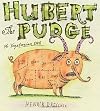
Hubert the Pudge is done mostly in fleshy pinks and pastels, giving it a kind of soft fleshy feel. A pudge is not a particular type of animal...he's most like a pig, but he's also got a trunk like an elephant and horns like an antelope. According to the text, a pudge, if allowed to grow to adulthood (which these are not) would be so very large that he could give an elephant a piggy back ride with ease...the picture that accompanies this text shows the elephants on the back of a brontosaurus show more size adult pudge.
As we join Hubert, he lives on Farmer Jake's Processing Farm in deplorable conditions and as it happens, Hubert manages to escape on the one day they are allowed outside before they are taken away to the meat processing plant. He and he alone escapes to the deepest, darkest part of the forest where he meets other animals and learns to love the freedom AND becomes the first ever of his kind to grow to adulthood (because the nasty people kill them for meat before they can ever grow up). After quite a long time eating and living free, Hubert begins to feel guilty about leaving behind all the other pudges and so he returns to free them and they all live happily ever after and Farmer Jake learns to farm something else that isn't an animal.
I'm totally on board with the message that large agri-farms and animal processing plants are inhumane, dirty, and an unsuitable place for animals to live before they are taken to slaughter...because books like Coming Home to Eat and The Omnivores dilemma demonstrate that animals CAN be humanely raised and slaughtered, these large processing farms are not necessary for anything but profit. I also don't mind the overall message and agree that kids should be aware that the meat they are eating is obtained by killing animals and while this book accomplishes that, it does so in a way that manages to rub me the wrong way. All the meat eating people are portrayed as fat, disgusting slobs and meat is consistently described as greasy and fried...both the people and the meat itself is shown in the most despicable and disgusting light, the author doesn't allow for the perspective of animals raised and killed humanely and with thanks to the animal for the meat and nourishment we get from it.
I realize that this book is for young children, but with a grade range listed from 1-3, you're talking about kids from about age 6-9 and they are certainly sophisticated enough to understand the basics of the life of an animal raised as food and make a decision for themselves if they would like to eat meat or go for a vegetarian diet...using deplorable imagery and words to describe meat itself (which isn't always fried, greasy and/or disgusting) and people who choose to eat meat as mean, slovenly and gross isn't really fair or accurate. Kids do better with facts and honesty in making their decision about vegetarianism...I know a fair number of 7-9 year olds who have opted to become vegetarians and it was because they were told honesty about how animals are raised and killed or just because they don't like the idea of eating something that was walking around shortly before it wound up in the grocery store. I just didn't appreciate how the author's message was delivered, I honestly think there is a better and more entertaining and interesting way to present the message this book wants to give. This book gets two stars from me...I'd love to see something with a positive vegetarian message, because Hubert and Pudge isn't it. show less
As we join Hubert, he lives on Farmer Jake's Processing Farm in deplorable conditions and as it happens, Hubert manages to escape on the one day they are allowed outside before they are taken away to the meat processing plant. He and he alone escapes to the deepest, darkest part of the forest where he meets other animals and learns to love the freedom AND becomes the first ever of his kind to grow to adulthood (because the nasty people kill them for meat before they can ever grow up). After quite a long time eating and living free, Hubert begins to feel guilty about leaving behind all the other pudges and so he returns to free them and they all live happily ever after and Farmer Jake learns to farm something else that isn't an animal.
I'm totally on board with the message that large agri-farms and animal processing plants are inhumane, dirty, and an unsuitable place for animals to live before they are taken to slaughter...because books like Coming Home to Eat and The Omnivores dilemma demonstrate that animals CAN be humanely raised and slaughtered, these large processing farms are not necessary for anything but profit. I also don't mind the overall message and agree that kids should be aware that the meat they are eating is obtained by killing animals and while this book accomplishes that, it does so in a way that manages to rub me the wrong way. All the meat eating people are portrayed as fat, disgusting slobs and meat is consistently described as greasy and fried...both the people and the meat itself is shown in the most despicable and disgusting light, the author doesn't allow for the perspective of animals raised and killed humanely and with thanks to the animal for the meat and nourishment we get from it.
I realize that this book is for young children, but with a grade range listed from 1-3, you're talking about kids from about age 6-9 and they are certainly sophisticated enough to understand the basics of the life of an animal raised as food and make a decision for themselves if they would like to eat meat or go for a vegetarian diet...using deplorable imagery and words to describe meat itself (which isn't always fried, greasy and/or disgusting) and people who choose to eat meat as mean, slovenly and gross isn't really fair or accurate. Kids do better with facts and honesty in making their decision about vegetarianism...I know a fair number of 7-9 year olds who have opted to become vegetarians and it was because they were told honesty about how animals are raised and killed or just because they don't like the idea of eating something that was walking around shortly before it wound up in the grocery store. I just didn't appreciate how the author's message was delivered, I honestly think there is a better and more entertaining and interesting way to present the message this book wants to give. This book gets two stars from me...I'd love to see something with a positive vegetarian message, because Hubert and Pudge isn't it. show less

The Boy Who Ate Around is a cute story about a picky little eater. The little boy does not like what his parents cooked for dinner. Instead, he decides to eat whatever is around his plate. Throughout the story, he turns into many different monsters and ends up eating the whole world. I really enjoyed the creativity in this book and how it allows the reader to have a great imagination. The text is written in waves, circles, lines etc. throughout the story. This made it enjoyable and funny to show more read. Overall, I think this is a really cute book to share with children simply for entertainment. show less
Awards


You May Also Like


Associated Authors
Statistics
- Works
- 36
- Also by
- 5
- Members
- 926
- Popularity
- #27,711
- Rating
- 4.1
- Reviews
- 21
- ISBNs
- 58
- Languages
- 3
- Favorited
- 3