
Ann Durell (1930–2018)
Author of The Big Book for Peace
About the Author
Works by Ann Durell
Associated Works
Tagged
Common Knowledge
- Birthdate
- 1930-09-20
- Date of death
- 2018-05-06
- Gender
- female
- Education
- Mt. Holyoke College
- Organizations
- St. Michael's Episcopal Church (New York City)
New York Society Library - Relationships
- McCrory, James T. (husband)
- Short biography
- [excerpted from Publishers Weekly online obituary]
Durell developed her taste for writing early on when she was asked to review some titles for the Junior Literary Guild. Durell joined the Doubleday training program, during which she acquired bookselling experience in one of the Doubleday shops. By 1953, she landed a position as secretary to Margaret Lesser, editor of young people's books at the company. She took a course in writing for children taught by Phyllis Whitney at New York University and sold a few short stories for children to such magazines as American Girl. Whitney suggested Durell expand one of her short stories to book length, and it became Holly River Secret, a novel acquired by Lesser and published in 1956.
She was selected as editor of the Junior Library Guild in 1959. She became a children's book editor for Holt in 1961 and later became editor-in-chief of the children's department at Holt, Rinehart and Winston. In 1969, Durell joined Dutton Children's Books where, over a nearly 20-year span, she worked with a roster of authors and illustrators that included Lloyd Alexander, Judy Blume, David McPhail, Diane Goode and Laurene Krasny Brown and Marc Brown, all of whom have received numerous prestigious accolades, the Newbery and Caldecott Medals among them. Durell retired in 1987 as v-p and publisher of Dutton's children's division.
Durell married James T. McCrory on May 8, 1982. The couple traveled to England each spring and fall where she loved to indulge in one of her greatest passions: walking. In an obituary, her family noted the hundreds of miles Durell trekked during her retirement, in her New York City neighborhood of the Upper West Side as well as at vacation spots in the White Mountains and New Hampshire. Among other pursuits during retirement, Durell was active in St. Michael's Episcopal Church, served as a tutor for local public school children, and was honored as a 40-year member of the New York Society Library. - Birthplace
- Belleplain, New Jersey, USA
- Place of death
- Manhattan, New York, New York, USA
- Associated Place (for map)
- USA
Members
Reviews
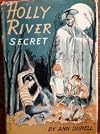
O.K – first off, I would never recommend this book to anyone. Not that there is anything seriously wrong with this children’s book published in 1956 other than the inescapable fact that it is a stellar example of children’s books of the time. It is in a word – dull.
It is the story of Joanna Finch (called Joey by everyone except her staid Philadelphia grandmother), her twin brothers, Donny and Mac and one summer of their life in Holly River, NJ where their father cultivates show more cranberries with the help of an Old Local Character by the name of John Rufus. At the beginning of the summer, Joey discovers the spot where she believes the Gray Gull Inn once stood and which local legend has it is the burial site of the Pirate Treasure of Captain Tom Bones. She and her brothers search for the treasure in a desultory fashion all summer long, gathering clues, digging around the glade Joey found and bugging the stuffing out of the Old Local Character – pumping John Rufus for info, which in characteristic Old Local Character fashion, he does not give up easily. Also present, off and on, is Grandmother, a rigid lady with high Victorian-style standards, who does nothing but criticize Joey’s penchant for frolicking about in dirty dungarees and grubby little blouses, when she could be wearing the lovely, itchy organdy dresses Grandmother bought for her at Wanamaker’s instead. She is constantly lobbying for Joey to come back to Philadelphia with her so that she can attend a proper girls’ school and also for her son to stop messing about with filthy old cranberries and get a decent job in Philly.
Joey, Donny and Mac become friends with three other children – Alec, a terribly poor child Joey finds picking trash in the family dump, Ted a local boy who is a “Piney” (read denizen of the backwoods) and Baptista, daughter of an Italian picker from Philadelphia whose family arrives in Holly River for the cranberry harvesting season along with a number of other pickers who travel in Model-T Fords. I grew up in the 50’s and I don’t remember ever seeing a Model-T anywhere as a child except as part of the fleet of antique cars that made their annual appearance at the Westport Fourth of July parade, so I had a little trouble with that one. Also, I could not keep myself from cringing at the appearance of the words “polack” and “wop” (applied rather gaily to Alex and Baptista) in this book. Joey picked up these phrases at school from a narrow-minded and bratty little girl and when she uses them she is appropriately scolded by Mom and Dad, but their use was still a little startling. (In this case, Dad’s idea of a punishment is for Joey and her brothers to learn three uplifting vocabulary words – not much like any punishment levied upon me in my childhood.) Neither Alex nor Baptista serve much of a purpose other than to show that the Finches are broad-minded and right-thinking, when all is said and done. Nor is there much of a reason for Ted, who lives in the deepest part of the backwoods, other than to introduce the children to his great uncle who has been unintentionally terrorizing them (especially Joey who is a colossal coward) whenever they venture out into the woods by themselves. Old Uncle Tom-Tom tells them the story of how he got his reputation for putting “hants” on children.
The true story of the treasure remains a little sketchy for most of the book until John Rufus caves and relates the story to the children. Then mean old Grandma from Philadelphia reveals that, not only does she know the story, but that the Finches are descendants of the original owners of the inn. (Which makes for another valuable little lesson for Joey – never discount the usefulness of old people.) After Grandmother tells the family the whole story, Joey is inspired, in a dream, to hurry back to the site of the Gray Gull Inn in the middle of the night in order to dig about for the hidden treasure once more. And – no surprise here – she uncovers the treasure. Ta Dah!
Everything is wrapped up nicely by the end. The Finches can keep the treasure as they are entitled to it by blood. The boys are going off to prep school, Joey wants to go the nasty old girls’ school now because she will be able to play with Baptista who lives in Philadelphia (somehow I think Grandmother will have a thing or two to say about that), Dad is getting a research job at the university (the identity of which is not specified) for the winter and the whole family will return to Holly River the next summer to raise another cranberry crop. Everyone is happy. Happy, happy, happy.
I’m sure that I’ve left out a few details, but this is the essential tale. I suppose that it is possible that, as a grown up, I could not get into the spirit of the story – that I am too jaded to read it as a child might, but I don’t really think so. The Happy Hollisters were exciting and rollicking good fun compared to this. If you happen to pull this one out of a dusty attic somewhere, don’t make your kid’s life miserable by making him read it. show less
It is the story of Joanna Finch (called Joey by everyone except her staid Philadelphia grandmother), her twin brothers, Donny and Mac and one summer of their life in Holly River, NJ where their father cultivates show more cranberries with the help of an Old Local Character by the name of John Rufus. At the beginning of the summer, Joey discovers the spot where she believes the Gray Gull Inn once stood and which local legend has it is the burial site of the Pirate Treasure of Captain Tom Bones. She and her brothers search for the treasure in a desultory fashion all summer long, gathering clues, digging around the glade Joey found and bugging the stuffing out of the Old Local Character – pumping John Rufus for info, which in characteristic Old Local Character fashion, he does not give up easily. Also present, off and on, is Grandmother, a rigid lady with high Victorian-style standards, who does nothing but criticize Joey’s penchant for frolicking about in dirty dungarees and grubby little blouses, when she could be wearing the lovely, itchy organdy dresses Grandmother bought for her at Wanamaker’s instead. She is constantly lobbying for Joey to come back to Philadelphia with her so that she can attend a proper girls’ school and also for her son to stop messing about with filthy old cranberries and get a decent job in Philly.
Joey, Donny and Mac become friends with three other children – Alec, a terribly poor child Joey finds picking trash in the family dump, Ted a local boy who is a “Piney” (read denizen of the backwoods) and Baptista, daughter of an Italian picker from Philadelphia whose family arrives in Holly River for the cranberry harvesting season along with a number of other pickers who travel in Model-T Fords. I grew up in the 50’s and I don’t remember ever seeing a Model-T anywhere as a child except as part of the fleet of antique cars that made their annual appearance at the Westport Fourth of July parade, so I had a little trouble with that one. Also, I could not keep myself from cringing at the appearance of the words “polack” and “wop” (applied rather gaily to Alex and Baptista) in this book. Joey picked up these phrases at school from a narrow-minded and bratty little girl and when she uses them she is appropriately scolded by Mom and Dad, but their use was still a little startling. (In this case, Dad’s idea of a punishment is for Joey and her brothers to learn three uplifting vocabulary words – not much like any punishment levied upon me in my childhood.) Neither Alex nor Baptista serve much of a purpose other than to show that the Finches are broad-minded and right-thinking, when all is said and done. Nor is there much of a reason for Ted, who lives in the deepest part of the backwoods, other than to introduce the children to his great uncle who has been unintentionally terrorizing them (especially Joey who is a colossal coward) whenever they venture out into the woods by themselves. Old Uncle Tom-Tom tells them the story of how he got his reputation for putting “hants” on children.
The true story of the treasure remains a little sketchy for most of the book until John Rufus caves and relates the story to the children. Then mean old Grandma from Philadelphia reveals that, not only does she know the story, but that the Finches are descendants of the original owners of the inn. (Which makes for another valuable little lesson for Joey – never discount the usefulness of old people.) After Grandmother tells the family the whole story, Joey is inspired, in a dream, to hurry back to the site of the Gray Gull Inn in the middle of the night in order to dig about for the hidden treasure once more. And – no surprise here – she uncovers the treasure. Ta Dah!
Everything is wrapped up nicely by the end. The Finches can keep the treasure as they are entitled to it by blood. The boys are going off to prep school, Joey wants to go the nasty old girls’ school now because she will be able to play with Baptista who lives in Philadelphia (somehow I think Grandmother will have a thing or two to say about that), Dad is getting a research job at the university (the identity of which is not specified) for the winter and the whole family will return to Holly River the next summer to raise another cranberry crop. Everyone is happy. Happy, happy, happy.
I’m sure that I’ve left out a few details, but this is the essential tale. I suppose that it is possible that, as a grown up, I could not get into the spirit of the story – that I am too jaded to read it as a child might, but I don’t really think so. The Happy Hollisters were exciting and rollicking good fun compared to this. If you happen to pull this one out of a dusty attic somewhere, don’t make your kid’s life miserable by making him read it. show less
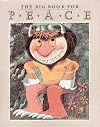
Full disclosure: I bought this book simply because it had one of Maurice Sendak's Wild Things on the cover, and completely unaware of the contents, so this review may be a little scattered. Obviously Sendak was involved in the production of this book, contributing a lovely illustration of a simpler world full of fun and adventure, but most of the authors and illustrators were unfamiliar to me. Published in 1990, as the world was coming down from the highs of the Cold War, but still seeing an show more increase in violence and strige worldwide, the collection is a manifesto promoting cooperation, understanding, and of course peace among humankind. We see examples of cultures coming together ("There is an Island"), people peaefully protesting for their rights ("The Bus for Deadhorse"), and an example of peaceful coexistence from the animal world ("The Birds' Peace") to name a few of my favourite examples. For what is on the surface a simple children's book of tales, I was surprised at how deeply many of the stories tackle a historical narrative. Engaging with themes of American nationalism, racism, and isolationis a tricky thing to do for publishers, but this risk has paid off to make the book highly engaging. Since its publication it doesn't seem like humanity has come very far in becoming more peaceful, so may it is time to revisit this publishing concept and do another BIGGER book for peace! show less
Peace is very important in the world in which we live. Anyone who has been hurt in a quarrel or a fight or watched TV news or read a newspaper knows that. This profound book looks at the idea of peace in many multifaceted ways. In fantasy tales and present-day stories, some funny and some serious. In true incidents, some that happened in the past and some that are happening right now. In poems, pictures, and even song. The pictures in this book fit really nicely with the text.
I agree with those who said this book was uneven. It also seems to me that it lacked a coherent direction or tone. Some of the stories seemed too simple for older kids and some were too frightening for younger ones so I was confused about what age group this was aimed at. Thematically it wandered; some authors seemed to be writing about how people might behave peacefully, others about how war is frightening and bad, some about how to agitate or demonstrate for political change, others retold show more native american stories, some gave episodes from US history. I do get that there is a common thread to all of this but it wasn't a strong enough thread to pull the book together. It felt like a bunch of very loosely related parts just thrown together. Some of the loosely related parts were charming, some were less so. All in all I felt like it needed a much stronger editor and in the end I wanted to like this book much more than I did like it. show less
Awards


You May Also Like


Associated Authors
Statistics
- Works
- 7
- Also by
- 2
- Members
- 1,181
- Popularity
- #21,763
- Rating
- 4.1
- Reviews
- 19
- ISBNs
- 11
- Languages
- 1
- Favorited
- 1