
Meg Waite Clayton
Author of The Wednesday Sisters
About the Author
Meg Waite Clayton is an American author, and a graduate of the University of Michigan Law School. She has written for the Los Angeles Times, The New York Times, The Washington Post, San Francisco Chronicle, Runner's World and public radio, frequently on the particular challenges that women face. show more Her first novel, The Language of Light, was a finalist for the Bellwether Prize for Socially Engaged Fiction (now the PEN/Bellwether). She has also written The Race for Paris, The Wednesday Daughters, The Four Ms. Bradwells, and The Wednesday Sisters. (Bowker Author Biography) show less
Image credit: photo by McCord Clayton
Series
Works by Meg Waite Clayton
Beautiful Exiles 1 copy
Associated Works
My Bookstore: Writers Celebrate Their Favorite Places to Browse, Read, and Shop (2012) — Contributor — 621 copies, 16 reviews
A Paris All Your Own: Bestselling Women Writers on the City of Light (2017) — Contributor — 85 copies, 5 reviews
Tagged
Common Knowledge
- Canonical name
- Clayton, Meg Waite
- Birthdate
- 1959-01-01
- Gender
- female
- Education
- University of Michigan
- Occupations
- corporate lawyer
- Organizations
- Readerville
- Agent
- Marly Rusoff (The Rusoff Agency)
- Nationality
- USA
- Birthplace
- Washington, D.C., USA
- Places of residence
- Palo Alto, California, USA
- Associated Place (for map)
- USA
Members
Reviews
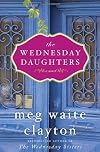
So, I'm not going to lie. When I received The Wednesday Daughters in the mail, I anxiously picked it right up and started reading, having loved Meg Waite Clayton's two previous novels. Then I thought for a moment that I was reading something a little too familiar. I felt like The Wednesday Daughters was treading too similar waters, that the characters from The Wednesday Sisters had been dropped into the setting of The Four Ms Bradwells, where friends go off to a cottage in the woods to deal show more with a major life change. Well, I was wrong. Yes, it does seem at first as if the Daughters borrow heavily from her previous two novels, but that's not really the case. At all.
The book opens with three of the Wednesday Daughters, Julie, Anne Page, and Hope, arriving at Ally's (Hope's mother) writing cottage shortly after Ally's death. They've come here to help Hope sort through her mother's belongings, and almost immediately on their arrival, Hope begins to discover there is an entire portion of her mother's life that she didn't know about. What follows is a lovely story on the discovery of family ties and friendships, and how those ties can bind, even through the years and beyond death.
Intermixed in the story is a biography of sorts of Beatrix Potter. Ally had been working on this biography when she died, and how Clayton has her go about working on it is actually quite clever.
Quite frankly, once I really got into the story, I couldn't put it down. I actually read the entire book in two sittings, and I'm honestly embarrassed by my initial reaction to the book. Meg Waite Clayton has clearly had some amazing female friendships in her lifetime, as she knows how to write about them and create realistic and believable characters and the experiences and emotions, both good and bad, that flow between friends who are more family and who have known each other their entire lives. I liked how Daughters isn't a direct sequel to Sisters. Yes, there is mention of the Wednesday Sisters from the first book, and there are even guest appearances, but this isn't really their story. This story deals directly with the Wednesday Daughters, and the challenges that their generation can face in the real world. You don't need to read Sisters to enjoy Daughters, but being familiar with the first book does enhance the reading experience for Daughters.
I love Meg Waite Clayton's writing. She writes in such a familiar fashion that is so easy to read, and moves the story along with such beautiful imagery. I enjoy her characters, I enjoy her pacing, I enjoy her language. So basically, ignore everything I said at the beginning of this review and pick up the book. If you've read her previous novels, you'll be reminded why Clayton is such a great writer, and if you are new to her writing, you'll be pleasantly surprised.
Highly recommended and happy reading! show less
The book opens with three of the Wednesday Daughters, Julie, Anne Page, and Hope, arriving at Ally's (Hope's mother) writing cottage shortly after Ally's death. They've come here to help Hope sort through her mother's belongings, and almost immediately on their arrival, Hope begins to discover there is an entire portion of her mother's life that she didn't know about. What follows is a lovely story on the discovery of family ties and friendships, and how those ties can bind, even through the years and beyond death.
Intermixed in the story is a biography of sorts of Beatrix Potter. Ally had been working on this biography when she died, and how Clayton has her go about working on it is actually quite clever.
Quite frankly, once I really got into the story, I couldn't put it down. I actually read the entire book in two sittings, and I'm honestly embarrassed by my initial reaction to the book. Meg Waite Clayton has clearly had some amazing female friendships in her lifetime, as she knows how to write about them and create realistic and believable characters and the experiences and emotions, both good and bad, that flow between friends who are more family and who have known each other their entire lives. I liked how Daughters isn't a direct sequel to Sisters. Yes, there is mention of the Wednesday Sisters from the first book, and there are even guest appearances, but this isn't really their story. This story deals directly with the Wednesday Daughters, and the challenges that their generation can face in the real world. You don't need to read Sisters to enjoy Daughters, but being familiar with the first book does enhance the reading experience for Daughters.
I love Meg Waite Clayton's writing. She writes in such a familiar fashion that is so easy to read, and moves the story along with such beautiful imagery. I enjoy her characters, I enjoy her pacing, I enjoy her language. So basically, ignore everything I said at the beginning of this review and pick up the book. If you've read her previous novels, you'll be reminded why Clayton is such a great writer, and if you are new to her writing, you'll be pleasantly surprised.
Highly recommended and happy reading! show less
TW: Child sexual abuse; incest; sexual assault; racism; misogyny; victim-blaming.
WOW, this book was awful. Narrative passages about nothing clutter several books lately. Have them -be- about something, not just a character Thinking Deep Thoughts of uselessness! This was stuffed full of characters -ruminating- and -brooding- and there was NO emotion behind it. I wonder if it was there to pad word count or something. Even the passages where I am clearly meant to feel something inspired boredom show more and irritation. The little chapter intros were not as cute or clever as the author wanted them to be. They were meant to emulate, I think, announcements in society pages or school papers. It didn't work. Not only is this multiple POVs written with the exact same voice minus word choices, this flips between timelines of forty years or more for no reason and I couldn't stand it. It was so hard to follow! Laney is a Southern gal stereotype, and most of the time I wished she'd shut up. The author made her too much of a stereotype, is why. Betts needed to be cut entirely. She added nothing, although I found out what a zhaleika was and that's interesting. I watched a clip on youtube. Mia was probably there to balance out the sadness and deep issues of everyone else's stories, and it kind of worked. None of these women had any real character once they got older. Their characterization was barely there to begin with.
They're called the four Ms Bradwells because a professor they had thought he was being clever. He called one Ms Bradwell a drug dealer and I raised my eyebrows. If I hadn't had professors who had been as proud of using shock value as he was, I would have been aghast. But no, some professors absolutely do this. It's inappropriate. Stop. One student is proficient in Latin due to practicing a branch of Catholicism that uses it a lot, and the professor is delighted. The others struggle and a nonsensical phrase emerges that they still use thirty years later. It's--a thing--but it comes off as odd and annoying. The book insists it takes place in 2011, but for all intents and purposes, takes place thirty years earlier, when they're all in their twenties and the horrible stuff is happening. As far as 2011, there's a brief mention of a blog. We never get to see the blog. Not a single entry, just a mention. There's no references to 2011 technology, societal messages, or thought patterns. This is solidly early 1980s, late 70s. Sooo much of the book could have been cut and just focused on that. The rest was just padding. No characterization, no action, no connection between the timelines, just padding.
This was a poorly done character study, not a thriller. I think the reason there's the nonsense about two timelines, with one thirty years into the future, was so all the women could be shown as grown with children the ages they were when the dramatic stuff happened, and how they adjust to it and what they teach their daughters. It's useless. Ginger's mom is a terrible, terrible parent. Most parents would be screaming and plotting murder if their daughter were being sexually assaulted at the age of thirteen by a twenty-year-old, and a family member at that. Ginger's mom just whispers and stares at the friend who told her. Then, she...writes a poem and sticks it in a poetry book...for her daughter to find after she dies. CUT THE MELODRAMA, YOU ASSHOLE. I'd yell at her to protect her kid but...child abuse and sexual assault weren't crimes until the 1970s. There's realistically not a lot that would have been done. The acts are seen as crimes now, but it's still really recent and it's a huge part of why people blame victims and especially brush child sexual assault by family members under the rug. Or joke about it. It's become a joke since the 90s I think. So, back in the 70s, "seduction at thirteen by a cousin" would have been...seen as exactly that, as opposed to "he groomed her for sexual assault". It's still awful all around, and I desperately wish things had been different for Ginger.
This trope always goes one of two ways: survivor becomes withdrawn, dislikes everyone and lots of "cry for help" stuff, which I've never seen portrayed realistically in books outside of "Speak." Or, survivor becomes promiscuous, rebellious, and someone everyone blames and makes fun of. It's never realistic, there's no nuance, and do these authors ever -speak- to survivors? Ugh. Ginger becomes the second one. The phrase "gawky slut" is used in reference to her by someone who's supposed to be her friend. Her cousin assaulted her over a period of years, and she...became a rebel because he wasn't in love with her? WHAT?! You're gawky unless someone falls in love with you?! WHAT THE FUCK. This makes no sense! The "Ginger is a gawky slut" friend later reveals Ginger's rapist is also her rapist. He called her a racist slur and a misogynist slur as well, while assaulting her. Ginger argues, years later when they're adults, that Trey couldn't have raped or been racist to her friend because...he was assaulting -her- all along so blahblah stupid. I HATE THOUGHT PROCESSES LIKE THIS.
Ginger keeps referring to the period of seven years where her cousin repeatedly assaulted and groomed her as "an affair." NO NO NO. Again, counseling for this wouldn't have been around then really. This...is realistic to the 1970s. So have the book take place maaaybe in the 1990s if you want them to reflect reasonably! Mental health services and methods haven't really changed since the 1960s in America. The 1990s had particular types of misogyny still, that could have been an interesting social commentary when compared to the 1970s. The author missed that opportunity and so many others. Trey, her assailant, kills himself later and--each woman flaps her jaws about this, but has no emotion about it. The attitude is "ooh, suicide, let's be both surprised and horribly fascinated by it as well." UGH. I've known people whose assailants died, and their emotions and reflections on it -that they felt comfortable sharing with others- do not reflect what this book said at all. There's a wide variety of emotions and circumstances, and this book did -nothing-. And there were weird journalists? There was no foreshadowing or reason, and no--it felt randomly placed to stretch out the story. It wasn't done well at all.
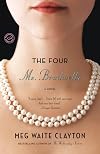
Whyyyy did Ginger strip down naked on the boat at the end? Why did the book end on that note? Was it poorly done symbolism? Was it an act of rebellion to end the book? What? Ugh. Before I forget: a black pearl necklace was repeatedly referred to in the book. Why does the cover have a double strand of white pearls?.
Trey, the assailant, was nothing but a wind-up rape machine. The author made him a cartoon villain and little more than set dressing. He wasn't even a plot device, that's how poorly this book was written. If the audience wasn't upset that he raped a child, and one he was related to, they would surely be upset that he raped a woman in a way that's seen as unusually degrading, while using racist and misogynist slurs! Be angry, readers! BEEEEEE ANNNNNGRRRYYYY IT'S MYYYY BOOK AND I SHALL CHAAAANNNNELLLLL EMOOOOTIONNSSS FROM YOUUUUU. In response to what the author was doing, I think of Smosh's catchphrase, "SHUT. UP.!"
Books that do a much better job examining sexual assault that actually -have- the rapist in them, thus drawing emotion from the audience and are plot, not set dressing, are "Speak" by Laurie Halse Anderson. "Speak" has the survivor who is withdrawn, and does -excellent- with the portrayal. "Luckiest Girl Alive" by Jessica Knoll has the promiscuous rebel survivor. Please read those and skip this one. show less
WOW, this book was awful. Narrative passages about nothing clutter several books lately. Have them -be- about something, not just a character Thinking Deep Thoughts of uselessness! This was stuffed full of characters -ruminating- and -brooding- and there was NO emotion behind it. I wonder if it was there to pad word count or something. Even the passages where I am clearly meant to feel something inspired boredom show more and irritation. The little chapter intros were not as cute or clever as the author wanted them to be. They were meant to emulate, I think, announcements in society pages or school papers. It didn't work. Not only is this multiple POVs written with the exact same voice minus word choices, this flips between timelines of forty years or more for no reason and I couldn't stand it. It was so hard to follow! Laney is a Southern gal stereotype, and most of the time I wished she'd shut up. The author made her too much of a stereotype, is why. Betts needed to be cut entirely. She added nothing, although I found out what a zhaleika was and that's interesting. I watched a clip on youtube. Mia was probably there to balance out the sadness and deep issues of everyone else's stories, and it kind of worked. None of these women had any real character once they got older. Their characterization was barely there to begin with.
They're called the four Ms Bradwells because a professor they had thought he was being clever. He called one Ms Bradwell a drug dealer and I raised my eyebrows. If I hadn't had professors who had been as proud of using shock value as he was, I would have been aghast. But no, some professors absolutely do this. It's inappropriate. Stop. One student is proficient in Latin due to practicing a branch of Catholicism that uses it a lot, and the professor is delighted. The others struggle and a nonsensical phrase emerges that they still use thirty years later. It's--a thing--but it comes off as odd and annoying. The book insists it takes place in 2011, but for all intents and purposes, takes place thirty years earlier, when they're all in their twenties and the horrible stuff is happening. As far as 2011, there's a brief mention of a blog. We never get to see the blog. Not a single entry, just a mention. There's no references to 2011 technology, societal messages, or thought patterns. This is solidly early 1980s, late 70s. Sooo much of the book could have been cut and just focused on that. The rest was just padding. No characterization, no action, no connection between the timelines, just padding.
This was a poorly done character study, not a thriller. I think the reason there's the nonsense about two timelines, with one thirty years into the future, was so all the women could be shown as grown with children the ages they were when the dramatic stuff happened, and how they adjust to it and what they teach their daughters. It's useless. Ginger's mom is a terrible, terrible parent. Most parents would be screaming and plotting murder if their daughter were being sexually assaulted at the age of thirteen by a twenty-year-old, and a family member at that. Ginger's mom just whispers and stares at the friend who told her. Then, she...writes a poem and sticks it in a poetry book...for her daughter to find after she dies. CUT THE MELODRAMA, YOU ASSHOLE. I'd yell at her to protect her kid but...child abuse and sexual assault weren't crimes until the 1970s. There's realistically not a lot that would have been done. The acts are seen as crimes now, but it's still really recent and it's a huge part of why people blame victims and especially brush child sexual assault by family members under the rug. Or joke about it. It's become a joke since the 90s I think. So, back in the 70s, "seduction at thirteen by a cousin" would have been...seen as exactly that, as opposed to "he groomed her for sexual assault". It's still awful all around, and I desperately wish things had been different for Ginger.
This trope always goes one of two ways: survivor becomes withdrawn, dislikes everyone and lots of "cry for help" stuff, which I've never seen portrayed realistically in books outside of "Speak." Or, survivor becomes promiscuous, rebellious, and someone everyone blames and makes fun of. It's never realistic, there's no nuance, and do these authors ever -speak- to survivors? Ugh. Ginger becomes the second one. The phrase "gawky slut" is used in reference to her by someone who's supposed to be her friend. Her cousin assaulted her over a period of years, and she...became a rebel because he wasn't in love with her? WHAT?! You're gawky unless someone falls in love with you?! WHAT THE FUCK. This makes no sense! The "Ginger is a gawky slut" friend later reveals Ginger's rapist is also her rapist. He called her a racist slur and a misogynist slur as well, while assaulting her. Ginger argues, years later when they're adults, that Trey couldn't have raped or been racist to her friend because...he was assaulting -her- all along so blahblah stupid. I HATE THOUGHT PROCESSES LIKE THIS.
Ginger keeps referring to the period of seven years where her cousin repeatedly assaulted and groomed her as "an affair." NO NO NO. Again, counseling for this wouldn't have been around then really. This...is realistic to the 1970s. So have the book take place maaaybe in the 1990s if you want them to reflect reasonably! Mental health services and methods haven't really changed since the 1960s in America. The 1990s had particular types of misogyny still, that could have been an interesting social commentary when compared to the 1970s. The author missed that opportunity and so many others. Trey, her assailant, kills himself later and--each woman flaps her jaws about this, but has no emotion about it. The attitude is "ooh, suicide, let's be both surprised and horribly fascinated by it as well." UGH. I've known people whose assailants died, and their emotions and reflections on it -that they felt comfortable sharing with others- do not reflect what this book said at all. There's a wide variety of emotions and circumstances, and this book did -nothing-. And there were weird journalists? There was no foreshadowing or reason, and no--it felt randomly placed to stretch out the story. It wasn't done well at all.
Whyyyy did Ginger strip down naked on the boat at the end? Why did the book end on that note? Was it poorly done symbolism? Was it an act of rebellion to end the book? What? Ugh. Before I forget: a black pearl necklace was repeatedly referred to in the book. Why does the cover have a double strand of white pearls?.
Trey, the assailant, was nothing but a wind-up rape machine. The author made him a cartoon villain and little more than set dressing. He wasn't even a plot device, that's how poorly this book was written. If the audience wasn't upset that he raped a child, and one he was related to, they would surely be upset that he raped a woman in a way that's seen as unusually degrading, while using racist and misogynist slurs! Be angry, readers! BEEEEEE ANNNNNGRRRYYYY IT'S MYYYY BOOK AND I SHALL CHAAAANNNNELLLLL EMOOOOTIONNSSS FROM YOUUUUU. In response to what the author was doing, I think of Smosh's catchphrase, "SHUT. UP.!"
Books that do a much better job examining sexual assault that actually -have- the rapist in them, thus drawing emotion from the audience and are plot, not set dressing, are "Speak" by Laurie Halse Anderson. "Speak" has the survivor who is withdrawn, and does -excellent- with the portrayal. "Luckiest Girl Alive" by Jessica Knoll has the promiscuous rebel survivor. Please read those and skip this one. show less
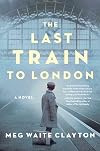
Holy Cow!!! I thought I had read everything that had to do with the Kindertransport, however I missed a lot on my journey to understanding until The Last Train to London rode into my universe. Ms. Clayton has created a world where heartache, Heroism, and horror blend together to honor men and women who tried to do what was best for the Jewish Children of WWII torn German, Austria and the surrounding areas.
Stephan Neumann Is an ordinary Austrian teenager, however what is inordinately show more different is that he is a phenomenal writer who loves the brilliant math prodigy, Žofie-Helene Perger daughter of a “rabble rousing journalist” and whose family owns the most famous chocolatier factory in all of Austria. The Last Train to London is his story. It’s also. Madame Geertruida Wijsmuller’s (Tante Truus as she was known to those she saved) story, and the thousands of children she helped save from the terrors of the Concentration Camps of WWII. Those adults that ran the Kindertransport were hero's. They risked their own lives and their families lives into the danger of themselves being residents of any of the horrific concentration camps. We owe them the stories that are told of them to help open each other’s eyes so we don’t have a repeat of the terror of trying to annihilate a whole race of people. People of the Jewish faith, ones related to me and my German ancestors. People who believe in peace and love. This is their story, this is a story we all should read and learn from.
I highly recommend The Last Train Of London as not only as a great read, the factual history is dark, deep and revealing AND one that is timely and important. show less
Stephan Neumann Is an ordinary Austrian teenager, however what is inordinately show more different is that he is a phenomenal writer who loves the brilliant math prodigy, Žofie-Helene Perger daughter of a “rabble rousing journalist” and whose family owns the most famous chocolatier factory in all of Austria. The Last Train to London is his story. It’s also. Madame Geertruida Wijsmuller’s (Tante Truus as she was known to those she saved) story, and the thousands of children she helped save from the terrors of the Concentration Camps of WWII. Those adults that ran the Kindertransport were hero's. They risked their own lives and their families lives into the danger of themselves being residents of any of the horrific concentration camps. We owe them the stories that are told of them to help open each other’s eyes so we don’t have a repeat of the terror of trying to annihilate a whole race of people. People of the Jewish faith, ones related to me and my German ancestors. People who believe in peace and love. This is their story, this is a story we all should read and learn from.
I highly recommend The Last Train Of London as not only as a great read, the factual history is dark, deep and revealing AND one that is timely and important. show less
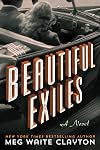
My knowledge of Hemingway runs no farther than The Old Man and the Sea, a staple of most high school English classes. I only have a vague memory of slogging thru, his writing clearly not for me. As a result, I've never pursued any more reading, let alone research, on him (or his wives) and therefore honestly had no frame of reference going into Beautiful Exiles, other than having read Meg Waite Clayton's previous books and being a fan of her writing.
Painstakingly researched and beautifully show more written, this book is not about Hemingway; instead it is about Martha Gellhorn, a writer and eventual prominent war correspondent, who became Hemingway's third wife. Told in the first-person, Gelhorn proves to be just as strong-willed as Hemingway, and more often than not, I found myself wishing she would strike out on her own and leave the self-inflated Hemingway behind. We are given a Gelhorn who is a force unto herself, who is not overshadowed by the sometimes more famous characters around her.
The writing is spot on; whether describing the peaceful, lazy days in Key West or the fast paced, immediate action of being on the front line, I could easily imagine each scene. The detail and descriptions were perfect and really brought the characters, and their situations, to life. Clayton's writing continues to get stronger with each book, and it clearly shows here.
In my admitted non-existent knowledge of Martha Gelhorn, I appreciate Beautiful Exiles all the more; everyone knows Hemingway, but I'm not so sure about Gelhorn. Clayton has given me a perspective on a woman ahead of her time, who was willing to put her life on the line to make sure the world knew what was happening in Europe during Hitler's rise to power. I found Gelhorn fascinating and am sorry that she had become overshadowed by Hemingway, at least in my experience. I want to find out more about her, and I think that a book like Beautiful Exiles, one that sparks that kind of interest in me, is always remarkable. show less
Painstakingly researched and beautifully show more written, this book is not about Hemingway; instead it is about Martha Gellhorn, a writer and eventual prominent war correspondent, who became Hemingway's third wife. Told in the first-person, Gelhorn proves to be just as strong-willed as Hemingway, and more often than not, I found myself wishing she would strike out on her own and leave the self-inflated Hemingway behind. We are given a Gelhorn who is a force unto herself, who is not overshadowed by the sometimes more famous characters around her.
The writing is spot on; whether describing the peaceful, lazy days in Key West or the fast paced, immediate action of being on the front line, I could easily imagine each scene. The detail and descriptions were perfect and really brought the characters, and their situations, to life. Clayton's writing continues to get stronger with each book, and it clearly shows here.
In my admitted non-existent knowledge of Martha Gelhorn, I appreciate Beautiful Exiles all the more; everyone knows Hemingway, but I'm not so sure about Gelhorn. Clayton has given me a perspective on a woman ahead of her time, who was willing to put her life on the line to make sure the world knew what was happening in Europe during Hitler's rise to power. I found Gelhorn fascinating and am sorry that she had become overshadowed by Hemingway, at least in my experience. I want to find out more about her, and I think that a book like Beautiful Exiles, one that sparks that kind of interest in me, is always remarkable. show less
Lists
Awards


You May Also Like


Associated Authors
Statistics
- Works
- 11
- Also by
- 2
- Members
- 3,644
- Popularity
- #6,946
- Rating
- 3.6
- Reviews
- 360
- ISBNs
- 102
- Languages
- 8
- Favorited
- 9

