

Sarah Langan
Author of The Keeper
Works by Sarah Langan
The Lost 8 copies
Squid Teeth: A Tor Original 3 copies
The Changeling 2 copies
Taut Red Ribbons 1 copy
Short Fiction Collection 1 copy
Sacred Cows 1 copy
Associated Works
Mister October: An Anthology in Memory of Rick Hautala (Volume 2) (2013) — Contributor — 62 copies, 18 reviews
Mister October: An Anthology in Memory of Rick Hautala (Volumes 1 and 2) (2013) — Contributor — 17 copies, 15 reviews
The Magazine of Fantasy and Science Fiction September/October 2011, Vol. 121, Nos. 3 & 4 (2011) — Contributor — 14 copies
Elemental Forces: Horror Short Stories (The Flame Tree Book of Horror) (2024) — Contributor — 13 copies
Brave New Worlds {Second Edition ebook} — Contributor, some editions — 11 copies
Tagged
Common Knowledge
- Birthdate
- 20th Century
- Gender
- female
- Education
- Columbia University (MFA|Creative Writing)
- Relationships
- Langan, Peter (father)
- Nationality
- USA
- Places of residence
- Long Island, New York, USA
Waterville, Maine, USA
Brooklyn, New York, USA - Associated Place (for map)
- New York, USA
Members
Reviews

'I'll start, and you finish', the woman said. 'Once upon a time there was a little girl and she was very unlucky She was born in a haunted place where nothing ever died.'
Susan Marley is crazy. Betrayed by her family and friends, she stopped speaking when she was a teenager and wanders mute through the streets of Bedford, Maine. And everyone in town dreams about her, although they don't talk about that, and try not to think about it either. But although Susan is the townspeople's scapegoat, show more things were badly wrong in Bedford long before she was born.
What I really liked abut this book is the way the author casually introduces the horrific and macabre. You are reading along and all of a sudden you read something like "Just then, the closet door opened and a monster stepped out of it." that you hardly notice at first until you are brought up short and have to go back and re-read it. I found it a very effective technique, as it mirrored the way the townspeople skated over the strange things that happened in their town. Later in the book, when the dead stalk the town menacing those townsfolk who didn't sense them coming and flee town, the horror becomes more overt, and that fits too. show less
Susan Marley is crazy. Betrayed by her family and friends, she stopped speaking when she was a teenager and wanders mute through the streets of Bedford, Maine. And everyone in town dreams about her, although they don't talk about that, and try not to think about it either. But although Susan is the townspeople's scapegoat, show more things were badly wrong in Bedford long before she was born.
What I really liked abut this book is the way the author casually introduces the horrific and macabre. You are reading along and all of a sudden you read something like "Just then, the closet door opened and a monster stepped out of it." that you hardly notice at first until you are brought up short and have to go back and re-read it. I found it a very effective technique, as it mirrored the way the townspeople skated over the strange things that happened in their town. Later in the book, when the dead stalk the town menacing those townsfolk who didn't sense them coming and flee town, the horror becomes more overt, and that fits too. show less
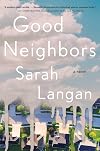
A stunning book - both in itself and in the vehement negative reactions some readers have had to it. "Good Neighbors" is a creditable descendant of Miller's "The Crucible" and Jackson's "The Lottery" and it cannot help but reflect (without screeching) the fog of conspiracy thinking and mob mentality in which we presently live.
A tip of the hat is necessary to Rod Serling's "The Monsters Are Due on Maple Street:" "The tools of conquest do not necessarily come with bombs and explosions and show more fallout. There are weapons that are simply thoughts, attitudes, prejudices...to be found only in the minds of men. For the record, prejudices can kill...and suspicion can destroy...and a thoughtless, frightened search for a scapegoat has a fallout all of its own—for the children and the children yet unborn. And the pity of it is that these things cannot be confined to the Twilight Zone." show less
A tip of the hat is necessary to Rod Serling's "The Monsters Are Due on Maple Street:" "The tools of conquest do not necessarily come with bombs and explosions and show more fallout. There are weapons that are simply thoughts, attitudes, prejudices...to be found only in the minds of men. For the record, prejudices can kill...and suspicion can destroy...and a thoughtless, frightened search for a scapegoat has a fallout all of its own—for the children and the children yet unborn. And the pity of it is that these things cannot be confined to the Twilight Zone." show less
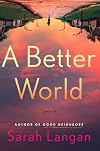
An early admirer of Langan's work and following the very, very well-done, break-out novel Good Neighbors, I couldn't wait to get my hands of A Better World. That I was disappointed isn't the same as saying this was a bad book - it bit off a lot and, for the book clubbers out there, it will leave a lot to be discussed. The problem with this novel is that the table is pretty much set within the first few chapters - there really are no surprises: we recognize the meta-terror as all too near, show more the cliques as all too familiar, and the denouement as the "just right" porridge (satisfactory but not shattering.) That said, I'm all in for Langan's next book. show less
The Wildes are the newest family on Maple Street, a quiet crescent-shaped street on Long Island that faces a large park. The families on Maple Street are a fairly close-knit group, complete with block parties and the children roving through the backyards together in the summer. In the summer of 2027, tensions are running high due to a collapsing economy and worsening environmental conditions, and when a sinkhole opens up in the park during the Fourth of July block picnic, things get out of show more control and the Wildes get blamed for it all. By the end of the summer an entire family will be dead.
Apparently, what happens on Maple Street captures the public's attention, and by 20 years later all the surviving participants will have been interviewed numerous times, books will have been written, and there will even be an interactive Broadway play based on the events of that summer. But what actually happens on Maple Street?
The later analysis and interviews that are included lead the reader to believe that there is some confusion about who is to blame for what happened, but the contemporary narrative makes things fairly clear. It comes down to mental illness. As a result, debating responsibility was less interesting than watching the reactions of the residents of Maple Street. This is a modern-day Crucible, with sexual abuse replacing witchcraft. Peer pressure and mob mentality are undisguised, but what was most interesting to me was how some people doubled down on their accusations, even in the face of actual evidence to the contrary. It was fascinating.
Langan's writing is very vivid, evoking the heat and the smells of that summer (although apparently many things smell like candy apples) as well as the actions of the characters. My only complaint about this book is that there are far too many neighbors, and I couldn't distinguish among them. In terms of bringing the mob to life, this is very effective, but in terms of establishing individual motivation it is, of necessity, less effective. Unfortunately, not having a sense of many of the characters as individuals took away from the story for me. Still, this is a powerful book, and an important one, in a world where "truth" seems less and less concrete. show less
Apparently, what happens on Maple Street captures the public's attention, and by 20 years later all the surviving participants will have been interviewed numerous times, books will have been written, and there will even be an interactive Broadway play based on the events of that summer. But what actually happens on Maple Street?
The later analysis and interviews that are included lead the reader to believe that there is some confusion about who is to blame for what happened, but the contemporary narrative makes things fairly clear. It comes down to mental illness. As a result, debating responsibility was less interesting than watching the reactions of the residents of Maple Street. This is a modern-day Crucible, with sexual abuse replacing witchcraft. Peer pressure and mob mentality are undisguised, but what was most interesting to me was how some people doubled down on their accusations, even in the face of actual evidence to the contrary. It was fascinating.
Langan's writing is very vivid, evoking the heat and the smells of that summer (although apparently many things smell like candy apples) as well as the actions of the characters. My only complaint about this book is that there are far too many neighbors, and I couldn't distinguish among them. In terms of bringing the mob to life, this is very effective, but in terms of establishing individual motivation it is, of necessity, less effective. Unfortunately, not having a sense of many of the characters as individuals took away from the story for me. Still, this is a powerful book, and an important one, in a world where "truth" seems less and less concrete. show less
Lists
100 Hemskaste (1)
Awards


You May Also Like


Associated Authors
Statistics
- Works
- 23
- Also by
- 32
- Members
- 1,913
- Popularity
- #13,451
- Rating
- 3.6
- Reviews
- 88
- ISBNs
- 60
- Languages
- 3
- Favorited
- 4