
Monica McGoldrick
Author of Genograms: Assessment and Intervention
About the Author
Monica McGoldrick, MA, MSW, PhD, is co-founder and director of the Multicultural Family Institute in Highland Pack, New Jersey, and adjunct faculty at Robert Wood Johnson Medical School. Her books include Genograms: Assessment and Intervention, You Can Go Home Again, Women in Families, and The show more Genogram Journey. show less
Image credit: babelio.com
Works by Monica McGoldrick
The Expanded Family Life Cycle: Individual, Family, and Social Perspectives (3rd Edition) (1998) 106 copies, 2 reviews
The Genogram Casebook: A Clinical Companion to Genograms: Assessment and Intervention (2016) 6 copies
Genograms: Assessment and Intervention (Norton Professional Books) 3th (third) edition (2009) 2 copies
Tagged
Common Knowledge
- Gender
- female
- Nationality
- USA
- Birthplace
- New York, New York, USA
Members
Reviews
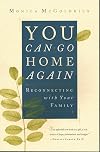
The title is a trifle misleading: it sounds as if only people who are estranged from their families would get anything from this book. Actually, it's for anyone interested in getting a clearer perspective on their family relationships. McGoldrick uses famous families as examples of various issues (loss, pressure to succeed, gender expectations, sibling relationships, and so on). She also suggests questions and topics for readers to explore if they choose to examine their own families. I wish show more she'd gone into issues of class and culture a bit more deeply--this is the only chapter without a family example in it and the chapter feels a bit rushed--but overall, it's a good book for people who want a solid introduction to looking at their families' psychology. show less
The Expanded Family Life Cycle: Individual, Family, and Social Perspectives (3rd Edition) by Elizabeth A. Carter
Either this book got less radical, or I got more radical as I read it. This is a collaboration of chapters from various different authors--all around the theme of the life cycle.
The focus that I saw in this book was that there are many factors that influence one's life. Culture, class, siblings, divorce, sexual orientation, substance abuse, violence are a few.
The reason I say this book is radical is that, at the beginning of the book, it seemed ultra-feminist. I consider myself pretty show more liberal and open minded, but being constantly hit over the head with "Women have it so bad compared to men" a million times in one paragraph (maybe an exageration), I had trouble reading it. Thankfully, the book did not stay that way the entire time, and there was some very interesting things to learn.
A bigger problem I felt was how outdated the research in the book was (ready for a new edition!).
And, for all that it said about multiculturalism--there was NO mention of Native Americans in ANY chapter. Talk about marginalizing a group. In the chapter that was devoted to culture and the life cycle, the authors even broke out an "Irish" and "Jewish" group...but NOTHING on Native Amricans...this is the more unforgivable thing... show less
The focus that I saw in this book was that there are many factors that influence one's life. Culture, class, siblings, divorce, sexual orientation, substance abuse, violence are a few.
The reason I say this book is radical is that, at the beginning of the book, it seemed ultra-feminist. I consider myself pretty show more liberal and open minded, but being constantly hit over the head with "Women have it so bad compared to men" a million times in one paragraph (maybe an exageration), I had trouble reading it. Thankfully, the book did not stay that way the entire time, and there was some very interesting things to learn.
A bigger problem I felt was how outdated the research in the book was (ready for a new edition!).
And, for all that it said about multiculturalism--there was NO mention of Native Americans in ANY chapter. Talk about marginalizing a group. In the chapter that was devoted to culture and the life cycle, the authors even broke out an "Irish" and "Jewish" group...but NOTHING on Native Amricans...this is the more unforgivable thing... show less
The Expanded Family Life Cycle: Individual, Family, and Social Perspectives (3rd Edition) by Elizabeth A. Carter
Either this book got less radical, or I got more radical as I read it. This is a collaboration of chapters from various different authors--all around the theme of the life cycle.
The focus that I saw in this book was that there are many factors that influence one's life. Culture, class, siblings, divorce, sexual orientation, substance abuse, violence are a few.
The reason I say this book is radical is that, at the beginning of the book, it seemed ultra-feminist. I consider myself pretty show more liberal and open minded, but being constantly hit over the head with "Women have it so bad compared to men" a million times in one paragraph (maybe an exageration), I had trouble reading it. Thankfully, the book did not stay that way the entire time, and there was some very interesting things to learn.
A bigger problem I felt was how outdated the research in the book was (ready for a new edition!).
And, for all that it said about multiculturalism--there was NO mention of Native Americans in ANY chapter. Talk about marginalizing a group. In the chapter that was devoted to culture and the life cycle, the authors even broke out an "Irish" and "Jewish" group...but NOTHING on Native Amricans...this is the more unforgivable thing... show less
The focus that I saw in this book was that there are many factors that influence one's life. Culture, class, siblings, divorce, sexual orientation, substance abuse, violence are a few.
The reason I say this book is radical is that, at the beginning of the book, it seemed ultra-feminist. I consider myself pretty show more liberal and open minded, but being constantly hit over the head with "Women have it so bad compared to men" a million times in one paragraph (maybe an exageration), I had trouble reading it. Thankfully, the book did not stay that way the entire time, and there was some very interesting things to learn.
A bigger problem I felt was how outdated the research in the book was (ready for a new edition!).
And, for all that it said about multiculturalism--there was NO mention of Native Americans in ANY chapter. Talk about marginalizing a group. In the chapter that was devoted to culture and the life cycle, the authors even broke out an "Irish" and "Jewish" group...but NOTHING on Native Amricans...this is the more unforgivable thing... show less
Genograms: Assessment and Intervention, Third Edition (Norton Professional Books) by Monica McGoldrick
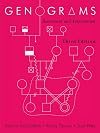
This is a decent book about genograms being used in the traditional sense. I bought it to make sense of the genograms done by social workers in my line of work. For that purpose, it's overkill. It did it's job, though, in explaining the basics of the genogram and the different uses it has in a clinical setting.
I was disappointed that the book fails to cover how to genogram the "non-traditional" families that are often formed to try and survive in lower socioeconomic neighborhoods. Genorgrams show more were conceived to explain nuclear families with maybe one or two step-mother, adopted brother, or other "non-traditional" additions. This book offers no ideas, new or otherwise, that would aid in the diagramming of a typical family I come across in my work. show less
I was disappointed that the book fails to cover how to genogram the "non-traditional" families that are often formed to try and survive in lower socioeconomic neighborhoods. Genorgrams show more were conceived to explain nuclear families with maybe one or two step-mother, adopted brother, or other "non-traditional" additions. This book offers no ideas, new or otherwise, that would aid in the diagramming of a typical family I come across in my work. show less
You May Also Like


Associated Authors
Statistics
- Works
- 20
- Members
- 1,153
- Popularity
- #22,290
- Rating
- 3.8
- Reviews
- 6
- ISBNs
- 47
- Languages
- 3