
Julie Flett
Author of When We Were Alone
About the Author
Image credit: via Greystone Books
Works by Julie Flett
Lii Yiiboo Nayaapiwak lii Swer: L'alfabet di Michif / Owls See Clearly at Night: A Michif Alphabet (2010) 42 copies, 5 reviews
Wieder da! pê-kîwêwin! 1 copy
Associated Works
Tagged
Common Knowledge
- Gender
- female
- Education
- Alberta College of Art and Design
- Nationality
- Canada
- Birthplace
- Toronto, Ontario, Canada
- Places of residence
- Vancouver, British Columbia, Canada
- Associated Place (for map)
- Canada
Members
Reviews
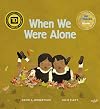
Nósisim loves to spend time with her kókom. Kókom wears bright colors, has long hair, and often speaks in Cree. One day, Nósisim asks why she does these things. Kókom explains how she was taken away to school and all these things were taken from her. Now she lives this way because she can. Her troubled past makes her cling tighter to these things now.
First, Nósisim asks Kókom why she wears so many colors. Kókom answers that when they were in school, their beautiful clothes were taken show more and they were forced to wear uniforms like everyone else. But the children secretly rebelled by rolling and covering themselves in colorful fall leaves. Kókom says, “And this made us happy.“
Second, Nósisim ask Kókom why she wears her hair so long. Kókom explains to her that the people at the school didn’t like how proud the Cree children were and so cut off their long hair to make them like everybody else. But against this too the children rebelled, for when they were alone in the field they would pick long blades of grass and weave them into each other’s hair, making it long. “And this made us happy.“
Next, Nósisim asks Kókom why she speaks in Cree. Kókom tells her how at school they wouldn’t let the children speak their own language but forced them all to use “their strange words“. The children refused to forget their language, however, and when they were alone in the fields they would speak it to each other so that they could remember. “And this made us happy.“
Finally, Nósisim asks Kókom why she and her brother always spend so much time together. Kókom tells her that when they were at the school they were separated, never allowed to be with each other. But sometimes, when they were alone, they would find each other and hold hands. “And this made us happy. ‘Now,’ Nókom said as she reached over and held my uncle’s hand, and mine, ‘I am always with my family.’“
[Content Warning: This book handles the subject of residential schools very gently, but it is still a hard subject. “When We Were Alone” is aimed at elementary school aged children, and, as such, will require some careful explanation of mature themes like the forced taking of family relationships, hair, and culture.]
David A. Robertson is the author of “When We Were Alone”, and he tenderly tells the tale of his people’s (the Swampy Cree) experience with residential schools. Being Cree himself, he speaks from a position of authority, and he tells the story with honesty and care for both the truth and for the age of his readers. Combined with Julie Flett’s (Métis-Cree) colorful and gentle illustrations, “When We Were Alone” is an excellent, dependable book on the residential school system for younger readers. Because of its accuracy and reliability and authorship by Native peoples, it is available for sale on Birchbark Books, a bookshop owned by acclaimed Ojibway authoress Louise Erdrich.
“When We Were Alone” is the perfect way to introduce your young child to the horrors of history slowly and gently. Our children need to know the truth about our histories, but their minds are impressionable and vulnerable and need to be treated with care. If I ever have children, I will want to use this book with its colorful pages and careful references to trauma as a first training ground for their young minds. The first book I want them to read is the Bible, and after that, it’s books like this that tell the truth of history while shaping their minds to fight for something better.
I really like this book. I love Julie Flett’s illustrations, especially the cover one where the children lay in a pile of many-hued fall leaves. I also love the illustration of the children braiding grass into each other’s hair to make it longer. I love that I can read about the truth without feeling myself overwhelmed by the trauma. I love the family relations and the determination to be strong and to be Cree and to love. Ultimately, that’s what this book is about. Finding the strength to fight to be human in the midst of inhumane treatment. And, ultimately, that’s what I love – the hope. This book is grounded on and immersed in hope. And it’s the hope that brings comfort and meaning. It’s the hope I need. And that’s why I love this book.
This book is good. This book is important. I highly recommend this book. show less
First, Nósisim asks Kókom why she wears so many colors. Kókom answers that when they were in school, their beautiful clothes were taken show more and they were forced to wear uniforms like everyone else. But the children secretly rebelled by rolling and covering themselves in colorful fall leaves. Kókom says, “And this made us happy.“
Second, Nósisim ask Kókom why she wears her hair so long. Kókom explains to her that the people at the school didn’t like how proud the Cree children were and so cut off their long hair to make them like everybody else. But against this too the children rebelled, for when they were alone in the field they would pick long blades of grass and weave them into each other’s hair, making it long. “And this made us happy.“
Next, Nósisim asks Kókom why she speaks in Cree. Kókom tells her how at school they wouldn’t let the children speak their own language but forced them all to use “their strange words“. The children refused to forget their language, however, and when they were alone in the fields they would speak it to each other so that they could remember. “And this made us happy.“
Finally, Nósisim asks Kókom why she and her brother always spend so much time together. Kókom tells her that when they were at the school they were separated, never allowed to be with each other. But sometimes, when they were alone, they would find each other and hold hands. “And this made us happy. ‘Now,’ Nókom said as she reached over and held my uncle’s hand, and mine, ‘I am always with my family.’“
[Content Warning: This book handles the subject of residential schools very gently, but it is still a hard subject. “When We Were Alone” is aimed at elementary school aged children, and, as such, will require some careful explanation of mature themes like the forced taking of family relationships, hair, and culture.]
David A. Robertson is the author of “When We Were Alone”, and he tenderly tells the tale of his people’s (the Swampy Cree) experience with residential schools. Being Cree himself, he speaks from a position of authority, and he tells the story with honesty and care for both the truth and for the age of his readers. Combined with Julie Flett’s (Métis-Cree) colorful and gentle illustrations, “When We Were Alone” is an excellent, dependable book on the residential school system for younger readers. Because of its accuracy and reliability and authorship by Native peoples, it is available for sale on Birchbark Books, a bookshop owned by acclaimed Ojibway authoress Louise Erdrich.
“When We Were Alone” is the perfect way to introduce your young child to the horrors of history slowly and gently. Our children need to know the truth about our histories, but their minds are impressionable and vulnerable and need to be treated with care. If I ever have children, I will want to use this book with its colorful pages and careful references to trauma as a first training ground for their young minds. The first book I want them to read is the Bible, and after that, it’s books like this that tell the truth of history while shaping their minds to fight for something better.
I really like this book. I love Julie Flett’s illustrations, especially the cover one where the children lay in a pile of many-hued fall leaves. I also love the illustration of the children braiding grass into each other’s hair to make it longer. I love that I can read about the truth without feeling myself overwhelmed by the trauma. I love the family relations and the determination to be strong and to be Cree and to love. Ultimately, that’s what this book is about. Finding the strength to fight to be human in the midst of inhumane treatment. And, ultimately, that’s what I love – the hope. This book is grounded on and immersed in hope. And it’s the hope that brings comfort and meaning. It’s the hope I need. And that’s why I love this book.
This book is good. This book is important. I highly recommend this book. show less
It is essential that our children learn about the problems with the residential school system that subjected generations of First Nations peoples to the awfulness of losing their language, family, and identity. The best way to teach is through some of the many brilliant books that are available on bookstore and library shelves. One such book is When We Were Alone by David Alexander Robertson. Told in questions posed from a little girl to her Nókom, we find out Nókom does the things she show more does today because she was not allowed to do them when she was at residential school. There are simple moments of joy in the story, where Nókom speaks of "when we were alone" and were able to say and do things to remind them of who they are and where they came from.
This book can be shared with even the littlest of readers. It explains how things were in a very delicate way, without too much information about the atrocities that we as adults know were perpetuated. It is the perfect first introduction to explaining the residential school system in an age appropriate way that all children can understand. I am particularly fond on the incorporation of the Cree language in the story to give children the sense of what was missing from the education of the First Nations children. As always, the beautiful, simple illustrations by Julie Flett bring life and colour to an otherwise heartbreaking story.
Published by Highwater Press, When We Were Alone is a must have for every primary classroom in Canada and a must read for every child. show less
This book can be shared with even the littlest of readers. It explains how things were in a very delicate way, without too much information about the atrocities that we as adults know were perpetuated. It is the perfect first introduction to explaining the residential school system in an age appropriate way that all children can understand. I am particularly fond on the incorporation of the Cree language in the story to give children the sense of what was missing from the education of the First Nations children. As always, the beautiful, simple illustrations by Julie Flett bring life and colour to an otherwise heartbreaking story.
Published by Highwater Press, When We Were Alone is a must have for every primary classroom in Canada and a must read for every child. show less
"In this illustrated book for children ages 4 to 8, a curious girl learns about how her grandmother held on to cultural touchstones when she was a child at a Native American residential school.
The young girl who narrates this book notices one day, while helping her grandmother in the garden, that her Nókom (Cree for “grandmother”) always does certain things. She dons colorful clothes; wears her hair long; speaks in Cree; and spends time with her brother, talking and laughing. But why? show more The book explains in the rhythm of a poem or song, repeating the structure of question and answer. For example, the girl asks, “Nókom, why do you wear so many colours?” and the grandmother replies, “Well, Nósisim…” and begins her story. She explains that as a girl, she once liked to wear many colors, but at her far-away school, all the children were dressed the same. Why? “ ‘They didn’t like that we wore such beautiful colours,’ Nókom said. ‘They wanted us to look like everybody else.’ ” But in autumn, the girls would pile kaleidoscopic fallen leaves on themselves and found happiness that way. Now, Nókom always wears the most beautiful hues. Similar explanations follow: the school cut the girls’ hair, wouldn’t let them speak Cree, and separated family members, all to enforce conformity. Today, though, Nókom can flaunt her culture openly. Robertson (The Chief: Mistahimaskwa, 2016, etc.) handles a delicate task here admirably well: explaining residential schools, that shameful legacy, and making them understandable to small children. It’s a dark history, and the author doesn’t disguise that, but he wisely focuses the grandmother’s tale on how, season by season, the students use creativity, imagination, and patience to retain their sense of identity. A beautifully quiet, bold strength arises from the continued refrain “When we were alone” and in how the children insisted on being themselves. Flett’s (We Sang You Home, 2016, etc.) gorgeous, skillful illustrations have a flattened, faux naïve feel to them, like construction paper collage, a style that works perfectly with the story. She nicely contrasts the school’s dull browns and grays with the riotous colors surrounding Nókom and gets much expression from her simple silhouettes.
Spare, poetic, and moving, this Cree heritage story makes a powerful impression." Kirkus Reviews show less
The young girl who narrates this book notices one day, while helping her grandmother in the garden, that her Nókom (Cree for “grandmother”) always does certain things. She dons colorful clothes; wears her hair long; speaks in Cree; and spends time with her brother, talking and laughing. But why? show more The book explains in the rhythm of a poem or song, repeating the structure of question and answer. For example, the girl asks, “Nókom, why do you wear so many colours?” and the grandmother replies, “Well, Nósisim…” and begins her story. She explains that as a girl, she once liked to wear many colors, but at her far-away school, all the children were dressed the same. Why? “ ‘They didn’t like that we wore such beautiful colours,’ Nókom said. ‘They wanted us to look like everybody else.’ ” But in autumn, the girls would pile kaleidoscopic fallen leaves on themselves and found happiness that way. Now, Nókom always wears the most beautiful hues. Similar explanations follow: the school cut the girls’ hair, wouldn’t let them speak Cree, and separated family members, all to enforce conformity. Today, though, Nókom can flaunt her culture openly. Robertson (The Chief: Mistahimaskwa, 2016, etc.) handles a delicate task here admirably well: explaining residential schools, that shameful legacy, and making them understandable to small children. It’s a dark history, and the author doesn’t disguise that, but he wisely focuses the grandmother’s tale on how, season by season, the students use creativity, imagination, and patience to retain their sense of identity. A beautifully quiet, bold strength arises from the continued refrain “When we were alone” and in how the children insisted on being themselves. Flett’s (We Sang You Home, 2016, etc.) gorgeous, skillful illustrations have a flattened, faux naïve feel to them, like construction paper collage, a style that works perfectly with the story. She nicely contrasts the school’s dull browns and grays with the riotous colors surrounding Nókom and gets much expression from her simple silhouettes.
Spare, poetic, and moving, this Cree heritage story makes a powerful impression." Kirkus Reviews show less

Und warum sind Kókoms Haare so lang – sie reichen ihr fast bis zur Hüfte! Warum spricht Kókom so oft auf Cree? Und warum verbringt Kókom so viel Zeit mit ihrem Bruder?
Während es seiner Großmutter bei der Gartenarbeit hilft, entdeckt ein kleines Mädchen Stück für Stück die Kindheit der Großmutter ...
In wenigen Worten und mit eindrücklichen Bildern vermittelt „Als wir allein waren“ ein Kapitel der kanadischen Geschichte, um dessen Aufarbeitung sich nicht nur die Ureinwohner, show more sondern breite Teile der Gesellschaft Kanadas derzeit bemühen: die sogenannten Residential Schools.
Robertsons poetischer Text über Liebe und Widerstand ist ein Plädoyer für den respektvollen Umgang mit Menschen, die in anderen Kulturen und Sprachen zuhause sind. In behutsamen Bildern einfühlsam illustriert von Julie Flett. show less
Während es seiner Großmutter bei der Gartenarbeit hilft, entdeckt ein kleines Mädchen Stück für Stück die Kindheit der Großmutter ...
In wenigen Worten und mit eindrücklichen Bildern vermittelt „Als wir allein waren“ ein Kapitel der kanadischen Geschichte, um dessen Aufarbeitung sich nicht nur die Ureinwohner, show more sondern breite Teile der Gesellschaft Kanadas derzeit bemühen: die sogenannten Residential Schools.
Robertsons poetischer Text über Liebe und Widerstand ist ein Plädoyer für den respektvollen Umgang mit Menschen, die in anderen Kulturen und Sprachen zuhause sind. In behutsamen Bildern einfühlsam illustriert von Julie Flett. show less
Lists
VBL Picturebooks (4)
Youth: DEI (1)
Awards


You May Also Like


Associated Authors
Statistics
- Works
- 16
- Also by
- 11
- Members
- 1,857
- Popularity
- #13,858
- Rating
- 4.2
- Reviews
- 140
- ISBNs
- 64
- Languages
- 4