
Traci Sorell
Author of We Are Grateful: Otsaliheliga
About the Author
Works by Traci Sorell
Classified: The Secret Career of Mary Golda Ross, Cherokee Aerospace Engineer (2021) 160 copies, 21 reviews
Clack, Clack! Smack! A Cherokee Stickball Story (International Development in Focus) (2024) 21 copies, 3 reviews
Indigenous from A to Z 1 copy
Associated Works
No Voice Too Small: Fourteen Young Americans Making History (2020) — Contributor — 63 copies, 2 reviews
Tagged
Common Knowledge
- Gender
- female
- Occupations
- non-fiction writer
fiction writer
children's poet - Short biography
- Traci Sorrell writes fiction and nonfiction books, as well as poems for children. Traci is an enrolled citizen of the Cherokee Nation and livs in northeastern Oklahoma where her tribe is located. [adapted from At Mountain's Base, 2019]
- Places of residence
- Cherokee Nation
California, USA
Madrid, Spain
Members
Reviews

Author Traci Sorell and illustrator Frané Lessac, who previously collaborated on the bilingual picture-book We Are Grateful: Otsaliheliga, turn in this present volume to the history of America's Native Nations, and their tradition of resistance to cultural, political and geographic encroachment on the part of the United States. Conceived as a series of twelve presentations given by the students at a Native community school on Indigenous People's Day, the topics explored include: show more Assimilation, Allotment, Indian New Deal, Termination, Relocation, Tribal Activism, Self-Determination, Indian Child Welfare & Education, Religious Freedom, Economic Development, Language Revival, and Sovereign Resurgence. The book closes with an extensive afterword including more information on each "presentation," from the facts presented to the meaning of the accompanying artwork; a timeline from the end of the Civil War to the present day; a glossary of terms; a list of sources; and an author's note.
Having greatly enjoyed this author/illustrator team's previous foray into the world of picture-books, as well as individual projects from both, I picked up We Are Still Here!: Native American Truths Everyone Should Know with great anticipation, particularly as I find the subject matter both interesting and important. Unfortunately, I found the book wanting in a few key areas, and was not favorably impressed. The paramount trouble, and it is an inescapably structural one, is that this is not really a picture-book. Or, put another way, there is great audience confusion here. Both the subject matter and the language used belong more to a middle-grade title, and I could see this making an excellent work of non-fiction for that age range, if the twelve presentations were expanded, and each made into a brief chapter. As it is, the presentations are little more than lists of points about the topic in question—they are in fact literally lists, with an ellipsis before each point—followed by the refrain "Native Nations say We are still here!" The after matter gives more details, but there is no avoiding the fact that this info-dumping structure lacks the power to engage young picture-book audiences, despite the very thin "framing" narrative of the students making their presentations. I came away with the impression that the choice of picture-book format may have been more driven by Sorell and Lessac's previous title, which was very well received, rather than by a thoughtful consideration of what would work best for different age groups. As it stands, this doesn't work as a picture-book, and is not fleshed out enough for an adequate middle-grade title. I am somewhat bemused by all of the praise the book has received in official reviewing publications. I can only conclude that these reviewers are so enthusiastic for the topic that they have suspended their critical judgement, which is no flattering reflection upon them.
Leaving that aside, the book has other, more subtle flaws. I was very disturbed to see that when unambiguously bad actions taken by the U.S. government were being discussed—Assimilation, Allotment—terms like "white men" and "white people" were used, but when more positive actions were taken–Indian New Deal, Self-Determination, Indian Child Welfare & Education—terms like "United States government," "Congress" and "non-Native families" were used. This may reflect unconscious bias on the author's part—negative actions are associated with white people as a race, while positive actions are associated with institutions, even when those institutions were (at that time) made up of people of that same race—but I think that it can be very harmful to young people to receive these kinds of subtle messages. I was also disturbed to see that, in the discussion of casinos—the Economic Development section—no mention was made of the great controversies and divisions that running casinos have brought to many Native Nations. I still recall the news about the so-called "Mohawk Civil War" that occurred in upstate New York and Canada, back in the 1990s, when I was in high school. If the author didn't wish to focus on something divisive in her main text, that's fair enough, but I find it astonishing that the indigenous community's mixed feelings about gambling and casinos was not raised anywhere in the back matter. To be clear, I am not personally opposed to casinos, and believe that they have brought benefit to various Native Nations, but the omission of any reference to the internal conflicts created by the issue feels intentional, and potentially even dishonest. Consider the language used in the timeline entry related to this specific topic: "Tribes have always had traditional games of chance, so some tribes decide to offer casino-style gaming." Is there anything in such a description that even hints that there might be more to the story?
All in all, I think this is a book that explores an important and worthy topic, and I think it had the potential to do so well, if someone in the editorial process had had the wisdom to suggest a different, expanded format, and had been alive to some of these subtler points. As it is, despite appreciating the intention of the narrative, and the beauty of the artwork, this is not one I can recommend. show less
Having greatly enjoyed this author/illustrator team's previous foray into the world of picture-books, as well as individual projects from both, I picked up We Are Still Here!: Native American Truths Everyone Should Know with great anticipation, particularly as I find the subject matter both interesting and important. Unfortunately, I found the book wanting in a few key areas, and was not favorably impressed. The paramount trouble, and it is an inescapably structural one, is that this is not really a picture-book. Or, put another way, there is great audience confusion here. Both the subject matter and the language used belong more to a middle-grade title, and I could see this making an excellent work of non-fiction for that age range, if the twelve presentations were expanded, and each made into a brief chapter. As it is, the presentations are little more than lists of points about the topic in question—they are in fact literally lists, with an ellipsis before each point—followed by the refrain "Native Nations say We are still here!" The after matter gives more details, but there is no avoiding the fact that this info-dumping structure lacks the power to engage young picture-book audiences, despite the very thin "framing" narrative of the students making their presentations. I came away with the impression that the choice of picture-book format may have been more driven by Sorell and Lessac's previous title, which was very well received, rather than by a thoughtful consideration of what would work best for different age groups. As it stands, this doesn't work as a picture-book, and is not fleshed out enough for an adequate middle-grade title. I am somewhat bemused by all of the praise the book has received in official reviewing publications. I can only conclude that these reviewers are so enthusiastic for the topic that they have suspended their critical judgement, which is no flattering reflection upon them.
Leaving that aside, the book has other, more subtle flaws. I was very disturbed to see that when unambiguously bad actions taken by the U.S. government were being discussed—Assimilation, Allotment—terms like "white men" and "white people" were used, but when more positive actions were taken–Indian New Deal, Self-Determination, Indian Child Welfare & Education—terms like "United States government," "Congress" and "non-Native families" were used. This may reflect unconscious bias on the author's part—negative actions are associated with white people as a race, while positive actions are associated with institutions, even when those institutions were (at that time) made up of people of that same race—but I think that it can be very harmful to young people to receive these kinds of subtle messages. I was also disturbed to see that, in the discussion of casinos—the Economic Development section—no mention was made of the great controversies and divisions that running casinos have brought to many Native Nations. I still recall the news about the so-called "Mohawk Civil War" that occurred in upstate New York and Canada, back in the 1990s, when I was in high school. If the author didn't wish to focus on something divisive in her main text, that's fair enough, but I find it astonishing that the indigenous community's mixed feelings about gambling and casinos was not raised anywhere in the back matter. To be clear, I am not personally opposed to casinos, and believe that they have brought benefit to various Native Nations, but the omission of any reference to the internal conflicts created by the issue feels intentional, and potentially even dishonest. Consider the language used in the timeline entry related to this specific topic: "Tribes have always had traditional games of chance, so some tribes decide to offer casino-style gaming." Is there anything in such a description that even hints that there might be more to the story?
All in all, I think this is a book that explores an important and worthy topic, and I think it had the potential to do so well, if someone in the editorial process had had the wisdom to suggest a different, expanded format, and had been alive to some of these subtler points. As it is, despite appreciating the intention of the narrative, and the beauty of the artwork, this is not one I can recommend. show less
Clack, Clack! Smack! A Cherokee Stickball Story (International Development in Focus) by Traci Sorell
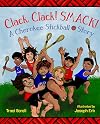
wo Cherokee teams play a game of stickball in Tahlequah, Oklahoma.
Vann feels insecure about having missed a key shot in last week’s match. “Stickball requires speed,” after all, and his “towering body” won’t cooperate. As Vann and his team, the Eagles, take to the field against the Redhawks, they “zip,” “chase,” and “rush” for the ball, their wooden sticks clashing with a “CLACK, CLACK!” Coach gives the team a pep talk in Tsalagi, the Cherokee language. He reminds show more them of gadugi, the importance of working together. As the players return to the field to finish the game, Vann’s best friend, Jesse, gives him an encouraging smile. The game is now tied. Can Vann and his team win? Sorell and Erb, both members of the Cherokee Nation, deliver an uplifting story of team spirit and collaboration; the emphasis is on group triumphs rather than individual victories. Writing in terse, alliterative prose—“a tackle, a twist, and a wrong turn”—Sorell skillfully builds tension as she choreographs this action-packed game. Erb’s thick-lined cartoon illustrations have a pleasing solidity; they capture the chaos and drama of the game and depict players with a range of brown skin tones. The story features frequent Tsalagi words and phrases. Backmatter stresses the importance of keeping the Cherokee language alive and explains the significance of stickball, which traditionally was used to settle conflicts.
Stand and cheer for this fast-paced tale of sportsmanship and community. (Tsalagi glossary, photographs) (Picture book. 4-8)
-Kirkus Review show less
Vann feels insecure about having missed a key shot in last week’s match. “Stickball requires speed,” after all, and his “towering body” won’t cooperate. As Vann and his team, the Eagles, take to the field against the Redhawks, they “zip,” “chase,” and “rush” for the ball, their wooden sticks clashing with a “CLACK, CLACK!” Coach gives the team a pep talk in Tsalagi, the Cherokee language. He reminds show more them of gadugi, the importance of working together. As the players return to the field to finish the game, Vann’s best friend, Jesse, gives him an encouraging smile. The game is now tied. Can Vann and his team win? Sorell and Erb, both members of the Cherokee Nation, deliver an uplifting story of team spirit and collaboration; the emphasis is on group triumphs rather than individual victories. Writing in terse, alliterative prose—“a tackle, a twist, and a wrong turn”—Sorell skillfully builds tension as she choreographs this action-packed game. Erb’s thick-lined cartoon illustrations have a pleasing solidity; they capture the chaos and drama of the game and depict players with a range of brown skin tones. The story features frequent Tsalagi words and phrases. Backmatter stresses the importance of keeping the Cherokee language alive and explains the significance of stickball, which traditionally was used to settle conflicts.
Stand and cheer for this fast-paced tale of sportsmanship and community. (Tsalagi glossary, photographs) (Picture book. 4-8)
-Kirkus Review show less
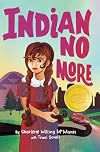
Incredibly well-done, story of a young girl and her family's displacement during the termination of the Umpqua Tribes' reservation in the mid-fifties. While this is inspired by personal experiences, rather than true memoir, it not only has been thoroughly and respectfully researched, but also rings with a true personal voice. Things I loved about this book - Regina has a great voice, and her puzzled confrontations with neighborhood kids who want her to be a specific kind of Hollywood Indian show more rather than a modern tribal kid are illuminating without being preachy. Her family life is rocky sometimes, but hugely loving. Her father's success, and her clear-headed assessment of what is lost in progress as well as what is gained. It's really well done, and well targeted for its audience. I mourn the death of the author, because I would love to read more of her work. show less
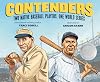
Profiles of the first two Native players to make history by facing off in a World Series: Charles Bender and John Meyers.
Properly rejecting the conventional sobriquets (both were often referred to as “Chief” in newspapers despite not being tribal leaders) as inaccurate and disrespectful and using her subjects’ given names (or childhood nicknames) throughout, Sorell weaves into her brief but suspenseful recap of the 1911 Series accounts of both men’s paths to the major leagues. Bender show more left the White Earth Reservation in Minnesota to pitch for the Philadelphia Athletics after escaping abusive experiences both at home, from his German American father, and in a boarding school; Meyers resisted “pressure to adopt white people’s norms” as he left the Cahuilla reservation in California for spots on several semipro teams and then spoke out against injustices against Native people as a catcher for the New York Giants. Adding carefully authenticated Ojibwe and Cahuilla motifs on framing borders, Starr offers a set of clean-lined on-field tableaux, montages, and baseball card–style portraits of the chiseled players in period uniforms. Though the author does give her stars’ later careers (and, in a closing timeline, lives) quick overviews, the story she tells is at least as much about racism as it is about baseball, with several references to “slights and slurs” along with documented prejudicial quotes and headlines from the time identified as “insults.” Nor has the onslaught let up significantly: “From peewee to professional levels,” she concludes, “no other athletes in the United States face the kind of sanctioned mocking and dishonor of their culture that Native players do.” (This book was reviewed digitally.)
A lesser-known but significant encounter with all-too-current resonances. (author’s note, quotes, sources) (Informational picture book. 7-10)
-Kirkus Revuew show less
Properly rejecting the conventional sobriquets (both were often referred to as “Chief” in newspapers despite not being tribal leaders) as inaccurate and disrespectful and using her subjects’ given names (or childhood nicknames) throughout, Sorell weaves into her brief but suspenseful recap of the 1911 Series accounts of both men’s paths to the major leagues. Bender show more left the White Earth Reservation in Minnesota to pitch for the Philadelphia Athletics after escaping abusive experiences both at home, from his German American father, and in a boarding school; Meyers resisted “pressure to adopt white people’s norms” as he left the Cahuilla reservation in California for spots on several semipro teams and then spoke out against injustices against Native people as a catcher for the New York Giants. Adding carefully authenticated Ojibwe and Cahuilla motifs on framing borders, Starr offers a set of clean-lined on-field tableaux, montages, and baseball card–style portraits of the chiseled players in period uniforms. Though the author does give her stars’ later careers (and, in a closing timeline, lives) quick overviews, the story she tells is at least as much about racism as it is about baseball, with several references to “slights and slurs” along with documented prejudicial quotes and headlines from the time identified as “insults.” Nor has the onslaught let up significantly: “From peewee to professional levels,” she concludes, “no other athletes in the United States face the kind of sanctioned mocking and dishonor of their culture that Native players do.” (This book was reviewed digitally.)
A lesser-known but significant encounter with all-too-current resonances. (author’s note, quotes, sources) (Informational picture book. 7-10)
-Kirkus Revuew show less
Lists
Youth: DEI (3)
Awards


You May Also Like


Associated Authors
Statistics
- Works
- 16
- Also by
- 7
- Members
- 2,711
- Popularity
- #9,474
- Rating
- 4.2
- Reviews
- 218
- ISBNs
- 85
- Languages
- 1