
Carole Lindstrom
Author of We Are Water Protectors
About the Author
Image credit: via author's website
Works by Carole Lindstrom
Associated Works
Tagged
Common Knowledge
- Birthdate
- 1964-08-18
- Gender
- female
- Education
- Institute of Children's Literature
- Organizations
- Turtle Mountain Band of Chippewa Indians
- Agent
- Andrea Brown Literary Agency
- Nationality
- Turtle Mountain Band of Ojibwe
USA - Birthplace
- Nebraska, USA
- Places of residence
- Maryland, USA
- Associated Place (for map)
- USA
Members
Reviews
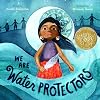
We Are Water Protectors, written by Carole Lindstrom, is a magnificently illustrated story told from the point of view of a contemporary indigenous girl who reveals what she has learned from her grandmother about what (and who) water is. “Water is life, “sacred”, and the “first medicine.” It is “Spirit” and nourishes us. Water is alive and it remembers. Her ancestors have taught her to be a steward of the Earth. When the black snake arrives and threatens to destroy the land and show more poison the water, our young protagonist, a water protector, is compelled to rally her people and fight against it. She leads with a pro-Earth charge to “Stand with and for the water”, and “for the land.” To stand as one and courageously fight against the black snake that endangers her people. This story is a call for awareness, indigenous rights, social justice, and a call to action to the reader.
Critical Analysis:It is easy to see how this creatively presented picture book was awarded the Caldecott Medal identifying it as a “distinguished American picture book for children”. Illustrator, Michaela Goade, Sitka, of Tlingit descent, tribally enrolled with the Central Council of Tlingit and Haida Indian Tribes of Alaska was a perfect choice for this work. She made history as the first nonwhite woman, first indigenous woman, and the first BIPOC woman to win the Caldecott Medal (2021) ever in 83 years.The artistic technique utilized, and cultural pictorial interpretation of the story, theme, and concept is excellent. The illustrator fittingly uses watercolor as a medium to depict a wonder-filled variety of beautifully detailed images that are intriguing to both young and older readers. The method by which Goade utilized her artistic craft to reveal the culture, setting, plot, the power and strength of our young protagonist, and the interrelatedness of the creatures of the Earth is amazing.
Additionally, there are a variety of literary elements in this appealing book perfect for teaching. It will help children understand important environmental concerns, the connectedness of nature, and the story of Standing Rock. A mirror book for indigenous peoples and a sliding door for others, it is a perfect mentor text for Earth Day, Indigenous Peoples month, or to explore topics of indigenous cultures and rights, stewardship, activism, environmentalism, social justice, and children using their voice to create changes.
Favorite Quote: “The river runs through our veins. Through my peoples’ veins.” show less
Critical Analysis:It is easy to see how this creatively presented picture book was awarded the Caldecott Medal identifying it as a “distinguished American picture book for children”. Illustrator, Michaela Goade, Sitka, of Tlingit descent, tribally enrolled with the Central Council of Tlingit and Haida Indian Tribes of Alaska was a perfect choice for this work. She made history as the first nonwhite woman, first indigenous woman, and the first BIPOC woman to win the Caldecott Medal (2021) ever in 83 years.The artistic technique utilized, and cultural pictorial interpretation of the story, theme, and concept is excellent. The illustrator fittingly uses watercolor as a medium to depict a wonder-filled variety of beautifully detailed images that are intriguing to both young and older readers. The method by which Goade utilized her artistic craft to reveal the culture, setting, plot, the power and strength of our young protagonist, and the interrelatedness of the creatures of the Earth is amazing.
Additionally, there are a variety of literary elements in this appealing book perfect for teaching. It will help children understand important environmental concerns, the connectedness of nature, and the story of Standing Rock. A mirror book for indigenous peoples and a sliding door for others, it is a perfect mentor text for Earth Day, Indigenous Peoples month, or to explore topics of indigenous cultures and rights, stewardship, activism, environmentalism, social justice, and children using their voice to create changes.
Favorite Quote: “The river runs through our veins. Through my peoples’ veins.” show less

Inspired by the story of the Standing Rock protests against the Dakota Access Pipeline, an oil pipeline running from North Dakota to Illinois, Anishinaabe (Ojibwe) author Carole Lindstrom spins this tale of a young Native American girl who, together with her people, takes a stand as a water protector, against the destructive "black snake" threatening their lands. Guided by the wisdom of her nokomis, or grandmother, the girl reflects on the importance of water to all life, and the urgent show more necessity to protect it. The simple but poetic text, which emphasizes the presence of native peoples in the here and now - "We stand / With our songs / And our drums. / We are still here" - and the interconnected nature of all life and all peoples, is paired with gorgeously stylized illustrations from Tlingit artist Michaela Goade...
Published in March of 2020, We Are Water Protectors is a book I have been meaning to get to for some time now. Unlike most previous years, I had little access to the newest children's books this past year, so I had few opinions as to which titles were contenders for awards. Having now read this, I can certainly see why it was awarded the Caldecott Medal, given annually to the preceding year's "most distinguished American picture book for children." Michaela Goade's illustrations here are beautiful, featuring a gorgeous color palette, elegantly stylized human and animal figures, and an overall composition on each page that works well with Lindstrom's text. This last is key, as the Caldecott doesn't simply recognize beautiful illustration. Rather, it recognizes excellence in the picture-book form, and part of what makes a picture-book excellent is the seamless connection between story and image. Here that relationship is wonderfully complementary, as exemplified in many scenes. Perhaps one of my favorites is the two-page spread which shows the young girl surging forward, her hair a stream of water behind her. This powerful image is paired with the words: "Take Courage!"
Needless to say, I enjoyed the artwork here, and will lose no time in seeking out other books illustrated by Goade. I also appreciated the story, and the afterword, which gives more information about the importance of water in Ojibwe culture, and the protestors against the DAPL. A glossary and an illustrator's note are also included, and it's significant that Goade mentions including certain visual details in honor of Carole Lindstrom's Ojibwe heritage. This is significant, as Goade herself is native, but of Tlingit heritage, subtly emphasizing to young readers that not all native peoples are synonymous. Highly recommended, to any picture-book readers seeking stories with an ecological theme and/or with a Native American cultural context. Also recommended to anyone who appreciates beautiful picture-book art. show less
Published in March of 2020, We Are Water Protectors is a book I have been meaning to get to for some time now. Unlike most previous years, I had little access to the newest children's books this past year, so I had few opinions as to which titles were contenders for awards. Having now read this, I can certainly see why it was awarded the Caldecott Medal, given annually to the preceding year's "most distinguished American picture book for children." Michaela Goade's illustrations here are beautiful, featuring a gorgeous color palette, elegantly stylized human and animal figures, and an overall composition on each page that works well with Lindstrom's text. This last is key, as the Caldecott doesn't simply recognize beautiful illustration. Rather, it recognizes excellence in the picture-book form, and part of what makes a picture-book excellent is the seamless connection between story and image. Here that relationship is wonderfully complementary, as exemplified in many scenes. Perhaps one of my favorites is the two-page spread which shows the young girl surging forward, her hair a stream of water behind her. This powerful image is paired with the words: "Take Courage!"
Needless to say, I enjoyed the artwork here, and will lose no time in seeking out other books illustrated by Goade. I also appreciated the story, and the afterword, which gives more information about the importance of water in Ojibwe culture, and the protestors against the DAPL. A glossary and an illustrator's note are also included, and it's significant that Goade mentions including certain visual details in honor of Carole Lindstrom's Ojibwe heritage. This is significant, as Goade herself is native, but of Tlingit heritage, subtly emphasizing to young readers that not all native peoples are synonymous. Highly recommended, to any picture-book readers seeking stories with an ecological theme and/or with a Native American cultural context. Also recommended to anyone who appreciates beautiful picture-book art. show less
"In this tribute to Native resilience, Indigenous author-and-illustrator team Lindstrom and Goade invite readers to stand up for environmental justice.
“Water is the first medicine,” a young, unnamed protagonist reflects as she wades into a river with her grandmother. “We come from water.” Stunning illustrations, rich in symbolism from the creators’ respective Ojibwe and Tlingit/Haida lineages, bring the dark-haired, brown-skinned child’s narrative to life as she recounts an show more Anishinaabe prophecy: One day, a “black snake” will terrorize her community and threaten water, animals, and land. “Now the black snake is here,” the narrator proclaims, connecting the legend to the present-day threat of oil pipelines being built on Native lands. Though its image is fearsome, younger audiences aren’t likely to be frightened due to Goade’s vibrant, uplifting focus on collective power. Awash in brilliant colors and atmospheric studies of light, the girl emphasizes the importance of protecting “those who cannot fight for themselves” and understanding that on Earth, “we are all related.” Themes of ancestry, community responsibility, and shared inheritance run throughout. Where the brave protagonist is depicted alongside her community, the illustrations feature people of all ages, skin tones, and clothing styles. Lindstrom’s powerful message includes non-Native and Native readers alike: “We are stewards of the Earth. We are water protectors.”
An inspiring call to action for all who care about our interconnected planet. (author’s note, glossary, illustrator’s note, Water Protector pledge) (Picture book. 5-12)" A Kirkus Starred Review, www.kirkusreviews.com show less
“Water is the first medicine,” a young, unnamed protagonist reflects as she wades into a river with her grandmother. “We come from water.” Stunning illustrations, rich in symbolism from the creators’ respective Ojibwe and Tlingit/Haida lineages, bring the dark-haired, brown-skinned child’s narrative to life as she recounts an show more Anishinaabe prophecy: One day, a “black snake” will terrorize her community and threaten water, animals, and land. “Now the black snake is here,” the narrator proclaims, connecting the legend to the present-day threat of oil pipelines being built on Native lands. Though its image is fearsome, younger audiences aren’t likely to be frightened due to Goade’s vibrant, uplifting focus on collective power. Awash in brilliant colors and atmospheric studies of light, the girl emphasizes the importance of protecting “those who cannot fight for themselves” and understanding that on Earth, “we are all related.” Themes of ancestry, community responsibility, and shared inheritance run throughout. Where the brave protagonist is depicted alongside her community, the illustrations feature people of all ages, skin tones, and clothing styles. Lindstrom’s powerful message includes non-Native and Native readers alike: “We are stewards of the Earth. We are water protectors.”
An inspiring call to action for all who care about our interconnected planet. (author’s note, glossary, illustrator’s note, Water Protector pledge) (Picture book. 5-12)" A Kirkus Starred Review, www.kirkusreviews.com show less
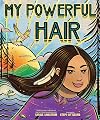
ANative girl reflects on hair, both her own and her family’s.
The young narrator’s Nokomis (Ojibwe for grandmother) and mother were not permitted to have long hair—her mother’s was deemed “too wild,” while Nokomis’ was shorn at a residential school. The phrase “Our ancestors say” repeats throughout as we learn that “stories and memories are woven” into the young narrator’s hair. Long Indigenous hair is a form of self-expression, honors ancestral knowledge, and is show more healing medicine, according to the ancestors. Littlebird’s (enrolled Confederated Tribes of Grand Ronde) bold art matches the power of We Are Water Protectors author Lindstrom’s (Anishinabe/Métis, enrolled Turtle Mountain Band of Ojibwe) words. Crisp, striking illustrations reminiscent of woodcuts celebrate life and depict characters’ connections to Mother Earth as leaves swirl and splashes of vibrant colors dance across pages like confetti. Parents, siblings, grandparents, cousins, and aunties are included, making for a loving portrayal of a tightknit extended Native family. The stages of the protagonist’s hair growth serve as a timeline of events: When Nimishoomis (grandfather) taught the child to fish, her hair reached her ears; when her brother was born, it was shoulder-length. When Nimishoomis dies, the young girl cuts her hair to send powerful energy into the spirit world with him. As the book ends, the child decides to regrow her hair, and so does her mother. (This book was reviewed digitally.)
A deeply moving and inspiring celebration of long hair and its significance in Indigenous cultures. (information on the importance of hair to Native/Indigenous peoples, Ojibwe glossary, author’s note) (Picture book. 5-11)
-Kirkus Review show less
The young narrator’s Nokomis (Ojibwe for grandmother) and mother were not permitted to have long hair—her mother’s was deemed “too wild,” while Nokomis’ was shorn at a residential school. The phrase “Our ancestors say” repeats throughout as we learn that “stories and memories are woven” into the young narrator’s hair. Long Indigenous hair is a form of self-expression, honors ancestral knowledge, and is show more healing medicine, according to the ancestors. Littlebird’s (enrolled Confederated Tribes of Grand Ronde) bold art matches the power of We Are Water Protectors author Lindstrom’s (Anishinabe/Métis, enrolled Turtle Mountain Band of Ojibwe) words. Crisp, striking illustrations reminiscent of woodcuts celebrate life and depict characters’ connections to Mother Earth as leaves swirl and splashes of vibrant colors dance across pages like confetti. Parents, siblings, grandparents, cousins, and aunties are included, making for a loving portrayal of a tightknit extended Native family. The stages of the protagonist’s hair growth serve as a timeline of events: When Nimishoomis (grandfather) taught the child to fish, her hair reached her ears; when her brother was born, it was shoulder-length. When Nimishoomis dies, the young girl cuts her hair to send powerful energy into the spirit world with him. As the book ends, the child decides to regrow her hair, and so does her mother. (This book was reviewed digitally.)
A deeply moving and inspiring celebration of long hair and its significance in Indigenous cultures. (information on the importance of hair to Native/Indigenous peoples, Ojibwe glossary, author’s note) (Picture book. 5-11)
-Kirkus Review show less
Lists
4th Grade Books (1)
VBL Picturebooks (1)
Awards


You May Also Like


Associated Authors
Statistics
- Works
- 8
- Also by
- 2
- Members
- 2,299
- Popularity
- #11,173
- Rating
- 4.5
- Reviews
- 118
- ISBNs
- 35
- Languages
- 3