
Nobuyoshi Araki
Author of Araki: Tokyo Lucky Hole
About the Author
Nobuyoshi Araki was born on May 5, 1940 in Tokyo. He attended Chiba University in 1959, majoring in photography and cinema. Araki worked as an advertising photographer and began his independent work on films and photography. He is best known for the erotic nature of his works. In 1974, Araki show more founded a photo-workshop school. During the 1970s and 1980s, his work was widely exhibited and also published in numerous magazines. He created films including Pseudo Diary: High School Girls and Video Love Declaration: The Actress Y's Private Life. As Araki's work became more popular, greater opposition to it arose. Some critics concluded that his work amounted to little more than pornography. In 1992 the Japanese police shut down his Photomania Diary Exhibit. The following year several people were arrested in Tokyo on obscenity charges for selling his book, Erotos. Although his work creates controversy, his more than 80 books of pictures have established him as one of the most famous photographers in Japan. Among his books are Tokyo Comedy and Tokyo Lucky Hole. (Bowker Author Biography) show less
Works by Nobuyoshi Araki
Provoke: Between Protest and Performance: Photography in Japan 1960–1975 (2016) — Photographer — 43 copies, 2 reviews
Nobuyoshi Araki a La Fondation Cartier Pour l'Art Contemporain (Contrejour : Photographes Contemporains; Hors-serie; 1) (1995) 8 copies
Stern portfolio N56 Nobuyoshi Araki 5 copies
Mujo 3 copies
Moriyama, Daido 2 copies
Inbai Araki 2002 2 copies
Kyonen 2 copies
Pseudo Diary 2 copies
ARAKISS. Nobuyoshi Araki — Photographer — 2 copies
Sentimental Journey 2 copies
Black Frame 2 copies
Araki gold 2 copies
Araki's Eikimatsu 2 copies
After Araki : heaven & hell 1 copy
Sentimental Sky 1 copy
Super Photo Magazine 12 1 copy
araki 2002 1 copy
monographie peinte 1 copy
2 Golden Heart / Golden Ring JoJo's Bizarre Adventure (JUMP j BOOKS) (2001) ISBN: 4087031039 [Japanese Import] (2001) 1 copy
Junco 1 copy
Monthly Miyazaki Masumi-Special (SHINCHO MOOK 66) (2005) ISBN: 4107901386 [Japanese Import] (2005) 1 copy
Araki: THNSHI-SAI 1 copy
Flowers: Life and Death 1 copy
写真小説 春雪抄 1 copy
Kinbaku Raisan 1 copy
Documents 1 copy
Nobuyoshi Araki: Shiki In Me 1 copy
Nobuyoshi Araki 1 copy
All Women are Beautiful 1 copy
Tokyo Diary 1981- 1995 1 copy
2TheSky: My Ender 1 copy
My Love and Sex 1 copy
Shashin Workshop No. 7 1 copy
Pseudo-Reportage 1 copy
Photographic Journey 1 copy
Geribara 5 vol. 2 (Mizugi no Yangu Redii-Tachi) (Young Ladies in Bathing Suits) (Bathing Beauties) 1 copy
OO Nippon 1 copy
Tokyo 1 copy
Workshop no. 8 1 copy
Shashin Workshop No. 6. 1 copy
Kinbaku Shamaki 1 copy
Oh! Nippon (Oh! Japan) 1 copy
The Works (v. 1 - 20) 1 copy
Okinawa 1 copy
The Night of Nostalgia 1 copy
Diary Tokyo : 1981-1995 1 copy
Nobuyoshi Araki - higan nite 1 copy
Nobuyoshi Araki's World 1 copy
Shusen Go (Post-War Japan) 1 copy
Eros easy copy girl landscape journey of Nobuyoshi Araki (1983) (Travels in the Womanscape) (1983) 1 copy
Polart 1 copy
geribara 5: Five Girls 1 copy
After the War 1 copy
Tagged
Common Knowledge
- Birthdate
- 1940-05-25
- Gender
- male
- Education
- Chiba University, Chiba
- Occupations
- photographer
- Nationality
- Japan
- Birthplace
- Minowa, Tokio
- Places of residence
- Tokyo, Japan
- Associated Place (for map)
- Japan
Members
Reviews
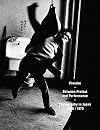
The short-lived Japanese magazine Provoke, founded in 1968, is nowadays recognized as a major contribution to postwar photography in Japan, featuring the country’s finest representatives of protest photography, vanguard fine art and critical theory in only three issues overall. The magazine's goal was to mirror the complexities of Japanese society and its art world of the 1960s, a decade shaped by the country’s first large-scale student protests. The movement yielded a wave of new books show more featuring innovative graphic design combined with photography: serialized imagery, gripping text-image combinations, dynamic cropping and the use of provocatively "poor" materials. The writings and images by Provoke's members―critic Koji Taki, poet Takahiko Okada, photographers Takuma Nakahira, Yakata Takanashi and Daido Moriyama―were suffused with the tactics developed by Japanese protest photographers such as Nobuyoshi Araki, Eikoh Hosoe and Shomei Tomatsu, who pointed at and criticized the mythologies of modern life. Provoke accompanies the first exhibition ever to be held on the magazine and its creators. Illuminating the various uses of photography in Japan at the time, the catalogue focuses on selected projects undertaken between 1960 and 1975 that offer a strongly interpretative account of currents in Japanese art and society at a moment of historical collapse and renewal. show less

Negaeropolis is a series of color photographs featuring subjects consistently found in Araki’s work: nudes, flowers, dolls, and the streets of Tokyo, among other scenes from the artist’s everyday life. In this new body of work, Araki has made photographs of images exactly as they appear on the film negatives. The inverted images, with their complementary hues and orange mask characteristic of negative film, appear simultaneously vibrant and yet somber, expressing how the two sides of show more film- positive and negative- are inextricably linked together, serving as a metaphor for yin and yang and Araki’s own personal view of life and death.
Limited edition of 300 copies. show less
Limited edition of 300 copies. show less

The series consists of around 100 photographs taken around the year 1965, when Araki was working at advertising giant Dentsu. The photos, first shown at an exhibition at Taka Ishii Gallery in February 2011, are presented as a postcard-sized book, hidden in a Fuji photographic paper box replica, the same way Araki discovered his old prints.
“I’ve found a cabinet box, labelled “Theater of Love”. Opening it, there were about 150 prints inside. They must have been taken around ’65, back show more when I was clicking away on an Olympus Pen F, experimenting with thermal development, fooling around with printing and film developing techniques. The photos are a record of me, the women and the life and the places of that era. Seems like I called them “Theater of Love” in those days. But either way — good stuff. Good photos. You can’t get this with digital.”
— Nobuyoshi Araki show less
“I’ve found a cabinet box, labelled “Theater of Love”. Opening it, there were about 150 prints inside. They must have been taken around ’65, back show more when I was clicking away on an Olympus Pen F, experimenting with thermal development, fooling around with printing and film developing techniques. The photos are a record of me, the women and the life and the places of that era. Seems like I called them “Theater of Love” in those days. But either way — good stuff. Good photos. You can’t get this with digital.”
— Nobuyoshi Araki show less

I bought this out of curiosity more than anything, in one of those bargain bookshops where everything costs only a pound or two. It certainly isn't worth paying full price for.
Awards

You May Also Like


Associated Authors
Statistics
- Works
- 255
- Members
- 1,051
- Popularity
- #24,523
- Rating
- 3.7
- Reviews
- 9
- ISBNs
- 169
- Languages
- 9
- Favorited
- 4